


An indoor play tent is so much more than just another toy. Think of it as a personal sanctuary where your child’s imagination can run wild. These simple structures create a private, cozy space for everything from secret club meetings to quiet reading time, becoming a launchpad for creativity and independence right in your own home.
It’s their own pop-up world, a personal hideaway where they make the rules.
More Than a Toy: A World of Imagination
Step into the magical world of kid tents for indoors, where a simple piece of fabric instantly becomes a universe of adventure. One minute, it’s a fairy tale castle for warding off dragons; the next, it’s a deep-space rocket ship charting a course to Mars. This chameleon-like ability to shapeshift according to a child's whims is what makes an indoor tent such a powerful tool for development.
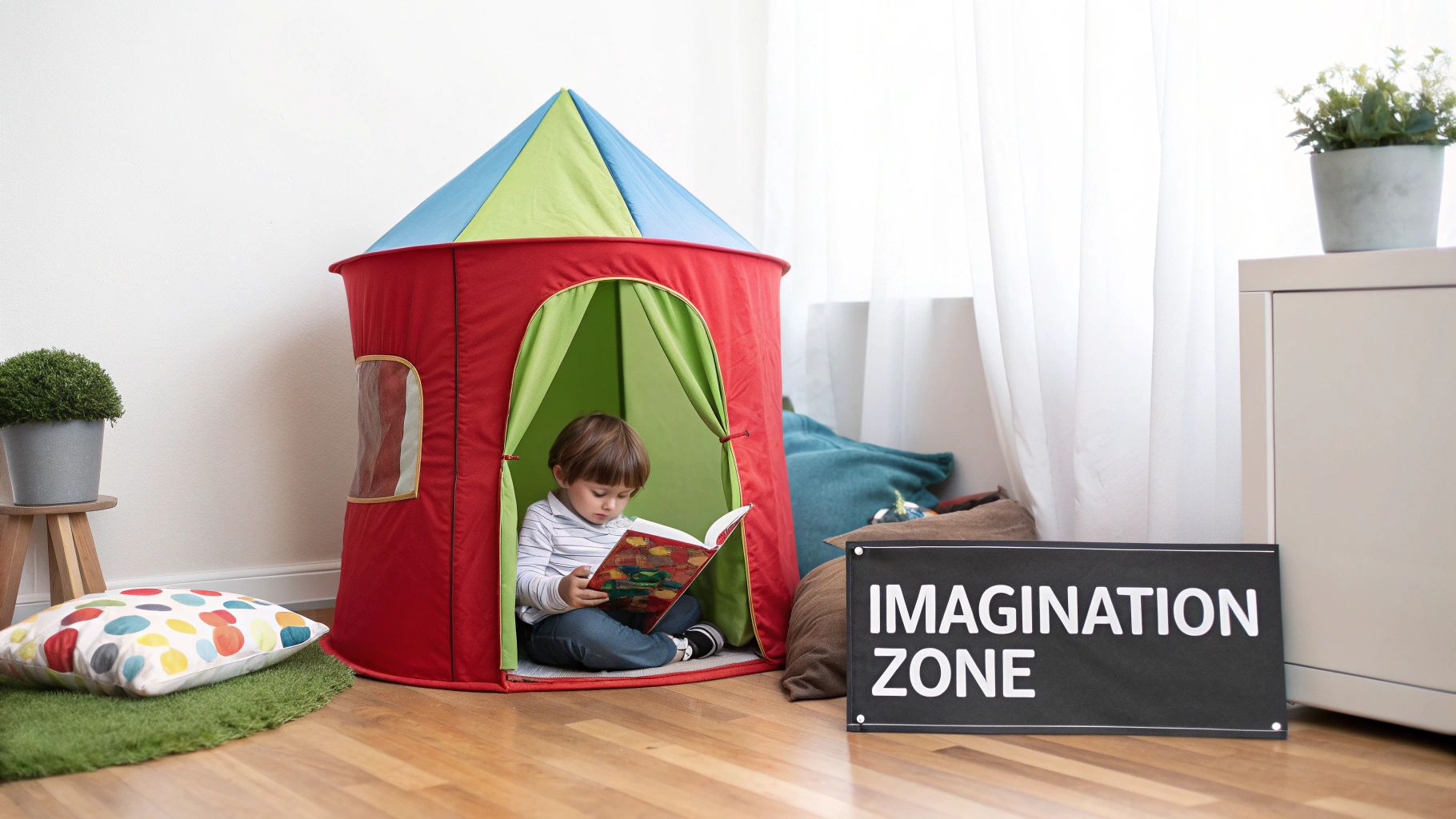
This isn't just a parental hunch. The global market for kids' play tents has seen significant growth, with playrooms accounting for 43.35% of their use. This trend shows that parents are actively creating dedicated, safe play zones right inside the house.
Your Child's Private Sanctuary for Growth
Every kid needs a little space to call their own—a small retreat from the hustle and bustle of family life where they feel in control. An indoor tent offers exactly that. It's a place where they can:
- Process their day without interruption.
- Enjoy quiet time with their favorite books or stuffed animals.
- Develop a sense of ownership and responsibility for their personal space.
An indoor tent can become the perfect nook to foster both independence and a love for reading. For more on that, check out these valuable tips for encouraging a love of books.
Fostering Critical Imaginative Play Skills
Imaginative play is the absolute bedrock of cognitive development. It’s how kids build problem-solving skills, empathy, and creativity. A tent provides the perfect stage for this kind of play, serving as a versatile prop for countless scenarios.
For example, when a tent becomes a "vet clinic," a child isn't just playing; they're practicing empathy for their stuffed animal patients and problem-solving how to "fix" a wobbly leg. Looking for more ways to support this kind of growth? You'll find tons of inspiration in our guide to the best imaginative play toys.
The Developmental Benefits of an Indoor Tent
It’s easy to see an indoor tent as just another toy, but it’s actually a quiet powerhouse for your child's growth. It’s far more than a simple plaything; it’s a dedicated space where kids hit crucial developmental milestones just by having fun. From building social skills to sparking a love for reading, this personal sanctuary supports your child's journey in many ways.
The market for kids' tents is booming, driven by parents who are more conscious than ever about creating quality play environments at home. We're recognizing that these spaces are fantastic for imaginative play and encouraging enriching activities. You can read more about the rising popularity of kids' play tents on accio.com.
Fostering Imagination and Independence
A tent is a blank canvas for a child's mind. One day it's a rocket ship blasting off to the moon; the next, it's a busy vet clinic for a lineup of stuffed animals. This kind of imaginative play is fundamental for cognitive development, teaching kids to think outside the box and solve problems on their own.
By giving them a space that is solely theirs, a tent also fosters a healthy sense of independence. It becomes their safe retreat where they can have quiet time, process their day, and feel a sense of control over their own little world.
An indoor tent gives a child a manageable world of their own. Within its walls, they are the creator, the explorer, and the hero of their own story, building confidence with every new adventure they imagine.
Boosting Early Literacy and Social Skills
One of the best, and sometimes overlooked, benefits of kid tents for indoors is how they can create an irresistible reading nook. Just toss in a few comfy pillows and their favorite books, and the tent transforms into a magical escape. Suddenly, reading feels like an adventure, not a chore. This positive association is a cornerstone for building lifelong literacy skills.
On top of that, a tent naturally becomes a hub for social learning. When siblings or friends pile in, kids can't help but practice essential social skills. They learn to:
- Share their space and favorite toys.
- Negotiate roles during make-believe ("You be the patient, I'll be the doctor!").
- Collaborate on ideas to build their imaginary worlds together.
These little interactions are the building blocks of empathy, communication, and teamwork. It all comes back to the core principles of play-based learning benefits, which show how simple, fun activities can lead to profound developmental gains. Dive deeper into this topic by reading our article on the benefits of play-based learning. Ultimately, that simple tent becomes a miniature classroom for some of life's most important lessons.
How to Choose the Perfect Indoor Play Tent
Feeling a bit lost in the sea of princesses, rockets, and canvas castles? It’s easy to feel overwhelmed when you start shopping for an indoor play tent. The key is to break the decision down into a few practical areas to make the process simple and stress-free.
It’s not about finding the one "best" tent out there; it’s about finding the one that fits your space, your kid’s age, and your family’s lifestyle. With a little thought, you can confidently pick the perfect private hideaway for your child's next big adventure.
This flowchart can help you visualize the decision process, especially when thinking about your child's age.
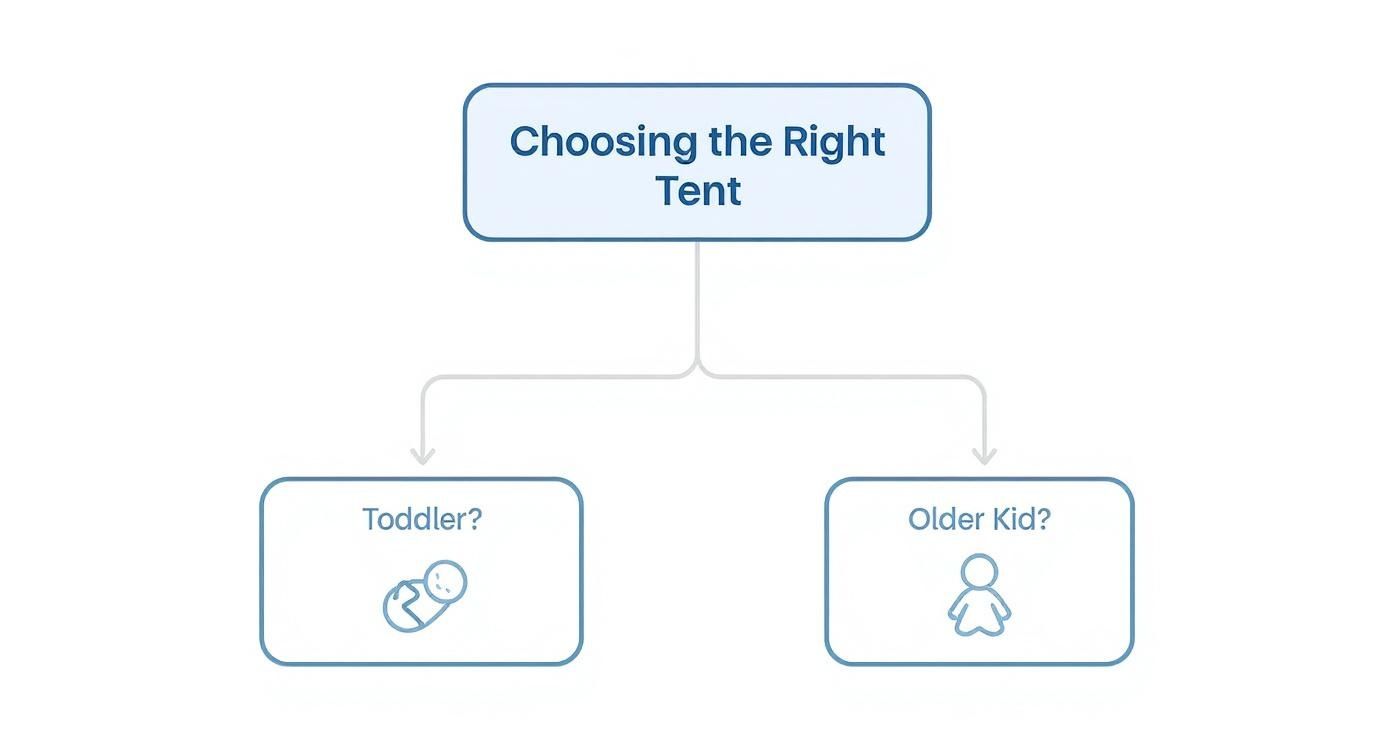
As you can see, the perfect tent for a toddler is all about soft materials and simple entryways. But an older kid might want more space for friends and room for more complex, imaginative play.
Size and Space Considerations
Before you fall in love with a cool design, grab a measuring tape. The number one rule is making sure the tent actually fits comfortably where you plan to put it. Measure the floor space and the height, leaving some extra room around the tent so kids can get in and out without bumping into furniture.
Also, think about the tent's "occupancy." Is this a solo reading nook, or do you need enough space for siblings and friends? A larger footprint is fantastic for social play, while a smaller, cozier model is perfect for that much-needed quiet time.
Materials and Durability
The material of your kid tents for indoors has a huge impact on its safety, longevity, and even how it feels. The two most common options you'll find are polyester and cotton canvas, each with its own pros and cons.
-
Polyester Tents (Pros & Cons):
- Pros: Lightweight, often feature bright colors, and are a breeze to wipe clean. They are also typically more budget-friendly.
- Cons: Can be less breathable than natural fabrics.
-
Cotton Canvas Tents (Pros & Cons):
- Pros: Extremely durable and breathable with a classic, sturdy feel. They often last for years.
- Cons: Heavier, may cost more, and can be harder to clean.
This focus on better materials isn't just for kids; it's a trend we're seeing everywhere. The family tent market is projected to hit USD 7.69 billion in 2024, showing how much families value durable, high-quality designs. You can read more about the growing tent market on funkidslive.com.
Assembly and Age-Appropriate Features
How much setup are you willing to tackle? Most tents fall into two camps: instant pop-ups or pole-based structures. Pop-up tents are ready in seconds but can sometimes be a puzzle to fold back down. Tents with poles take a few minutes to assemble but are generally sturdier.
When choosing a tent, think about who it's for. A toddler's perfect tent is a soft, simple pop-up with no small parts, while an older child might treasure a more complex teepee-style tent they can help build and decorate themselves.
Always match the features to your child's age and developmental stage. For toddlers, look for soft edges, wide doorways, and nothing small they can pull off. For older kids, features like windows, roll-up flaps, and inside pockets add to the fun. Exploring different types of play tents can help you see these features in action.
Finally, prioritize non-negotiable safety features. Ensure any tent you consider has mesh windows or vents for good airflow, and always check that materials are non-toxic and flame-retardant for complete peace of mind.
Your Quick-Reference Checklist
To make your shopping trip even easier, we’ve put together a simple checklist. Keep these points in mind as you compare different tents, and you'll have no trouble finding the perfect fit.
Indoor Tent Feature Checklist
| Feature | What to Look For | Why It Matters |
|---|---|---|
| Size | Dimensions that fit your room with 1-2 feet of clearance. | Ensures the tent doesn't overwhelm the space and allows for safe movement around it. |
| Material | Durable, non-toxic polyester or breathable cotton canvas. | Safety and longevity. Easy-to-clean materials save you time and hassle. |
| Assembly | Pop-up for instant fun, or pole-based for sturdiness. | Choose based on your patience for setup and how permanent the tent will be. |
| Age-Appropriate | Soft edges and no small parts for toddlers; windows/pockets for older kids. | Keeps playtime safe and engaging for your child's specific developmental stage. |
| Ventilation | Mesh windows or vents. | Crucial for airflow and safety, preventing the tent from getting stuffy during play. |
| Portability | Lightweight design and a carrying case. | Makes it easy to store the tent away or take it to a friend's house. |
| Cleaning | Wipe-clean or machine-washable fabric. | Because spills and messes are a part of life! Easy cleaning keeps the tent fresh. |
This checklist is your secret weapon for cutting through the noise. By focusing on these key features—from the right size for your living room to materials that can handle energetic play—you're all set to make a great choice.
Setting Up Your Tent for Safe and Easy Play
The moment the box with your child's new tent arrives is pure magic. With a little planning, you can make the setup just as fun as the playtime that follows. Turning assembly into a team effort is a fantastic way to build their excitement and give them a real sense of ownership over their brand-new space.
Even with the simplest pop-up designs, get them involved. Let your little one be the one to unfold it, or hand you the poles for a more structured model. This small act makes them feel like they’re building their own little home, transforming a toy into their special fort from the start.
Finding the Perfect Spot
Picking the right location for your kid tents for indoors is a big deal for both safety and fun. You're hunting for that sweet spot that feels like part of the family action but is safely out of the way of daily foot traffic. A cozy corner in the living room or a dedicated space in the playroom usually works perfectly.
As you scout a location, keep these safety checks in mind:
- Distance from Hazards: Steer clear of stairs, fireplaces, heaters, and any windows with long, dangling cords.
- Stable Surface: Always place it on a flat, even floor so it won't tip over when playing gets rowdy.
- Clear Surroundings: Ensure there's enough open space around the entrance for easy ins and outs without bumping into furniture.
A well-placed tent becomes a natural part of the room's flow instead of an obstacle. It's also a great chance to think about your overall playroom layout. For more ideas, check out our full guide on how to organize a toy room, which is packed with tips for creating a fun, clutter-free environment.
A Simple Guide to Care and Maintenance
Keeping the tent clean and in great shape is easier than you might think, and it ensures their little hideaway stays healthy for countless adventures. A little regular maintenance goes a long way in extending the tent's life and keeping it looking fresh and inviting.
Most messes on polyester or nylon tents can be handled with a quick spot-clean. Just grab a damp cloth with a bit of mild soap to wipe away spills and smudges. If you have a canvas tent or need a deeper clean, always check the manufacturer’s instructions first—some have removable covers that are machine-washable.
Pro Tip: Let it breathe! Once a week, open any windows or flaps on the tent and let it air out for an hour. This simple step helps prevent musty smells and keeps the inside feeling fresh.
When it's time to pack the tent away, make sure it’s completely dry before folding it up. This is key to preventing mildew. Tuck it neatly into its storage bag and keep it somewhere dry, like a closet or under a bed, so it’s ready for the next playtime mission.
Get Creative and Spark Their Imagination
A play tent is so much more than a pop-up fort; it's a blank canvas for your child's imagination. With a few simple props and a little encouragement, you can help transform their cozy corner into a universe of adventure, learning, or quiet reflection.
The real magic happens when you stop seeing the tent as a toy and start seeing it as a versatile stage for endless stories.
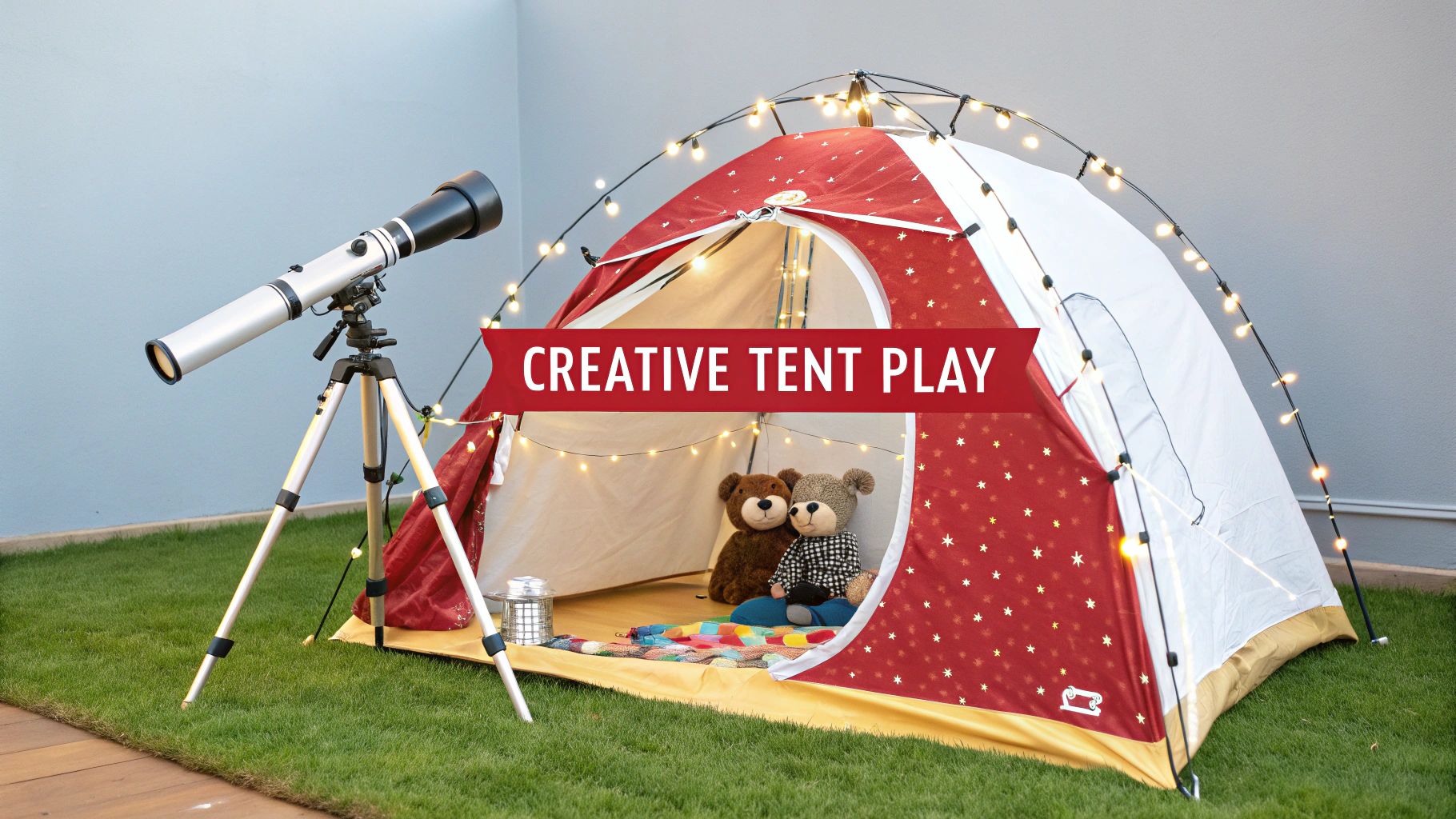
From thrilling expeditions to peaceful retreats, a kid tent for indoors can become the heart of your playroom. All it takes is a sprinkle of imagination to unlock its full potential and create memories that will last a lifetime.
Themed Adventures for Every Explorer
One of the easiest ways to get the fun started is to give the tent a theme. This strategy provides a framework for imaginative play, helping kids build narratives and explore different roles. You don't need an elaborate, Pinterest-perfect setup; usually, a few key items are all it takes to set the scene.
Here are a few actionable ideas:
- Jungle Explorer Base Camp: Drape the tent with green streamers or fake ivy, add a pair of binoculars, and scatter a few stuffed "wildlife" around. Suddenly, your little explorer is a scientist documenting new species from their research outpost.
- Deep-Sea Submarine: Cut out paper portholes and tape them to the inside walls. Blue blankets on the floor become the ocean floor, and flashlights are essential for spotting mysterious sea creatures.
- Cozy Bear Picnic Cabin: Gather up all the teddy bears, lay down a small blanket for the "picnic," and serve up imaginary tea and snacks inside their very own woodland cabin.
A Fun-Filled Hub for Learning and Skills
A tent can also be a fantastic tool for learning, creating an engaging environment that makes educational activities feel like pure fun. By blending play with discovery, you can nurture your child's natural curiosity and make complex subjects feel accessible.
It's the perfect spot for a captivating reading nook. To really make the tent a hub of discovery, try introducing some captivating 4th grade mystery books that will provide hours of engaging storytelling inside their private space.
Why not turn the tent into a "Starlit Observatory"? String fairy lights inside to look like stars. Bring in some astronomy books and a small toy telescope, and you've created a magical space for learning about the cosmos, all from the comfort of the living room.
Creating a Calm-Down Corner
Beyond active play, an indoor tent offers the perfect opportunity to create a sensory-friendly retreat. This designated calm-down corner gives kids a safe, comforting space to manage big emotions, decompress after a busy day, or simply enjoy some quiet time alone.
To set up a sensory-friendly space, focus on comfort and tranquility. Add soft pillows, a weighted blanket, and some favorite quiet activities like fidget toys or coloring books. The enclosed nature of the tent helps reduce overwhelming external stimuli, making it an ideal sanctuary. For a fun, hands-on project, you can even find some great cardboard craft ideas to decorate the space together.
Got Questions? We've Got Answers
So, you're thinking about bringing one of these little forts into your home. Awesome! But it’s totally normal to have a few questions buzzing around. From safety checks to cleaning tips, getting the details sorted helps you feel 100% confident in your choice.
We’ve pulled together the most common questions we hear from parents. Think of this as your final sanity check before the real fun begins.
What’s the Best Age for an Indoor Tent?
While every kid is different, the sweet spot for indoor tents is usually between 18 months and 8 years old. For toddlers just finding their feet, a simple pop-up tent is a soft, safe little world to explore. It’s all about sensory play at that age.
As they get older, the tent grows with them. It can become a secret fortress for imaginary quests, a quiet reading nook for escaping a noisy house, or the official headquarters for a grade-schooler's clubhouse. The trick is to match the tent to where your child is at. A one-year-old needs wide-open doors and lots of mesh, while a seven-year-old might be thrilled with roll-up window flaps and pockets to stash their treasures.
Are Indoor Tents Safe for Toddlers?
Yes, absolutely—as long as you know what to look for. The single most important thing is proper ventilation. You want a tent with mesh windows or vents to keep fresh air circulating. No one wants a stuffy, hot play space.
Beyond that, here are a few other non-negotiables:
- Non-Toxic Materials: Check that the fabric is free from harmful chemicals.
- Sturdy Construction: The frame needs to be strong enough to handle enthusiastic play without tipping over.
- No Small Parts: Especially for the little ones, steer clear of tents with small, dangly decorations that could become a choking hazard.
How Can I Keep the Tent Clean?
This is way easier than you might think. Most tents these days are made from materials like polyester or nylon that are super easy to spot-clean. For most spills and smudges, a damp cloth with a bit of mild soap will do the trick.
Parent Tip: For a more serious cleaning, always check the tag first. Lots of fabric covers are actually removable and can be tossed in the washing machine on a gentle cycle. Just be sure to let it air dry completely before putting it away to avoid any mildew.
A little fresh air goes a long way, too. Just open up the flaps and windows for an hour or so every once in a while to keep the inside smelling fresh.
How Do I Get My Kid to Actually Use Their New Tent?
Sometimes a new toy, even a cool one, can feel a little strange at first. If your child is hesitant, the best way in is to join them. Don't just tell them to go play in it; show them how.
Start by making it feel cozy and safe. Toss in their favorite stuffed animal, a soft blanket, and a couple of their most-loved books. Then, lead by example. Crawl in and start reading a story out loud, or suggest a teddy bear picnic inside. Once they see it as a shared space for connection and fun, it won't be long before it becomes their own special sanctuary for all kinds of adventures.
Ready to find the perfect launchpad for your child's imagination? Playz offers a wide range of creative and safe play tents designed to spark curiosity and make learning fun. Explore our collection and discover a world of adventure waiting to unfold.