

The most popular advice on the best toys for 11 year olds is wrong. It treats an 11-year-old like a slightly taller younger kid, then wonders why the toy gets touched once and abandoned. At 11, the test isn't whether the box looks age-appropriate, it's whether the toy still feels cool after the first rush of novelty fades.
That's why I judge tween gifts by social status, replay value, and independence. If a toy can't survive the tween taste test, it's clutter, not a gift. The good news is that the toys that pass are usually the ones that also support the kind of play children in this age band want: rule-based, skill-building, and a little more advanced than pretend play, as Seattle Children's notes for ages 9 to 12 (Seattle Children's guidance on toys and play for 9 to 12 year olds).
Why Most 11-Year-Old Gift Lists Miss the Mark
Most gift lists sort toys by category and call that helpful. It isn't. An 11-year-old picks a toy because it makes them feel capable, independent, and not babyish around other kids. That social filter matters more than a neat label on a shopping page.
Most lists also miss how fast a tween rejects anything that looks too young. If the toy feels like it belongs to a younger sibling, it is finished before the batteries even go in. That is why the true test is the cool test, not the age box on the front of the package.
A toy can be perfectly safe, perfectly sturdy, and still flop hard if it feels off. Kids this age notice that immediately.
Practical rule: If a toy needs you to explain why it is fun, it probably is not fun enough for an 11-year-old.
The market does have a good reason for pushing more complex toys at this age. Children in the 9 to 12 range are in middle childhood, and play shifts toward rules, strategy, and skill-building rather than simple pretend scenarios. That is why credible roundups for tweens keep coming back to board games, construction sets, science kits, sports gear, and art supplies. Those formats give kids room to make their own choices, which is the part adults keep underestimating.
The problem is that many gift lists still shop for the box, not the child. At 11, a toy has to compete with friends, devices, and the tween's own identity. If it does not offer challenge, replay value, or some social payoff, it will sit on a shelf. For a useful explanation of why kids keep returning to hands-on, open-ended play, What exploratory play looks like in practice is a solid reference.
How Tween Brains Choose What to Play With
At 11, a toy earns attention only if it passes the tween test. The child has to want it, not just accept it. That is why so many “great for learning” gifts fail after the first look, while a sharper, cooler object gets picked up again and again.
Middle childhood changes the game
Children in the 9 to 12 range respond best to toys and activities that support physical, intellectual, and social development, especially board games, construction toys, sports equipment, science kits, and art supplies. That mix says a lot. The toy has to do real work for the child, not just fill time. It has to give them something to build, test, compare, or show off.
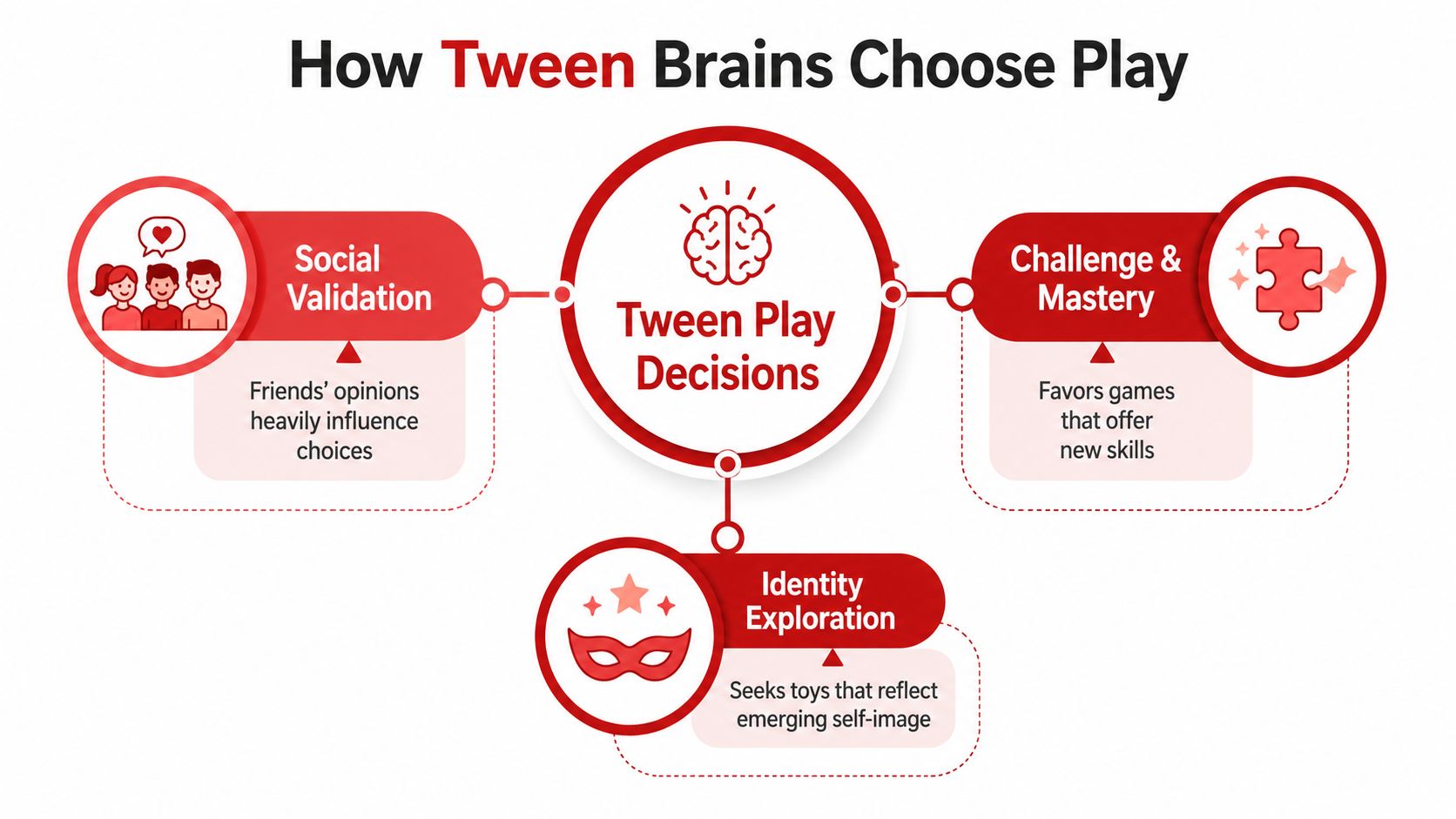
The best toys for 11 year olds usually hit one of three marks. They let a child master a skill, they let a child show progress in front of friends, or they let a child tinker without an adult standing over the table. That is why a simple pretend set that would have been a hit at seven often lands with a thud now.
Kids this age do not just ask “What is it?” They ask “Can I make it harder, better, or more mine?”
What that means in real life
A board game works when the rules have enough depth to stay interesting, but not so much that the child needs a full tutorial before the first round. A science kit works when the result is clear, repeatable, and satisfying. A building set works when it has enough moving parts to support new builds, not just one finished model that gets admired once and shelved.
Open-ended toys do better because they leave room for the child to decide what happens next. Hands-on learning ideas fit this age especially well, because tweens want to touch, build, test, and redo instead of just watch. NAEYC also points out that toys should match the child's developmental stage and be usable in more than one way, which is exactly why the strongest picks at 11 are the ones that can be revisited without feeling childish or boxed in (NAEYC on toys and play).
A toy earns a place in a tween's room when it gives them control, room to experiment, and enough status to survive peer judgment. If it cannot do that, it becomes clutter.
The Four Filters That Predict a Toy's Real Lifespan
I don't buy an 11-year-old toy unless it clears four filters. Age labels on the box matter less than whether the toy survives the tween test. The four filters are replay value, social status, independence, and durability. Miss one, and you are betting on a short shelf life.
Replay value and social status
Replay value means a toy can be used in new ways, not just repeated the same way until the novelty wears off. Modular STEM kits earn their keep here because they invite rebuilding, tweaking, and trying again. A toy that changes shape, difficulty, or outcome keeps a tween interested far longer than a one-note novelty item. That is why STEM learning toys usually outlast the flashy stuff that looks clever in the store and feels stale by the weekend.
Social status matters more than parents want to admit. If friends want to play with it, the toy stays in the rotation. If it feels embarrassing in front of peers, it goes straight into a closet, no matter how smart it is.
Bottom line: the toy has to be fun enough for the child, but also believable enough for the friend group.
Independence and durability
Independence is where a lot of gifts fall apart. If an 11-year-old needs an adult to reset the toy, explain the rules, or fix it every ten minutes, it loses momentum fast. Toys that are easy to start, hard to exhaust, and manageable without constant help usually stick.
Durability is the final gate. Tweens use toys harder than younger kids do, and they expect long sessions. A flimsy toy may survive the unboxing, but it will not survive actual play.
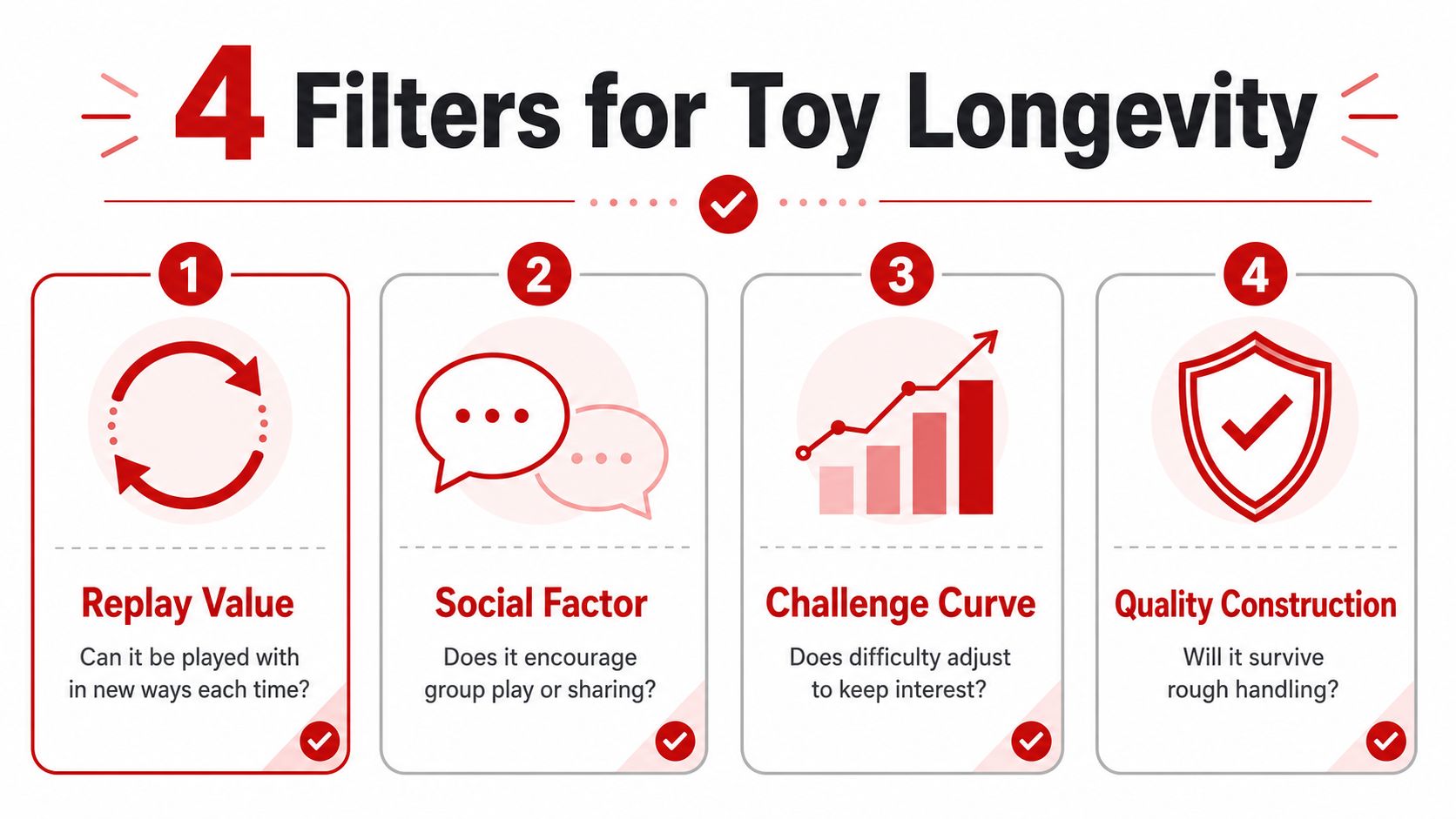
If you want a fast test, ask these four questions before you buy:
- Replay Value: Can it be played with in new ways each time?
- Social Factor: Does it encourage group play or sharing?
- Challenge Curve: Does difficulty adjust to keep interest?
- Quality Construction: Will it survive rough handling?
That framework cuts through the marketing noise fast. If a toy fails two of the four, keep looking.
Top Toy Categories That Stick
The categories that last at 11 are the ones that let the child feel capable, smart, and not talked down to. I've watched plenty of “cute” gifts flop within a week because they were decorative, too easy, or invisible to friends. The winners usually look more serious and give tweens something to do on their own.
Modular STEM kits
These are the safest bet for a curious tween. Snap-circuit sets are a strong example because they are built for repeated combinations, and the version highlighted in the research brief advertises 100+ projects with 29 parts and no tools (AirFrov guide to tech gifts for 11 year old boys). That kind of structure is exactly why these kits outlast single-build kits.
The upside is obvious. They reward tinkering and problem-solving without forcing the child into one fixed outcome. The downside is that some kids want more freedom than a guided kit allows, so the sweet spot is a set with clear instructions and room to modify.
For parents who want a broader starting point, STEM toy ideas can help you compare the formats that keep a tween engaged instead of bored after the first assembly.
Strategy and party games
These are the social glue of this age group. Good board games and fast party games work because 11-year-olds want something they can share, win at, and argue over in a fun way. The right game makes the child look competent in front of friends, and that matters more than adults often expect.
The trade-off is replay fatigue. If the game has one obvious winning strategy or drags too long, interest drops fast. Keep the rules clean and the turns moving.
Advanced building sets
Construction toys still work at 11 when they feel more like engineering than preschool stacking. The child wants challenge, not just assembly. Detailed builds, robotics-adjacent sets, and mechanical models do the job.
The strongest ones also leave room for experimentation. If the set only produces one outcome, it will lose attention quickly.
Outdoor and sports gear
Active kids often prefer gear they can use with friends. A sports item counts as a toy when it creates play, competition, or movement. That is why this category often beats smarter-looking gadgets in practical use.
The downside is plain, weather, space, and interest all matter. If your child is not naturally active, do not buy this category just because it looks wholesome on a shelf.
Creative kits
Art supplies, craft kits, and science experiments hit a sweet spot because they feel personal. They let an 11-year-old make something that feels like theirs. That sense of ownership matters a lot more now than it did at age eight.
One reason this category lasts is that it gives kids a finished thing they can show off. That matters at eleven, because display value and brag value are part of the play pattern. Playz's science and creative toy range fits here too, especially if you want hands-on kits built around experimentation instead of passive use.
Durability, Power, and Safety Details That Matter
At 11, a toy has to hold up to real use, not glossy product shots. I look at the build first, because tweens are harder on toys than younger kids are. Strong picks use ABS plastic, metal-reinforced connection points on RC toys, and a screw-locked battery door, all of which help the toy survive rough play and keep it in service longer.
What to check before you buy
If a toy has moving parts, check the joints before you buy it. Weak seams and loose hinges are where cheap toys fail first. Modular designs can be great, but only if the pieces lock together cleanly and do not feel brittle in your hands.
Battery design matters just as much. For tech-heavy toys, a safer setup is one that uses USB-C instead of micro-USB, charges without a fuss, and does not leave a kid waiting around for a dead toy to come back to life. If you want a closer look at battery safety and setup choices, battery considerations for kids' toys is a useful place to start. A toy with a clumsy power routine gets used less, plain and simple.
Tweens notice this fast. If charging is annoying or the battery dies too quickly, the toy starts collecting dust.
Safety isn't optional
Age labels are only the first filter. Chemistry kits, small parts, and RC toys each bring different supervision needs, and parents should treat the box as guidance, not a pass/fail verdict. If a toy seems like it needs a cautious adult nearby, it probably does.
The main consideration is whether the toy fits the child you have. Some 11-year-olds are careful builders, some throw everything into a backpack, and some treat every gadget like it has to survive a soccer bench, a bedroom floor, and a sibling. For more hands-on STEM toy ideas that line up with that kind of use, the safest choice is usually the one with fewer fragile parts and a simpler power setup. If I have to choose between a sturdier toy with sane battery design and a flashier one with a fiddly charge routine, I take the sturdier one every time.
Why This Age Band Has More Real Engineering Now
The reason the best toys for 11 year olds feel more engineered now is simple, the market is bigger, and the competition is harsher. Fat Brain Toys market context reflects that shift, with industry analysis cited by major market research firms estimating the global toy industry at about $114.4 billion in 2023 and projecting roughly $239.6 billion by 2032. Bigger markets force sharper age targeting, clearer educational value, and better hands-on design.
That pressure changes the shelf. Parents are not buying “fun” by itself anymore, they are buying toys that can justify a higher price through learning, durability, and repeat use. The stronger products in this age band feel like tools for exploration, not one-time distractions.
| Category | Replay Value | Best For | Watch Out For |
|---|---|---|---|
| Modular STEM kits | High | Quiet problem-solvers | Instructions that are too rigid |
| Strategy and party games | High with the right group | Social kids and family nights | Games that drag or feel childish |
| Advanced building sets | High | Budding engineers | One-build-only kits |
| Outdoor and sports gear | Medium to high | Active tweens | Weather and space limits |
| Creative kits | High | Kids who like making things | Kits that are too prescriptive |
That market shift also explains why science kits, craft kits, and construction toys show up more often in gift guides and retailer assortments after 2020. Parents who want screen-free, skill-based play are driving demand for products that hold attention longer and support real engagement. For buyers, that makes higher-priced engineering-led toys easier to justify than they were a decade ago.
The clearest examples are the toys that let kids build, test, and revise without waiting for an adult to restart the whole process. That is why hands-on STEM toy ideas fit so well here, and why robotics for kids belongs in the conversation too. Robotics sits right on the edge between play, learning, and repeat challenge, which is exactly where this age band starts to care.
Smart Buying Strategy and Final Picks
My buying process for an 11-year-old is brutally simple. Start with the child's actual interest, not the aisle label. Then run the toy through the four filters, replay value, social status, independence, and durability, before you even think about checkout.
If two options both seem good, I usually pick the one with more replay. A more expensive modular kit can be worth it if it keeps a child engaged longer. A mid-priced craft kit can be the smarter buy if the child likes making things once and moving on.
For a broader sense of how retail curators think about gift selection, the Signature Lacrosse holiday gift guide is a helpful contrast because it shows how categories get organized around age and use case. GoodHousekeeping's 11-year-old guide is also stronger than most because it says the picks were shaped by feedback from real tweens, testing by the Good Housekeeping Institute, trends, best-seller data, and parents' input, which is a much better method than just tossing popular items into a list (Good Housekeeping's 11-year-old gift guide).
My final pick advice is this. Buy fewer toys, but buy ones that can be used independently, shown to friends, and returned to next week without groaning. That's the standard for the best toys for 11 year olds, not how impressive they look in the box.
If you want science kits, creative toys, and active play options that fit this age better than generic gift clutter, start with Playz. Their range is built around hands-on play, which makes it easier to choose something an 11-year-old will use instead of forget by Friday.