


Kick Off Your Next Family Adventure
Transform your living room, kitchen, or backyard into a hub of fun at home family activities that spark imagination and laughter. According to a 2021 survey by the American Psychological Association (APA), 85% of families reported stronger bonds after weekly game nights.
You’ll explore ten engaging, screen-free experiences complete with Playz product pairings, real-world scenarios, and clear setup steps. Each activity includes actionable tips, sample timelines, and age-based variations to keep every child engaged.
Quickly scan headings, enjoy short paragraphs, and dive into key takeaways for each idea. Whether you have toddlers or preteens, these activities require minimal prep and turn everyday spaces into memory-making zones.
Scroll down for step-by-step outlines, expert tips, and SEO-optimized insights on fun at home family activities.
1. Indoor Scavenger Hunt
Indoor scavenger hunt is a classic game where family members search your home for hidden items using clues or a checklist. It blends physical movement and problem solving—perfect for rainy afternoons and energetic kids.
How It Works
- Give each player a list of items or riddles.
- Set clear boundaries on search areas.
- Use Playz scavenger kits or DIY printed clues for quick setup.
Real-World Examples
- Theme-based birthday party treasure hunts.
- Educational color-and-letter hunts for preschoolers.
- Living-room “museum” hunt with small art prizes.
Actionable Tips
- Tailor clue difficulty by age group.
- Write riddles in rhyme for extra fun.
- Offer gentle hints to keep momentum.
Why It Works
Combines teamwork, movement, and critical thinking. Kids stay active while parents relax.
“A well-designed scavenger hunt turns an ordinary afternoon into an unforgettable adventure.”
Ready to boost your next family game night? Visit Playz.com for scavenger hunt kits and detailed guides.
2. Family Movie or Game Night
Gather your crew for a scheduled evening of movies, board games, or video-game tournaments. This ritual builds structure, shared anticipation, and recurring quality time.
How It Works
- Pick a consistent day and time each week.
- Rotate who selects the movie or game.
- Prepare snacks and comfy seating.
Real-World Examples
- Friday-night pizza-and-popcorn tradition.
- Sibling Mario Kart tournaments with homemade trophies.
- Family board-game leagues with rotating champions.
Actionable Tips
- Set screen-time limits for younger kids.
- Alternate movies with tabletop games for variety.
- Use fairy lights and blankets for a cozy theater vibe.
Why It Works
Predictable routine plus flexible choices foster bonding and lighthearted competition.
“Turning a regular evening into a mini festival at home makes memories that last.”
Explore more interactive options: 10 Fun Indoor Group Games for Kids and Family Movie or Game Night on Playz.
3. Cooking or Baking Together
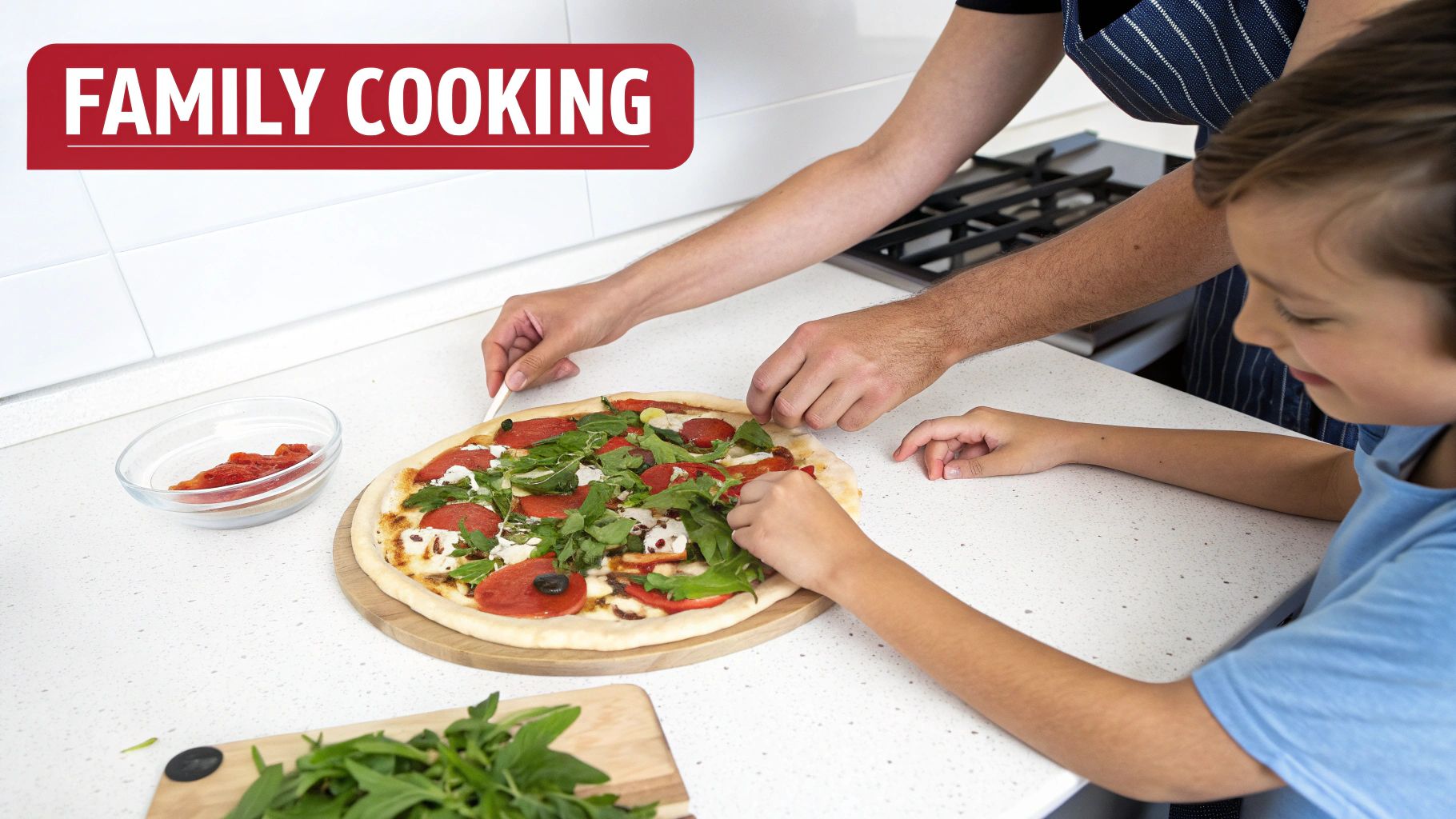
Bring everyone into the kitchen to prepare a meal, snack, or dessert as a team. This activity teaches kitchen skills, nutrition basics, and sparks creativity—plus you enjoy a tasty reward.
How It Works
- Choose a simple 3–5-ingredient recipe.
- Assign age-appropriate tasks: mixing, measuring, decorating.
- Use step stools and pre-measured ingredients for safety.
Real-World Examples
- Personalize-your-own-pizza night.
- Holiday cookies with festive cutter shapes.
- Rainbow smoothie bowls with fruit layers.
Actionable Tips
- Lay out supplies before you start.
- Encourage creative decorating.
- Keep a damp cloth handy for spills.
Why It Works
Blends sensory learning with teamwork. Children gain confidence and life skills.
“Turning meal prep into a family project sparks creativity and connection in the heart of your home.”
Find family-friendly kitchen kits and recipes at Playz.com.
4. Arts and Crafts Projects
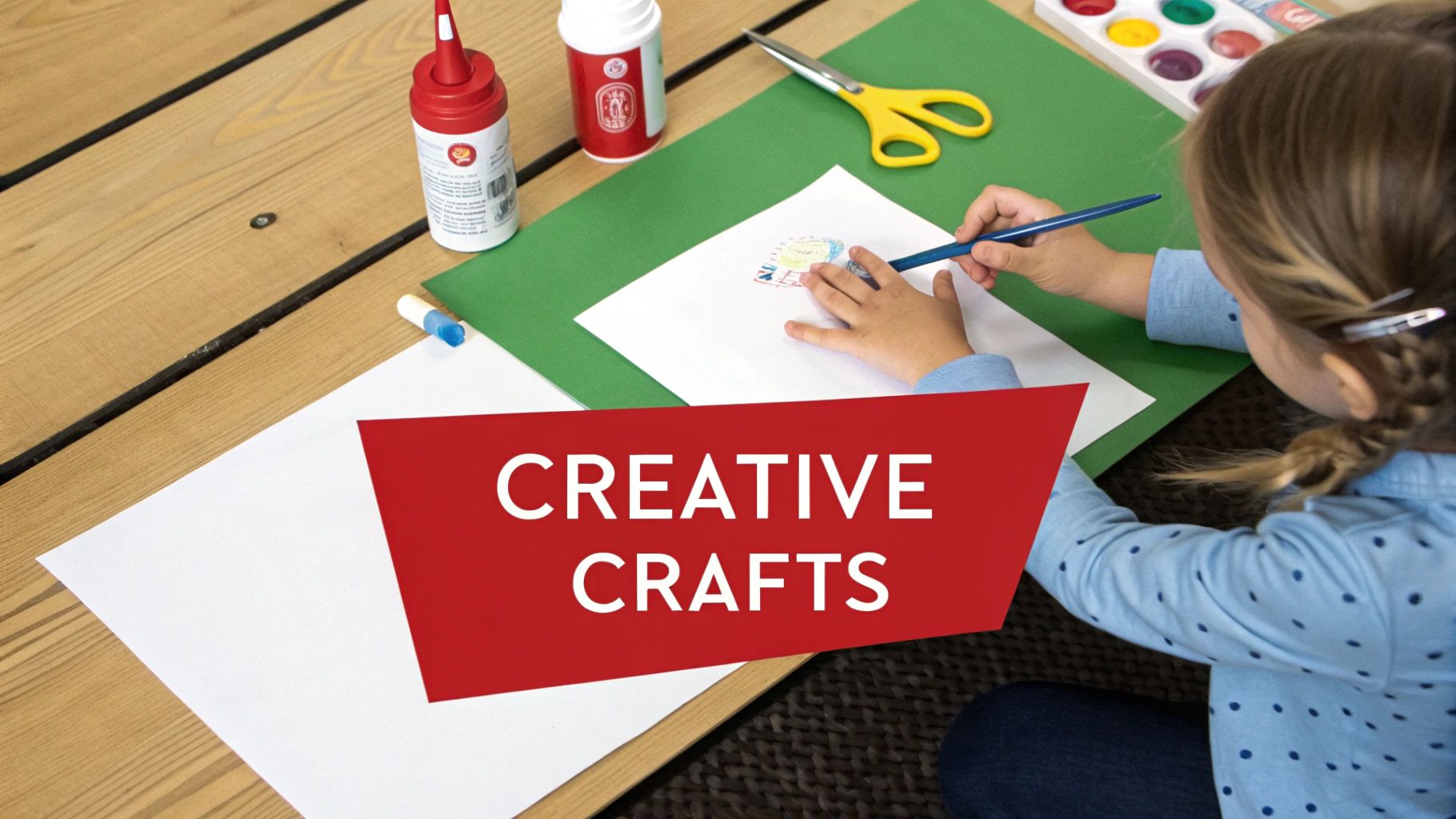
Design, build, or create themed crafts using paper, paint, clay, and recycled materials. Projects strengthen fine motor skills and ignite creative expression.
How It Works
- Pick a theme that appeals to all ages.
- Protect surfaces and lay out supplies.
- Provide simple templates or free-draw options.
Real-World Examples
- Canvas paintings for a home gallery.
- Pinecone bird feeders with peanut butter and seeds.
- DIY tie-dye T-shirts with rubber bands and dyes.
Actionable Tips
- Use washable art supplies.
- Display finished projects on a gallery wall.
- Introduce seasonal motifs for fresh inspiration.
Why It Works
Encourages design thinking and pride in accomplishments.
“Arts and crafts give kids a sense of pride and a chance to explore new skills.”
Ready to expand your toolkit? Explore cardboard craft ideas on Playz.com.
5. Indoor Obstacle Course or Physical Games
Transform your space into an active playground with a DIY obstacle course. This activity boosts gross motor skills and channels energy in a structured, safe environment.
How It Works
- Layout stations using cushions, chairs, tape lines, and blankets.
- Assign challenges: cushion jumps, crawl-under tunnels, balance-beam walks.
- Time each run or keep a family scoreboard.
Real-World Examples
- Blanket tunnel and pillow-jump combos.
- Tape-track balance beams on hardwood floors.
- Relay races weaving around furniture.
Actionable Tips
- Clear breakables and sharp corners.
- Cushion landing zones generously.
- Let each member design a section.
Why It Works
Promotes fitness, coordination, and creative problem solving.
“Transforming your living room into a physical playground keeps kids moving and families connected.”
Build custom courses with help from a DIY indoor obstacle course guide. Discover themed kits at Playz.com.
6. Indoor Picnic or Blanket Fort Building
Create a cozy hideaway by draping blankets over furniture. Share snacks, stories, and games inside your homemade fort for a magical bonding experience.

How It Works
- Anchor blankets on sturdy chairs or tables.
- Tuck edges under cushions or use clips.
- Fill the fort with pillows, rugs, and fairy lights.
Real-World Examples
- Movie screening fort with popcorn trays.
- “Camping” sleepover with sleeping bags and lanterns.
- Castle or spaceship role-play.
Actionable Tips
- Clip blankets securely.
- Leave a ventilation flap.
- Use battery-powered lights for safety.
Why It Works
Offers a private, imaginative space for storytelling and relaxation.
“Building forts was our best rainy-day tradition—it brought out everyone’s creativity.”
Get fortress-building ideas at Indoor Picnic or Blanket Fort Building on PlayzUSA.com.
7. DIY Science Experiments
Turn your home into a mini-lab with safe, hands-on experiments that teach STEM concepts. These playful projects foster curiosity, critical thinking, and collaboration.
How It Works
- Choose age-appropriate experiments: baking-soda volcano, crystal growing, slime creation.
- Predict outcomes, follow instructions, and observe reactions.
- Document results with photos and notes.
Real-World Examples
- Erupting volcanoes on plastic trays.
- Borax crystal gardens in mason jars.
- Homemade slime for tactile exploration.
Actionable Tips
- Research each experiment’s safety and complexity.
- Cover surfaces with paper or plastic.
- Discuss real-world applications of the science.
Why It Works
Combines structured learning with playful discovery.
“Simple home experiments spark lifelong interest in science through playful discovery.”
Dive deeper with DIY Science Experiments on PlayzUSA.com.
8. Storytelling and Reading Circle
Gather around for shared reading, collaborative storytelling, and character role-play. This cozy routine strengthens literacy, listening skills, and imaginative play.
How It Works
- Select a book or story prompt.
- Take turns reading aloud or adding to a shared tale.
- Pause to discuss plot twists and predict outcomes.
Real-World Examples
- Weekly Harry Potter read-aloud sessions.
- Bedtime picture-book traditions.
- Family story chains starting with “Once upon a time…”.
Actionable Tips
- Use distinct character voices.
- Create a cushy reading nook with soft lighting.
- Ask open-ended questions after each chapter.
Why It Works
Fosters vocabulary growth and emotional bonding.
“A family story time sparks curiosity, unity, and lifelong reading habits.”
Find storytelling kits and resources at Playz.com.
9. Indoor Treasure Hunt with Clue-Solving
Elevate scavenger hunts with riddles, puzzles, and mini-challenges. This immersive quest boosts teamwork and problem-solving skills for older kids and adults alike.
How It Works
- Write sequential riddles or coded messages.
- Hide clues in different rooms.
- Include mini-puzzles to unlock the next hint.
Real-World Examples
- Pirate-themed birthday treasure maps.
- Detective-night mystery scene setups.
- Puzzle-piece Easter egg hunts.
Actionable Tips
- Test every clue beforehand.
- Use simple ciphers like Caesar shifts.
- Provide hint cards to prevent stalls.
Why It Works
Blends storytelling with cognitive challenges, keeping energy high.
“A puzzle-packed hunt turns a rainy afternoon into an epic family quest.”
Learn more about Indoor Treasure Hunt with Clue-Solving on Playz.com.
10. Themed Family Activities and Costume Parties
Step into custom worlds by choosing themes, crafting decorations, and designing costumes. From historical eras to movie universes, themed parties offer immersive fun and teamwork.
How It Works
- Agree on a theme everyone loves.
- Create DIY decorations and costumes.
- Plan mini-games and themed snacks.
Real-World Examples
- Disney princess and superhero mashup parties.
- Ancient Egypt nights with DIY pyramids.
- 1950s retro dance parties with classic tunes.
Actionable Tips
- Balance theme complexity with prep time.
- Use budget-friendly materials.
- Document the event with photos or video.
Why It Works
Blends creativity, storytelling, and social play into one epic event.
“A themed dress-up night turns your home into an immersive playground.”
Host your next epic costume event—visit Playz.com for themed party kits and guides.
10 At-Home Family Activities Comparison
| Activity | Complexity 🔄 | Resource Requirements ⚡ | Outcomes 📊 | Use Cases 💡 | Key Advantages ⭐ |
|---|---|---|---|---|---|
| Indoor Scavenger Hunt | Low | Minimal | Movement, teamwork, critical thinking | Rainy days, parties, quick bursts | Adaptable, engaging |
| Family Movie or Game Night | Low | Low | Shared bonding, tradition | Evenings, weekly routine | Easy, relaxing |
| Cooking or Baking Together | Medium | Moderate | Practical skills, nutrition, confidence | Meal prep, holidays, teaching moments | Educational, rewarding |
| Arts and Crafts Projects | Low–Medium | Low–Moderate | Creativity, fine motor skills | Screen-free time, gifts, seasonal projects | Therapeutic, expressive |
| Indoor Obstacle Course / Physical Games | Medium | Minimal | Fitness, coordination | High-energy days, indoor exercise | Active, creative |
| Indoor Picnic / Blanket Fort Building | Low | Minimal | Cozy bonding, imaginative play | Bedtime, pretend play, quiet afternoons | Inexpensive, immersive |
| DIY Science Experiments | Medium | Low–Moderate | STEM learning, curiosity | Science-themed days, educational sessions | High educational impact |
| Storytelling & Reading Circle | Low | Minimal | Literacy, imagination | Bedtime, literacy practice | Language development, calm |
| Indoor Treasure Hunt with Clues | High | Minimal–Moderate | Logical reasoning, sequencing | Mystery nights, parties, challenge sessions | Cognitive challenge |
| Themed Family Activities & Costume Parties | High | Moderate–High | Creativity, teamwork, shared memories | Holidays, special occasions, celebrations | Immersive, highly memorable |
Pros and Cons of Fun at Home Family Activities
Pros
- Strengthens family bonds and communication
- Cost-effective compared to outings and events
- Adaptable to any space and schedule
- Encourages creativity, learning, and physical activity
Cons
- Prep and cleanup can take time
- Younger children may need extra supervision
- Space constraints in small homes
- Material costs add up without reuse
Frequently Asked Questions
What age is best for indoor scavenger hunts?
Scavenger hunts can be adapted for ages 2 and up. Use picture-based clues for toddlers and riddle-based lists for preteens.
How do I keep kids engaged in DIY science experiments?
Invite them to predict outcomes, record observations, and discuss real-world applications. Offer age-appropriate complexity and hands-on involvement.
What’s the ideal duration for a family game night?
Aim for 60–90 minutes, balancing attention spans and ensuring you have time for introductions, gameplay, and wrap-up discussions.
How can I involve reluctant siblings in cooking activities?
Let each child choose a recipe element—toppings, decoration, or help with cleanup—to give them ownership and motivation.
How do I make themed costume parties budget-friendly?
Use recycled materials—cardboard, old fabrics, household items—and shop dollar-store accessories to keep costs low.
Keep the Fun Going with Playz
Over these ten fun at home family activities, you’ve discovered creative ways to bond, learn, and laugh together. From thrilling scavenger hunts to immersive costume parties, each idea balances simplicity and excitement. Pair these activities with Playz’s #KidsLearnBestThruPlayz products—STEM kits, art bundles, and game packs—to amplify engagement and turn playtime into meaningful learning.
Start planning your next adventure now! Visit Playz to explore our curated kits and bring joyful learning into every corner of your home.