


Tackling childhood obesity isn't about enforcing strict, rigid rules. The most effective approach is to create a supportive, positive family environment by making small, consistent changes to nutrition and daily activity that build up over time. The goal is to make healthy habits the easy, natural choice for everyone.
This guide provides actionable insights and practical examples to help you foster a healthier lifestyle for your children, focusing on joy and connection rather than restriction.
Understanding the Roots of Childhood Obesity
Navigating a child's weight can feel overwhelming, but this is a challenge rooted in modern life, not a personal failing. The first step is understanding the factors at play so you can empower your family to make meaningful changes. It’s not about one meal or a single lazy afternoon; it's the sum of our daily habits.
Childhood obesity often stems from a combination of having too many convenient, ultra-processed foods readily available and an increasingly sedentary lifestyle where screens have replaced active playtime. Small, unconscious choices can add up over time, gradually tipping the scales toward unhealthy weight gain.
The Modern Environment and Its Impact
Today's world is built for convenience, which often means less physical effort. A child might ride a bus instead of walking, sit for hours in class, and then come home to zone out with video games or TV. Our environment subtly discourages movement.
This shift toward inactivity is a huge piece of the puzzle. When kids move less, their bodies burn fewer calories, making weight gain far more likely. For practical ideas on swapping passive screen time for engaging fun, check out our guide on how to reduce screen time and make active play the most exciting part of their day.
A Global Health Concern
This isn't just an issue in a few homes; it's a worldwide trend. Over the last few decades, childhood obesity has grown into a major public health issue.
Globally, the number of overweight children and adolescents aged 5–19 jumped from 8% in 1990 to 20% by 2022. That's over 390 million young people. These WHO numbers aren't meant to scare you—they're a clear signal that we need supportive environments that make healthy choices the default. You can explore more on this global health trend from the WHO.
Key Takeaway: The goal isn't to cause alarm. It's to empower you with a clear-eyed view of the environmental and habitual forces we're all up against. By reframing the problem as a series of small, manageable adjustments, you can build a positive foundation for a healthier home.
Ultimately, addressing childhood obesity starts with recognizing these influences without judgment. Once we understand the "why"—from the food on grocery store shelves to how our neighborhoods are designed—we can put together a plan that actually works.
Building a Positive Food Culture at Home
Forget about strict diets and stressful mealtime negotiations. The most effective way to help kids build a healthy relationship with food is to create a positive, joyful, and curious food culture in your own home. It’s all about making nutritious choices the easy and appealing choices, not about deprivation.
This approach centers on adding more of the good stuff—like vibrant fruits, crunchy vegetables, and whole grains—instead of just focusing on what to take away. When you reframe healthy eating as an adventure, you empower your kids to build a lifelong positive relationship with food.
This infographic clearly illustrates two of the biggest contributors to rising childhood obesity rates.
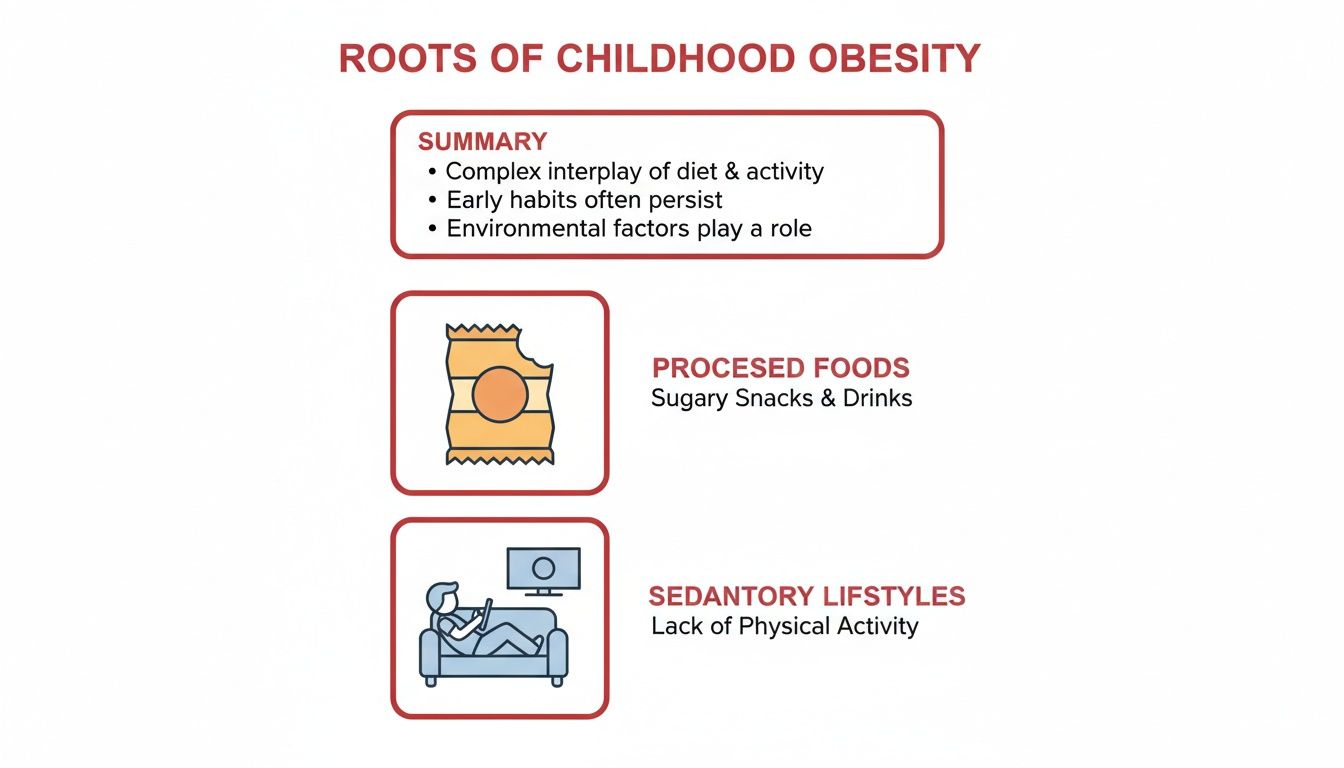
The one-two punch of readily available processed foods and more sedentary lifestyles creates a powerful force driving unhealthy weight gain.
Making Nutritious Choices the Easy Choices
Creating a healthy food environment starts with what you bring into the house. If junk food isn't there, they can't eat it. Your job is to stock your pantry and fridge with appealing, ready-to-eat healthy options.
For example, a simple fruit bowl on the counter is far more inviting than a bag of chips hidden in a cupboard. Pre-cut veggies with hummus in the fridge make for an easy grab-and-go snack. The goal is to make the healthy option the path of least resistance.
This shift doesn’t have to happen overnight. You can start with small, manageable changes that feel sustainable for your family, like mastering the art of the healthy food swap.
Making small changes can have a huge impact over time. Here are a few simple swaps to get you started, showing how easy it is to upgrade your family's meals without a fight.
Actionable Tip: Healthy Food Swaps for Everyday Meals
| Instead Of This | Try This Healthy Swap | Why It's Better |
|---|---|---|
| Sugary Cereal | Oatmeal with fresh berries & cinnamon | Higher in fiber, no added sugars, provides lasting energy. |
| Fruit Juice | A whole piece of fruit (like an orange or apple) | Provides fiber to slow sugar absorption and keep them full longer. |
| Potato Chips | Air-popped popcorn or veggie sticks with hummus | Lower in sodium and unhealthy fats, higher in nutrients. |
| Soda or Sports Drinks | Water infused with fruit (lemon, strawberries, cucumber) | Hydrates without the empty calories and massive sugar load. |
| Processed Granola Bars | A handful of almonds and a piece of cheese | Balanced protein and healthy fats for sustained energy, no sugar crash. |
These little adjustments really add up. For families looking to make a bigger change, understanding how to quit eating sugar for good can be a powerful next step toward better health for everyone.
Get Kids Excited in the Kitchen
One of the most powerful tools you have is your own kitchen. When kids are involved in preparing food, they develop a sense of ownership and curiosity. A child who helps wash lettuce for a salad is far more likely to eat it.
This turns meal prep from a chore into a fun, collaborative activity and a chance to teach essential life skills. For more ideas on blending education with fun, check out our guide on how to make learning fun.
Try these real-world examples to get them started:
- Let Them Be the Sous Chef: Younger kids can wash produce, stir ingredients, or tear up herbs. Older kids can help measure, chop veggies (with supervision), and read recipes aloud.
- Plan a "Theme Night": Let your child pick a theme, like "Taco Tuesday" or "Build-Your-Own Pizza Friday." They can help choose healthy toppings and assemble their own delicious creations.
- Grow Something: Even a small pot of basil on a windowsill can teach kids where food comes from and get them excited to taste what they’ve grown.
By building a positive food culture at home, you’re not just feeding your child’s body; you’re nurturing their relationship with food for years to come.
Making Active Play the Most Exciting Choice
In a world full of screens, getting kids to move can feel like an uphill battle. But the secret isn’t framing exercise as a chore. It’s about making active play the most fun, engaging, and exciting choice they have.
When movement is tied to joy, imagination, and discovery, it becomes something kids want to do. This is a mental shift from saying, "You need to go outside," to exclaiming, "Let's build the most epic fort ever!" The goal is to replace passive screen time with hands-on activities that build strong bodies and spark curious minds.
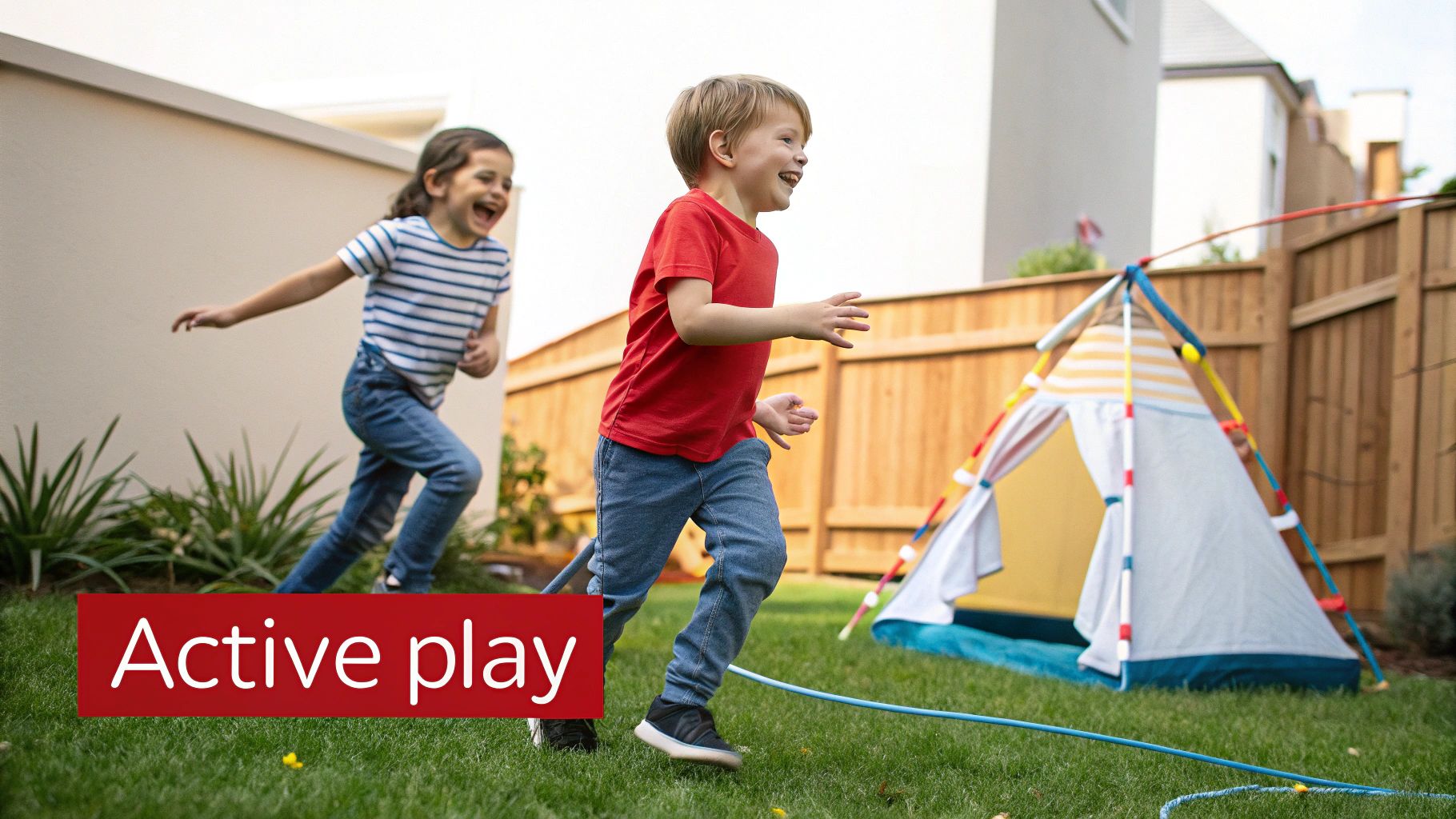
From Passive Screens to Active Adventures
First, understand the pull of screens—they offer instant gratification and endless content. To compete, our alternatives must be just as compelling by tapping into a child's natural drive to explore and create.
For younger kids, this could be turning the living room into a fantasy world. A simple play tent isn’t just a tent; it’s a secret castle, a spaceship, or a base camp for a jungle expedition. This imaginative play gets them moving without them even realizing it—crawling, defending the fort, and going on "missions" is part of the fun.
Key Takeaway: The secret to reducing childhood obesity isn't just limiting the "bad" (like screen time) but enthusiastically promoting the "good" (like creative play). By making active fun the most accessible and exciting option, you naturally foster healthier habits.
This strategy of replacing passive entertainment with active engagement is a powerful tool in your toolkit for how to reduce childhood obesity.
Turning Learning into a Full-Body Experience
As kids get older, their play evolves. They crave challenges and a real sense of accomplishment. This is where you can use hands-on projects to turn a lazy afternoon into a thrilling, problem-solving adventure.
A hands-on science kit, for example, does more than teach chemistry. It gets kids on their feet—mixing ingredients, building models, and running outside to launch a homemade volcano. Suddenly, learning isn't something that happens sitting down. It’s a dynamic process engaging mind and body.
This approach offers huge wins:
- It burns physical energy: Kids are naturally moving, lifting, and experimenting.
- It engages their minds: Problem-solving is baked right into the fun.
- It builds confidence: Finishing a project gives them a tangible sense of achievement.
By framing activities this way, you reinforce the idea that the most exciting things in life happen away from a screen.
Setting Boundaries and Providing Better Alternatives
Creating a home where play thrives also means setting clear, consistent boundaries around screen time. This isn’t about punishment; it’s about creating a balanced lifestyle where digital entertainment has its place but doesn't take over.
Establish "screen-free" zones or times, like the dinner table or the hour before bed. The trick is to have appealing alternatives ready to go so the transition is easy.
Here are a few compelling alternatives to have on hand:
- A "Boredom Buster" Jar: Fill a jar with slips of paper, each with a fun, active idea. Think "build the tallest pillow fort ever," "have a 10-minute dance party," or "do a scavenger hunt for five red things."
- Outdoor Adventure Kits: Keep a backpack ready with essentials for spontaneous fun, like a magnifying glass, a bug-catching jar, and sidewalk chalk. Exploring the many benefits of outdoor play shows just how critical this time is for healthy development.
- Creative Stations: Set up a corner with art supplies, building blocks, or a science kit. Having these materials visible and accessible makes them an easy choice when boredom strikes.
The Centers for Disease Control and Prevention (CDC) recommends that kids get 60 minutes or more of moderate-to-vigorous physical activity each day. Making that hour genuinely fun is the best way to hit that target. This structure helps manage expectations and makes the switch from screen time to active time much smoother for everyone.
Creating Healthy Routines as a Family Team
Lasting change happens when the whole family gets on board as a team. The real secret to reducing childhood obesity is building simple, consistent routines that make healthy living a shared goal. Forget the overnight overhaul; focus on creating a supportive family culture where healthy habits stick.
When "health" becomes a way to connect, a simple evening walk or cooking dinner together turns into bonding time, making the process joyful and sustainable.
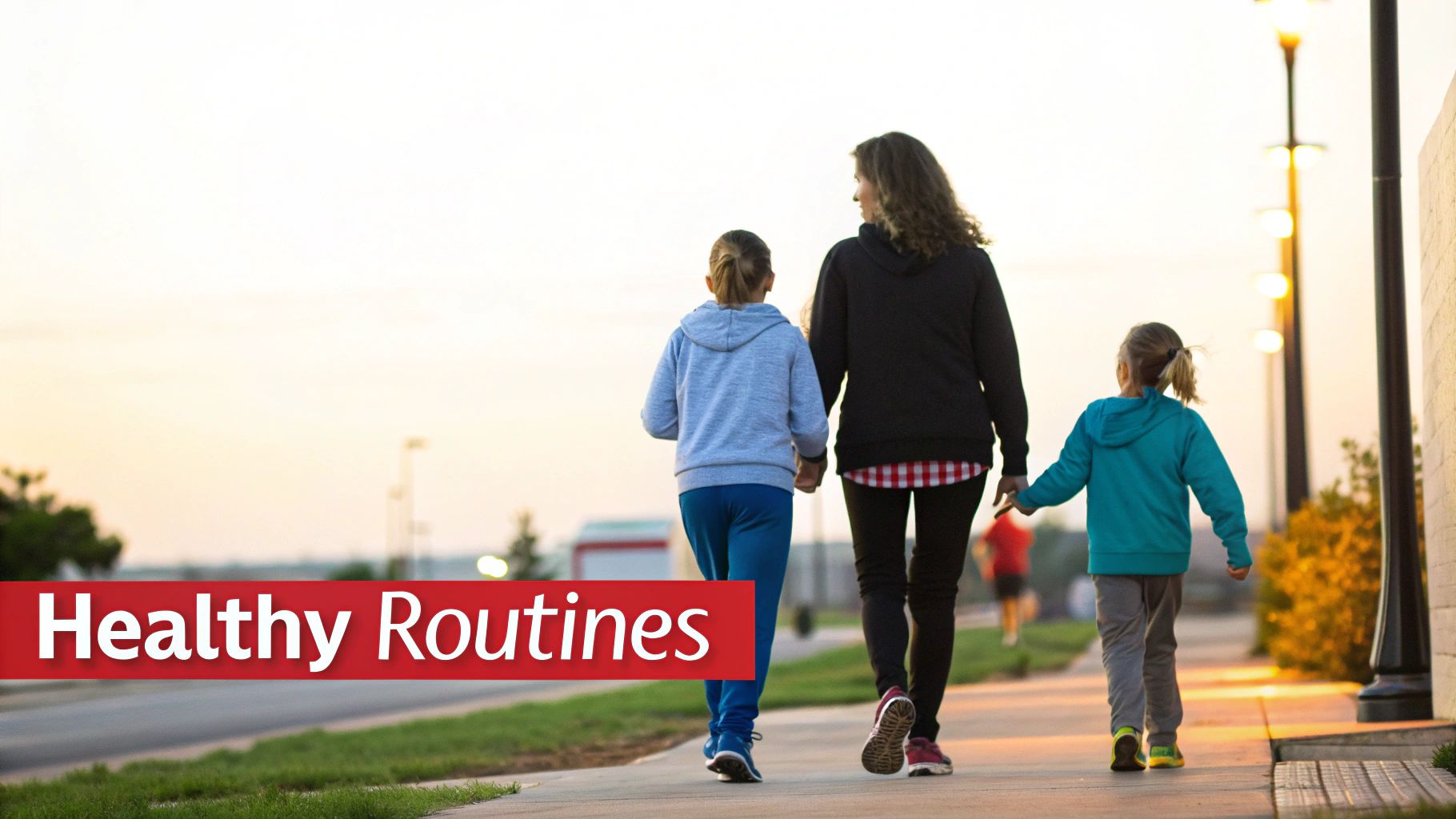
The Power of Predictable Schedules
Kids thrive on routines. When healthy activities are just "what we do" at a certain time, you eliminate constant negotiating. Two of the most impactful routines you can establish are shared family meals and a consistent sleep schedule.
Regular family meals, eaten together at a table without screens, are consistently linked to better nutrition and healthier weights. It's a built-in time to connect and model healthy eating in a relaxed way.
A solid sleep schedule is another secret weapon. Research shows that not getting enough sleep messes with the hormones that control appetite, making kids crave high-calorie junk. Getting enough rest is a foundational step that makes everything else easier.
Weaving Activity into Your Week
You don't need a gym membership to get your family moving. The goal is to make activity a natural part of your family’s rhythm. A quick walk after dinner, a Saturday bike ride, or a 15-minute dance party before school can make a massive difference.
To help you get started, here’s a sample schedule you can tweak to fit your own family’s vibe.
Actionable Tip: Sample Weekly Active Family Schedule
This is a framework to get you thinking about where you can slot in fun, active time together.
| Day of the Week | Morning Activity (15-20 min) | After-School/Evening Activity (45-60 min) | Weekend Idea |
|---|---|---|---|
| Monday | Walk to the bus stop or around the block | Family walk after dinner | Hike at a local park |
| Tuesday | Stretching or yoga together | Playground visit before homework | Swimming at a community pool |
| Wednesday | "Wake-up" dance party to 3 songs | Bike ride around the neighborhood | Backyard obstacle course |
| Thursday | Walk the dog together | Active game like tag or soccer in the yard | Family sports game (kickball, etc.) |
| Friday | Quick game of catch or Simon Says | Free play; let them choose the active fun | Visit a trampoline park |
The key here is consistency, not perfection. For more creative ways to make these moments count, check out our guide to fun family engagement activities that build both health and memories.
Celebrating Effort Over Outcomes
This is perhaps the most important part: shift the focus from weight to well-being. Celebrating effort and healthy choices with positive reinforcement is far more effective than focusing on numbers on a scale. This is how you build a child's self-esteem and internal motivation.
Key Takeaway: Praise the process, not just the result. Saying, "I'm so proud of you for trying that new vegetable!" is more powerful than commenting on weight loss. This helps your child develop a growth mindset and a positive relationship with their body.
Here are a few small wins worth celebrating:
- Trying a new food: Even if it's just one tiny bite.
- Choosing water over a sugary drink: Acknowledge their smart choice.
- Opting for active play: "I love that you decided to build a fort instead of watching TV!"
- Helping prepare a healthy meal: Celebrate their contribution to the family.
By focusing on these positive actions, you create an environment where your child feels encouraged, not judged. This isn't just about reducing childhood obesity; it's about raising confident, healthy kids for life.
Tracking Progress and Knowing When to Seek Help
How can you tell if your efforts are making a difference? The journey to a healthier family lifestyle is about small, consistent wins, not an overnight transformation. Progress shows up in more ways than one.
The first mental shift is to look beyond the number on the scale. A child's weight can fluctuate for many reasons, and focusing on it can create anxiety. Instead, focus on the "non-scale victories" that prove your new habits are taking hold.
Look Beyond the Scale for Real Wins
True progress is about feeling better, stronger, and happier. When you celebrate these changes, you reinforce the idea that a healthy lifestyle is joyful and empowering.
Keep an eye out for these powerful signs that you’re moving in the right direction:
- More energy for play: Is your child running around for longer without getting winded? That’s a huge win.
- Brighter moods: Consistent activity and good nutrition are incredible mood boosters.
- Clothes fitting better: Pants feeling a little looser are tangible signs of a healthier body composition.
- Increased stamina: Can they now make it up the big hill at the park? This is a clear sign of improved heart and lung health.
Key Takeaway: Frame conversations around how strong and energetic their bodies feel. Focus on what their bodies can do—climb higher, run faster, play longer—not what they look like. This builds a positive body image that isn't tied to a number.
Tracking progress this way helps your child see the immediate, feel-good benefits of your family's new habits. For more context on what to expect at different ages, our guide to childhood development milestones can be a helpful resource.
Knowing When to Consult a Professional
Steering your family toward better health is a big job, but you don't have to do it alone. It’s smart to know when to call in professional backup. A pediatrician or a registered dietitian can offer personalized advice and ensure your child is growing in a healthy, steady way.
Consider reaching out for professional advice if you notice any of the following.
Actionable Tip: Clear Signs It's Time for a Check-In
| Concern | What to Watch For | Who to See |
|---|---|---|
| Growth & Development | You have ongoing worries about their growth curve, or weight gain seems to be accelerating despite lifestyle changes. | Pediatrician |
| Emotional Eating Patterns | Food is regularly used to cope with boredom, stress, or sadness. You might notice them sneaking food or hiding wrappers. | Pediatrician or a Counselor |
| Persistent Health Issues | They complain of joint pain, get out of breath easily, or show signs of low self-esteem tied to their body. | Pediatrician |
| Complex Dietary Needs | You're struggling with extreme picky eating, potential food allergies, or just want a safe, structured nutrition plan. | Registered Dietitian |
Asking for help is a sign of strength, not failure. These experts can provide tailored strategies and medical oversight that work hand-in-hand with the positive changes you're making at home.
Frequently Asked Questions About Reducing Childhood Obesity
Navigating the path to a healthier family lifestyle isn't always straightforward. It’s completely normal to have questions about real-world situations. Here are some of the most common hurdles parents face, along with practical, actionable advice.
How do we handle birthday parties and junk food events?
Social events can feel like a minefield of sugary snacks. The goal is preparation, not deprivation. It's about finding a balance that lets your child enjoy the fun without feeling left out. A great strategy is to "fill up first." Before you go, give your child a healthy snack packed with protein and fiber, like an apple with peanut butter or Greek yogurt. This takes the edge off their hunger, so they're less likely to overdo it on cake and chips. It's also a great time to talk about making choices. Frame it positively: "Let's pick one special treat at the party to really enjoy." This empowers them and teaches moderation in a low-pressure way.
What if my child resists new foods or activities?
Resistance is a normal part of being a kid. The last thing you want is a power struggle. Patience and creativity are your best friends here. For food, try the "one-bite rule." Encourage a single, no-pressure bite of the new food. They don't have to finish it or even like it. Repeated, low-stress exposure is what makes new flavors feel familiar. For activity resistance, connect movement to what they already love. If they’re into superheroes, create an "Avenger Training Course" in the backyard. If they love art, go on a "nature walk" to find cool leaves for a craft project. The idea is to make activity a fun side effect of play, not a chore.
Pro Tip: Motivation often starts with curiosity and play. If you can make healthy choices feel like an exciting adventure instead of a rigid rule, you'll overcome resistance more easily. A simple play tent can become a secret base for an active mission, turning a reluctant afternoon into a fun-filled adventure.
How much exercise do kids actually need?
It can be confusing to figure out if your kids are getting enough physical activity. Thankfully, the Centers for Disease Control and Prevention (CDC) provides clear guidelines.
Here’s a simple breakdown by age:
- Preschoolers (Ages 3-5): Should be physically active throughout the day. Their bodies are built for constant motion, so encouraging free play is the best approach.
- Kids and Teens (Ages 6-17): Need 60 minutes or more of moderate-to-vigorous physical activity every day.
This doesn't mean scheduling one solid hour of exercise. You can break it up! A 20-minute bike ride, 20 minutes at the playground, and a 20-minute family walk after dinner all add up. The most important thing is making movement a consistent and enjoyable part of their daily routine.
At Playz, we believe the best way to build healthy habits is through joyful, engaging play. Our science kits and active toys are designed to get kids moving and thinking, turning any afternoon into an opportunity for discovery. Explore our collection and find the perfect way to make active play the most exciting choice in your home.