

Welcome to a world of color, texture, and boundless imagination. Finding the right art and craft for preschoolers is one of the most powerful ways to support their development, turning simple moments into impactful learning opportunities. Engaging in creative play not only builds essential fine motor skills and cognitive abilities but also provides a healthy, joyful alternative to passive screen time.
This guide is your ultimate resource, offering a curated roundup of simple, low-mess, and high-impact activities specifically designed to inspire your little artist. For each project, you will find practical instructions, a list of developmental benefits, and actionable tips to make learning an unforgettable adventure. We’ll cover everything from classic finger painting and play dough sculpting to nature-based crafts and sensory explorations.
Our goal is to provide a practical toolkit that empowers you to foster creativity with confidence. If you're looking for even more ways to spark young imaginations, you might want to explore these additional 10 Creative Art Projects for Preschoolers for further inspiration. Let's dive in and watch your child’s unique talents blossom through hands-on fun.
1. Finger Painting: A Sensory Introduction to Art
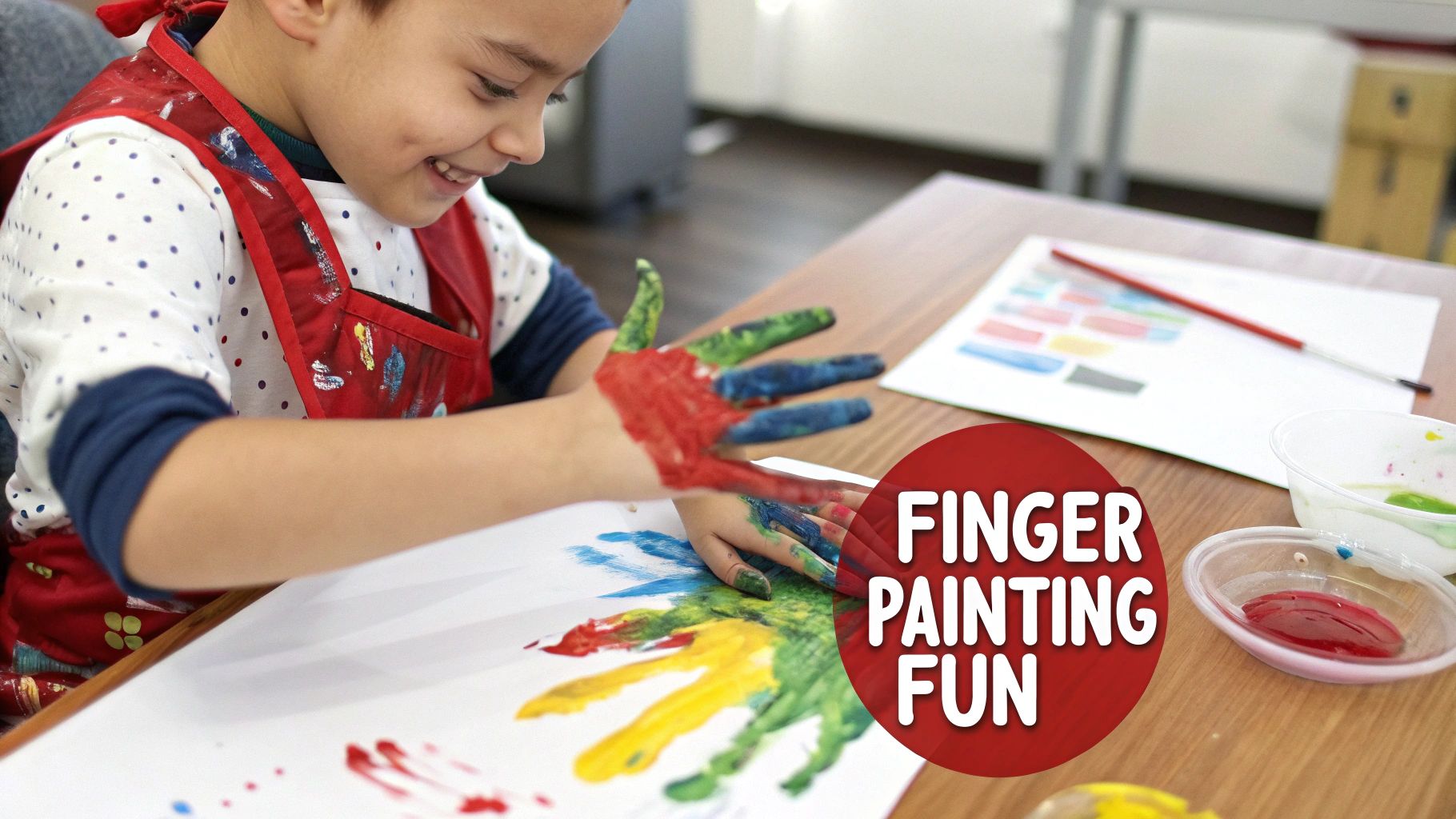
Finger painting is a classic art and craft for preschoolers that offers a fantastic sensory experience. It involves using fingers, hands, and even forearms to apply washable, non-toxic paint directly onto paper. This foundational activity is less about creating a perfect picture and more about the joy of tactile exploration, color mixing, and uninhibited self-expression. It bypasses the need for advanced fine motor skills required to hold a brush, making it accessible and empowering for the youngest artists.
Why It's a Top Choice for Early Development
This activity is a cornerstone of early childhood education, famously championed by sensory-based learning philosophies like Montessori and Reggio Emilia. It directly engages a child's sense of touch, helping them understand cause and effect as they see how their movements create different patterns and new colors on the page.
Key Insight: The primary goal of finger painting isn't the final product, but the developmental process. It builds nerve connections in the brain's pathways and supports language development as children describe the feel of the paint and the colors they are creating.
How to Get Started: A Practical Guide
- Materials: You will need washable, non-toxic finger paints, heavy paper (like cardstock or freezer paper), a smock or old shirt, and a protected work surface (a plastic tablecloth or craft mat works well).
- Setup: Squeeze small amounts of primary colors (red, yellow, blue) onto a paper plate or directly onto the paper.
- Action: Encourage your child to dip their fingers in the paint and spread it around. Let them experiment with making swirls, dots, and handprints.
- Cleanup: Keep a bowl of soapy water and a towel or wet wipes nearby for easy cleanup. The best finger paints wash off skin and surfaces with minimal effort.
2. Play Dough Sculpting: Building Hand Strength Through Play
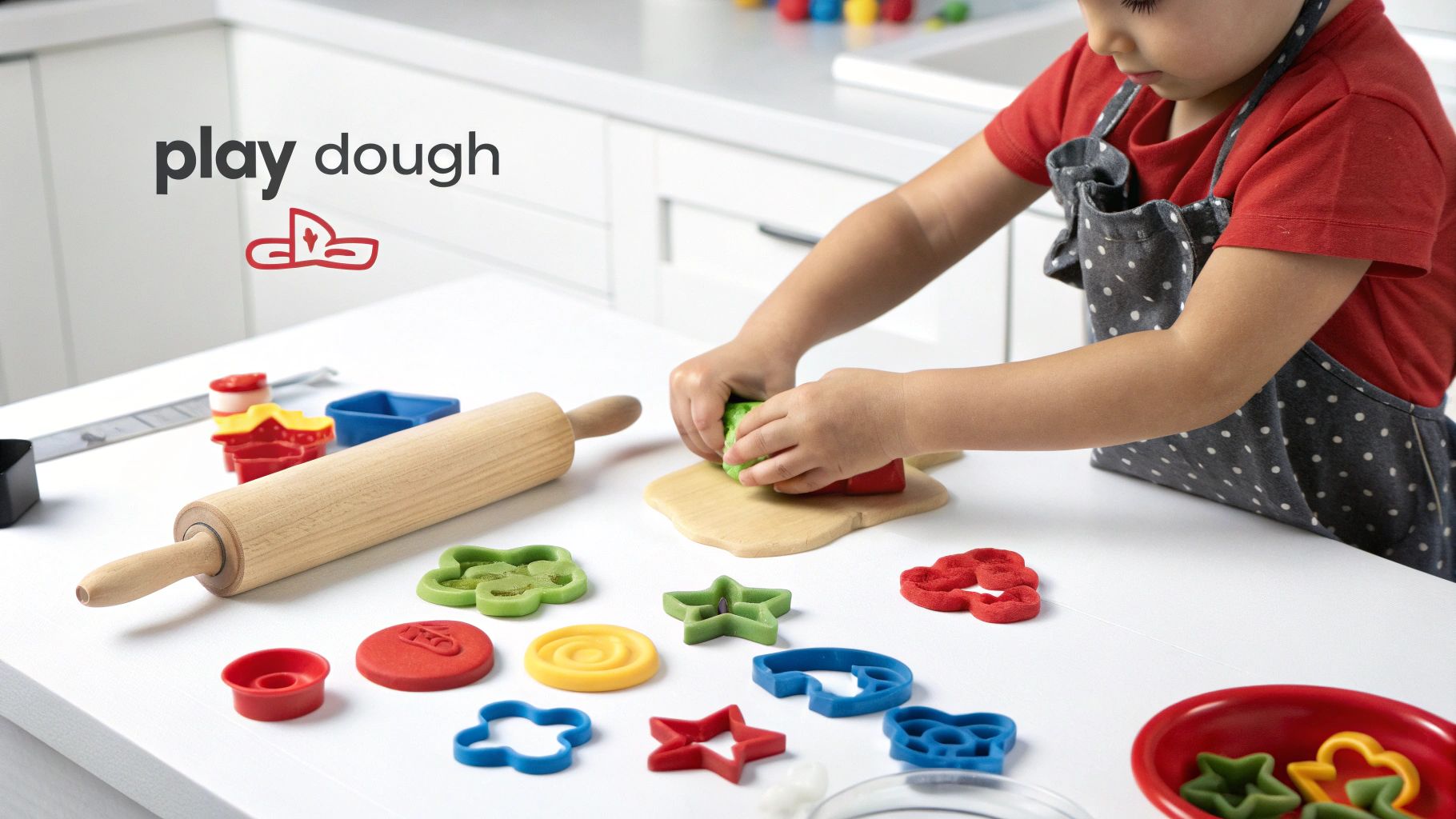
Play dough sculpting is a quintessential manipulative art and craft for preschoolers that involves shaping soft, moldable dough. Using their hands and simple tools, children can roll, squish, pinch, and cut the dough, transforming it into anything their imagination desires. This activity is a powerhouse for developing hand strength and fine motor control, while also providing a calming sensory outlet that can help relieve stress and improve focus. It's a foundational experience that builds crucial pre-writing skills.
Why It's a Top Choice for Pre-Writing Skills
Recognized by educators from Waldorf to occupational therapists, play dough is celebrated for its therapeutic and developmental benefits. The tactile nature of the dough engages the sense of touch, while the open-ended possibilities encourage creativity and problem-solving. As children manipulate the dough, they are strengthening the small muscles in their hands and fingers, which is essential for tasks like holding a pencil and using scissors.
Key Insight: Play dough sculpting acts as a bridge between imaginative play and physical development. The act of creating a "snake" or a "pizza" is not just fun; it's a targeted workout for the hands that directly supports future academic skills.
How to Get Started: A Practical Guide
- Materials: You'll need play dough (store-bought or homemade), a smooth work surface or mat, and simple tools like cookie cutters, plastic utensils, and a small rolling pin.
- Setup: Lay out a few colors of dough and provide an assortment of tools. Thematic prompts like a "bakery" or "animal zoo" can spark initial ideas.
- Action: Encourage your child to explore the dough's texture first. Show them how to roll a ball, make a long coil, and flatten it with their palm before introducing tools.
- Cleanup: Store the dough in airtight containers to prevent it from drying out. Making your own dough is a simple, cost-effective option explored in many creative crafts for preschoolers.
3. Torn Paper Collage: Creating Art Without Scissors
Collage making with torn paper is an engaging art and craft for preschoolers that focuses on texture, composition, and fine motor development without the need for scissors. Children tear pieces of colorful paper and glue them onto a surface to create unique images or abstract designs. This activity, famously used by author-illustrator Eric Carle, allows little ones to explore how smaller parts can come together to form a whole, introducing foundational concepts of artistic arrangement in a safe and accessible way.
Why It's a Top Choice for Fine Motor Skills
This activity is a staple in Reggio Emilia-inspired classrooms because it builds crucial pincer grasp skills and hand strength through the action of tearing paper. It encourages decision-making as children choose colors, shapes, and placement. Unlike more structured crafts, torn paper collage is entirely process-driven, celebrating individual creativity over a uniform outcome and boosting a child’s confidence in their artistic abilities.
Key Insight: The act of tearing paper provides valuable sensory feedback and builds bilateral coordination, as both hands must work together. This process helps children develop the hand dexterity and strength necessary for future skills like writing and using scissors.
How to Get Started: A Practical Guide
- Materials: You will need various types of paper (construction, tissue, newspaper, magazines), a sturdy base like cardstock or a paper plate, and a non-toxic glue stick.
- Setup: Lay out the different papers and demonstrate how to tear them into strips or smaller pieces. For younger children, you can pre-tear some strips to get them started.
- Action: Encourage your child to apply glue to their base paper and arrange the torn pieces to create a picture or pattern. They can create a themed collage, like a blue ocean or a green landscape.
- Cleanup: Glue sticks make for a relatively mess-free experience. Simply put the caps back on the glue and recycle the paper scraps. For more engaging paper activities for kids, you can explore different themes and textures.
4. Stamping and Printing: Exploring Patterns and Repetition
Stamping and printing are fantastic art and craft for preschoolers that introduce the core concepts of printmaking and pattern creation. This activity involves pressing objects coated in paint or ink, like sponges, leaves, or specially designed stamps, onto paper to transfer an image. It's a satisfying process that helps children understand repetition and symmetry in a hands-on, engaging way. Unlike free-form drawing, stamping provides a clear cause-and-effect outcome that builds confidence and artistic skills.
Why It's a Top Choice for Cognitive Skills
This activity is a staple in Montessori sensorial work and nature education programs because it bridges the gap between structured patterns and creative expression. Using different objects as stamps encourages children to see artistic potential everywhere, from a potato in the kitchen to a fallen leaf in the yard. It enhances fine motor skills as children grasp the stamp and apply pressure, and it develops cognitive skills like sequencing and planning as they create patterns.
Key Insight: The magic of stamping is its ability to produce consistent, recognizable shapes. This repetition offers a sense of predictability and control, empowering young children to create complex-looking designs with simple actions, which is a major confidence booster.
How to Get Started: A Practical Guide
- Materials: You'll need washable, non-toxic paint or ink pads, paper, and stamping tools. These can be commercial stamp sets, sponges cut into shapes, cookie cutters, or natural objects like leaves and twigs.
- Setup: Pour a thin layer of paint into a shallow tray or plate. If using an ink pad, simply open it. Protect your work surface.
- Action: Show your child how to press the stamp into the paint or ink and then firmly onto the paper. Encourage them to create rows, random patterns, or even a scene.
- Cleanup: Most child-safe inks and paints are water-soluble. Keep a damp cloth handy for wiping stamps and hands between colors to prevent smudging.
5. Sticker and Dot Marker Art: Low-Mess and High-Success Fun
Sticker and dot marker activities are a wonderfully accessible form of art and craft for preschoolers that delivers instant gratification with minimal mess. This method involves using self-adhesive stickers or chunky, easy-to-grip dot markers (often called bingo daubers) to fill in shapes, create patterns, or decorate pre-made templates. It's an excellent introductory activity for young toddlers as it requires less precise motor control than drawing with crayons or using a paintbrush, yet still provides a satisfying visual and tactile experience.
Why It's a Top Choice for Building Confidence
Popularized by occupational therapists and early childhood educators, these activities are powerhouses for developing foundational skills. Peeling a sticker off a sheet and placing it on paper hones the pincer grasp, a crucial precursor to holding a pencil. Dot markers help children understand cause and effect while strengthening hand-eye coordination as they aim for specific spots on the page.
Key Insight: The repetitive, focused nature of these tasks builds a child's concentration and attention span. Successfully placing a sticker or making a dot provides a small but significant sense of accomplishment, boosting confidence and encouraging independent play.
How to Get Started: A Practical Guide
- Materials: You will need assorted stickers (puffy, foil, or simple dots), washable dot markers, and paper or pre-printed activity sheets.
- Setup: Provide a clear workspace. For stickers, you can peel away the background part of the sheet to make the individual stickers easier for little fingers to grasp. For dot markers, simply uncap them.
- Action: Encourage your child to place stickers or make dots within designated areas on a worksheet or to create their own free-form design on a blank page.
- Variations: Create your own templates by drawing simple shapes or letters. Use stickers and dots to "decorate" the outlines, reinforcing shape and letter recognition. These activities are a great way to improve fine motor skills.
6. Nature Crafts: Connecting Art with the Outdoors
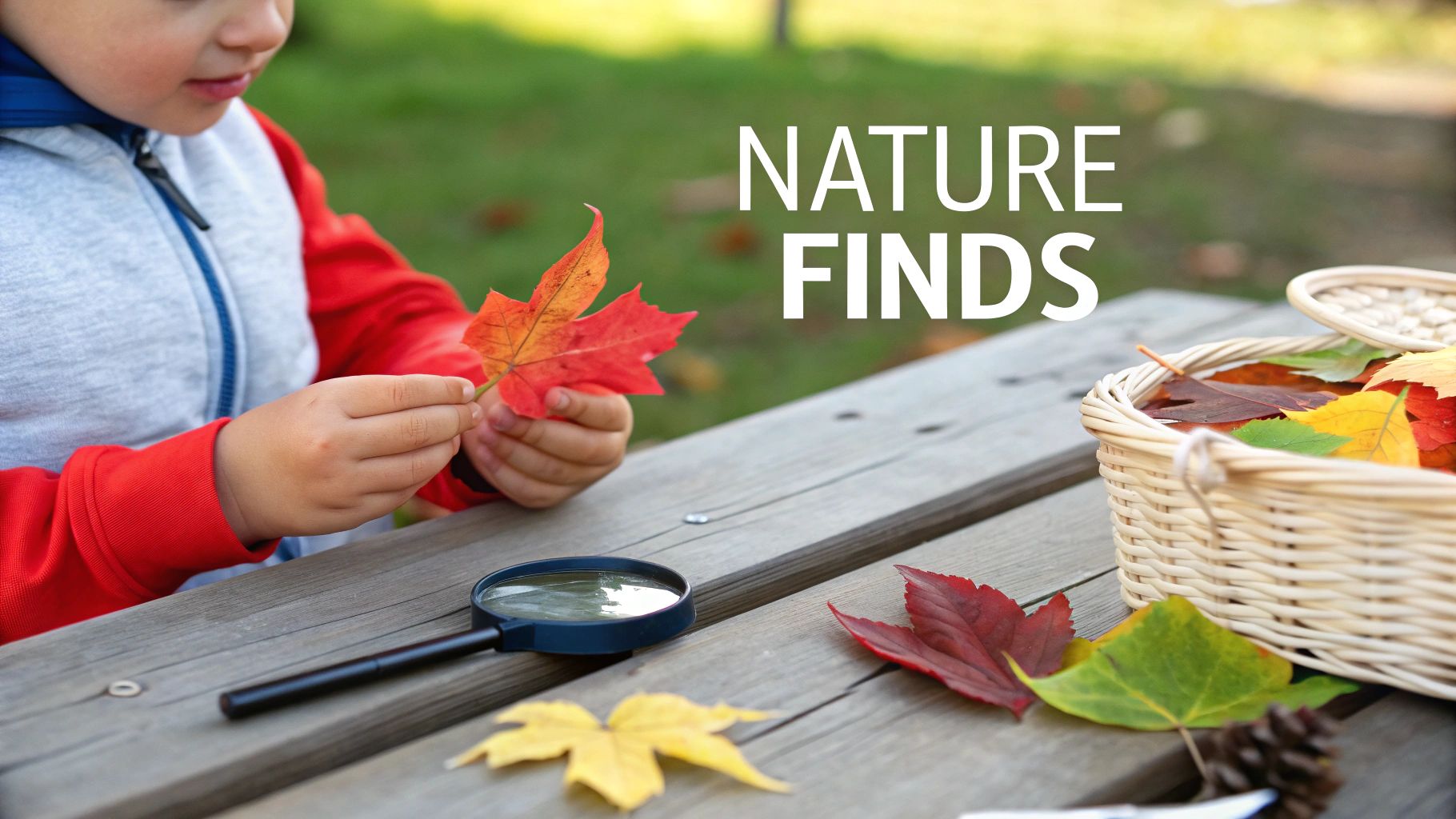
Nature crafts and leaf collecting connect preschoolers with the outdoors by using natural materials like leaves, twigs, stones, and flowers in art projects. This activity is less about a structured outcome and more about fostering a sense of wonder, environmental awareness, and creative thinking. It turns a simple walk in the park or backyard into a treasure hunt, encouraging children to observe their surroundings and appreciate the beauty of the natural world.
Why It's a Top Choice for Environmental Awareness
Popularized by educational philosophies like the Forest School movement and Waldorf education, nature-based art emphasizes learning through direct experience. Handling different textures like rough bark, smooth stones, and delicate petals provides a rich sensory experience that screen time cannot replicate. This hands-on art and craft for preschoolers helps them categorize, compare, and understand the diverse elements of their environment.
Key Insight: Using found objects from nature teaches resourcefulness and sustainability. Children learn that art supplies don't only come from a store, fostering creativity and a deeper connection to their local ecosystem.
How to Get Started: A Practical Guide
- Materials: A collection bag or bucket, paper, child-safe glue, and any natural items your child finds interesting (leaves, sticks, pebbles, pinecones).
- Setup: Go on a guided nature walk with your child, encouraging them to collect items that catch their eye. Talk about the colors, shapes, and textures they find.
- Action: Back at your craft station, let your child arrange their treasures on paper to create a collage, a nature scene, or even abstract patterns. They can glue them down to make a permanent piece.
- Cleanup: Shake off excess dirt outside. Natural materials are biodegradable, making cleanup simple and environmentally friendly. Store extra items in a dry box for future projects.
7. Watercolor Painting: Discovering Color Blending
Watercolor painting introduces preschoolers to the magical, fluid world of color blending and brush control. Unlike thicker paints, watercolors move and bleed together on the page, offering a unique medium for exploring how colors interact. This art and craft for preschoolers is less about precision and more about observing the beautiful, often unpredictable, effects that water and pigment create together. It's an excellent next step after finger painting, introducing the use of a tool (the brush) to develop fine motor skills.
Why It's a Top Choice for Fostering Patience
This classic activity is a staple in many early childhood philosophies, including the Waldorf education system, for its gentle and artistic nature. It teaches children about transparency, saturation, and the delicate balance of water and paint. Working with watercolors can be a very calming and focused activity, helping children develop patience and concentration as they watch colors spread and dry.
Key Insight: The beauty of watercolor is its unpredictability. This teaches children to embrace happy accidents and see them as part of the creative process, fostering resilience and a flexible mindset.
How to Get Started: A Practical Guide
- Materials: You'll need a kid-friendly, non-toxic watercolor set (pan or liquid), a couple of chunky, easy-grip brushes, thick watercolor paper (to prevent buckling), and a stable, spill-resistant bowl for water.
- Setup: Arrange the paint, paper, and a water bowl on a protected surface. Activate dry watercolor pans with a few drops of water.
- Action: Show your child how to dip the brush in water, then into a color, and then onto the paper. Encourage them to see what happens when wet colors touch each other on the page.
- Cleanup: Cleanup is simple. Just rinse the brushes and the paint palette with water and let them air dry.
Watercoloring is one of many creative learning activities for preschoolers that builds a strong foundation for artistic expression.
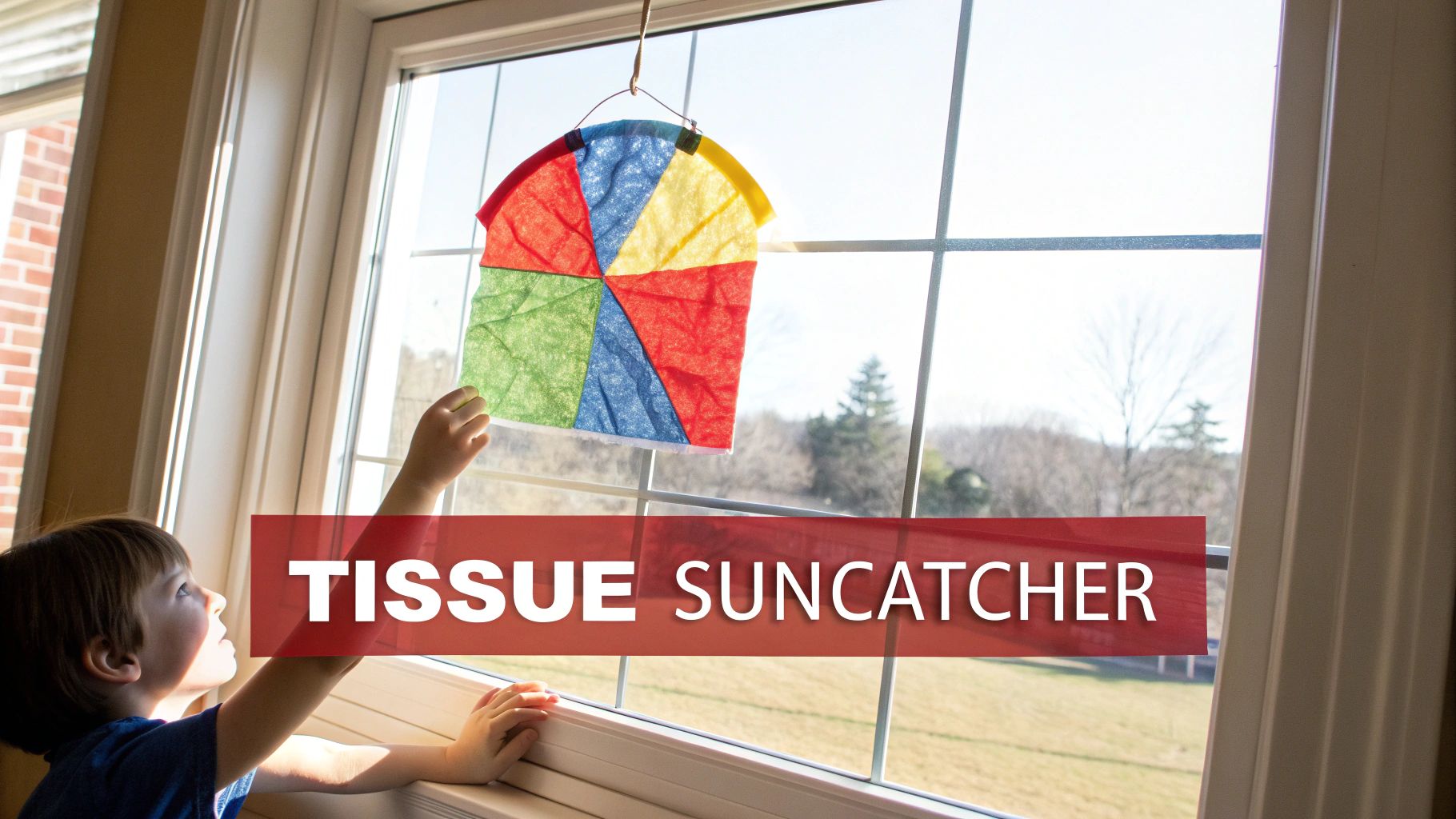
8. Tissue Paper Suncatchers: An Art Project That Shines
Tissue paper suncatchers are a delightful art and craft for preschoolers that explores light, color, and texture. This project involves arranging colorful, translucent tissue paper pieces onto a sticky or glued surface, often framed by a dark paper outline. When hung in a window, sunlight filters through the layers, creating a stunning stained-glass effect that brightens any room and fascinates young creators.
Why It's a Top Choice for Exploring Science and Art
This classic classroom activity is perfect for developing fine motor skills as children pinch, tear, and place small pieces of tissue paper. It also serves as a beautiful introduction to scientific concepts like transparency and color mixing. Watching how overlapping yellow and blue tissue creates a green hue when held to the light provides a magical and memorable learning moment.
Key Insight: Suncatcher creation is a multi-sensory activity that connects art with science. It encourages children to think about how light interacts with objects and how different arrangements of color can change their environment.
How to Get Started: A Practical Guide
- Materials: You will need assorted colors of tissue paper, clear contact paper or wax paper, liquid glue (if using wax paper), scissors, and black construction paper for a frame.
- Setup: Cut a frame from the black paper in a desired shape (like a leaf, heart, or circle). Cut two pieces of contact paper slightly larger than the frame's opening.
- Action: Peel the backing from one piece of contact paper and place the black frame on the sticky side. Let your child stick pieces of torn or cut tissue paper inside the frame.
- Cleanup: Once finished, place the second piece of contact paper, sticky side down, over the tissue paper to seal it. Trim the excess contact paper and hang it in a sunny window.
9. Foam Sticker Crafting: Building 3D Art with Ease
Foam sticker and foam sheet crafting is a wonderfully clean and tactile art and craft for preschoolers that introduces dimension and texture. This activity involves using lightweight, colorful foam shapes, stickers, and sheets that are easy for small hands to peel, stick, and manipulate. Because many foam pieces come with pre-applied adhesive, it minimizes the need for messy glue, making it an ideal choice for quick, engaging projects that build confidence without the cleanup.
Why It's a Top Choice for Tactile Learners
This craft is excellent for developing the pincer grasp, a crucial fine motor skill needed for writing. Peeling the backing off a sticker and placing it precisely requires hand-eye coordination and concentration. The various textures and the slightly spongy feel of foam provide a unique sensory input, while the vibrant, pre-cut shapes allow children to create recognizable scenes like animal collages or holiday decorations, boosting their creative satisfaction.
Key Insight: Foam crafting offers a "low-mess, high-success" experience. The immediate adhesion of stickers provides instant gratification, encouraging children who may be hesitant with messier materials and helping them focus on composition and storytelling.
How to Get Started: A Practical Guide
- Materials: You will need assorted foam stickers (animals, letters, shapes), blank foam sheets in various colors, and scissors for adult use (to pre-cut shapes if needed).
- Setup: Lay out a base foam sheet or piece of cardstock. Arrange the foam stickers in a tray or shallow bowl so your child can easily see and pick their desired shapes.
- Action: Show your child how to peel the paper backing from a sticker and press it onto the base sheet. Encourage them to build a picture, create patterns, or decorate a pre-cut foam shape like a star or heart.
- Cleanup: Cleanup is simple. Just gather any leftover paper backings and unused foam pieces for the next session.
10. Sensory Painting: Adding Texture for a Deeper Experience
Sensory painting with textured materials elevates a simple art project into a multi-sensory experience. This process involves adding items like sand, uncooked rice, small pasta shapes, or glitter to paint, transforming a smooth liquid into a rich, tactile medium. This art and craft for preschoolers is about engaging sight, touch, and even hearing as materials crunch and scrape across the paper. It encourages children to explore how different textures feel and change the properties of the paint.
Why It's a Top Choice for Sensory Integration
This activity is a fantastic way to support sensory integration, a crucial part of early childhood development. By combining the visual art of painting with the tactile exploration of textures, it helps children process and respond to sensory information more effectively. It also introduces scientific concepts like absorption and mixture in a hands-on, accessible way. Beyond just textured painting, there are many other engaging sensory activities for preschoolers that can foster creativity and emotional wellbeing.
Key Insight: The goal is to create "touchable" art. This process builds descriptive language skills as children learn words like "gritty," "bumpy," "smooth," and "sparkly" to articulate their sensory experience.
How to Get Started: A Practical Guide
- Materials: You will need washable, non-toxic paint, heavy paper or cardboard, a selection of textured materials (sand, salt, coffee grounds, small pasta, rice), and a smock. A tray can help contain the mess.
- Setup: Place your textured materials in separate small bowls. Put paint on a paper plate or directly onto the art surface.
- Action: Let your child sprinkle the materials onto wet paint or mix them directly into the paint before applying it. Encourage them to use their fingers or a brush to feel the different textures. For more ideas on combining art and touch, you can learn more about sensory activities for kids.
- Cleanup: Shake excess loose material off the artwork over a bin before it dries. Textured paint can take longer to dry completely, so set it aside in a safe place.
Comparison of 10 Preschool Art & Craft Activities
| Activity | 🔄 Implementation Complexity | ⚡ Resource Requirements | 📊 Expected Outcomes | 💡 Ideal Use Cases / Tips | ⭐ Key Advantages |
|---|---|---|---|---|---|
| Finger Painting | Low — minimal setup, easy supervision | Very low — washable paint, paper, aprons, wipes | Sensory exploration, color mixing, gross & fine motor basics | Circle time, sensory tables; protect clothing, start with primaries | ⭐⭐⭐ Highly engaging, inclusive, low-pressure |
| Play Dough Sculpting | Low — simple prep, storage management | Low — commercial or homemade dough, containers, simple tools | Hand strength, bilateral coordination, imaginative play | Fine-motor stations, calm-down activities; store airtight, rotate dough | ⭐⭐⭐ Durable, reusable, develops hand strength |
| Collage Making with Torn Paper | Low–Medium — prep of paper/colors, glue management | Low — assorted papers, glue sticks, base sheets | Spatial awareness, composition, fine motor via tearing | Art centers, theme collages; pre-tear for younger kids, use glue sticks | ⭐⭐ Teaches composition, uses recycled materials |
| Stamping & Printing Activities | Low — setup of inks/stamps; demonstration needed | Low — stamps, ink pads/paints, paper; washable inks preferred | Pattern recognition, sequencing, fine motor control | Pattern lessons, nature-printing sessions; use large stamps, washable pads | ⭐⭐ Immediate results, teaches cause-and-effect |
| Sticker & Dot Marker Activities | Very low — minimal supervision required | Very low — stickers or dot markers, printed templates | Confidence-building, hand-eye coordination, color ID | Toddler-friendly, quick activities; use cushioned grips, secure caps | ⭐⭐⭐ Guaranteed success, very low mess |
| Nature Crafts & Leaf Collecting | Medium — outdoor planning and supervision | Very low — found materials, glue, storage; weather dependent | Environmental awareness, observational skills, tactile variety | Nature walks, seasonal projects; press/preserve finds, label collections | ⭐⭐ Encourages outdoor exploration and sustainability |
| Watercolor Painting | Medium — requires water management and drying | Low–Medium — watercolor sets, brushes, watercolor paper | Brush control, color blending, controlled fine motor skills | Art classes, focused skill sessions; use chunky brushes, demo strokes | ⭐⭐⭐ Produces high-quality, exploratory results |
| Tissue Paper Suncatchers | Low — simple assembly, some adhesive handling | Low — tissue paper, contact/clear plastic, frames | Color transparency understanding, fine motor placement | Window displays, seasonal crafts; pre-cut pieces for young children | ⭐⭐ Visually striking, teaches light/color concepts |
| Foam Sticker & Foam Sheet Crafting | Very low — straightforward assembly | Very low — foam stickers/sheets, optional scissors (pre-cut advised) | 3D thinking, spatial awareness, tactile exploration | Quick craft stations, holiday projects; use pre-adhesive stickers for youngest | ⭐⭐ Safe, easy, satisfying 3D results |
| Sensory Painting with Textured Materials | Medium — careful prep and supervision required | Medium — paints plus textured items (sand, rice, pasta), adhesives | Tactile discrimination, multi-sensory integration, creative experimentation | Sensory-focused sessions, OT interventions; avoid small bits for under-3s, secure materials | ⭐⭐⭐ Highly engaging multi-sensory outcomes, but messy |
Start Your Creative Journey Today
You have just explored a vibrant collection of activities, from the tactile joy of finger painting to the delicate beauty of tissue paper suncatchers. We have walked through ten foundational art and craft for preschoolers ideas designed not just to fill an afternoon, but to build a solid foundation for lifelong learning. These projects are more than simple pastimes; they are powerful tools for development, chosen to enhance key skills in a fun and engaging way.
The core takeaway is the immense value of process over product. While a finished collage is a wonderful keepsake, the real magic happens during creation. It’s in the decision-making, problem-solving, and sensory exploration where your preschooler’s brain is firing on all cylinders, forging new neural pathways with every tear, snip, and brushstroke.
Key Takeaways and Actionable Next Steps
Let’s distill the most critical insights from our creative exploration into actionable steps you can take right now:
- Embrace the Mess, Embrace the Learning: Sensory activities like finger painting are inherently messy, but this tactile engagement is crucial for cognitive development. Your next step is to create a "mess-friendly" zone. Lay down a splat mat, use washable paints, and dress your child in old clothes. By preparing for the mess, you free your child to explore without inhibition.
- Integrate Nature Seamlessly: The world outside is a treasure trove of art supplies. Make your next park visit a material-gathering mission. Collect leaves of different shapes, interesting twigs, or smooth stones. This simple shift transforms a regular outing into a creative adventure, teaching observation skills and an appreciation for the natural environment.
- Focus on Foundational Skills: Every activity we discussed targets specific developmental milestones. To maximize the benefits, be intentional. When your child uses dot markers, comment on their hand-eye coordination. During play dough sculpting, talk about how they are strengthening their finger muscles. This conscious reinforcement helps you see the profound educational value hidden in simple play.
The Lasting Impact of Early Creativity
Fostering a creative environment does more than just produce cute crafts for the refrigerator. It builds confident, resilient, and resourceful individuals. A child who learns how to make torn paper stick to a page is practicing the same critical thinking they will later use to solve a math equation. The confidence gained from turning a blank page into a personal masterpiece is immeasurable and contributes to a positive "can-do" attitude.
By prioritizing art and craft for preschoolers, you are giving your child a universal language to express emotions and ideas long before their vocabulary can keep up. You are nurturing their innate curiosity and demonstrating that learning is an exciting, hands-on journey of discovery.
So, gather your supplies, pick an activity from our list, and dive in. Celebrate every unique creation, praise the effort, and most importantly, have fun together. The memories you make and the skills you build will last a lifetime, setting the stage for a future filled with imagination and innovation.
Ready to amplify your child's creative potential and make learning an unforgettable adventure? Explore the award-winning science and art kits from Playz. Our products are specifically designed to bridge the gap between fun and education, providing hands-on experiences that minimize screen time and maximize imagination. Discover your next family project at Playz and see why #KidsLearnBestThruPlayz.