

The best toys for active toddlers are those that get them moving, build crucial skills, and let their imaginations soar. From soft climbing structures to engaging play tents, these toys transform simple playtime into a powerful engine for growth, turning boundless energy into real-world confidence.
Why Active Play Is Essential for Your Toddler
In a world filled with screens, encouraging active play is more important than ever. It's not just about burning off that famous toddler energy; it’s the absolute foundation of healthy physical and cognitive development. It’s how toddlers learn to control their bodies, understand cause and effect, and build the confidence to explore their surroundings.
Think of your toddler as a tiny explorer on a grand adventure. Every day, they're discovering new abilities. The right toys are like their essential gear for this expedition, helping them master new challenges and navigate their exciting world.
Building Strong Bodies and Minds Through Movement
Active play directly wires your toddler's brain for critical physical skills. When they push a toy car, scramble over a foam block, or chase a ball, they're doing incredibly important developmental work.
This kind of physical fun strengthens their muscles, improves bone density, and fine-tunes their coordination. These simple actions lay the groundwork for major milestones, from walking and running with confidence to mastering the delicate grip needed to hold a crayon. It's no wonder so many of us are on the hunt for the best toys for active toddlers—we know this "play" is serious business.
Key Takeaway: Active play is the language of childhood. It's how toddlers communicate, learn, and make sense of their physical world, turning simple movements into profound developmental leaps.
The Growing Demand for Skill-Building Toys
Today's parents are more intentional than ever about playtime. We are witnessing a major shift toward toys that offer real, tangible benefits beyond simple entertainment.
In fact, 56% of U.S. parents now actively seek out toys that encourage outdoor play, and 60% prioritize toys that build specific skills. This boom in purposeful play is driving a market expected to reach an incredible USD 23.94 billion by 2035, with dynamic toys like sensory climbers easily winning out over passive entertainment.
This focus highlights the importance of choosing the right active toy. By providing your child with tools that encourage movement, you're not just offering them a good time; you're actively supporting their journey toward a healthy, capable, and confident future. For more ideas on getting your little one moving, check out our guide on the incredible benefits of outdoor play for your little one.
Matching Toys to Toddler Developmental Milestones
Toddlers grow and change at a dizzying pace, and the best toys are the ones that can keep up. Selecting a toy is about more than just what looks fun; it’s about matching the right tool to their current developmental stage to help them master new skills. A toy that’s a perfect match for a wobbly new walker won't hold the attention of an adventurous two-year-old for long.
When you understand the "why" behind a toy, playtime becomes far more powerful. Think of it like a personal trainer selecting the right equipment for a specific workout. Every toy should target a key developmental area, whether it’s balance, hand-eye coordination, or spatial awareness.
12-18 Months: The Age of Wobbly Wonders and First Steps
This is when toddlers are mastering the art of being upright. Their primary mission? Perfecting their balance and taking those first incredible, independent steps. The world is a huge, fascinating place, and they want to explore it on their own two feet.
The best toys for active toddlers in this stage support this newfound mobility.
- Practical Example: Push-pull toys, like a small bubble mower or a classic wooden duck on wheels, are fantastic. They act as a stable anchor, giving your little one the confidence to practice walking without constantly grabbing onto furniture.
18-24 Months: The Confident Climber and Fearless Builder
Once they've conquered walking, the next frontier is climbing. Suddenly, your sofa is Mount Everest and every chair is a new peak to scale. This is a critical time for building gross motor skills and proprioception—their internal GPS for knowing where their body is in space.
To support this adventurous phase, look for toys that offer safe climbing opportunities:
- Soft Foam Climbing Blocks: These let toddlers climb, stack, and tumble safely, building strength and spatial awareness without sharp corners.
- Small Indoor Slides: A gentle slide is great for teaching cause and effect as they coordinate movements to climb up and slide down.
- Ride-On Toys: Foot-to-floor ride-on toys are brilliant for building leg strength and mastering steering, a major leap in coordination.
This is a powerful time for learning. For more ideas, check out this guide on the best educational toys for 1-year-olds.
2-3 Years: The Little Problem Solver in Motion
Between two and three, a toddler's movements become much more refined and purposeful. They can now string actions together, like running to a ball and then kicking it. Their play becomes more imaginative and complex, calling for toys that challenge both their bodies and their brains.
This is the perfect age for toys that encourage problem-solving through movement:
- Play Tunnels and Tents: Crawling through a tunnel or figuring out how to set up a fort encourages them to plan their movements with a goal in mind.
- Ball Pits: A ball pit is a sensory goldmine, perfect for practicing throwing, catching, and sorting while getting amazing full-body sensory input.
- Balance Beams: A low-to-the-ground balance beam is a fun way to challenge their vestibular system (sense of balance) and improve focus.
To simplify your search, here’s a quick guide breaking down which toys are best suited for each stage.
Active Toy Guide by Toddler Age and Developmental Skill
| Age Range | Key Motor Skills | Recommended Active Toys | How It Helps |
|---|---|---|---|
| 12-18 Mos | Balance, early walking, pushing/pulling | Push cars, walkers, soft play mats | Provides stability for first steps and encourages forward movement. |
| 18-24 Mos | Climbing, jumping, basic coordination | Small slides, ride-on toys, foam blocks | Builds leg strength, spatial awareness, and confidence with heights. |
| 2-3 Yrs | Running, kicking, throwing, balancing | Ball pits, play tunnels, balance beams | Refines coordination, encourages goal-oriented play, and improves focus. |
While this table is a great starting point, remember every child develops at their own unique pace.
Actionable Insight: Matching a toy to a developmental stage isn't about rushing progress. It's about providing the right tools at the right time to build confidence and make learning feel like pure, joyful play.
This chart shows just how much parent trends are shaping the growth of the active play market.
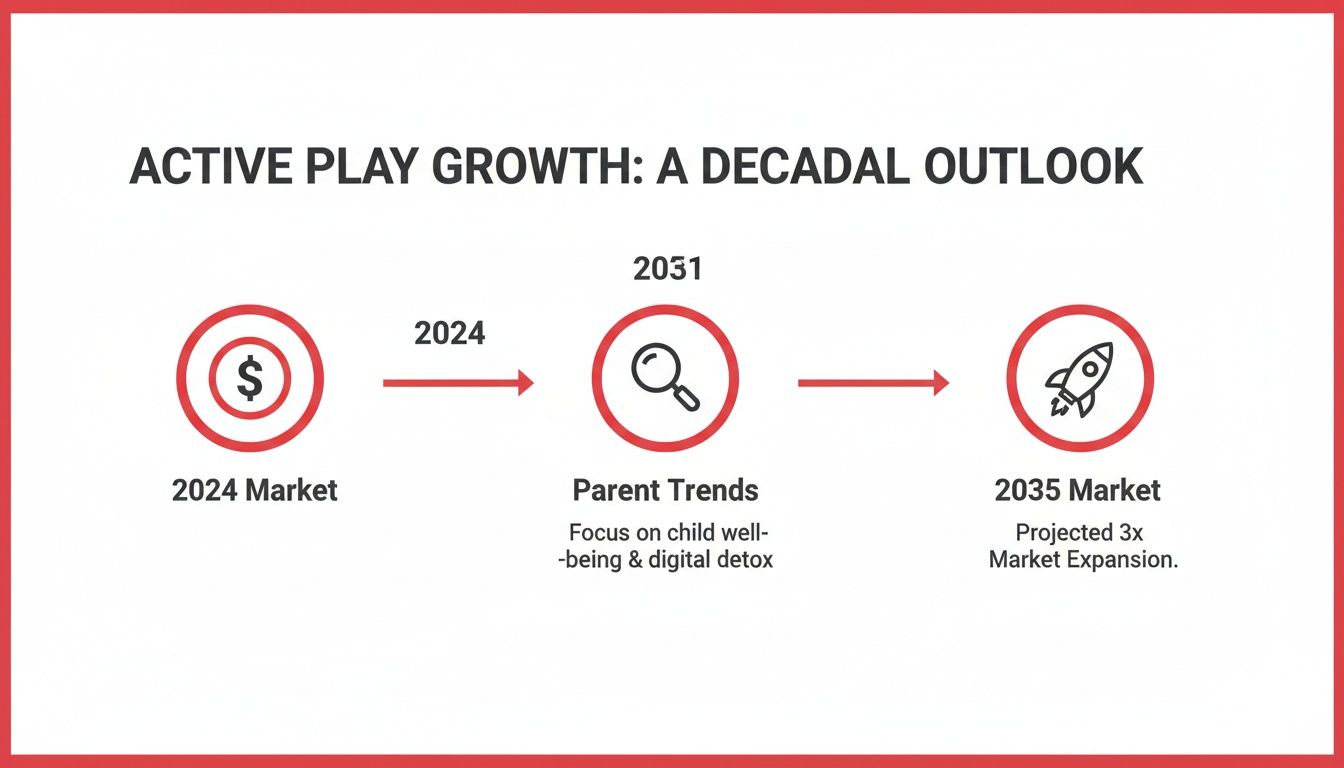
The data makes it clear: as parents focus more on skill-building, the market for purposeful, active toys will continue to grow. You can dive deeper into how these skills progress in our full guide to childhood development milestones. By choosing age-appropriate toys, you’re tapping directly into your toddler’s natural drive to learn, turning every playtime into a building block for their future.
How to Choose Toys for Indoor and Outdoor Fun
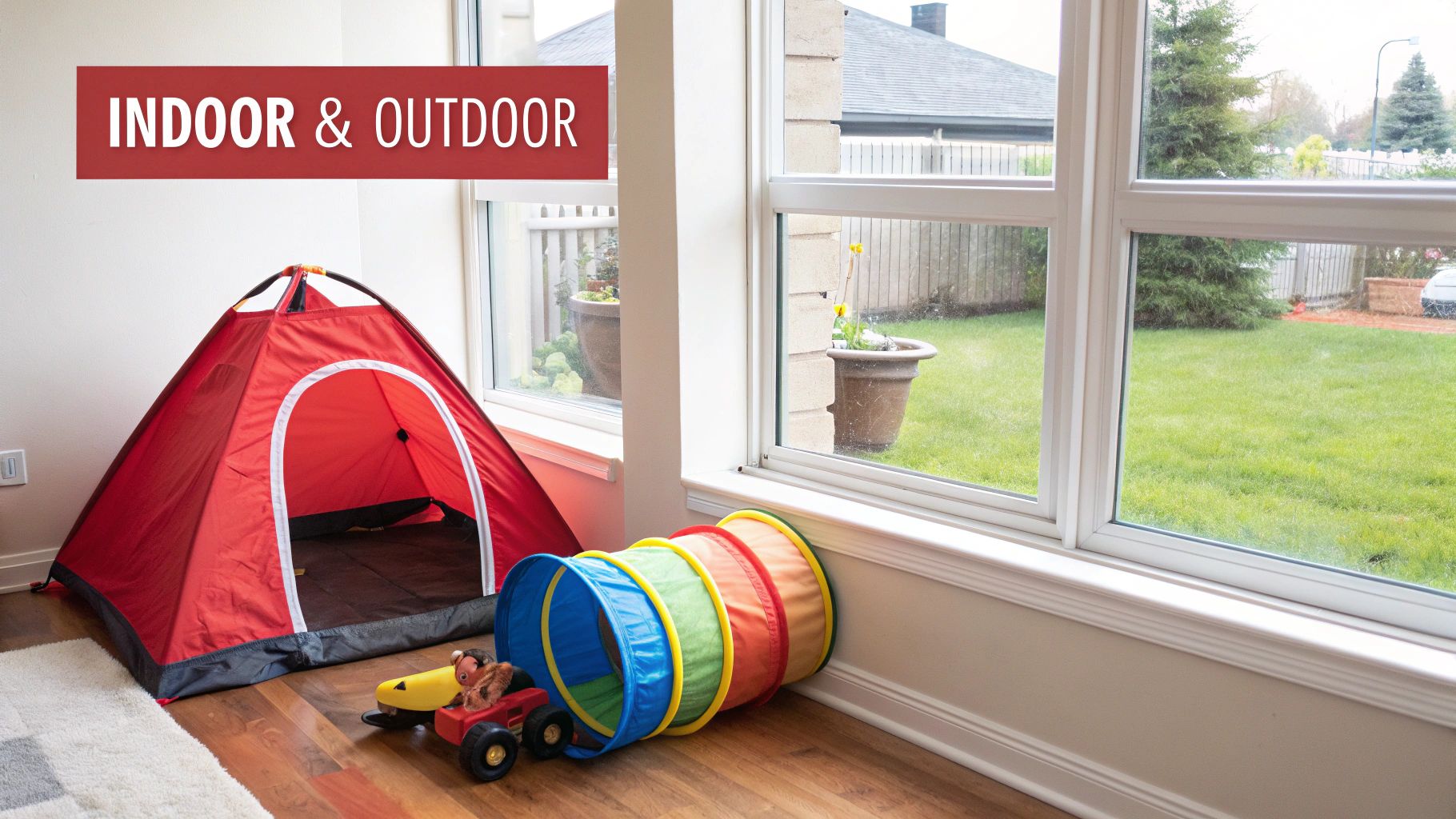
Many parents believe you need a huge backyard or a dedicated playroom to get toddlers moving. The great news? You can create incredible opportunities for active, giggle-filled play no matter the size of your space. It’s not about square footage; it's about making smart toy choices.
The real goal is to maximize their development and joy, whether you have a sprawling lawn or just a cozy apartment corner. It's all about being strategic.
Smart Solutions for Indoor Active Play
When space is limited, the best toys deliver big fun without leaving a big footprint. Think about toys you can set up in a flash, break down just as easily, and stash away, turning any room into a pop-up playground.
Imagine your living room transforming into a magical fort in minutes. That's where clever, space-saving designs truly shine, making active indoor play a reality for everyone.
Top Picks for Small Spaces:
- Foldable Play Tents: They create an instant private world for hide-and-seek or quiet time, then collapse flat to slide right under a bed.
- Collapsible Play Tunnels: Perfect for crawling—a huge builder of core strength and coordination—these tunnels pop open for adventure and shrink down for simple storage.
- Modular Foam Climbers: Soft, lightweight climbing blocks can be rearranged into endless forts and obstacle courses, then stacked neatly in a corner.
These options prove that even a small area can become a dynamic zone for physical growth. To see how these simple structures can inspire hours of creative movement, learn more about the world of indoor play tents.
Durable and Engaging Outdoor Toys
Outdoor play just hits different. You have fresh air, sunshine, and more room to run, jump, and be loud. For backyard adventures, durability is key. You need toys that can stand up to grass, dirt, and the occasional rain shower while inspiring your little one to explore.
Look for items that encourage your toddler to get their hands dirty and interact with the natural world. Outdoor toys should fuel their curiosity and get their whole body moving.
- Practical Example: A simple water table can provide hours of sensory fun and fine motor practice on a warm day, while ride-on toys help toddlers build serious leg strength as they patrol the patio.
Pro Tip: Your home doesn't need to be a gymnasium. By creating small, dedicated 'active zones' with the right toys, you can transform any space into a powerful environment for growth and fun.
When looking for options that work both inside and out, check out a variety of toys and games to find the perfect fit for your family.
Creating Your Active Play Zone Anywhere
One of the most effective strategies is to create a dedicated—but flexible—'active zone' in your home. This doesn't require renovations; it’s simply about designating a spot where movement is the main event.
Use a colorful play mat to define the area. When the mat is out, it's a clear signal that it’s time for tumbling, crawling, and energetic fun. When playtime is over, the mat and toys get put away, and the room returns to normal. This simple trick helps toddlers understand boundaries while ensuring they get the daily physical activity their growing bodies crave.
How Active Toys Build Smarter Brains
When you watch a toddler laser-focused on stacking blocks or navigating a play tunnel, you’re seeing more than just simple fun. You're witnessing a brain being built in real time. Active play is one of the most powerful ways to construct a smarter, more resilient mind.
Every jump, climb, and crawl forges critical neural connections. These pathways are the foundation for everything from problem-solving to emotional regulation. This physical movement floods the brain with sensory information, helping it make sense of the world and its place in it.
Unlocking Your Toddler's Internal GPS (Proprioception and Vestibular Senses)
Two of the most important senses you’ve probably never heard of are the proprioceptive and vestibular systems. In short, proprioception is your child's sense of body awareness, while the vestibular system governs their balance. Active play is how toddlers fine-tune these crucial internal systems.
- Real-World Example: Imagine your toddler carefully placing one foot in front of the other on a low balance beam. This isn't just a physical test; it’s a high-level brain workout. They are actively calibrating their brain's "internal GPS"—learning to coordinate movements, maintain balance, and understand where their body is in space without even looking.
Key Takeaway: When a toddler engages in active play, they are essentially wiring their brain for success. Each movement strengthens neural pathways, improving coordination, focus, and the ability to process sensory information.
This physical learning has a direct payoff for cognitive skills. Better balance and body awareness often lead to improved focus and a greater ability to sit still and concentrate when it counts.
Learning Problem-Solving in Motion
This is where active toys truly shine. They present small, achievable challenges that quietly build critical thinking skills. A toddler figuring out how to crawl through a play tunnel without bonking their head is a little scientist hard at work.
They are learning powerful lessons about:
- Cause and Effect: "If I push this block too far, the whole tower tumbles."
- Spatial Reasoning: "I need to duck my head to make it through this opening."
- Trial and Error: "Okay, that didn't work. Let's try it another way."
This hands-on problem-solving is invaluable. It builds resilience and teaches kids that trying and failing is just part of the process. With every attempt, they're strengthening their ability to think creatively and overcome obstacles—skills that will serve them well in school and in life.
It's no wonder that in the U.S., where the baby and toddler toys segment is a USD 4.5 billion industry, tools that boost these skills are in high demand. You can learn more about how the market is shaped by these developmental toy trends. By choosing the best toys for active toddlers, you aren’t just giving them something fun to do; you’re giving them the tools to build strong bodies and incredibly smart, capable minds. For a deeper look at this powerful connection, see our guide on the amazing benefits of play-based learning.
A Parent’s Checklist for Toy Safety and Care
Ensuring your toddler's playtime is both a blast and completely safe is job number one. The best active toys are built tough to handle serious fun, but a little foresight and regular upkeep go a long way in preventing accidents and making your investment last.
Think of toy safety in two parts: choosing the right products from the start and then keeping them in great shape. A quick inspection before you buy and a simple care routine can make all the difference, giving you peace of mind while your little one explores.
Non-Negotiable Safety Criteria for Active Toys
Before any toy enters your home, it needs to pass a basic safety check. High-energy play means toys will be jumped on, crawled through, and probably even chewed on, so their construction is critical.
Here are the key things to look for:
- Non-Toxic Materials: Always check that toys are made from materials labeled as non-toxic, BPA-free, and phthalate-free.
- Sturdy Construction: Feel the toy. Does it seem solid? Seams on fabric toys should be strong, and plastic or wooden parts should feel durable, not flimsy.
- No Choking Hazards: For children under three, every part of a toy should be larger than the diameter of a toilet paper roll.
- Smooth Edges and Surfaces: Run your hands over the toy to check for any sharp edges, splinters, or rough points that could cause scrapes.
The Essential Toy Maintenance Routine
Once you have the right toys, a simple maintenance routine will keep them safe and clean. Active toys take a beating, so a regular check-up can catch small issues before they become big problems.
Try to get into a rhythm—perhaps a quick check every week and a deeper clean once a month. This consistency helps ensure playtime is always a safe and healthy activity.
Actionable Insight: A safe toy is a well-maintained toy. A five-minute weekly inspection can prevent accidents by catching loose parts, cracks, or wear and tear before they become hazardous.
How to Clean Different Types of Active Toys
Keeping toys clean is essential for a healthy play space, but different materials require different care.
1. Fabric Toys (Play Tents and Tunnels):
For minor spills, spot-clean with a damp cloth and mild soap. For a deeper clean, check the manufacturer's label. Many fabric covers are machine-washable on a gentle cycle. Always air-dry them completely to prevent mildew.
2. Hard Plastic Toys (Climbers and Slides):
These are the easiest to clean. Wipe them down regularly with a solution of warm water and gentle soap. If they are used outside, a quick rinse with a hose will remove most dirt.
3. Wooden Toys (Balance Beams and Blocks):
Wood is naturally antibacterial but still needs care. Wipe wooden toys with a slightly damp cloth. Avoid soaking them in water, as this can cause the wood to swell and warp. Following these simple steps will ensure the best toys for active toddlers in your home stay safe, clean, and ready for the next adventure.
Creative Ways to Maximize Active Play at Home
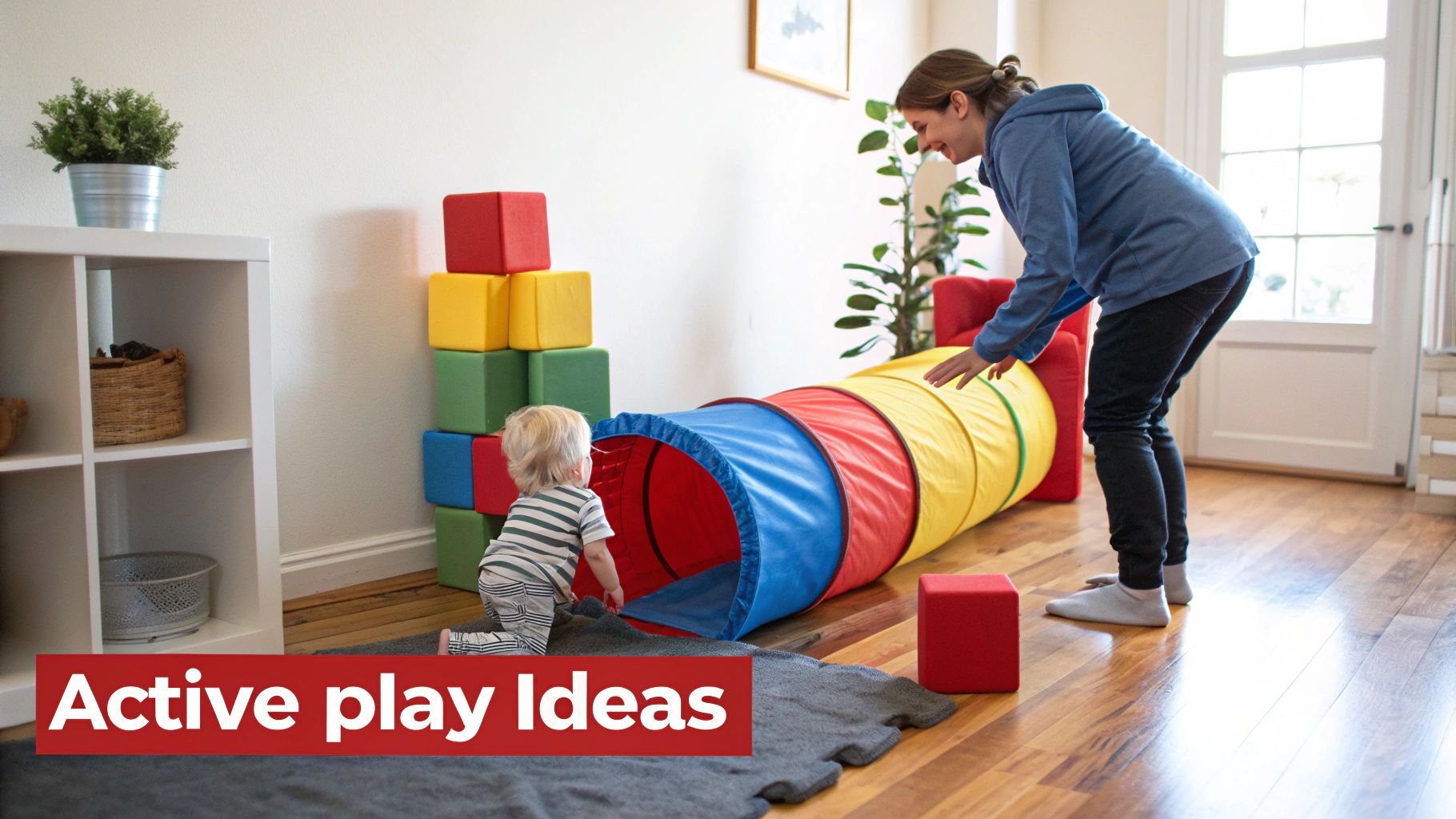
A fantastic toy is just the opening chapter of an amazing adventure. The real magic happens when you use it as a launchpad for imaginative games. By getting creative, you can stretch the value of your toddler’s favorite toys, spark new skills, and create joyful family memories.
The idea is to turn a simple object into a world of possibilities. It’s less about having more toys and more about doing more with the ones you already own. This mindset helps you create screen-free, interactive fun that turns your investment into a platform for limitless play. Recent data shows that games, puzzles, and explorative toys are leading a global rebound in toy sales, growing by 36%, 13%, and 12% respectively. You can learn more about how active toy trends are shaping the market and encouraging healthier habits.
Turn Your Living Room into an Obstacle Course
One of the easiest—and most exciting—ways to get your toddler moving is to build an obstacle course right in the living room. It sounds elaborate, but you can set it up in minutes with things you already have. This activity is a powerhouse for developing gross motor skills, problem-solving, and following directions.
A Simple Obstacle Course Idea:
- Crawl: Use a play tunnel as the starting line.
- Climb: Stack soft foam blocks or pillows to create a mountain to conquer.
- Balance: Make a "bridge" with a low balance beam or a line of painter's tape on the floor.
- Jump: Finish by jumping into a designated circle or onto a soft blanket.
The key is to keep it fun and low-pressure. Cheer them on, or do the course with them! This simple game turns passive toys into active stations for a full-body workout.
Reinvent Classic Toys with New Games
Even basic toys can get a second life with a little imagination. It’s all about looking at a toy and asking, "What else can this be?" This encourages cognitive flexibility and creativity.
Pro Tip: A toy's potential is only limited by imagination. A ball pit isn't just for jumping in; it's a sorting station, a treasure chest, and a colorful ocean for toy boats.
- Practical Example: Take a ball pit and turn it into a sorting game. Call out a color and have your toddler find all the matching balls and toss them into a basket. You’ve just added color recognition and coordination to a purely physical toy. Building blocks can be used for a color-coded scavenger hunt, too. These simple twists make old toys feel brand new while supporting both mind and body. For more ideas, check out these engaging gross motor activities for preschoolers.
FAQs: Answering Your Top Questions About Active Toddler Toys
Navigating the world of toddler toys can feel overwhelming. From battling screens to managing clutter, it's easy to have questions. Let's tackle some of the most common concerns parents have about choosing the best toys for active toddlers.
How do I get my toddler interested in active toys over screens?
The secret ingredient is you. You can’t just hand a toddler a new toy and expect them to ditch the tablet. The key to transitioning away from screens is making active play the more exciting, connected choice. Get on the floor and play with them. A simple play tent isn't just a tent—it's a secret fort on a jungle adventure that you create together. When you bring genuine excitement to moving and exploring, your energy is contagious.
Are expensive active toys always better than cheaper alternatives?
A hefty price tag doesn't guarantee a better play experience. The real value of a toy lies in its ability to safely engage your child and spark imagination. While premium toys may use more durable, non-toxic materials, some of the best active fun comes from the simplest things. Never underestimate the power of a simple ball, bubbles, or a giant cardboard box. Focus on open-ended toys that can be used in many ways—they grow with your child and deliver the best long-term value.
How many active toys does a toddler really need?
When it comes to toys, less is almost always more. A room overflowing with choices can overwhelm a toddler, causing them to flit from one thing to the next without engaging in deep, meaningful play. A small, thoughtfully chosen collection of versatile toys is far more powerful. A toy rotation system is a game-changer:
- Select a few key items (e.g., a climber, blocks, and a play tunnel).
- Store the rest completely out of sight.
- Swap them out every few weeks to make old toys feel brand new again. This encourages deeper engagement and creativity.
Ready to spark your toddler’s imagination and encourage healthy, active play? Playz offers a world of fun with our engaging play tents, tunnels, and creative kits designed to get kids moving and learning. Explore our collection and find the perfect tools for your little one's next big adventure at https://www.playzusa.com.