

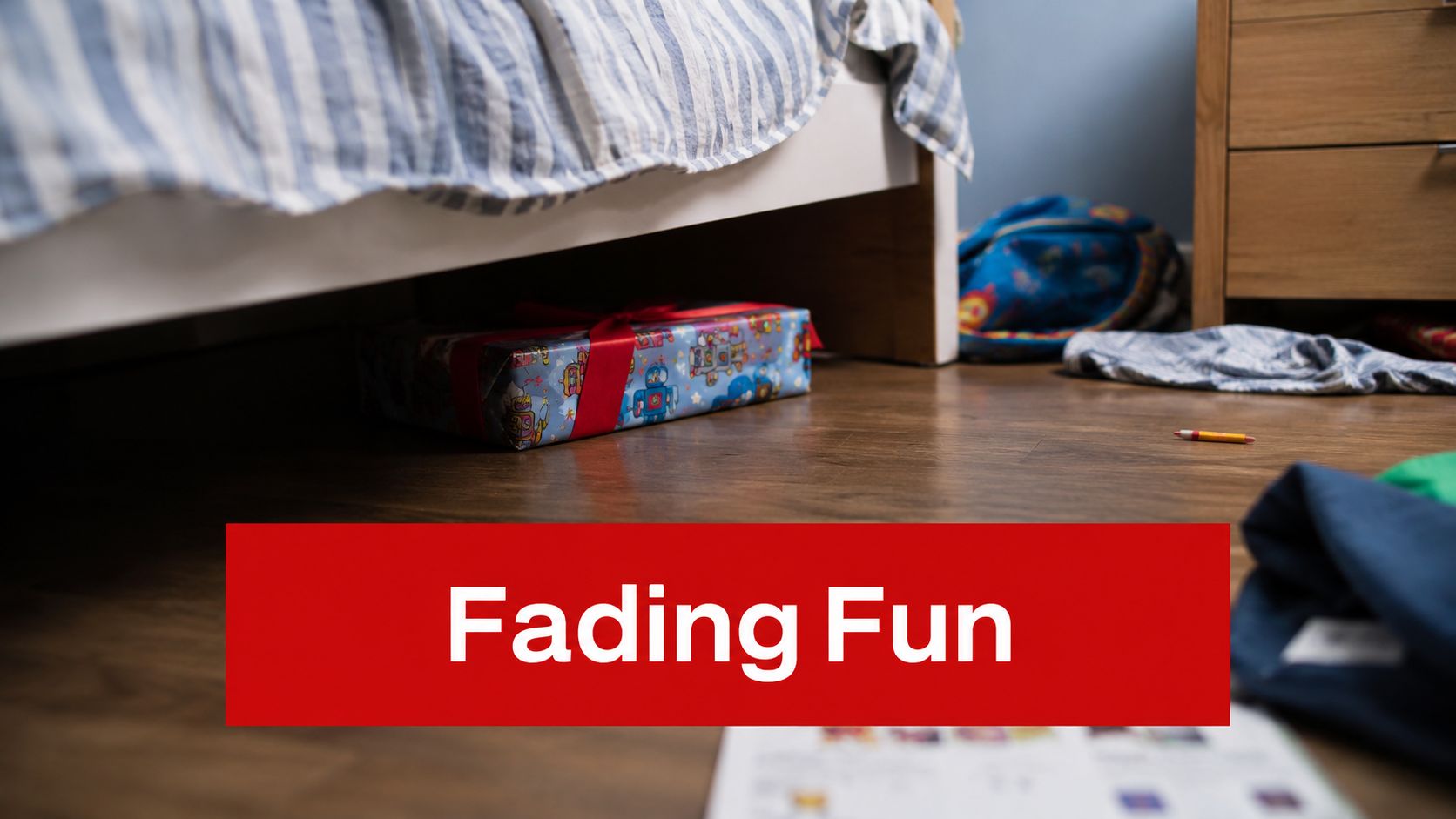
You've probably been there. You pick out a bright, exciting gift for a 7-year-old, hand it over, and within a week it's buried under a bed, half-used, or forgotten in a corner. The problem usually isn't the child. It's the gift choice.
At this age, the best presents aren't the loudest or the most expensive. They're the ones that match how the child already likes to play, fit the reality of the home, and hold up after the wrapping paper is gone. For solid hands-on learning ideas, this hands-on learning guide is a useful companion, but the bigger point is simpler, gifts for 7 year olds work when they feel instantly usable and not like homework in a box.
Why Most Gifts for 7 Year Olds End Up in a Drawer
The classic gift fail is easy to spot. A relative buys something that looks age-appropriate on the package, the child opens it with real excitement, then plays with it for ten minutes before drifting back to the same pile of blocks, crayons, or action figures they already loved yesterday. That happens because age labels alone are too crude for 7-year-olds.
A seven-year-old is not a preschooler with better spelling. They're usually ready for more complex, multi-step play, and the strongest gift guides keep circling back to STEM toys, creative kits, and hands-on play for that reason. Hands-on gifts work because they give kids something to do with their hands, their attention, and their curiosity at the same time, which is why this hands-on learning guide fits the age so well. Major roundups for this age also keep featuring construction sets, craft projects, cameras, and other toys that don't need constant adult rescue.
The frustration for parents, grandparents, and teachers is that generic lists rarely answer the practical question. They tell you what's “fun,” but not what gets used in a real house with noise limits, small shelves, and a child who already has plenty of plastic clutter. That is why the better way to shop is to start with the child's dominant play pattern, then filter for safety, budget, and footprint.
Practical rule: if a gift can't survive a normal Tuesday afternoon, it's probably not a good gift.
Small-space reality matters here too. A gift that needs a clear floor, constant supervision, or a permanent home on a table usually loses to whatever is already in reach. The better bets are toys and kits that pack down fast, store in one bin, and still feel worth pulling out again.
One more thing. A seven-year-old who likes to build will ignore a flashy novelty toy, while a child who likes drawing may treat a big construction set like background noise. That is why generic age-based shopping fails so often, and why the rest of this article focuses on fit, safety, budget, and the amount of mess a gift creates.
What 7 Year Olds Can Do Right Now
By age 7, kids are usually past the wobbly, all-or-nothing play style of the early preschool years. Fine motor control is noticeably stronger than at age 6, which is exactly why gifts involving writing, building, drawing, and crafting tend to land well. The child can still enjoy simple play, but they're also ready to finish a project, follow a sequence, and feel proud of something that looks more “made” than “messed with.”
That matters because the best gifts for this age reward attention, not just noise. A child who can stick with a puzzle, a model, a recipe, or a strategy game is ready for gifts that unfold in stages. 1st-grade activity ideas often overlap with the same kinds of toys and games that work for 7-year-olds, because both sit in that early elementary zone where guided independence starts to click.
What gets easier at 7
- Building with purpose. Kids can now handle kits with steps, parts, and a clear end result, not just open-ended stacking.
- Following rules. They're more willing to play games with structure, turns, and basic strategy.
- Making something visible. They like seeing a finished craft, drawing, or model they can show off.
- Sticking with one task longer. Not forever, but long enough for a kit or game to feel satisfying instead of frustrating.
A seven-year-old can usually handle more than a flashy novelty toy gives them. A toy that flashes, chirps, and stops there might get a quick reaction, but it does not give enough challenge to stay interesting. A gift that lets them solve, create, or build usually keeps attention longer because it gives them a job to finish.
The practical test is simple. Choose gifts that match what the child already does well, then push just a little past that level. A kid who likes building needs parts and steps. A kid who likes drawing needs tools that produce a real result. A kid who likes games needs enough rules to feel a bit grown-up without turning play into work.
The Five Gift Categories Worth Your Money
The strongest gifts for this age usually fall into five lanes, and each lane fits a different kind of kid. Pick the lane that matches the child's habits, and you avoid the usual drawer-fillers. A modern STEM learning toys guide helps here because seven-year-olds do not need one perfect category, they need the right match.
A retail roundup for 7-year-olds pointed to STEM education, interactive play, and collectible trends as the main themes, and it singled out a 125-piece kids STEM building toy priced at $27.24 with 2,174 latest-month sales and a 10-in-1 STEM toy priced at $26.09 with 1,026 latest-month sales. That is useful because it shows where parents are spending, on moderately priced gifts that do more than flash and beep. A wholesale analysis backed up the same pattern with novelty and sensory items, including a 25,000-unit pull-back car and a magic water elf kit with a 26.0% reorder rate, plus a finger press bubble music toy with 4,764 sales and a 9.8% reorder rate.
Gift categories at a glance
| Category | Best for kids who like | Typical budget | Watch for |
|---|---|---|---|
| STEM and building kits | Solving, constructing, testing | Mid-range to higher | Tiny parts, complicated setup |
| Creative and craft kits | Drawing, decorating, making | Low to mid-range | Mess, missing supplies |
| Active and outdoor toys | Running, jumping, rough play | Low to mid-range | Noise, space, durability |
| Role-play and pretend sets | Storytelling, acting, collecting | Mid-range | Too much clutter, weak replay value |
| Sensory or collectible items | Surprises, tactile play, novelty | Low-cost to mid-range | Short lifespan if the gimmick runs out |
STEM and building kits fit kids who want to make something that does something. Creative kits suit children who like visible results and personal expression. Active toys work for kids who seem to have endless physical energy. Pretend play sets are for the child who invents little worlds and keeps them going. Sensory and collectible items are the easy grab, but they only earn their place if the excitement lasts past the first reveal.
The categories are not equal. Building and creative kits usually give the best long-term value, while sensory and collectible gifts are more likely to deliver short, happy bursts. Choose by habit first, then by price, footprint, and cleanup. That keeps the gift useful in a real home, not just impressive in a store aisle.
A Four-Step Filter for Picking the Right Gift
Most bad gift choices happen because adults skip straight to the “cute” part. Don't. Start with the child's actual play pattern, then make the gift pass a few basic tests before money leaves your wallet. That's especially important because the data keeps pointing to the same two failure modes, flashy tech that needs an app for basic use, and expensive gifts that sound impressive but don't match the child.
Step 1, Identify the play pattern
Look at what the child already does without being pushed. Does she build? Does he draw? Does the child move constantly? Does the child line up figures and narrate elaborate stories? That answer should steer the category before anything else.
Step 2, Run the 30-second usability check
A gift should make sense fast. If the child can't understand the basic function within the first half-minute, the toy is asking too much. That's especially important for screen-free audio players, tactile STEM kits, and low-speed active toys, which trial data on actual engagement found to be more successful than flashy screen-based devices. The same data also noted that Yoto Player units were used for about 42 minutes daily versus under 18 minutes for most tablet-based story apps, which is exactly the kind of gap that happens when a toy is easy to understand and doesn't rely on constant friction.
Step 3, Check safety and durability
Look for age-appropriate labeling, non-toxic materials, small-parts screening, and compliance with ASTM F963-17. That's the baseline, not a bonus. A gift for a 7-year-old should be sturdy enough to survive the first week, because that's when the use, and abuse, starts.
Step 4, Match the budget to the use
A useful buying pattern keeps showing up. Under about $25, gifts tend to work best when they're immediately playable and narrowly focused. In the $25 to $50 range, quality improves for board games, building sets, and hobby tools. The $50 to $100 band is where longer-horizon gifts like better building sets, coding kits, and sports gear become more realistic. Budget guidance for gifts and toy safety points to the same tradeoff, interest fit matters more than sticker price.
Rule of thumb: if the gift is expensive but vague, skip it. If it's focused, safe, and easy to use, it has a much better shot at becoming a favorite.
A good example is a child who loves building. Start with a construction kit, not a general “educational toy.” Make sure it's age-appropriate, doesn't need a bunch of setup to work, and fits the budget tier you're shopping in. That's how you turn a likely drawer-item into something the child keeps returning to.
The Small-Space and Shared-Room Angle Most Guides Skip
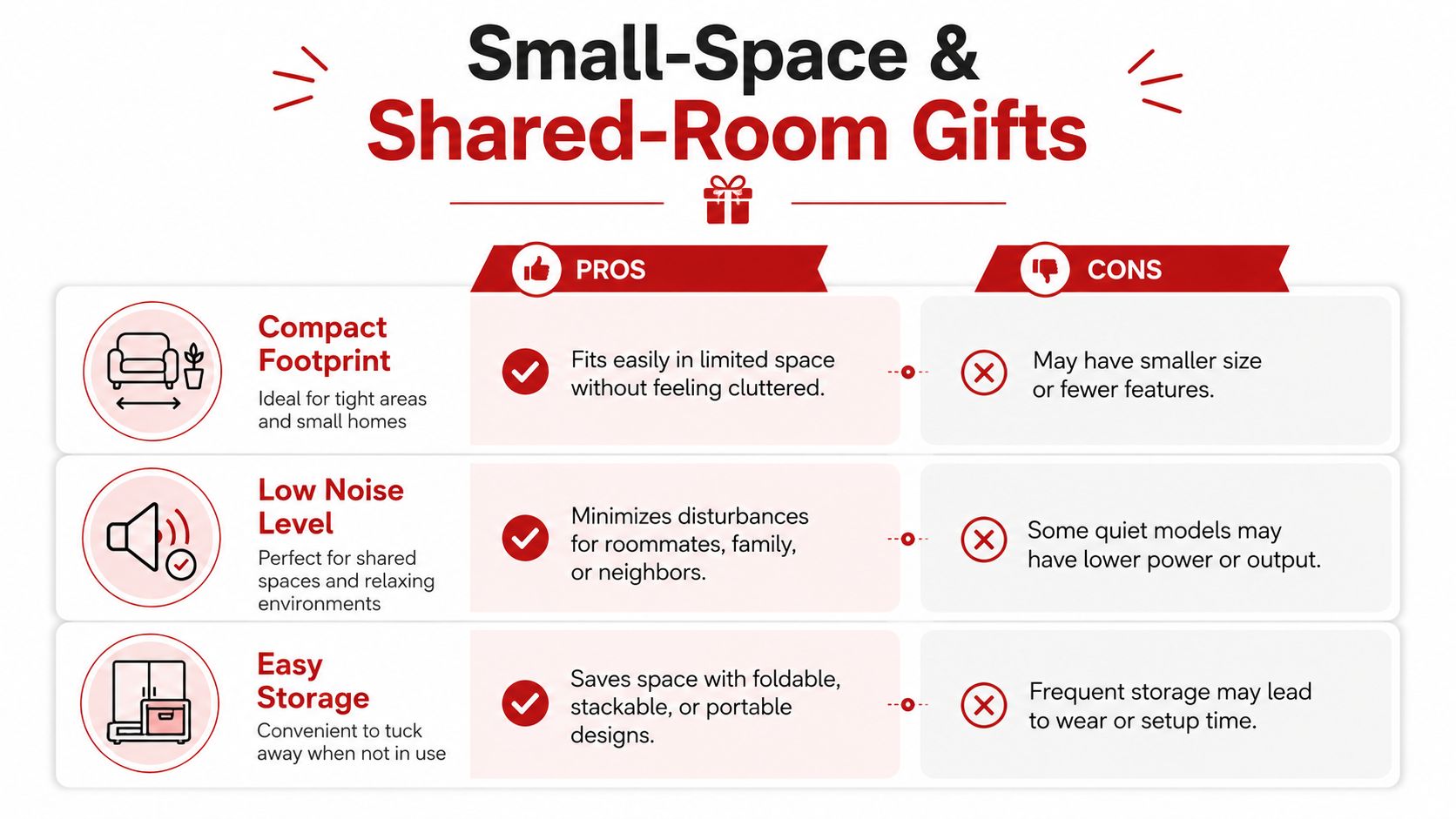
A lot of gift guides act like every child has a giant playroom and endless floor space. They don't. Plenty of families live in apartments, share bedrooms, or do not want another noisy thing taking over the dining room. That is why footprint, cleanup, noise level, and adult setup time matter just as much as “fun.”
Kids at this age can handle more spatially demanding toys and one-and-done project kits, as noted earlier. The problem is the house around them. Most homes cannot absorb a full-size game setup, a giant ride-on, or a constant pile of accessories. The better choice is a gift that gives movement or challenge without swallowing the room.
The space-efficient winners
- Indoor hopscotch rugs. Good for movement in tight spaces, and easy to roll away when play's over.
- Jump ropes. Cheap, effective, and almost no storage burden.
- Scooters. Best when the home has a hallway, patio, or nearby sidewalk use case.
- Memberships and experiences. Excellent for kids who already own too much stuff and need a reason to get out of the house.
- Simple construction kits with a storage box. Better than sprawling toy sets with a hundred loose parts.
The best small-space gifts are the ones that do not demand a permanent footprint. They should be easy to reset, easy to stash, and easy for a child to start without an adult spending 20 minutes setting everything up. A gift that needs a second adult just to begin is already too much for many shared homes.
Small-space gifting isn't a compromise. For a lot of families, it's the only version that gets used.
The practical gap in most guides is that they do not compare clutter, noise, or cleanup. They should. For a child in a shared room, a gift that folds, stores, or disappears into a closet after play is often the better choice than a bigger “wow” item. Toy storage solutions for small spaces matter because the afterlife of the gift matters too.
Concrete Gift Picks Across Budget Tiers
If you want a clean shopping shortcut, this is it. Use the child's play pattern, then shop by budget, not by marketing language. A low-cost winner should be simple and instantly playable. A mid-range gift should add real depth. A bigger-ticket gift should justify its space and last beyond a single weekend.
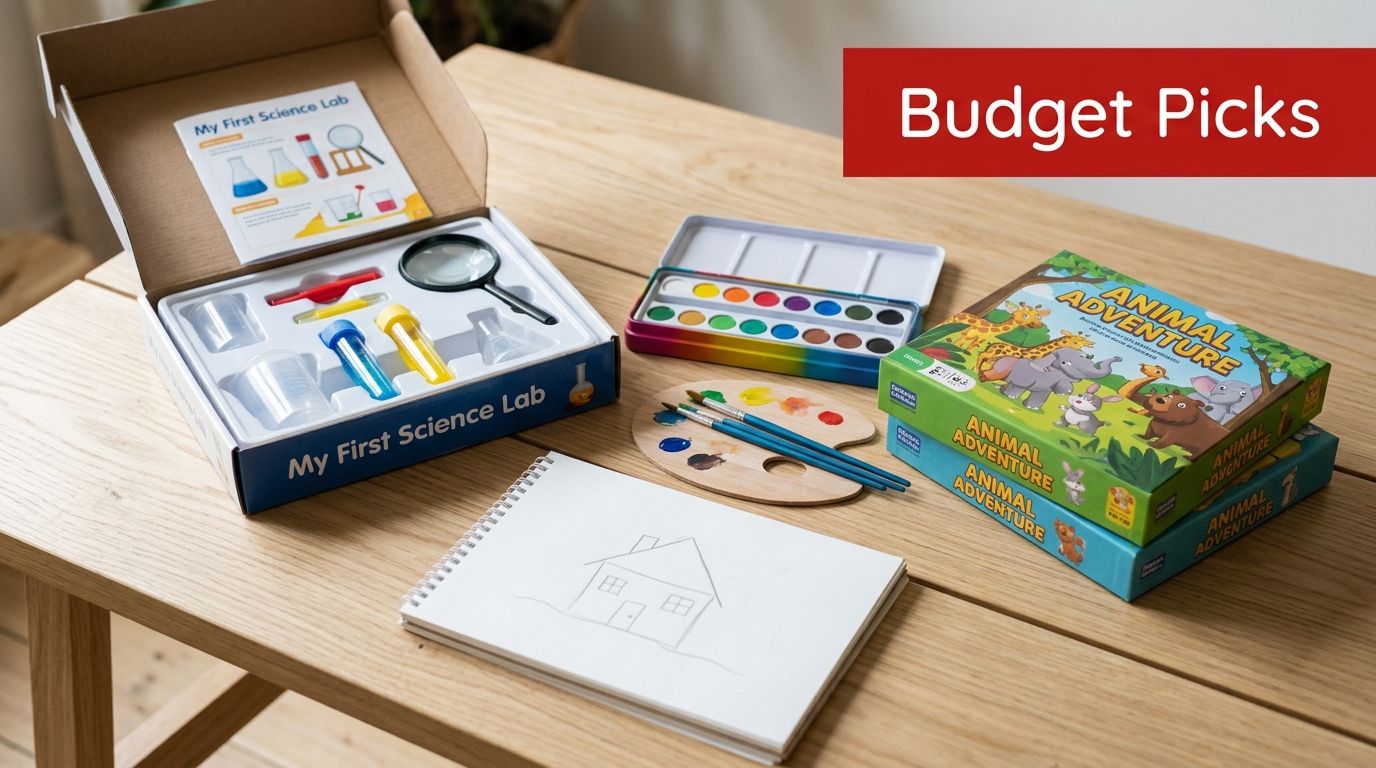
For the $10 to $25 band, I'd choose a tightly focused craft or sensory item over a random novelty toy. That's where smaller kits, simple art supplies, or a compact science activity make sense. If you want a Playz-aligned option in that lane, a Playz science or creative kit fits the age when it's something the child can start quickly and finish without a ton of adult help.
In the $25 to $50 range, go for the gifts that deliver repeat play. A STEM building set, a strategy game like Labyrinth, or a quality craft kit is a stronger buy than a flashy toy with one trick. This is also the sweet spot for the child who likes building but doesn't need a huge, expensive set to stay interested.
For $50 to $100, buy the gift that lasts. That might be a more durable building kit, a coding toy, or a physical play item that can grow with the child. If the child already loves active play, a scooter or another sturdier movement gift makes more sense than another indoor object that will be forgotten.
For a non-stuff alternative, I'd choose a membership or an experience every time for a child who already has too many things. That solves clutter and gives the family a reason to keep using the gift after the birthday high wears off. The right answer isn't always another box.
The shortest version of my advice is this, if the child loves making things, buy a kit. If the child loves movement, buy something active. If the child is drowning in toys already, buy an experience.
Presentation and Longevity Tips That Make Gifts Last
The unwrapping matters, but the second day matters more. Leave a few pieces unassembled so the child still has something to discover, and pair a kit with a notebook, sketchbook, or simple book that extends the play. A reusable storage pouch or box also helps the gift feel intentional instead of disposable.
One easy habit is toy rotation. Put a few items away after a couple of weeks, then bring them back later so they feel fresh again. A simple toy rotation system keeps a gift from getting lost in the noise, especially in homes with lots of siblings or a cramped play area.
A good gift doesn't end when the wrapping comes off. It keeps earning attention because it's easy to return to.
If you want the cleanest path, start with the child's actual interest, then choose something that fits the home, the budget, and the amount of cleanup the adults can live with. That's how you get gifts for 7 year olds that stay in use instead of disappearing into a drawer. Playz has STEM, science, and creative kits that fit this kind of practical, hands-on gifting, so check them out and choose one that matches how the child already loves to play.