


You probably know the scene. A child leans over a windowsill every morning, scanning for the tiniest green change, while you're trying to remember whether you watered the tray yesterday or the day before. That mix of excitement and uncertainty is exactly why plant growing kits work so well for families, classrooms, and anyone who wants a low-friction way to turn a seed into something living.
The best kits do more than help seeds sprout. They give kids a project they can touch, watch, measure, and care for, which is why they fit so naturally into home learning and school routines. They also sit inside a much larger gardening culture, with the market for germination kits and trays forecast to rise by USD 241.4 million between 2025 and 2030 and a projected 5.8% CAGR Technavio's germination kit market forecast, while U.S. gardening remains widely practiced, with 80% of American households participating in a gardening project in 2022 and average household spending on lawn and garden activities reaching $616 in 2022 Technavio's market overview.
What Plant Growing Kits Are and Why Kids Love Them
The first time a child spots a seedling, the reaction is usually the same. Eyes widen, voices get louder, and suddenly a plastic tray or paper pot feels like a tiny laboratory with a big secret inside it. That's the emotional power of plant growing kits, they turn something invisible and slow into something kids can finally see happening.
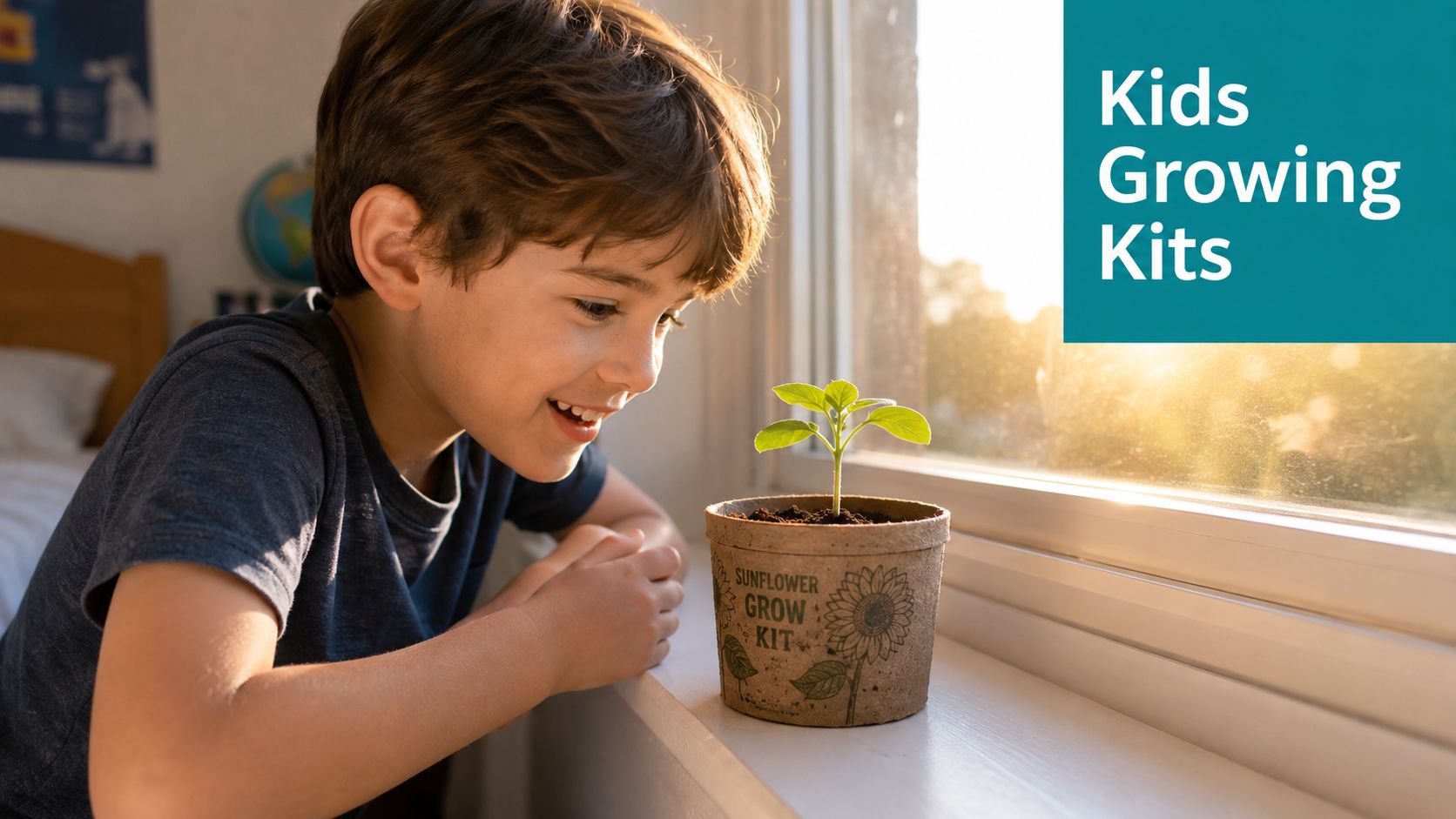
Most beginner kits bundle seeds, soil or another growing medium, containers, and instructions, which removes a lot of the guesswork for adults. That's the appeal for parents and educators. You don't have to source every piece separately, and kids still get a project that feels real because they're handling seeds, watering, and watching growth happen in front of them. If you're already comparing gardening-themed learning tools, this STEM toy guide is a useful companion read.
Simple starter kits vs more advanced systems
A basic seed-starting kit is usually about getting from seed to seedling with as little friction as possible. These are the kits that suit beginners, classrooms, and families who want a short, clear cycle of planting and observation. More advanced indoor or hydroponic systems add lights, pumps, timers, or nutrient management, so they're better for older kids or adults who want more variables to monitor.
Practical rule: if the child can't explain what they're waiting for, the kit is probably too advanced.
Popular kit themes include herb gardens, vegetable starters, pollinator kits, and flower kits. Herbs are great when you want fast, useful results in the kitchen. Vegetable kits feel more exciting when children want to eat what they grow. Pollinator kits add a nature connection that goes beyond the pot, while flower kits usually win on color and instant visual payoff. The right choice depends less on trend and more on whether you want a quick win, a food project, or a longer learning arc.
Educational and Developmental Benefits for Children
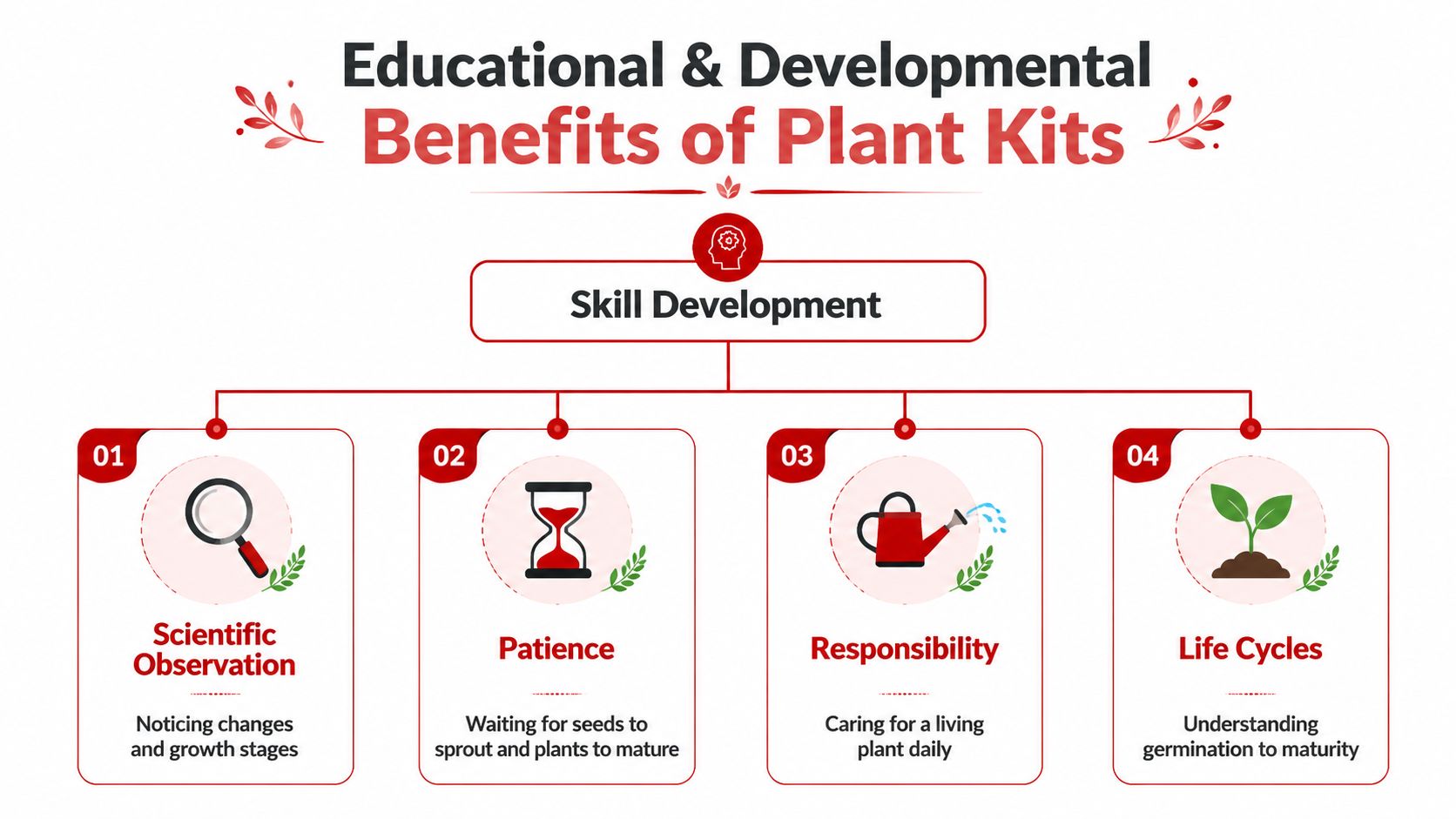
A plant kit looks simple, but it asks kids to do a lot of real thinking. They notice changes, compare leaves, ask why one pot is taller than another, and begin to connect what they do with what the plant does. That's where the learning gets durable. The child isn't memorizing a diagram, they're watching a life cycle unfold on the counter.
Science habits grow fast in a small tray
Kids start with simple observations, like “the stem bent toward the window” or “the topsoil dried out overnight.” Those comments are the beginning of scientific observation, and they lead naturally to better questions. Why did one seed sprout first? Why do roots stay hidden? Why do leaves look stronger after a sunny day? In a classroom, those questions can turn into hypothesis-testing and data collection without feeling formal.
The deeper science is built into the plant itself. A child can see photosynthesis as a concept tied to light and leaf growth, even if the word still feels big. They can lift a container and notice the root system holding the plant in place, then begin to understand why healthy roots matter as much as healthy leaves. If you want a simple example of hands-on plant learning, the benefits of hands-on learning article connects well with this kind of activity.
Patience, responsibility, and confidence come along too
Plant kits also teach delayed gratification in a way screens rarely do. Kids water today, wait tomorrow, and learn that not every result is immediate. That waiting builds patience. Daily care builds responsibility, because living things don't respond to half-attention.
The social-emotional side matters just as much. A child who waters a sprout correctly, then sees it survive, gets a real sense of competence. If the kit eventually produces herbs, peas, or lettuce, the pride gets even stronger because they can taste the result. That harvest moment turns care into ownership.
The best part isn't just the sprout. It's the child realizing, “I helped make that happen.”
How to Choose the Right Kit for Your Child
Choose a kit the same way you'd choose a good book, by matching the challenge to the reader. If it's too easy, the child gets bored. If it's too complex, the adult ends up doing all the work. The sweet spot is a kit that asks for just enough care that the child stays involved.
Start with age, then space, then goal
For toddlers and preschoolers, choose simple kits with large seeds, short instructions, and quick visual payoff. Beans, sunflowers, and fast-sprouting flower kits usually hold attention better than tiny seeds or multi-stage setups. For elementary-age kids, add measurement tools, labels, or a journal, because they're ready to track change, not just watch it.
Older kids can handle more variables. Hydroponic systems and multi-plant kits make more sense when a child can monitor light, water, or nutrient changes without losing interest. If your child likes building, timers and pumps can make the kit feel like an experiment instead of a craft.
Space matters just as much as age. A sunny windowsill kit fits apartment living and small kitchens. A balcony setup gives you more flexibility with containers and light. If you have a yard, an outdoor box or raised bed style kit opens the door to bigger plants and longer projects.
Best fit test: if you can't place the kit where the child naturally passes by it, it won't get cared for consistently.
Kit types compared
| Age Group | Kit Features | Best Plant Types | Space Needed |
|---|---|---|---|
| Toddlers and preschoolers | Large seeds, simple watering, short instructions | Sunflowers, beans, easy flowers | Windowsill or tabletop |
| Elementary-age kids | Labels, ruler, journal, clear steps | Herbs, lettuce, small vegetables | Windowsill, balcony, or small garden space |
| Older kids | Hydroponics, lights, timers, multiple variables | Leafy greens, herbs, multi-plant systems | Countertop, shelf, or dedicated indoor area |
Herb kits are the easiest entry point, especially if you want cooking to be part of the experience. Vegetable kits give the strongest sense of payoff, but they often need more patience. Flower kits are visually rewarding, though they can feel less connected to the kitchen. Pollinator kits are the best choice when you want a nature lesson, but they work best when the adult is willing to talk about bees, seasons, and local habitat instead of treating the kit like a decoration.
Setting Up and Caring for Your Growing Kit
A good setup keeps a child from thinking the kit failed when the problem is usually a small setup mistake. Start by unpacking every piece and checking that the containers have a drainage solution. Beginner grow-kit guidance specifically recommends drainage holes or another drainage method to help prevent root rot beginner grow-kit guidance. Young roots need moisture, but they also need air around them.
The setup sequence that avoids most mistakes
Fill the container with soil or the growing medium, then leave it loose instead of pressing it down hard. Seeds need contact with moisture and air, not a packed block. Plant at the depth suggested on the packet or kit instructions, then water gently so the medium is evenly damp without getting flooded. After that, place the kit where it can get the best available light, because weak light is one of the fastest ways to end up with stressed seedlings.
A terrarium follows the same basic idea, even though the container looks different. If you want a more visual guide for enclosed setups, see how to make a terrarium in a jar. The container still needs the right balance of moisture, light, and airflow.
Common mistakes are easy to spot once you know what they look like. Overwatering usually leaves the soil soggy and the roots short on oxygen. Planting too deep slows or stops germination. Low-light placement produces seedlings that stretch, lean, and look fragile.
Troubleshooting without panicking
If you see mold on the soil surface, the top layer is probably staying too wet and too still. Move the kit to better airflow, reduce watering, and remove the wettest surface debris if needed. If seeds do not sprout, check whether they were planted too deep, kept too cold, or allowed to dry out at the wrong moment. If seedlings get tall and spindly, they are asking for more light.
Yellowing leaves often mean the plant is unhappy with water, light, or nutrition, but do not rush to change everything at once. Adjust one thing, then wait and watch. That is how children learn that gardening is not guessing, it is careful observation and patient adjustment.
Indoor kits usually need steadier attention than outdoor ones because windows and heat sources change quickly with the seasons. Outdoor kits need more planning around weather, wind, and temperature swings. Either way, the best care routine is the one a child can repeat. A short daily check works better than a long weekend rescue, and it helps kids notice small changes before they become big problems.
Extending Learning with STEM Activities and Projects
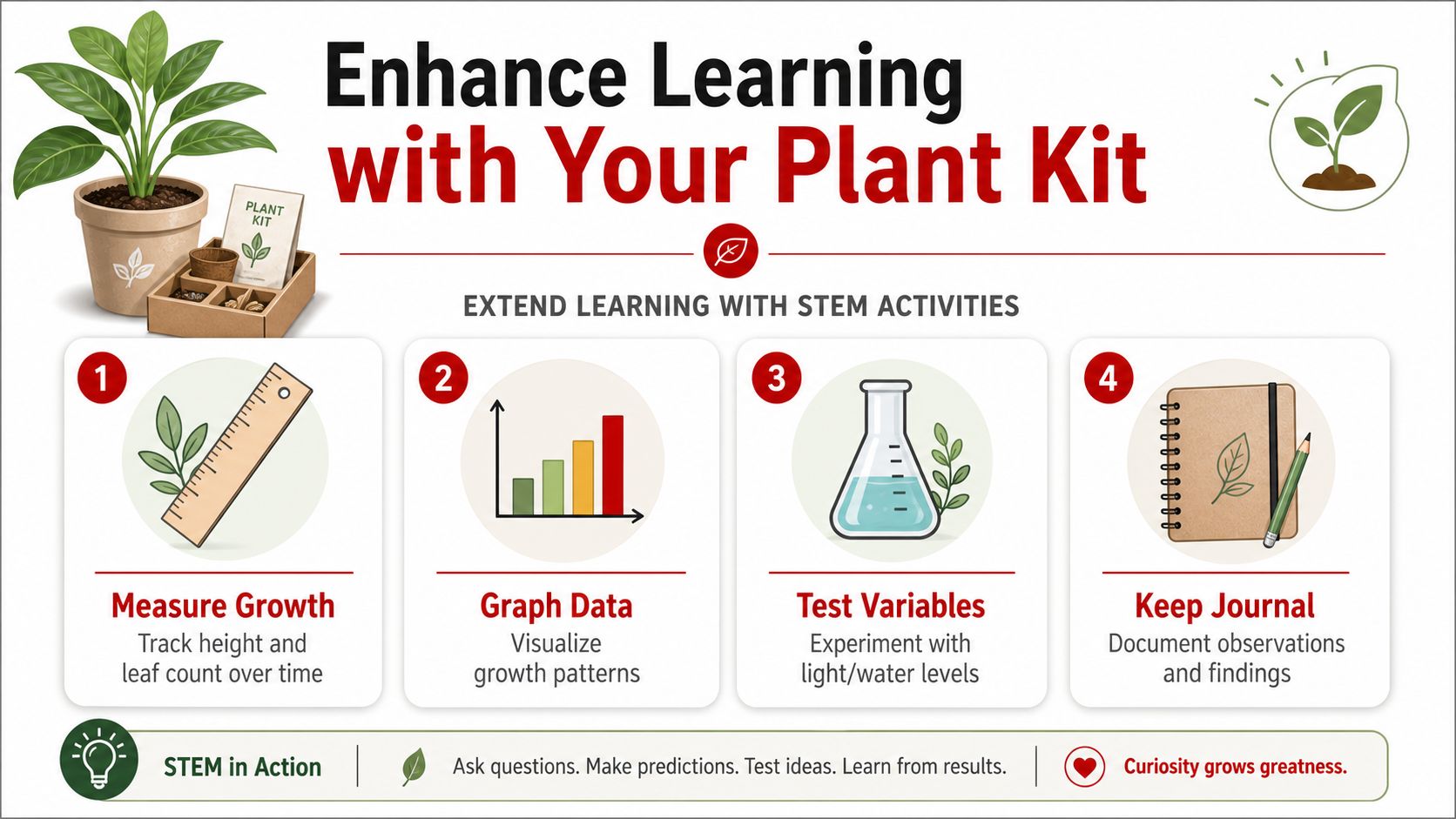
A plant kit becomes much richer when kids start measuring instead of only watering. That's when a sprout turns into a science project, a math lesson, and a writing prompt all at once. You don't need fancy materials, either. A ruler, a notebook, and a pencil can carry a lot of learning.
Easy STEM activities that actually deepen learning
Start by measuring plant height and leaf count over time. Kids can then graph the results and see patterns instead of just remembering them. If you want a classroom version, group students by plant type and let each team track one variable, like light placement or watering frequency. The point isn't to make a perfect experiment, it's to help them see how conditions change growth.
Another strong activity is variable testing. Give one plant more light and keep the other in a dimmer spot, then compare the results. Or vary water amounts and ask the child to predict what will happen before each change. The science experiments with plants resource pairs nicely with that kind of project thinking.
Make it cross-curricular
Math fits naturally through counting leaves, comparing heights, and charting change. Writing fits through daily journal entries, short predictions, and end-of-project reflections. Art fits through leaf rubbings, watercolor sketches, and labeled diagrams. Science standards in elementary and middle school often emphasize observation, evidence, systems, and cause-and-effect, and plant kits make those ideas concrete without turning them into worksheet language.
Ask questions that force a reason, not a guess.
“What changed since yesterday?”
“What do you think caused it?”
“What would happen if we moved it?”
For family learning, make it a routine. One child can measure, another can draw, and an adult can ask the questions. In a classroom, rotate the jobs so everyone handles observation, recording, and reporting. That structure keeps the kit from becoming a one-child project.
Keeping Kids Engaged Beyond the First Harvest
The test of a kit isn't the first sprout. It's whether a child wants to try again after the novelty wears off. Some kits do that better than others because they leave room for variation, repeat planting, and a bigger story than one tray on one week.
Choose kits that invite a second round
Seed variety packs help because each cycle can feel new without needing a whole new setup. Expandable systems are even better when a child can add containers, try different varieties, or compare results. Kits that produce harvestable food often create the strongest repeat interest, because cooking adds a social reward that plain observation can't match.
One of the smartest habits is succession planting. As soon as one crop finishes, start another. Let kids try a new plant type, then compare what changed in sprouting speed, leaf shape, or taste. If the first crop was herbs, the next might be lettuce or flowers, so the learning feels fresh without changing the whole routine.
Add meaning after the harvest
Cooking what they grow gives kids ownership. A child who snips basil for a pasta dish or picks lettuce for a sandwich sees the full cycle from seed to table. Seed-saving projects can stretch the learning further and create a sense of continuity from one season to the next.
Ecology-focused kits deserve attention here too. Native pollinator kits, especially those that connect to local habitats, help children think beyond the pot and into the neighborhood around it. That shift matters because it turns growing into stewardship, not just decoration. The better kits make children curious about insects, flowers, and seasonal change, not only about what's in their container.
The strongest long-term kit is the one that builds habits. It should encourage observation, care, and reuse, not just a one-time reveal. If a kit gives your child a reason to ask, “What should we grow next?”, you've found the right one.
Getting Started with Your First Plant Growing Kit
Start small, choose a kit that matches your child's age, and put it where you'll see it every day. Then set one simple routine, water, check, observe, repeat. If you want a broader home or classroom layout to support that kind of routine, step by step garden planning can help you think through space before you buy more supplies.
A family I'd trust to do well with this is the one that doesn't expect perfection on day one. They choose a windowsill kit, let the child label the pot, and take one photo a day. When a seed grows slowly or a leaf curls, they treat it as information, not failure. That's how children learn to stick with a process instead of quitting at the first wobble.
If you're ready, use this quick checklist. Pick the right age level. Match the kit to your space. Make sure it includes clear instructions and drainage. Plan one simple follow-up activity, like measuring or journaling. Expect some mess, because that's part of the learning.
Try a kit, let your child own part of it, and don't worry if every seed doesn't make it. The value is in the watching, adjusting, and trying again, because that's where real science habits begin. If you want another kid-friendly way to compare plant behavior, our celery color experiment is a great next step.
Playz makes learning feel active, curious, and hands-on, which is exactly why plant growing is such a strong fit for families who want more than screen time. If you're ready to pair science, creativity, and real-world discovery in your home or classroom, visit Playz and explore tools that help kids learn by doing.