

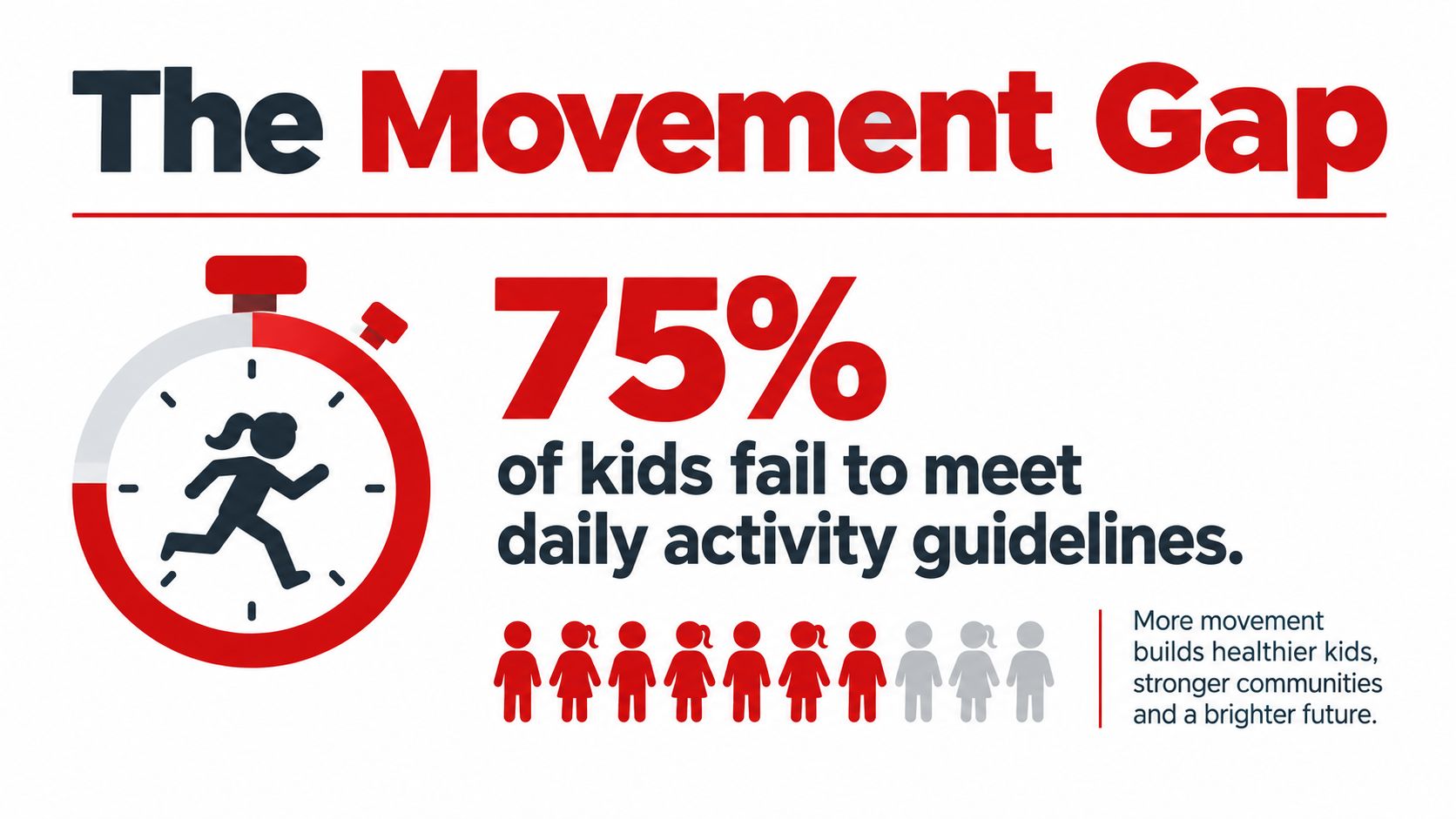
Only 24% of U.S. children ages 6–17 reach the recommended 60 minutes of daily physical activity, according to the Centers for Disease Control and Prevention. That gap matters on rainy afternoons, in small apartments, during childcare transitions, and on evenings when everyone's tired. Indoor gross motor toys can't replace outdoor play, but they can make crawling, climbing, balancing, jumping, and throwing easier to fit into ordinary family life.
The most useful setup isn't necessarily the largest or most exciting one. It's the equipment your child can use repeatedly, safely, and with enough variety to keep moving. A soft tunnel, low balance path, folding climbing element, or play tent can turn a narrow corner into a movement zone without taking over the whole home.
The Movement Gap and How Indoor Play Helps
Regular movement supports far more than energy release. Gross motor play helps children coordinate their arms and legs, shift weight, control posture, judge distance, and recover balance. These skills appear in ordinary tasks, from rising off the floor and carrying objects to moving around furniture and joining playground games.
As the figure above shows, fewer than one-quarter of U.S. children ages 6–17 meet the daily activity target. The number does not prove that a particular toy increases activity. It does show why movement opportunities need to be easy to reach, especially when limited space, bad weather, household noise, or caregiver fatigue makes outdoor play harder to arrange.
Why indoor access changes routines
Rain, heat, unsafe surroundings, distance, and a parent's schedule can all shorten outdoor play. A family guide to wet-weather outings may help caregivers find options outside the home, yet many families also need an activity that begins immediately, without packing bags or travelling.
Indoor gross motor toys can fill that practical gap. A crawl tunnel supports repeated trips across the floor. Foam stepping pieces create a route for careful foot placement. A low climbing structure gives children opportunities to pull, step, and descend with close adult supervision. A soft ball target adds throwing and reaching without requiring a large room.
Arrange equipment to encourage transitions, rather than one isolated action. A child could crawl through a tunnel, step across cushions, carry a beanbag to a tent, and return by another route. This sequence changes direction, body position, and speed while practising locomotor, stability, and object-control skills. In a small apartment, a short route can work like a miniature obstacle course, provided walkways remain clear and neighbours are not disturbed.
Practical rule: Choose equipment that invites children to change direction, body position, and speed.
From occasional play to a dependable opportunity
Access determines whether a movement zone becomes part of family life. Equipment hidden in a closet, difficult to assemble, or too noisy for the household is less likely to be used. Keep one or two pieces visible, rotate the others, and leave a clear floor route instead of filling the room.
Indoor movement complements outdoor play. This guide to the benefits of outdoor play can help families view both settings as partners. Outdoor spaces provide room to run and varied surfaces. Indoor spaces provide predictability and quick access when weather, space, or energy levels change the plan.
The goal is not a forced workout. It is a home routine with repeated chances to crawl, balance, climb, or throw. Small, manageable invitations to move can make active play feel as ordinary as reaching for a book.
Developmental Milestones and Age-Based Recommendations
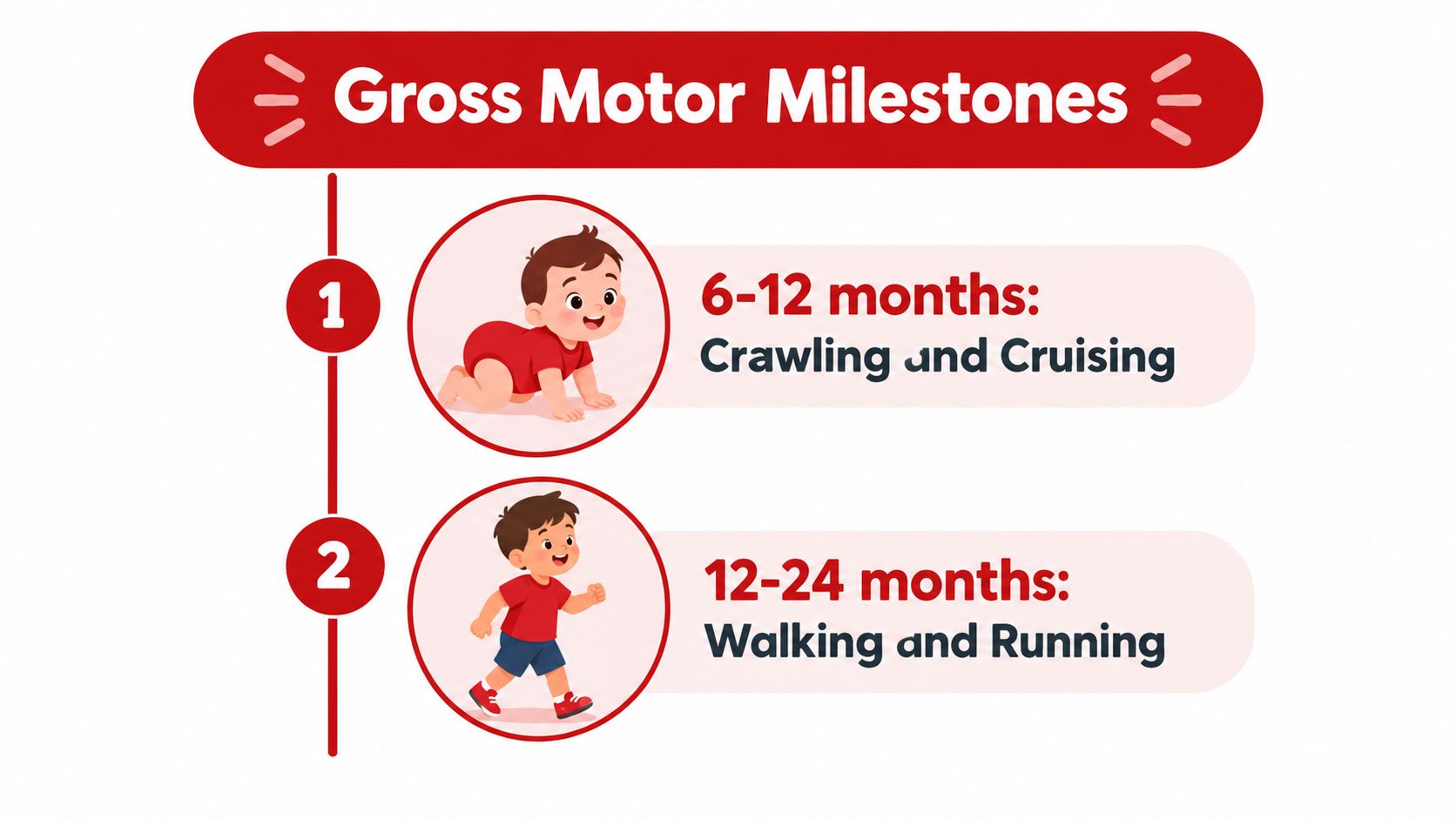
Children don't all develop gross motor skills on the same schedule, so age ranges should guide observation rather than create pressure. Look at what your child can do comfortably, what movement they avoid, and what challenge they're ready to try with support.
For babies who aren't yet mobile, floor-based play is the foundation. WHO guidance includes at least 30 minutes of tummy time spread throughout the day while awake, along with opportunities to reach, roll, and change position, as described in its physical activity guidance for young children. A firm play mat, low-interest object placed just beyond reach, and an uncluttered floor may be more useful than a complex structure.
From early mobility to confident walking
Once a child begins crawling, cruising, or walking, offer equipment that supports several related actions:
- Crawling and rolling: A soft tunnel or low fabric opening encourages forward movement and changing direction.
- Pulling and stepping: A stable, low platform can support controlled transitions, provided an adult stays close.
- Squatting and carrying: Large, lightweight objects give children a reason to lower their bodies, stand, and transport something.
- Walking and stopping: A simple path of floor markers or foam stepping elements lets a child practice starting, slowing, and balancing.
For caregivers looking for additional play ideas, these fun activities for toddler development can help translate developmental goals into ordinary games. The activity matters less than the movement pattern. A pretend delivery game may involve more useful practice than asking a toddler to repeat one exercise.
Preschool movement needs
WHO early-childhood guidance recommends that children ages 3–4 receive at least 180 minutes of physical activity daily, including 60 minutes of moderate-to-vigorous activity, with varied movements such as crawling, balancing, and climbing, according to the WHO early-childhood standards. Indoor equipment can divide activity across the day rather than making families depend on one long session.
A preschool setup might combine a crawl-through space, stepping path, low climbing element, and beanbag target. The child can move from one station to another, practice a different skill, and repeat the route with a small change, such as carrying an object or following a direction.
Why variety matters more than novelty
Gross motor competence develops through varied practice. Locomotor skills include moving from place to place. Stability skills involve balance and posture. Object-control skills include throwing, catching, carrying, and aiming.
A modular arrangement lets you change the demand without buying a completely different toy. Move the stepping elements farther apart when balance improves. Add a target after crawling. Ask the child to go under, over, around, and through objects. The challenge should remain achievable, with an adult ready to help when the equipment involves climbing or jumping.
Parents can also use this resource on childhood development milestones when they want broader developmental context. The most helpful question is simple: What movement does my child need more chances to practice today?
Creating Active Play Zones in Small Spaces
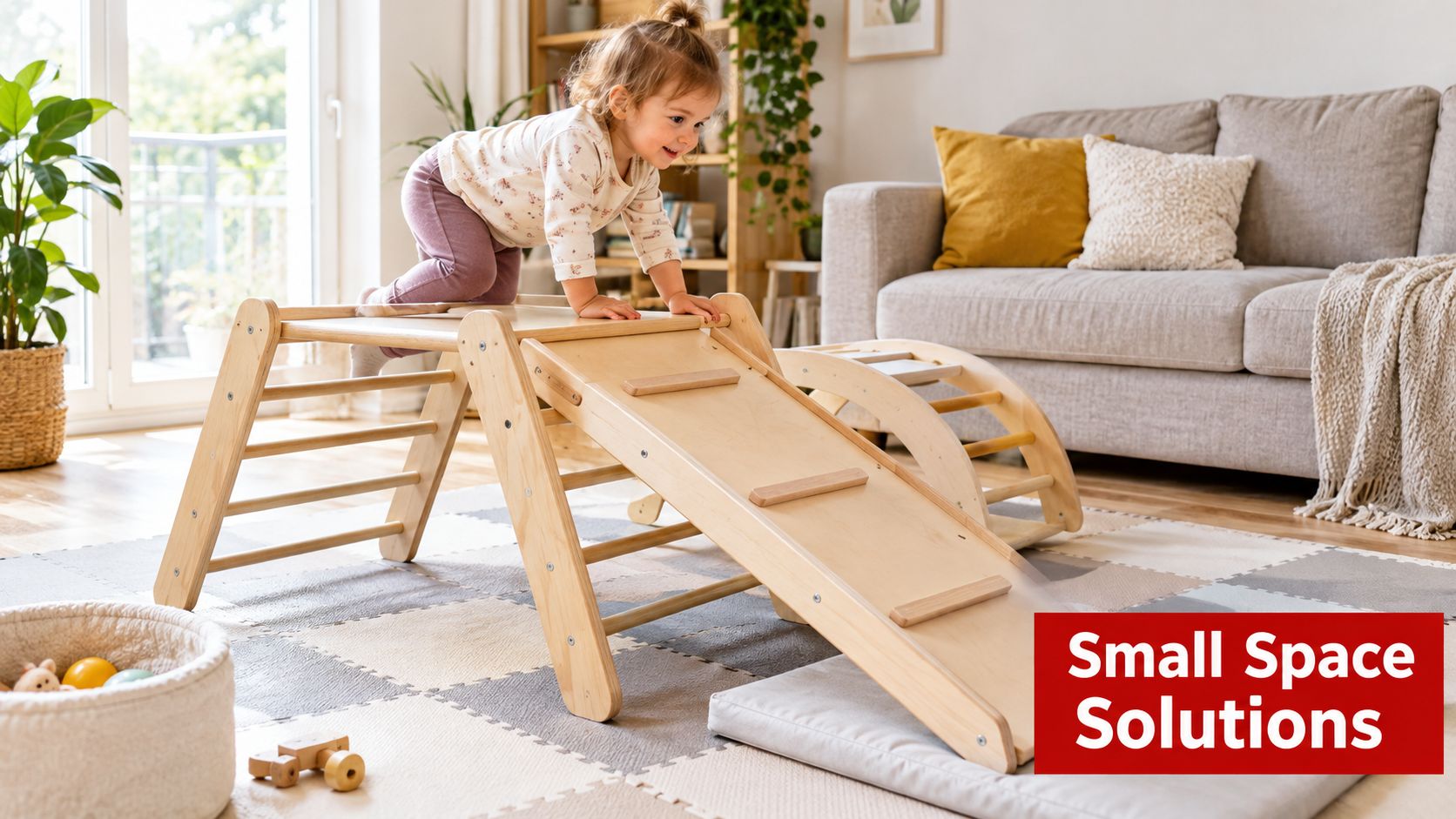
Active play doesn't require a dedicated playroom. It requires a defined area, an appropriate challenge, and a setup that fits the family's actual living conditions.
A 2025 systematic review found that limited space, unsafe outdoor environments, weather, and caregiver fatigue consistently restrict parent-child physical activity, making adaptable indoor solutions important, as reported in this systematic review of barriers to active play. Those barriers aren't solved by purchasing the biggest climbing frame. They're solved by choosing equipment that families can deploy without exhausting themselves.
Design around the room you have
Start with a movement rectangle rather than a product. Move hard-edged furniture, lamps, baskets, and loose cords away from the route. Use a rug or suitable mat to reduce slipping, and keep the equipment low enough for the child's ability.
For an apartment, lower-noise options may be more sustainable than repeated jumping. Try:
- Crawling routes: Tunnels and fabric tents create movement without heavy footfall.
- Balance work: Low foam stepping pieces encourage slow, controlled movement.
- Target games: Beanbags, scarves, or soft balls reduce the impact associated with hard objects.
- Transport games: Ask the child to carry stuffed animals from one safe station to another.
- Follow-the-leader play: Use marching, tiptoeing, ducking, and crawling instead of loud running.
The best toy is often the one that can be used on a tired evening. A foldable tunnel that takes moments to open may get more use than a larger structure that needs constant rearrangement.
Use short activity breaks
A movement routine doesn't have to be long to be worthwhile. Before dinner, invite your child to complete a route from the sofa to a tent, through a tunnel, and back while carrying a soft object. During a transition between activities, try animal walks, reaching games, or a quiet balance path.
Protect the routine from becoming another demand on the caregiver. Keep the activity predictable, offer two choices, and stop while the child is still successful. For storage ideas that make quick setup easier, see these toy storage solutions for small spaces.
Noise also responds to design. Place mats over hard flooring, avoid dropping objects, choose soft equipment, and schedule louder activities when neighbors are less likely to be disturbed. A child can work hard physically through crawling, carrying, squatting, and balancing without turning the home into a jumping arena.
Choosing the Right Equipment for Your Home
The right indoor gross motor toys should match three things at once: the child's current movement needs, the available floor area, and the caregiver's capacity to supervise and store the equipment. A toy that targets an important skill but stays packed away isn't serving the family.
| Equipment Type | Primary Motor Skills | Spatial Footprint | Ideal Age Range |
|---|---|---|---|
| Soft climbing structures | Climbing, stepping, balance, weight shifting | Moderate, often reconfigurable | Toddlers and preschoolers with supervision |
| Balance paths | Balance, foot placement, postural control | Low to moderate, depending on arrangement | Toddlers through early school years |
| Crawl tunnels | Crawling, coordination, direction changes | Low when folded, longer when open | Crawlers through preschoolers |
| Play tents | Crawling, ducking, entering, exiting, carrying | Low to moderate | Toddlers and young children |
| Soft ball-pit accessories | Throwing, reaching, squatting, object control | Variable, based on the container and play area | Toddlers and young children |
Soft climbing structures
Soft climbers offer several body positions in one setup. A child may crawl over a wedge, step onto a block, lower into a squat, and climb down. They're useful when you want varied movement without hard surfaces, but they still require stable placement and a clear landing area.
Their limitation is storage. Even lightweight foam pieces take floor space when assembled, so choose forms that can be stacked or rearranged. A small arrangement may be more practical than a full obstacle course.
Balance paths
Balance equipment supports slower movement and can suit homes where noise is a concern. Place pieces close together at first. As the child gains confidence, vary the direction and spacing while keeping the route manageable.
Balance paths also work well with pretend play. The floor becomes a river, bridge, or stepping-stone trail. That story gives the child a reason to repeat the movement without making practice feel like a lesson.
Tunnels and tents
Tunnels encourage crawling, turning, and repeated transitions between spaces. They fold for storage and can connect naturally with a play tent. A tent can become a quiet destination, a target for carrying objects, or a pretend cave that requires entering and exiting.
Playz offers products such as pop-up play tents, ball pits, crawl tunnels, and indoor obstacle-course configurations. Its ball pit and tunnel guide can help caregivers think about how those elements work together, rather than treating each item as an isolated activity.
Build for progression
Choose components that can change as your child develops. A low path may begin with wide, close-together steps and later become a route with more directional changes. A tunnel can shift from simple crawling to a delivery game, an animal rescue story, or a route that includes carrying and aiming.
Selection question: Can this equipment support at least two different movement patterns without making the room harder to manage?
Safety Standards and Setup Best Practices
Safety doesn't mean removing every challenge. It means controlling the environment so children can explore movement without unnecessary hazards.
The U.S. Consumer Product Safety Commission states that products intended for children under 3 must not contain small parts or release small parts after required testing because of choking risk. Caregivers should inspect not only the main structure but also balls, detachable connectors, fasteners, clips, and accessories, using the CPSC playground equipment guidance.
Complete a room audit
Before introducing a climbing or balance activity, get down to the child's level and scan the route. Check for sharp furniture corners, glass, cords, unstable shelves, slippery rugs, and objects that could be pulled down.
Use this sequence:
- Match the equipment: Read the manufacturer's age, ability, user-load, and supervision guidance.
- Check stability: Push gently from different directions and confirm that the base stays secure.
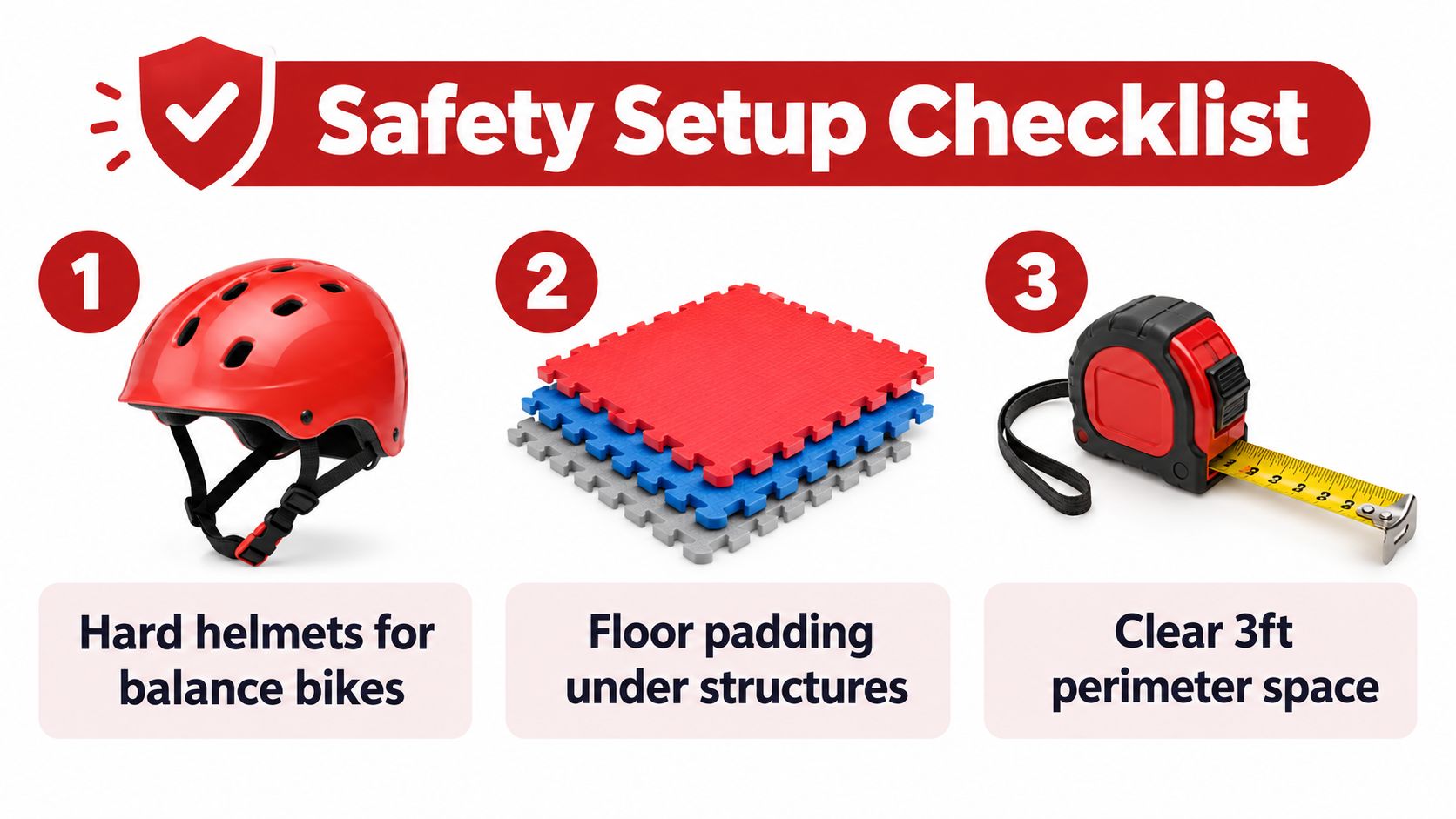
- Protect the floor: Use appropriate impact-absorbing surfaces beneath climbing or jumping areas.
- Clear the fall zone: Remove hard objects and create unobstructed space around the active element.
- Inspect small components: Look for loose fasteners, detachable parts, damaged seams, and worn connectors.
- Watch the first attempts: Observe how your child approaches the equipment before allowing more independent use.
A helmet isn't a universal solution for indoor play. It may be relevant for a balance bike or a specific product, but it doesn't replace stable equipment, supervision, or a clear route.
Create a continuous flow
Waiting creates collisions and frustration, especially when several children share one station. Arrange equipment so a child can move from one task to the next without crossing the landing area of another activity.
For example, place the tunnel entrance near the start of the route, the balance path beside it, and a soft target at the endpoint. Keep throwing activities pointed toward an empty wall or designated target, not toward climbing equipment.
A safe setup gives children room to move, room to stop, and room to recover.
Adjust rather than overpromise
Indoor equipment can make active play more accessible, but no toy guarantees a particular amount of movement. Watch observable outcomes instead. Is your child moving for longer before stopping? Are they trying different patterns? Can they use the setup safely with less help?
If the child appears overwhelmed, lower the challenge. If the route is too easy, change the direction, add carrying, or introduce a simple target. Safety and enjoyment should guide progression.
Building Screen-Free Movement Routines
A screen-free routine succeeds when it replaces a specific passive moment with an activity that feels easy to start. WHO recommends that children ages 2–4 have no more than 1 hour of sedentary screen time per day, with less being better, according to its guidance on sitting less and playing more.
The replacement doesn't need to be elaborate. A child can crawl through a tunnel while delivering toy animals, carry beanbags into a tent, or follow a parent through a short route of marching, ducking, and balancing. The adult's role is to make the first step obvious, then let the child add imagination.
Link movement to daily transitions
Use predictable moments rather than waiting for a child to ask for activity:
- Before meals: Complete a short crawl-and-carry route while food is prepared.
- After school or childcare: Offer a quiet balance path before asking for seated tasks.
- Before bedtime: Choose floor-based crawling, stretching, and tent play instead of vigorous jumping.
- During bad weather: Rotate a tunnel, stepping route, and throwing target across the available floor area.
- During caregiver fatigue: Set out one familiar activity and join for the opening round, rather than planning a complex circuit.
For educators and childcare providers, resources such as planning sessions for coaches can offer ideas for organizing movement activities. At home, the same principle is simpler: use a clear beginning, a few repeatable actions, and a calm ending.
Make the routine flexible
Some days call for active movement. Other days call for regulation through slow crawling, carrying, reaching, and hiding in a tent. A child who is tired or overstimulated may benefit from a predictable route with fewer choices.
Parents can also use this guide on how to limit screen time to support broader household routines. The aim isn't to make every minute productive. It's to ensure that screens aren't the only reliable source of entertainment when outdoor play isn't available.
A movement habit grows from repetition, not perfection.
Offer indoor gross motor toys where your child can see them, keep the setup safe, and rotate the challenge before it becomes stale. Over time, crawling, balancing, climbing, carrying, and throwing can become ordinary parts of the day rather than emergency solutions for restless afternoons.
Playz offers play tents, crawl tunnels, ball pits, and other creative play products that can help families build adaptable indoor movement zones. Visit Playz to explore options that fit your child's abilities, your available space, and your family's everyday routine.