

You're standing in a toy aisle, or scrolling late at night with a birthday deadline hanging over you, and every box seems to promise the “perfect” hero. Aquaman can feel like one more choice on a crowded superhero shelf, but the right figure can do more than sit in a collection. It can start stories, support ocean-themed imagination, and give kids hands-on play that keeps them engaged without a screen.
Aquaman action figures are a good example of why toy choice matters. Aquaman's rise in modern visibility after the 2018 film brought far more attention to the character and, in turn, more toy options for families to sort through. For parents, teachers, and gift buyers, the goal is not to chase every version. It is to choose the figure that fits the child's play style, age, and safety needs.
Welcome to the World of Aquaman Toys
Aquaman is easy for kids to grasp because his powers connect to familiar play ideas. DC describes him as the ruler of Atlantis with abilities tied to the sea, including underwater breathing and communication with sea creatures, so children get a ready-made story world instead of a character they have to figure out first DC's Aquaman profile. Tridents, sharks, waves, and underwater rescue scenes all fit naturally into that world.
A good first step is to choose for play style, then check the packaging details. Younger children usually do better with a figure that has simple movement and a sturdy build, since that gives them room to stage rescues, battles, and ocean adventures without worrying about small or delicate pieces. A more detailed figure can look exciting, but a display-style toy is not always the best choice for everyday hands-on play.
Aquaman also brings a useful sense of variety to the toy aisle. The character has appeared in comic-era and movie-inspired forms for many years, which is why you may see designs that look classic in one set and modern in another retrotoyquest.com. That variety helps parents and teachers choose the version that matches a child's interests without losing the core idea of the hero.
Practical rule: Buy the figure that fits the child's play pattern, not the one that looks best in a box.
The 2018 film also helped bring Aquaman back into the spotlight, and that visibility made the character easier for families to spot in stores and in home play setups The Numbers). For a child, that can mean quicker recognition, stronger story prompts, and easier mixing with other superhero toys. If you want a broader guide for choosing figures that support growth and creativity, the best toys for child development can help you match play value with the right kind of learning.
Choosing the Right Aquaman Figure for Your Child
A child standing in front of a shelf full of Aquaman toys usually needs one simple question answered first. Is this figure meant for active play, careful posing, or display on a shelf? Once that is clear, the right choice becomes much easier.
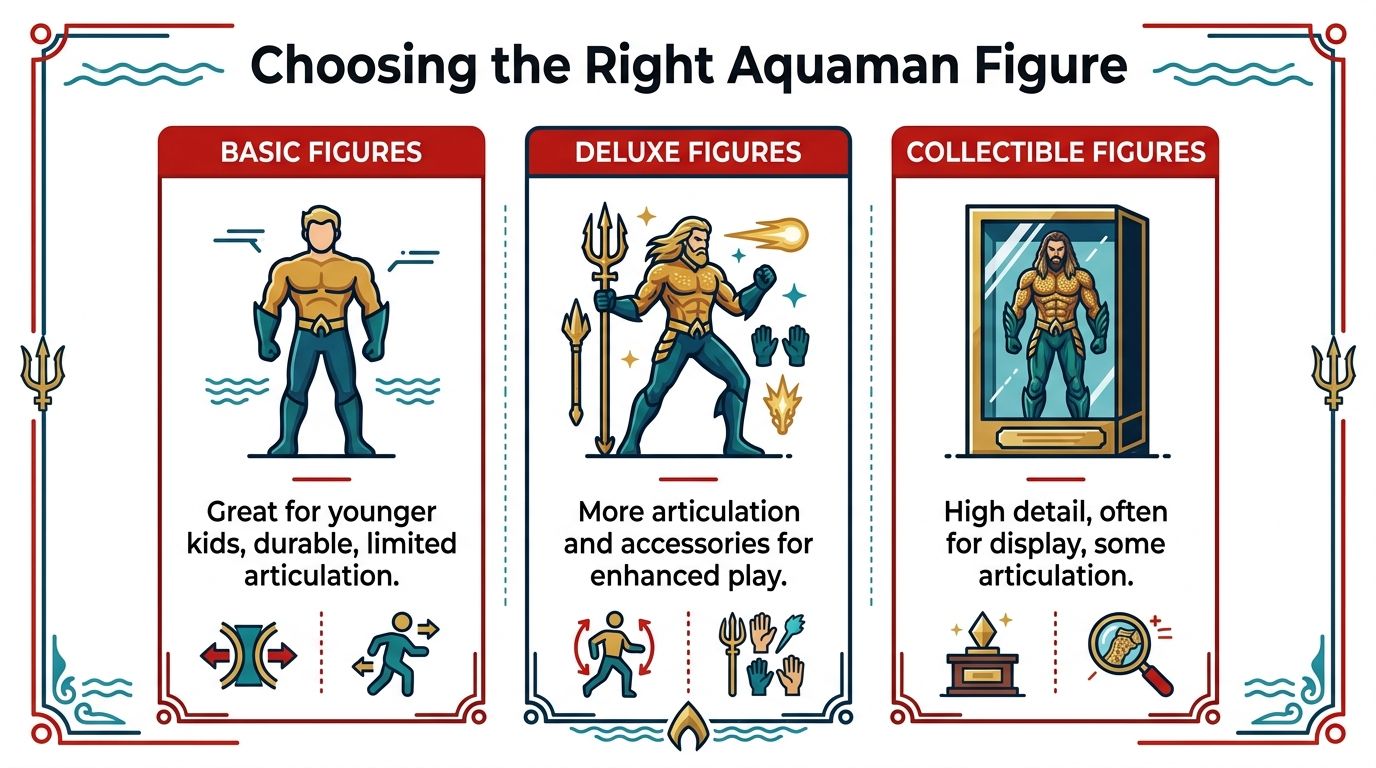
Basic, deluxe, and collector figures each serve a different kind of play. A younger child usually does better with fewer delicate parts and a sturdy body, while an older child may enjoy more movement, more accessories, and a figure that can match bigger story scenes.
Basic figures
Basic figures are usually the best match for rough-and-tumble play. They are simpler to handle, sturdier in the hand, and easier for small hands to grip. If a child likes pretend rescues on the floor, bath-time adventures, or dropping heroes into a toy bin and starting the story again, this category makes sense.
They also keep play open-ended. A child does not need to worry much about tiny parts, which means more time spent acting out scenes and less time spent protecting the toy.
Deluxe figures
Deluxe figures give children more pose options and more extras. Many mass-market Aquaman figures sit in the 6- to 12-inch scale and average around 11 points of articulation, which gives a practical balance of movement and durability Mattel technical product info. That often works well for children who want a figure that can stand, swim, swing, and hold a trident without feeling too fragile.
This middle category is often the easiest choice for families. It gives enough detail to spark stronger storytelling, but it still supports regular hands-on play. A child can place the figure in a rescue pose, line it up with other heroes, or use it in a pretend mission without treating it like a museum piece.
Collector figures
Collector-grade figures usually carry more detail and are made with display in mind. Some premium releases go past 30 points of articulation and include interchangeable hands and accessories such as a trident, which helps create more realistic poses Mezco Toys product listing. Those features can be exciting for older fans or adults, but they are not always the best fit for everyday play.
For a child, the main question is whether the figure invites action or asks to be handled carefully. If the toy will mostly sit on a shelf, collector detail can be a good match. If the toy will travel from the bedroom to the living room to the bath, a simpler figure usually supports play better.
| Figure Type | Best For | Key Features | Durability |
|---|---|---|---|
| Basic | Younger kids and active play | Simple design, fewer parts | Usually strongest for daily handling |
| Deluxe | Older kids who like posing and storytelling | More articulation, accessories | Good, but check small parts |
| Collector | Display, older fans, gift buyers | High detail, premium finish | Often more delicate |
A child's play pattern should guide the decision. A child who likes repeating scenes, building worlds, and changing stories over and over will usually get more value from a durable deluxe figure than from a display piece that stays on a shelf. For parents who want toys to support growth as well as fun, Playz's guide to child development toys is a helpful place to compare play value with learning goals.
Understanding Age Ratings and Toy Safety
A child may be drawn to Aquaman's bright colors or bold stance first, but safety has to guide the choice. A figure can look perfect on the shelf and still be a poor match for a preschooler if it includes tiny armor pieces, detachable hands, or a sharp trident. The age rating on the box gives you a starting point, then your own inspection fills in the rest.
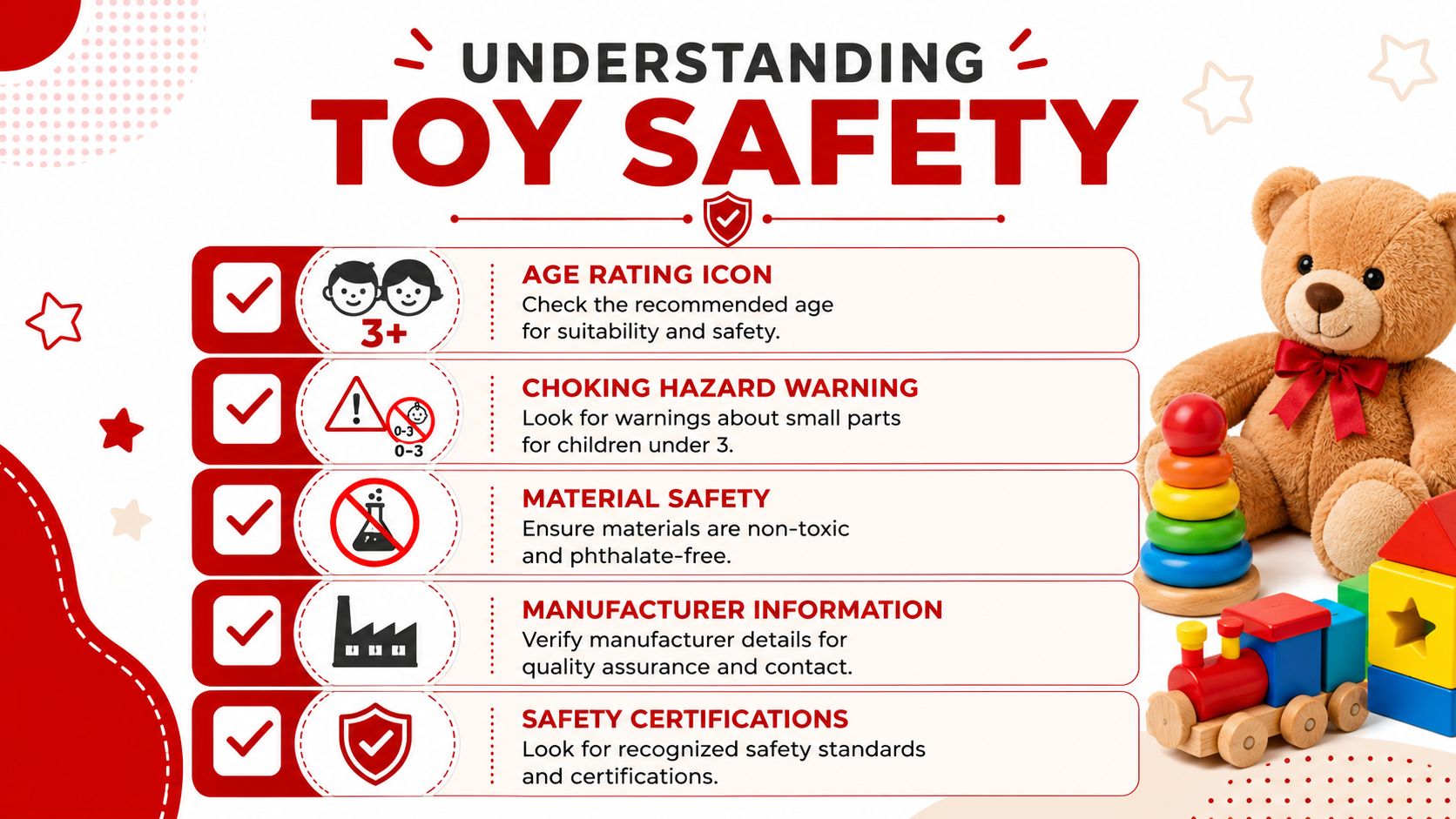
A quick check in the store or at home can prevent a lot of trouble later. Look for smooth edges, sturdy joints, and parts that stay secure when you gently move them. If the figure includes a trident, shield, or extra gear, make sure those pieces are large enough for the child using the toy and not likely to become a choking risk.
Here is a simple parent checklist:
- Check the age label: Match the toy to the child's developmental stage, not just their birthday.
- Inspect small parts: Look for loose hands, weapons, armor pieces, or joints that feel unstable.
- Feel the surface: Avoid toys with sharp seams, brittle plastic, or edges that scratch.
- Review materials: Choose products that feel solid and are clearly made for children.
- Save the packaging: Keep the brand and product details in case you need support later.
A figure with fewer fragile parts is often easier for younger children to handle during everyday play. Larger, sturdier designs usually hold up better when a toy moves from room to room, gets dropped, or joins a bath-time rescue mission. Parent and caregiver choices matter here, because the best toy is the one that fits the child's play style and can be checked quickly before play starts.
If you want another layer of guidance on toy materials and child-friendly choices, Playz's non-toxic toy guide is a useful companion. The habit to build is simple. Check the label, check the parts, and trust your hands as much as the box.
Creative Play and Learning Ideas Beyond the Box
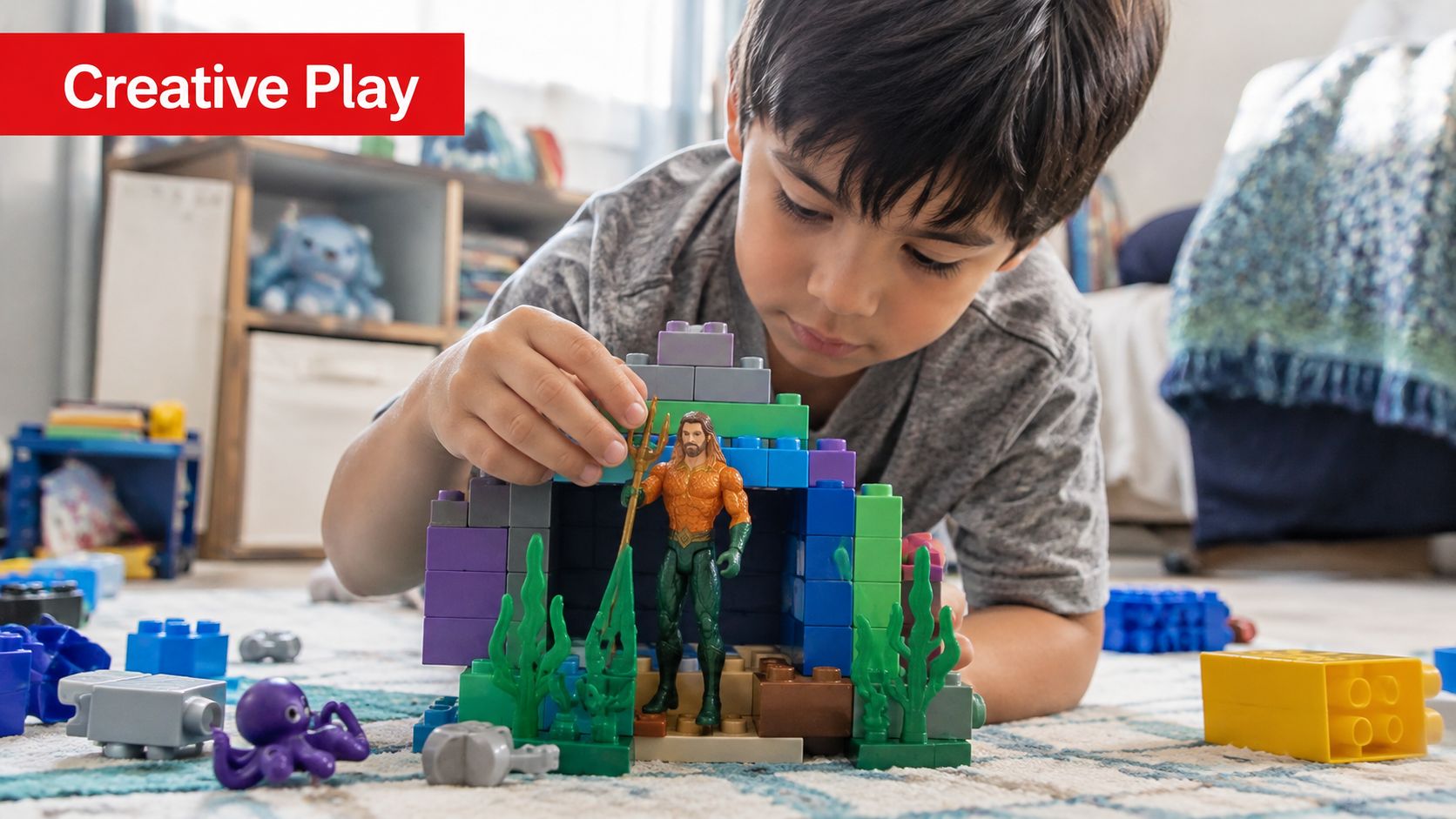
A child's Aquaman figure becomes far more useful once it has a story world around it. His connection to Atlantis and sea life gives kids an easy way into pretend play, because oceans, animals, and rescue scenes already feel familiar. That makes the toy a practical starting point for imagination, language, and problem-solving without needing a formal lesson.
Turn play into a story
A simple question can open the whole scene. Ask where Aquaman is going, who needs help, and what the mission is. If a child says, “He's saving a baby turtle,” the play already includes storytelling, empathy, and problem-solving.
That kind of play builds language without feeling like schoolwork. The child has to name characters, describe action, and put events in order. Parents can keep the story going by asking, “What happens next?” or “Who else lives in the ocean?” Those prompts help children stretch their answers and keep the scene moving.
Build Atlantis with everyday materials
A shoebox, blue paper, tape, and a few blocks can become a small Atlantis scene. Children can add coral towers, a sea cave, or a throne room for Aquaman. The goal is not perfect accuracy. The goal is to let them build a world and explain why it looks the way it does.
This kind of activity works well at home or in a classroom. Ask the child to design one underwater structure and describe its purpose. That simple step connects art, spatial thinking, and oral expression. For more ideas that support this kind of pretend play, Playz's creative play guide fits naturally with figure-based activities.
Add a marine learning angle
Aquaman's ocean theme makes marine learning feel natural. You can name sea creatures, compare where they live, or sort animals into groups like shellfish, fish, and mammals. The figure becomes a bridge to curiosity instead of just another hero on the shelf.
Best use: Let the figure lead to a question, then let the question lead to a new game.
You can also connect the toy to hero behavior. Ask what makes Aquaman a good leader, or how he might help creatures that are scared or lost. Questions like that build social understanding while keeping playtime active and enjoyable.
A toy does not need to stay on the floor to stay useful. If a child starts arranging figures on a shelf after play, that can be part of the learning too. For display protection ideas, choosing diecast model display cases can give you a useful starting point for the kind of enclosure that keeps collectibles safe and dust-free.
How to Care for and Display Your Figures
A figure lasts longer when kids learn where it belongs after play. That matters even more with Aquaman toys, since tridents, capes, and posed limbs can bend or disappear if everything goes into one shared bin. Good storage also teaches responsibility in a way children can visibly see.
Start with cleaning. Use a soft microfiber cloth for dust, then wipe the figure gently with a barely damp cloth if needed. Avoid harsh cleaners, soaking, or scrubbing, because painted details and joints can wear faster than parents expect.
For storage, separate the figure from accessories. A small pouch, divided container, or labeled bin keeps weapons and extra parts from vanishing under beds or into couch cushions. If a child has a few favorite heroes, sort them by character so cleanup feels easier.
For display, simple works best. A wall shelf, a clear case, or a protected tabletop zone keeps figures visible without inviting constant rough handling. If you're looking for display protection ideas, choosing diecast model display cases can give you a useful starting point for the kind of enclosure that keeps collectibles safe and dust-free.
Once the figure is cleaned, let it dry before storing. Moisture trapped in a bin can lead to sticky surfaces or faded paint over time. That small habit helps kids treat their toys like possessions they can care for, not disposable clutter.
The other half of organization is making storage easy enough that children will use it. Playz's toy organization tips are useful if your home already has more figures than shelf space. The simpler the system, the more likely it is to stick.
Good rule: If cleanup takes less than a minute, kids are far more likely to do it after play.
Making a Splash with the Perfect Gift
The best Aquaman figure is the one that fits the child in front of you. A child who likes action needs a sturdy figure with simple handling. A child who enjoys posing, building scenes, or inventing long adventures usually benefits from more articulation and a few accessories. Safety, age fit, and play style should guide the choice every time.
Aquaman also makes sense as a gift because children can recognize the ocean theme quickly and use it as a starting point for pretend play. That matters in a toy because familiar heroes often help children step into storytelling with less hesitation. As noted earlier, the character's wider presence has kept him visible in many homes and stores, which makes the figure easier to understand as a gift.
If you are still deciding, start with what the child already enjoys. Some children want a hero for pretend battles. Others want a figure for display, storytelling, or building a small world around it. A good choice supports both fun and learning, which is why the right toy can feel useful long after the wrapping paper is gone.
For more gift ideas that fit a child's interests, birthday gift ideas for boys can help you compare options that invite active, hands-on play. If you want a wider set of thoughtful options, special gifts for any son is another helpful place to start.
The main goal is simple. A well-chosen Aquaman figure can become a tool for imagination, confidence, and storytelling, not just a collectible sitting on a shelf.