

Tackling the toy tsunami is all about having a simple, sustainable system. The real key is to declutter first, then give every single toy a specific home in storage that your kids can actually use. By mapping out a clear plan before you start, you can turn a totally overwhelming task into a series of manageable, actionable steps.
Your Game Plan for Conquering Toy Clutter
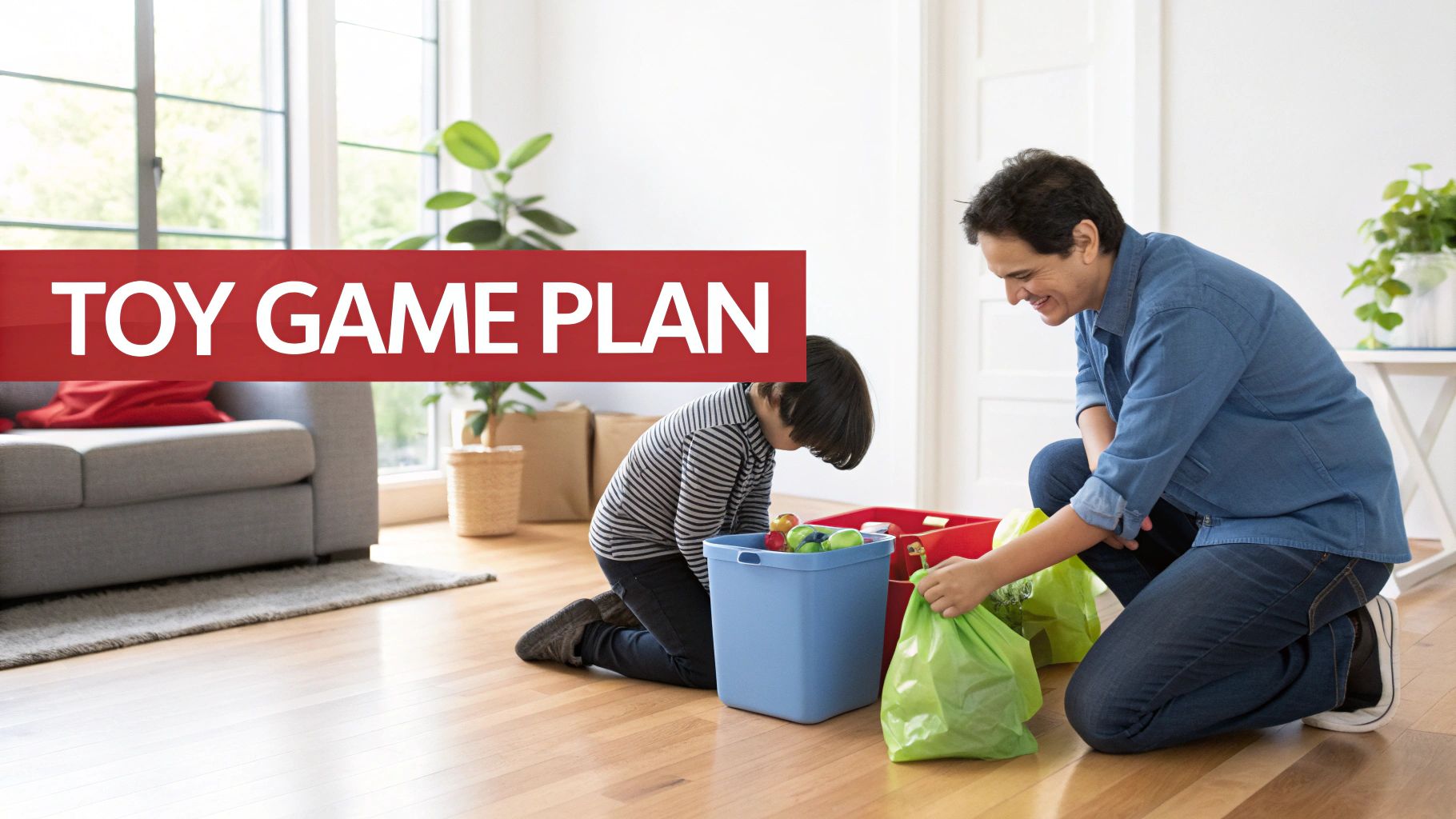
Before you even think about buying a single bin or firing up the label maker, the most important step is creating a solid game plan. This isn't just about tidying up; it's about shifting your mindset from overwhelmed to empowered and reclaiming your home from the chaos. A real strategy gives you the motivation to see the project through, ensuring you get rid of clutter for good, not just shuffle it from one room to another.
For a deeper dive into creating a clutter-free home that's perfectly set up for play, check out this comprehensive guide on organizing kids' toys.
Define Your Purpose
First, ask yourself why you're doing this. Is your main goal to create a calmer, more focused play space? Or do you want to start teaching your kids responsibility and how to clean up after themselves?
Key Takeaway: Having a clear "why" is your anchor. When you're surrounded by a mountain of LEGOs and feeling discouraged, remembering your goal—like fostering more creative play—will keep you going.
This simple act of defining your purpose helps you make tough decisions later, like whether to keep that sentimental toy they haven't touched in a year. It frames the entire process around a positive outcome, turning it from a chore into a mission.
Gather Your Supplies and Schedule Time
Next, set yourself up for success. Get everything you need ready before you begin and block out dedicated time on your calendar. Treat this like an important appointment you can't miss.
Your essential supply list includes:
- Sorting Containers: Cardboard boxes or laundry baskets labeled "Keep," "Donate," "Rotate," and "Discard."
- Cleaning Supplies: Disinfecting wipes and a cloth for wiping down dusty, forgotten toys.
- Bags: Sturdy trash bags for broken items and bags for the donation pile.
This prep work is a game-changer. It stops you from losing momentum by having to search for a trash bag mid-sort. Planning ahead is a huge part of learning how to organize a toy room effectively.
With the global toys market hitting $155.7 billion in 2021 according to cognitivemarketresearch.com, it's no wonder more toys are flooding into our homes than ever before. This data highlights just how critical a smart organization system has become.
The Great Toy Sort: A Practical Decluttering Method
Alright, this is where the real magic happens. With your supplies ready and motivation high, it’s time to tackle the mountain of toys. Instead of getting overwhelmed, we'll use a simple, proven four-category system to bring order to the chaos. The goal is to sort with intention and make a clear, confident decision about every single item.
The Four-Category System
Set up four distinct zones using your boxes or bags, each clearly labeled: Keep, Rotate, Donate, and Discard. Every single toy you pick up goes into one of these categories. No "maybe" pile allowed! This prevents decision fatigue from derailing the project.
-
Keep: These are the MVPs of the toy collection—the superstars that get played with constantly. We're talking about open-ended toys that fire up the imagination, like LEGOs, magnetic tiles, animal figures, and dress-up gear. To understand why these toys are so valuable, explore the benefits of pretend play.
-
Rotate: This is your secret weapon for toy sanity. This box is for toys your child genuinely enjoys but doesn't need out all the time. Think specific board games, elaborate playsets, or a puzzle they love but only do once in a while. Stashing them away for a few weeks makes them feel brand new when they reappear.
-
Donate: Anything in great shape but outgrown is a perfect candidate for donation. That shape-sorter your toddler mastered months ago? Pass it on to a new family.
-
Discard: This pile is for anything broken, missing essential pieces, or just plain gross. Be ruthless here. Holding onto broken toys only contributes to clutter and frustration.
Making the Tough Calls
Let's be real—deciding what goes can be tough. For sentimental items you’re not quite ready to part with, use a "purgatory box." Maybe it's your child’s first stuffed animal or a handmade gift. Pop it in this box, seal it up, and store it out of sight for a few months. If nobody asks for it, you can make a final, guilt-free decision later.
Pro-Tip: The "80/20 rule" is a game-changer for toy organization. Most kids get 80% of their play from just 20% of their toys. Keep this in mind as you sort to stay focused on what truly matters.
This principle is more important than ever given the sheer volume of toys entering our homes. By auditing your collection at least once a year and donating unused items, you can reclaim a shocking amount of space.
Finding the Right Home for Every Toy
You've sorted through the mountain of toys. Now comes the fun part: giving everything a proper home. Choosing the right storage is about creating a system that your kids can actually use and maintain themselves. The key is matching the storage to the toy. You wouldn't cram tiny LEGO bricks into a giant, deep basket, just as a small bin won't contain an overflowing collection of stuffed animals.
This visual guide is a great way to double-check your sorting process, ensuring every toy ends up in the right pile before you start putting things away.
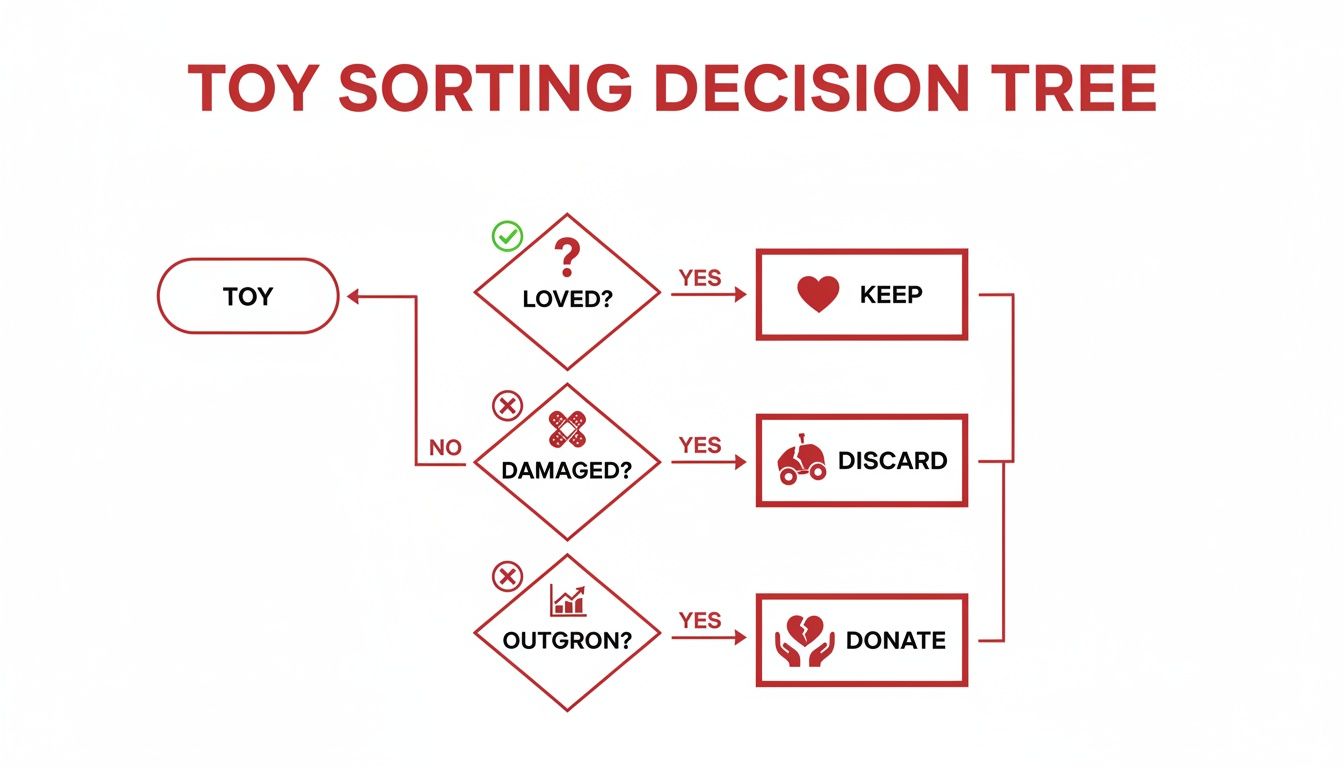
Breaking the decluttering process down into simple "yes" or "no" questions makes it so much easier to decide a toy's fate without getting stuck in sentimental second-guessing.
Choosing Smart Storage Solutions
The ultimate goals are visibility and accessibility. If kids can't see their toys, they won't play with them. This is why clear bins and low, open shelving are so effective, especially for younger kids.
For preschoolers, clear plastic bins with picture labels are a game-changer. They can see what’s inside without having to read, which empowers them to find what they want and clean up on their own. Those stylish, opaque baskets might look nice, but they often become black holes for smaller toys.
Actionable Insight: For toys with a million tiny pieces (like LEGOs), try shallow, under-the-bed storage containers. Kids can sift through them easily without needing to dump the entire collection on the floor.
For kids who benefit from sensory input, having their go-to items organized in a calming, accessible way is crucial. You can learn more about the best toys for sensory seekers and find storage solutions that work with them, not against them.
Toy Storage Solutions Comparison
Not all storage is created equal. Here's a quick comparison to help you choose the best options for your space and toys.
| Storage Type | Best For | Pros | Cons |
|---|---|---|---|
| Open Shelving | Books, board games, larger toys like wooden puzzles and vehicles. | Highly visible and accessible, encourages kids to grab and play. | Can look cluttered easily, requires frequent tidying to stay neat. |
| Cube Organizers | Almost everything, when paired with fabric or plastic bins. | Versatile and customizable, contains smaller items neatly. | Fabric bins can lose shape; requires labeling to know what's inside. |
| Clear Bins | Small-to-medium toys: action figures, blocks, art supplies, doll clothes. | Kids can see contents instantly, stackable, easy to label. | Can look less aesthetically pleasing than woven baskets. |
| Woven Baskets | Bulky, soft items like stuffed animals, dress-up clothes, and blankets. | Adds a warm, decorative touch to a room. | Not ideal for small toys, which sink to the bottom and get lost. |
Choosing the right mix of these options based on your kids' toys will make all the difference in keeping the playroom tidy long-term.
Creative and Budget-Friendly Ideas
You don't need to spend a fortune on custom storage. Sometimes, the best solutions are hiding in plain sight.
- Over-the-door shoe organizers are magic for Barbies, action figures, or craft supplies.
- Repurpose old furniture. A low-profile TV stand or small dresser can be perfect for toy storage.
- Use vertical space! Wall-mounted shelves or magnetic strips for toy cars get things off the floor.
By thinking outside the box, you can design a functional space that encourages independent play.
Designing a Play Space That Stays Organized
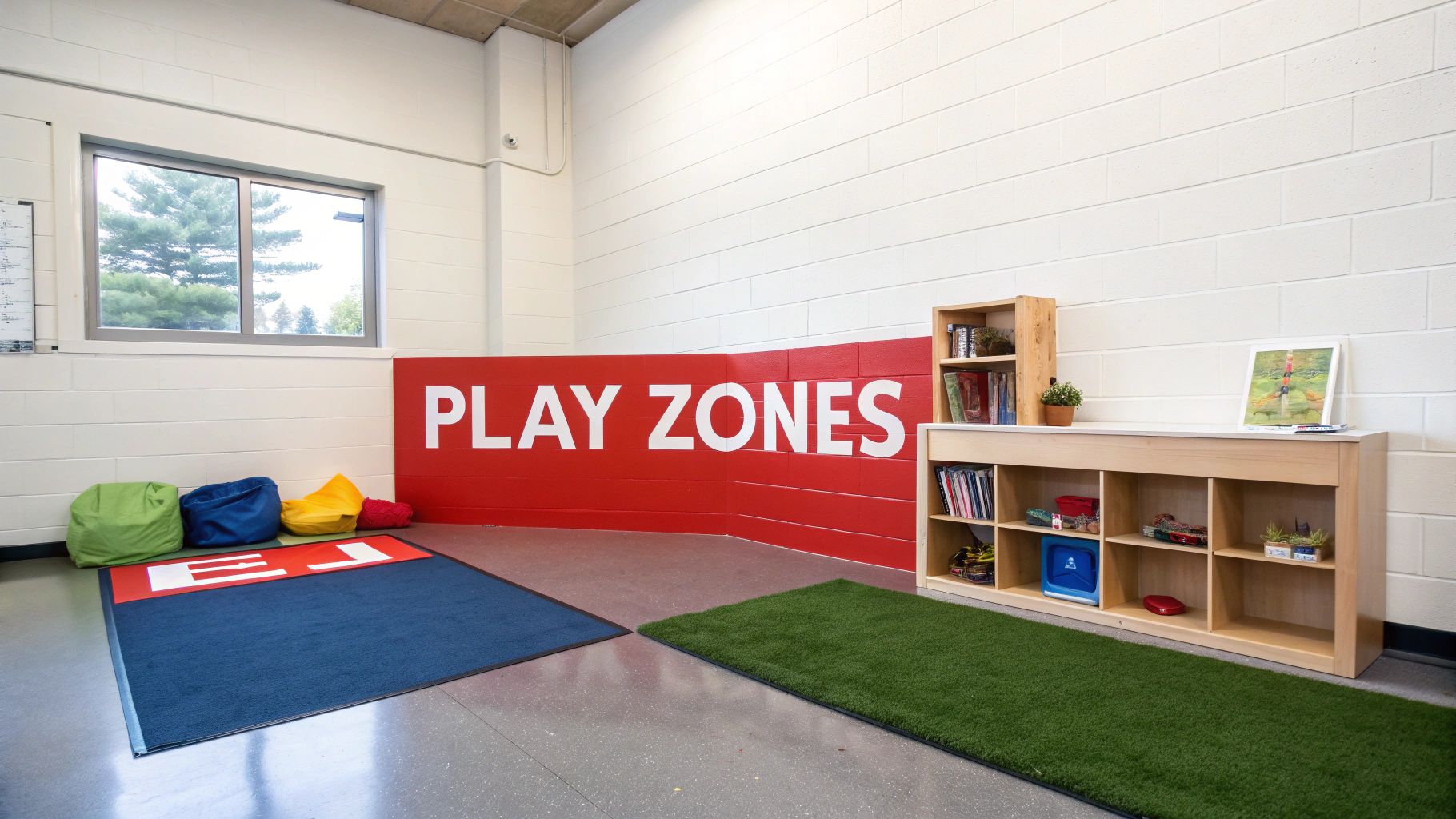
An organized playroom is a living system that has to work every day. The goal is to design a space that naturally encourages focused play and makes cleanup feel like part of the fun, not a chore. This means thinking beyond storage bins and creating dedicated "play zones" to contain the chaos and stop toys from taking over your entire home.
Create Purposeful Play Zones
A "play zone" is simply a designated spot for a specific activity. This trick slashes overstimulation and encourages kids to dive deeper into what they're doing. You don't need a huge room; even a small corner can become a special zone.
- A Building Station: A small rug with low bins for LEGOs and blocks keeps all those tiny, painful-to-step-on pieces in one place.
- A Reading Nook: A comfy beanbag and a forward-facing bookshelf make book covers irresistible.
- An Art Corner: A kid-sized table with a roll of paper and jars for crayons gives them a dedicated space to get creative.
For an extra layer of imaginative potential, explore how indoor play tents can help define these special areas.
Master the Art of Toy Rotation
If there's one secret weapon for maintaining an organized space, it's a solid toy rotation system. This strategy makes old toys feel brand new, slashes visible clutter, and helps kids appreciate what they have. The concept is simple: keep a limited number of toys out and store the rest out of sight. When you swap them, the "new" toys spark fresh interest.
Data Point: A core principle of the Montessori method involves using low, open shelves to ensure about 90% accessibility. This simple change can reduce a child’s decision fatigue by nearly 30% as they learn to find and put away items themselves.
This system is a game-changer for keeping play areas from exploding. It also cuts down on wasted playtime—studies show kids can lose up to 25% of their session just hunting for a toy in a cluttered room.
How to Implement a Rotation System
Getting a toy rotation going is easier than it sounds. You’ve already done the hard part of sorting, so now you just need to put that "Rotate" pile to work.
- Choose "On-Duty" Toys: Pick a balanced mix of 10-20 toys from different categories (building, pretend play, puzzles, etc.).
- Store "Off-Duty" Toys: Pack the rest into opaque, sealed bins and store them completely out of sight in a closet or garage.
- Set a Schedule: Rotate toys every two weeks to a month. Consistency is key, so set a calendar reminder.
With a solid rotation system, you can effectively manage the constant flow of new toys and prevent overwhelming clutter.
Getting Your Kids on Board with Cleanup
An organized system is only half the battle. The real win is teaching your kids to take ownership of their space. This is where patience and consistency become your secret weapons, turning cleanup from a daily power struggle into a collaborative family habit. It all boils down to making the system so simple a kid can actually use it.
Make Cleanup Simple and Visual
For toddlers and preschoolers, pictures are everything. A big bin of LEGOs is a chaotic mess, but a bin with a picture of a LEGO brick on the front is a clear, simple instruction. This empowers little ones who can't read yet, giving them the confidence to put things away by themselves. Once they can read, clear word labels work great. The goal is to make putting things away so obvious they don't have to ask, "Mom, where does this go?"
This approach provides just enough help for them to succeed on their own. Understanding the concept of scaffolding in child development can give you amazing insights into creating systems your child can grow with.
Turn Tidying into a Routine
The most effective way to get kids on board is to weave cleanup into your daily rhythm. Just like brushing teeth, tidying up before the next activity needs to become a non-negotiable transition.
Here are a few real-world examples that work:
- The "Cleanup Song": Blast a high-energy song and challenge everyone to put toys away before it ends.
- The "Five-Minute Tidy": Set a timer and race against the clock. This is a game-changer for short attention spans.
- Specific Instructions: Instead of the vague "clean your room," give one clear task at a time. "Put all the blue blocks back in the blue bin" is much easier for a child's brain to process.
Key Takeaway: Work alongside them, especially when they're young. Modeling the behavior you want to see is far more effective than just barking orders. You’re not just cleaning a room; you're teaching a lifelong skill.
Exploring practical strategies for getting kids to do chores can help you avoid the daily drama. When you frame it as a team effort, you build a sense of pride and responsibility that goes way beyond the playroom.
Common Questions About Organizing Kids Toys
Even with the best system, organizing kids' toys can feel like a puzzle with constantly moving pieces. Roadblocks are normal. Knowing how to handle them can keep your momentum going when you feel like you're drowning in doll clothes. Let's tackle some of the most common questions.
How Often Should I Declutter My Childrens Toys?
Aim for a major declutter twice a year: right before a birthday and again before the winter holidays. This proactive approach stops the toy collection from spiraling out of control before a wave of new items arrives.
For maintenance, a quick 15-minute check every month works wonders. If you spot a toy that hasn't been touched in three to six months, it's a strong candidate for the rotation box or donation pile.
Actionable Insight: Don't wait until you feel completely overwhelmed. Regular, small cleanouts are much less stressful than a massive annual overhaul and help make tidying a consistent family habit.
My Child Gets Upset When We Get Rid of Toys. What Do I Do?
This is a valid concern. A child’s toys are their prized possessions, and letting go can feel like a genuine loss. The key is to approach this with empathy and give them a sense of control.
Involve them by offering limited, manageable choices. Instead of asking, "What do you want to get rid of?" try a more guided approach:
- Frame it as helping others: "Let's find three special toys we can give to children who don't have as many. Which ones do you think would make another kid really happy?"
- Use a "maybe box": For sentimental items they struggle with, put them in a box out of sight for a month. If they don't ask for the toy, you can usually donate it without tears.
This method respects their feelings while still helping you reach your decluttering goal.
What Is the Best Way to Store LEGOs and Other Small Toys?
Tiny toys like LEGOs, beads, or Polly Pocket accessories require a special strategy. Deep bins are the enemy; all the good pieces sink to the bottom, forcing kids to dump everything out.
Instead, go for shallow, wide bins or under-the-bed storage containers. These let kids see and sift through pieces without making a huge mess. Another fantastic solution is a play mat that converts into a storage bag—cleanup is as simple as pulling a drawstring. For older kids with complex building sets, consider sectioned hardware drawers to sort pieces by color or type.
At Playz, we believe an organized play space is the foundation for creativity, learning, and big ideas. Our toys are designed to spark curiosity and encourage hands-on exploration, making cleanup just another part of the fun. Discover our collection of science kits, play tents, and creative toys that turn learning into an adventure. Visit Playz to find the perfect tools for your child's next big discovery.