

Which science gift fits the person you know, rather than the age printed on the box? A child who loves animals may have little interest in circuits, while an adult beginner might enjoy a guided engineering project more than a complicated gadget. The best gifts for science lovers match a genuine interest with something satisfying to do.
Start with the experience. Choose a one-time experiment kit for a focused introduction, reusable electronics for repeated building, a subscription for fresh projects, or a print resource for discovery without setup and cleanup. Then check age guidance, supervision needs, and whether the recipient wants to build, investigate, or read.
Specific interests matter as much as they do when choosing gifts for scuba divers. Buy for what someone already enjoys exploring, not just the broad category they belong to.
These seven options offer different starting points for children, teens, curious beginners, and adults. Most lean toward younger learners, so choose carefully for committed science enthusiasts who already own equipment or want advanced technical challenges.
1. Playz Kits
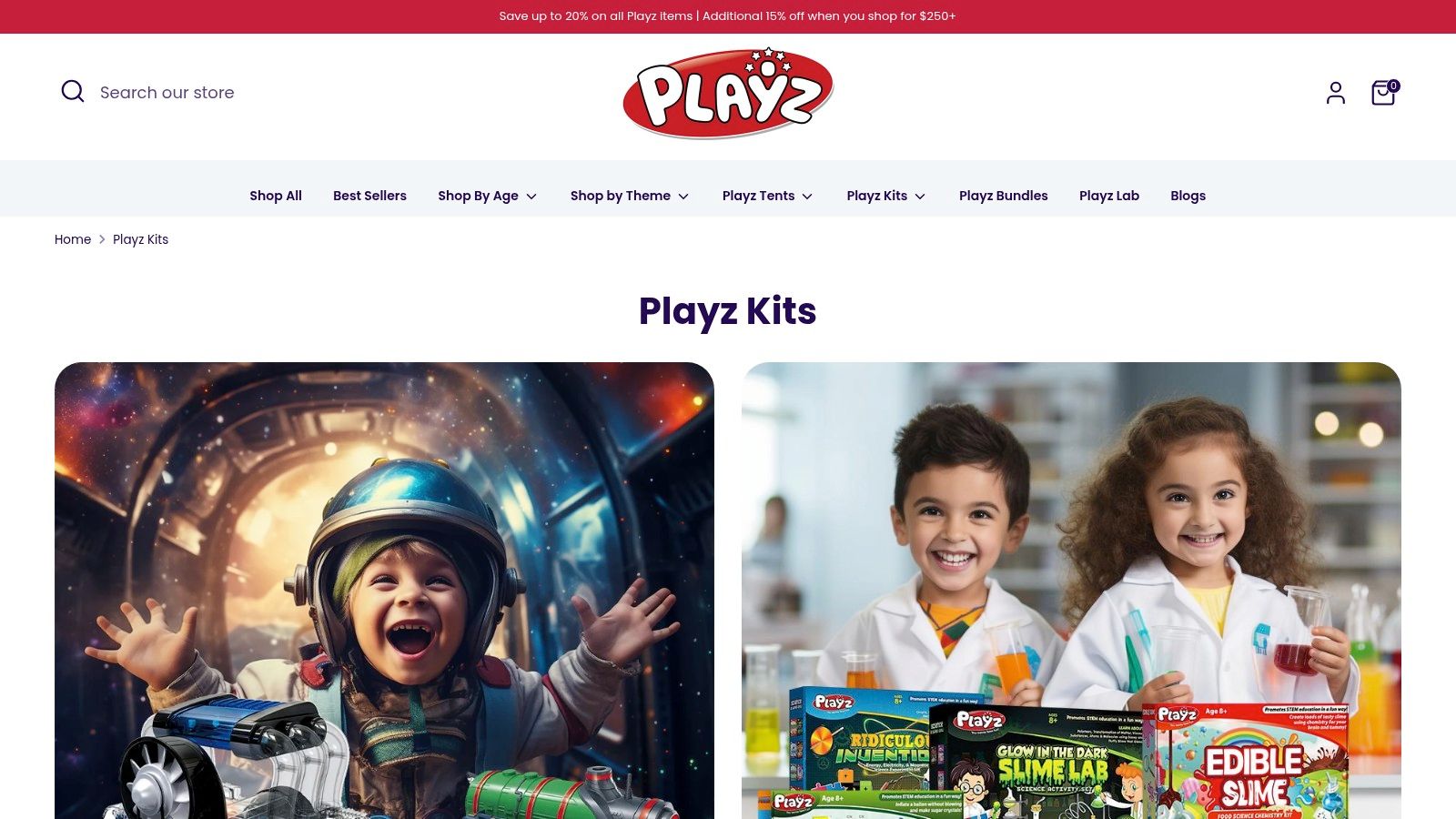
Choose Playz for young explorers who want to do science, not just read about it. The Playz Kits collection brings experiments and interactive STEM activities into the brand's broader play-based learning range. It's a strong starting point for parents seeking a purposeful, screen-free gift.
Think about the child's preferred activity before choosing a kit. A recipient who enjoys following a process needs a different challenge from one who wants to build, rearrange, and experiment freely. Match the actual product to that preference rather than assuming every science kit offers the same experience.
Hands-on learning has an established educational foundation. A Smithsonian account of experiment-based science education describes kits designed around students conducting experiments and learning through direct observation, rather than relying only on reading.
Check the individual kit before buying
The collection preview doesn't establish every product's contents, recommended age, difficulty, or price. Review the individual listing, especially if you're buying for a birthday party, classroom, or household where adults can't supervise throughout the activity.
- Pros: Hands-on activities offer an appealing route into curiosity, creativity, and STEM exploration without making a screen the center of play.
- Cons: Suitability varies between kits, so the collection name alone isn't enough to judge independence, mess, or challenge.
- Price and replay value: Check the selected product's current price, included materials, and whether experiments require replacement consumables.
For younger children, prioritize instructions that help adults guide without taking over. A randomized field test of preschool STEM kits found that families receiving instructional guidance used their kits more consistently and reported greater confidence supporting STEM learning than families receiving identical materials without that guidance.
Buying rule: Choose the activity your child will want to repeat, then check whether the kit makes repeating it practical.
Use Playz's guide to science kits for kids to refine your shortlist. For a first science gift, favor clear instructions and an inviting challenge over the biggest-looking box.
2. KiwiCo (Age-Matched Science and STEM Kits)
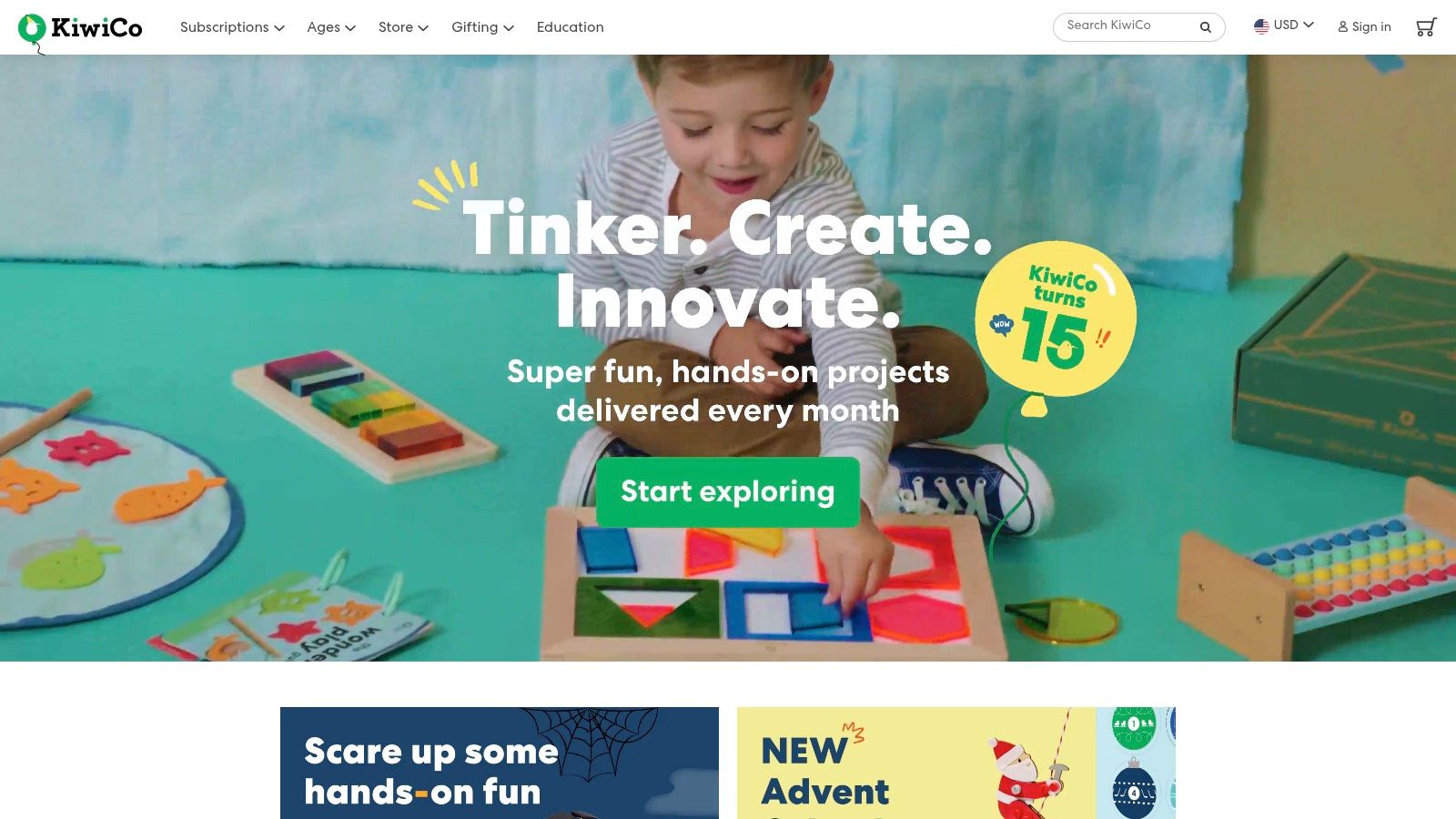
Buying for a niece whose interests change regularly? KiwiCo is the flexible choice. Its range includes age-banded projects spanning chemistry, robotics, engineering, and design, with options extending from toddlers through teens and adults.
KiwiCo lists subscription crates starting at $24, with free U.S. shipping for subscribers; individual kits and gift bundles have separate prices. Materials and instructions are included, and some products offer online extensions.
Choose a project before choosing a subscription
A one-off kit is the better purchase when you're unsure about the recipient's enthusiasm or the family's available time. A subscription suits someone who already enjoys completing guided projects and wants a fresh challenge regularly.
- Best feature: Broad age and subject choices make it easier to match the recipient rather than settling for a generic STEM label.
- Main compromise: A completed project may offer less replay value than a reusable building system.
- Buying check: Review renewal terms and distinguish optional online material from anything needed to complete the activity.
For a mechanically minded teenager, a suitable engineering project can complement broader interests such as aviation summer camps for teens. Choose the underlying activity they enjoy, such as construction or design, rather than expecting a crate to replace a specialist experience.
Compare monthly science kits for kids before committing to recurring deliveries. Fresh projects are valuable only when the household has time to use them. If unopened activities already occupy the cupboard, give a carefully chosen individual kit instead.
3. CrunchLabs (Build Box)
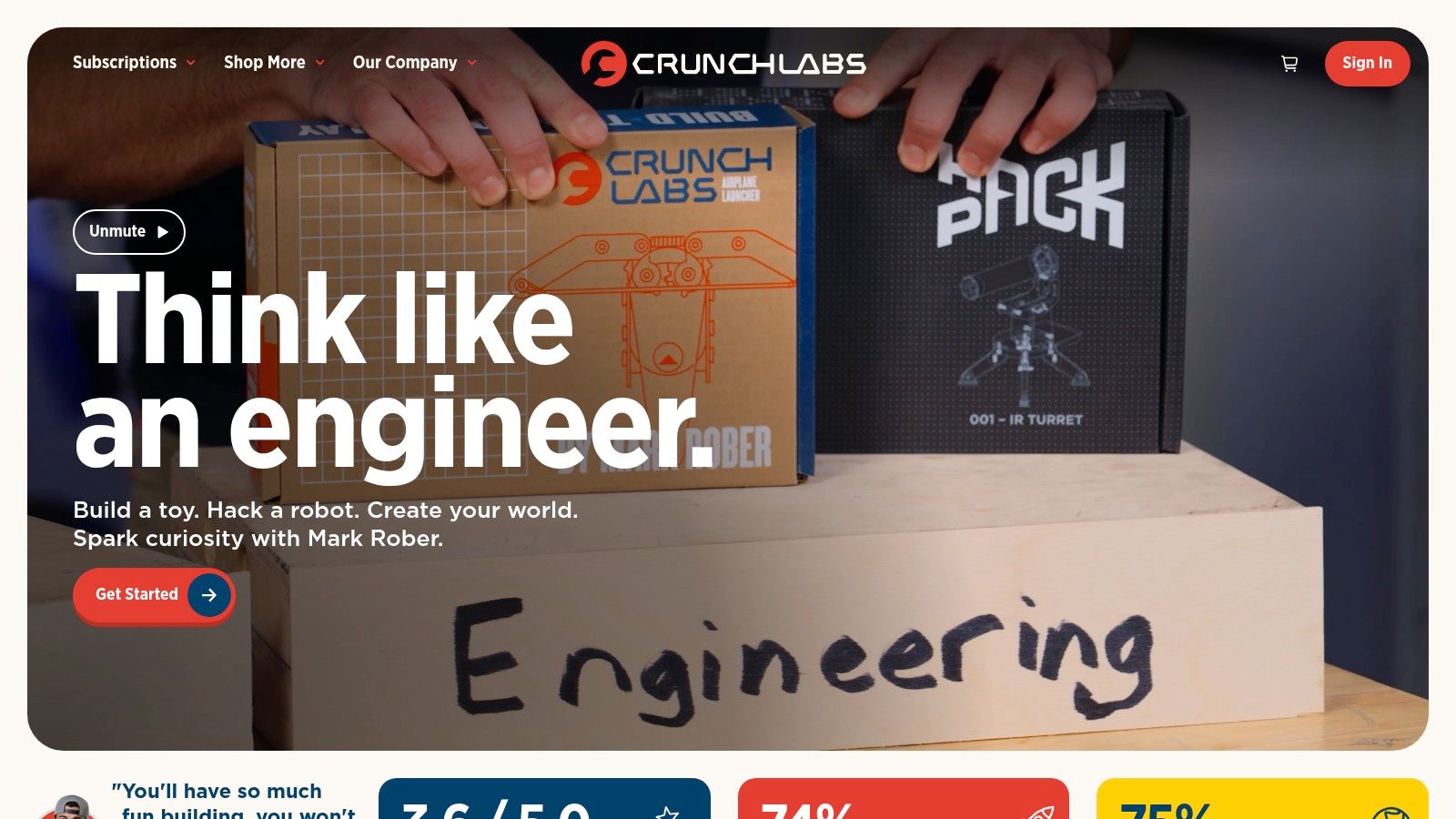
CrunchLabs Build Box is for children who want to assemble something they can play with afterward. Each monthly delivery pairs a build-it-yourself engineering toy with an educational video from Mark Rober. The appeal is the connection between construction, explanation, and play.
CrunchLabs lists Build Box for ages 8–13, with plans priced at $27.45 per box paid annually, $29.95 per box on an annual monthly-payment plan, or $98.85 per quarter, and reports a 4.8/5 customer rating. Confirm the checkout total and payment commitment before purchasing.
Compared with a chemistry experiment, this is the clearer recommendation for a child who wants a working object at the finish. Compared with Snap Circuits, it emphasizes a fresh monthly build rather than repeatedly recombining the same electronics components.
Know the commitment
The standard subscription automatically renews unless canceled. U.S. gift certificates let recipients enter their own shipping details, which is useful when you're giving from a distance.
Don't confuse paying monthly with buying a commitment-free monthly gift. Check the plan's duration as well as its payment schedule.
The videos need internet access and a suitable device, although they aren't required to complete the build. That makes Build Box a hands-on gift with a digital teaching option, not an entirely screen-free experience.
Pros: Clear engineering focus, a toy to use after assembly, and companion explanations. Cons: Recurring costs, a specific age fit, and less suitability for teenagers seeking advanced coding.
CrunchLabs also has separate offerings for younger children and older robotics-and-coding enthusiasts. Choose by product, not by brand recognition alone.
4. Smithsonian Store (Museum-Inspired Science Gifts)

Some recipients would rather examine a specimen or display a finished experiment than build another moving toy. The Smithsonian Store is the strongest browse for museum-minded gift recipients, with science, space, animals, and natural history alongside books, puzzles, and collectibles.
The Smithsonian Store lists an Electronic Crystal Growing Kit at $49 for ages 10 and up, including crystal-growing materials, goggles, a magnifying glass, and a light-up display base. It offers a concrete example of an experiment that also produces something to display.
That combination suits a patient child who enjoys observing changes and keeping the result. It's a weaker choice for someone who expects immediate action or wants to rebuild the same materials repeatedly.
- Pros: The museum-inspired assortment supports discovery through experiments, reading, puzzles, and display pieces.
- Cons: This is a broad gift store, not a specialist kit catalog, so educational depth and hands-on involvement vary.
- Practical limitation: Some experiments need supervision or time for results to develop; the crystal kit listing had no customer reviews when checked.
Choose observation over instant entertainment
For an adult, start with the subject and format they enjoy rather than automatically selecting a children's experiment. A natural-history collectible or book may fit better than a guided activity.
For a younger recipient, compare science gifts for kids and inspect the product's age guidance and contents. Buy the crystal kit for someone who will enjoy the process of watching and examining, not merely the promise of a glowing finished display.
5. Elenco Snap Circuits
Pick Snap Circuits when replay value matters more than receiving new materials. Children assemble working electronic projects by snapping components together without soldering, then take them apart for another build. It's the most direct electronics recommendation in this selection.
Elenco's Snap Circuits comparison chart lists the Beginner set at $24.95 for ages 5 and up and the Junior set at $34.95, alongside larger kits offering hundreds of projects. Treat those as comparison-chart prices and confirm the current retailer price before buying.
The snap-together format and illustrated instructions suit a child who enjoys tracing how parts connect. Specialty versions explore light, sound, motion, and alternative energy, while Elenco identifies CircuitSafe fuse technology as a product-line feature.
Reusable parts, focused subject matter
Unlike a consumable experiment, the central attraction is returning to the same components. Choose a manageable starter set for a newcomer rather than assuming the largest box will be the most satisfying.
- Pros: Reusable components, different entry points, and a clear focus on electricity and electronics.
- Cons: It won't satisfy a child whose real interest is biology, geology, or chemistry.
- Supervision: Younger builders and children attempting complex layouts may need help following instructions and checking connections.
Replay-value test: Ask whether the recipient enjoys rebuilding and troubleshooting, not just finishing.
For a technically experienced teenager or adult, inspect the actual project depth before purchasing. More projects don't automatically mean more advanced learning. If they specifically want programming, choose a coding-oriented product rather than expecting a circuit kit to meet that goal.
6. Thames & Kosmos (Science and Engineering Kits)

A child who asks about plants needs a different gift from one who takes an interest in machines. Thames & Kosmos is the best place to start when the recipient already has a favorite science discipline.
The Thames & Kosmos range includes chemistry, biology, physics, robotics, nature, engineering projects, and educational games. Options span early-childhood activities through more involved projects, with prices and availability varying by kit and retailer.
The advantage is specificity. Rather than buying an assortment and hoping something appeals, choose an experiment, model, or robotics project that connects with the questions the recipient already asks.
Read the manual before gifting
Product information and manuals are available for selected kits. Use them to assess the actual work involved, especially when buying for a teacher, childcare provider, or family with limited preparation time.
- Check the activity: Is the recipient experimenting, assembling a model, or following a mostly fixed sequence?
- Check the supplies: Some experiments may require additional household materials.
- Check the support: Confirm age guidance and adult-supervision needs rather than judging difficulty from the packaging.
Pros: Strong subject variety and opportunities to combine learning with a substantial build. Cons: Contents, difficulty, stock, and pricing require product-level checking.
Compare the selected product with other best science kits for kids before buying. For an older learner, prioritize an interesting question or mechanism over a youthful-looking theme. For a younger child, clear instructions and achievable steps matter more than how impressive the finished model appears.
7. National Geographic Kids (Magazine Gift Subscription)
Choose National Geographic Kids for the child who loves discovering facts but doesn't always want a project. Its recurring print issues cover animals, science discoveries, activities, and general-interest stories. It's a reading-first alternative to another box of components.
The U.S. National Geographic gift-subscription page lists National Geographic Kids for ages 6–8 at $39 per year, a magazine-and-reader-book bundle at $69 per year, and National Geographic Little Kids for ages 3–5 at $39 per year.
A magazine fits quiet reading, shared browsing, and households that don't want experiment setup or cleanup. It won't replace the experience of testing materials or building a working model.
Give reading, not disguised homework
Let the child browse according to interest instead of turning every issue into a quiz. If they return repeatedly to animal stories, use that interest to guide a later nature-focused gift.
Advantages: Less equipment clutter, broad discovery, and a clearly stated annual gift budget. Trade-offs: The standard options target younger readers, and this is a recurring subscription rather than a single present.
Check the checkout terms, delivery details, and any renewal arrangements before paying. For children who prefer making and testing, compare hands-on kids' science gifts instead.
Older readers need age-appropriate material beyond these younger-reader subscriptions. A resource such as DNA sequencing basics for beginners illustrates the kind of focused topic to look for once a recipient's interests become more specialized.
Buy the magazine for a willing reader, not as a substitute for the experiment kit they want.
Top 7 Science Gifts: Side-by-Side Comparison
| Item | Format & complexity 🔄 | Resources / commitment ⚡ | Expected outcome 📊 | Ideal use & key advantage ⭐ |
|---|---|---|---|---|
| Playz Kits | Hands-on experiments and activities; contents and difficulty vary by kit | Kit-specific; screen-free | Supports curiosity, creativity, and STEM exploration | Children who enjoy playful, screen-free learning; check each kit's age guidance and contents 💡 |
| KiwiCo, Age-Matched Science and STEM Kits | Guided projects across science, engineering, technology, and art | One-off kits, bundles, or recurring subscriptions; materials and instructions included | Builds practical skills through age-matched projects | Flexible gifting across ages and interests; subscription terms may apply |
| CrunchLabs, Build Box | Monthly engineering builds with companion videos; aimed at ages 8–13 | Recurring subscription with automatic renewal; videos need internet and a device | Combines construction with explanations of engineering concepts | Children who enjoy building and engineering; gift certificates are available |
| Smithsonian Store, Museum-Inspired Science Gifts | Broad assortment of kits, activities, books, and collectibles | Varies by product; some experiments may need supervision | Encourages discovery through museum-inspired science, nature, and history | Shoppers seeking educational gifts beyond experiment kits; some listings specify age and contents 💡 |
| Elenco Snap Circuits | Snap-together electronics projects; ranges from beginner to advanced sets | Reusable components; no soldering required | Introduces circuit and electronics concepts through repeated projects | Children interested in electricity and electronics; multiple kit levels support progression |
| Thames & Kosmos, Science and Engineering Kits | Experiments, models, and robotics across several science subjects | Varies by kit; some may need adult supervision or household supplies | Offers focused exploration and hands-on subject learning | Recipients with a specific science interest; manuals are available for selected kits 💡 |
| National Geographic Kids, Magazine Gift Subscription | Print reading with science stories, facts, and activities | Annual recurring subscription; options for ages 3–5 and 6–8 | Encourages reading and curiosity about science and animals | Young readers; a low-clutter alternative to a hands-on kit |
Choose Curiosity That Keeps Giving
The best gifts for science lovers begin with a simple match: the right subject, the right challenge, and the right amount of involvement. Choose Playz or another hands-on kit for an active young explorer, Snap Circuits for an electronics enthusiast, and a subject-specific Thames & Kosmos project for someone with a clear interest.
For ongoing discovery, choose KiwiCo or CrunchLabs when the recipient enjoys regular projects and the household welcomes recurring deliveries. Choose National Geographic Kids when reading is the attraction, or browse Smithsonian Store when museum-inspired discovery and display matter more than rebuilding.
Make the final buying decision practical
Before purchasing, verify age guidance, included materials, supervision needs, current pricing, and renewal terms. Consider where the activity will happen, who will help, and what the recipient can do with it afterward.
Safety deserves particular attention when younger siblings share the home. CPSC guidance prohibits small parts in products intended for children under 3 and warns that chemistry sets and other small-part hobby toys can be dangerous for younger children, so plan secure storage as carefully as the activity itself.
- For limited adult availability: Favor clear instructions, manageable setup, and an activity the recipient can complete at their current skill level.
- For lasting use: Check reusable apparatus, replacement materials, durability, and whether the finished project remains interesting.
- For a fixed budget: Compare the full commitment, including refills, household supplies, shipping, and subscription renewals.
Don't buy a science gift solely because it looks educational. Buy it because you can identify the part this particular person will enjoy: connecting components, observing a change, building a mechanism, or reading about animals.
Choose one gift that fits their interests now, rather than an ambitious project they may grow into someday. For a child who learns through active exploration, start with Playz's screen-free learning collection and select the individual kit whose age guidance and activities suit them best.
Playz offers science kits, creative toys, and play-based activities for children who enjoy learning by doing. Visit Playz to explore screen-free gift options, then check the individual product's activities and age recommendations to find a satisfying match for your young science lover.