


Fine motor skills involve the small, precise movements of the hands and fingers that allow kids to do everything from stacking blocks to eventually tying their own shoes. These playful activities are more than just a way to pass the time—they are foundational exercises that build the groundwork for academic success and daily independence. By turning practice into play, you can help your child develop the dexterity and confidence needed to thrive.
Why Small Hand Movements Build Big Brains
Have you ever watched a child laser-focused on placing one more block on a wobbly tower? Or seen the sheer determination on their face as they try to zip up a jacket? It might look like simple play, but you're actually witnessing a powerful brain-building workout in action.
These precise movements are the heart of fine motor skills. They require the small muscles in the hands, fingers, and wrists to work in concert with the eyes—a connection known as hand-eye coordination. This is the skill that allows a child to thread a bead, cut along a line with scissors, or form the letters of their name.
From Confidence to Classroom Success
Mastering these small physical challenges provides a massive boost to a child's confidence. Imagine the pride a preschooler feels when they finally button their own coat. That "I did it myself!" moment is a powerful motivator that encourages them to tackle even bigger challenges down the road.
This feeling of accomplishment directly impacts how they approach learning. A child who feels capable with their hands is more likely to engage in classroom activities, whether it's an art project or a hands-on science experiment. They build persistence with every LEGO they connect and problem-solving skills with every puzzle piece they fit into place.
Key Takeaway: The development of fine motor skills isn't just about physical dexterity; it's about wiring the brain for higher-level thinking. When a child engages in these activities, they are literally building neural pathways that support concentration, planning, and follow-through.
Laying the Groundwork for Academic Achievement
The link between a child's dexterity and their academic future is stronger than most people realize. In fact, strong fine motor skills are a key predictor of school readiness. When kids start kindergarten, they are expected to hold a crayon, use scissors, and begin writing—all tasks that depend on well-developed hand strength and control.
Research shows a direct connection between early fine motor ability and later academic achievement. One study found that children with strong skills in this area were more likely to excel in subjects like math and maintain better attention spans by ages six and seven.
Ultimately, every playful session with clay or crayons is an investment in your child's cognitive growth, building the physical and mental stamina they'll need for school. You can dive deeper into the benefits of hands-on learning in our detailed guide.
Engaging Fine Motor Activities for Toddlers And Preschoolers
For toddlers and preschoolers, the world is a giant playground for learning, and their hands are the primary tools for exploration. Every time they squish, stack, or scribble, they’re building crucial pathways in their brains. Creating opportunities for these small hand movements is one of the best ways to support their growth.
The goal is to make these fine motor activities feel like pure fun. You don’t need fancy equipment; many of the best tools are probably already in your kitchen or craft drawers. By encouraging practice through play, you can turn everyday moments into powerful learning experiences.
This timeline illustrates how simple play activities evolve into essential life skills, ultimately supporting cognitive success.
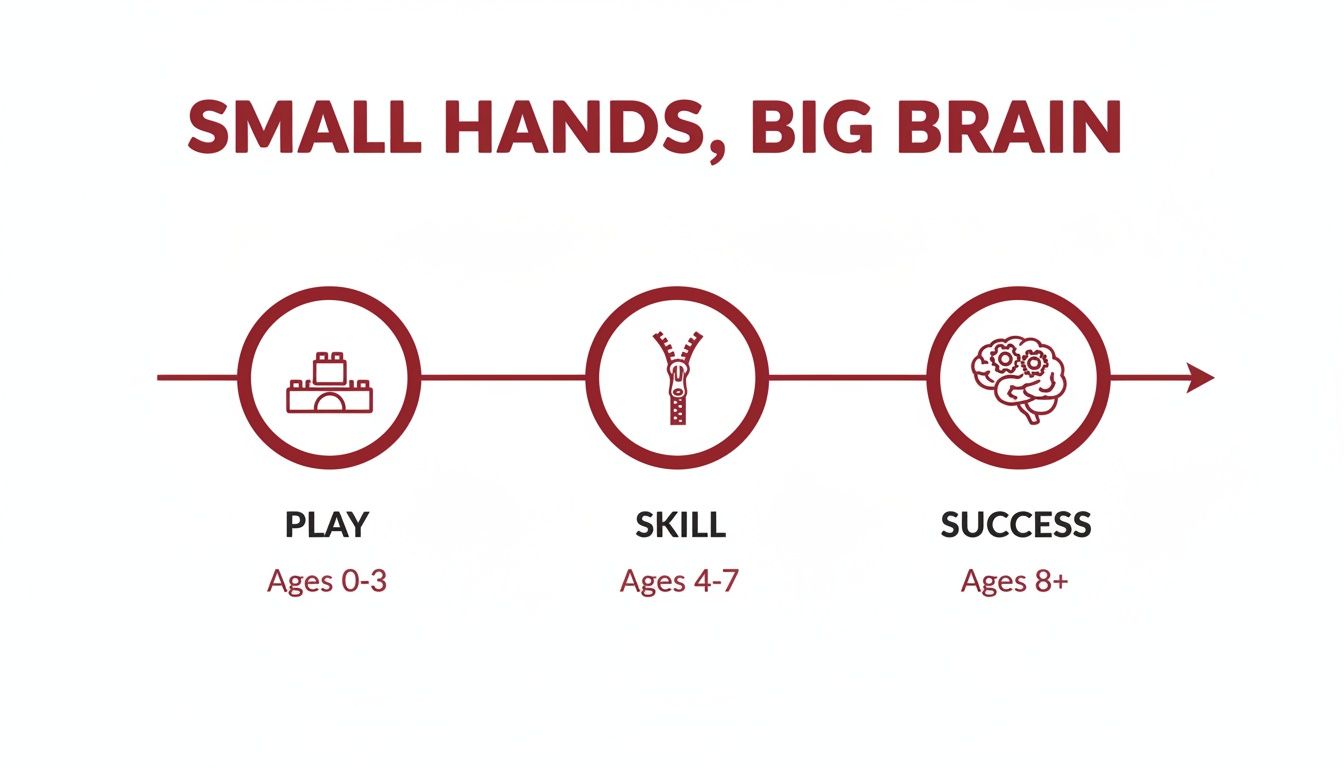
As you can see, foundational play with blocks directly leads to practical skills like writing, which in turn fosters overall brain development and success. It all starts with the basics.
Typical Fine Motor Milestones for Ages 1-4
Every child develops at their own pace, but having a general roadmap can be helpful. This quick guide outlines typical fine motor milestones and offers activity ideas to support your child at each stage.
| Age Range | Common Milestones | Actionable Activity Ideas |
|---|---|---|
| 1-2 Years | Starts developing pincer grasp (thumb and forefinger), claps hands, stacks 2-3 blocks, scribbles with a crayon. | Pushing pom-poms into a bottle, peeling painter's tape from a table, stacking chunky blocks. |
| 2-3 Years | Builds a tower of 6+ blocks, turns single pages in a book, begins to snip with scissors, threads large beads. | Creating shapes with Play-Doh, solving simple puzzles with knobs, threading large pasta onto yarn. |
| 3-4 Years | Draws circles and squares, cuts along a line with scissors, buttons large buttons, pours liquid with some spilling. | Using tongs to move cotton balls, building with interlocking blocks like LEGO Duplos, practicing with zippers and large buttons on a jacket. |
Remember, these are just guidelines. The focus should always be on providing a variety of fun, engaging opportunities for your child to practice and build confidence.
Getting Started with Pincer Grasp Practice
One of the first major fine motor milestones is the pincer grasp—the ability to pick up small objects using the thumb and forefinger. This seemingly simple action is the foundation for holding a pencil, buttoning a shirt, and zipping a coat.
Here are a few simple, practical ideas to get started:
- Snack Time Fun: Place small, age-appropriate snacks like puffs or blueberries on their highchair tray. Letting them pick them up one by one is a tasty and motivating way to practice.
- Pom-Pom Push: Give your child colorful pom-poms and an empty plastic water bottle. Show them how to push the pom-poms through the small opening—a task that requires focus and precision.
- Peeling Painter's Tape: Stick short strips of low-tack painter's tape on a tabletop. Your toddler will love the challenge of picking at the edge to peel it off, strengthening their fingertips.
These activities require almost no setup but offer huge developmental benefits, building the hand strength and hand-eye coordination needed for more complex tasks.
Actionable Insight: Focus on activities that isolate the thumb and index finger. This targeted practice builds the muscle memory for a mature pincer grasp, a cornerstone of fine motor control.
Building Skills with Stacking and Threading
Once your child is comfortable with basic grasping, you can introduce activities that involve more coordination and planning. Stacking and threading are classic fine motor activities for a reason—they are incredibly effective.
There are many fun art and crafts for toddlers that are perfect for honing fine motor control while sparking creativity.
Stacking Adventures
You don’t need special equipment for stacking. Chunky wooden blocks, large plastic containers, or sturdy, empty food boxes work perfectly.
Start simple by showing your child how to place one block on top of another. Encourage them to build taller towers and celebrate the inevitable crashes—it's a huge part of the fun! This activity develops hand-eye coordination, grasp control, and an early understanding of balance.
Pasta Threading Project
For this activity, you just need yarn with one end taped up (to create a "needle") and some large, tube-shaped pasta like penne or ziti.
Show your child how to hold the yarn in one hand and a piece of pasta in the other, then guide the yarn through the hole. Threading requires bilateral coordination—using both hands together for different tasks—which is a significant developmental step.
Exploring Sensory Play for Hand Strength
Sensory bins are a fantastic, open-ended way to build up the small muscles in the hands. The simple act of scooping, pouring, and squeezing different materials provides a great workout for little fingers.
A recent report showed that 93.3% of children aged 2 to 2.5 years are on track with their fine motor skills, and sensory play is a wonderful way to support this progress.
Creating a sensory bin is easy. Start with a base like dry rice, beans, or water. Then, add tools for exploration:
- Scoops and Spoons: Encourage wrist rotation and control.
- Tongs or Tweezers: Perfect for picking up pom-poms or beads, refining the pincer grasp.
- Small Cups: Pouring from one cup to another develops control and coordination.
Keep these play sessions short and sweet to match a toddler's attention span. For more inspiration, check out our guide on learning activities for toddlers at home.
Skill-Building Ideas for Early Elementary Kids
Once kids hit the early elementary years, the demands on their hands skyrocket. Kindergarten and first grade bring a world of pencils to grip, scissors to master, and keyboards to navigate. Fine motor activities need to level up, shifting from playful exploration to building the precision, strength, and endurance kids need to succeed in the classroom.
The focus moves from a simple grasp to more complex, coordinated movements. The goal is to build the hand muscles needed to write a sentence without fatigue and the dexterity to cut along a tricky curved line. The best part? You can build these skills through fun challenges that feel nothing like homework.
From Awkward Grips to Confident Writers
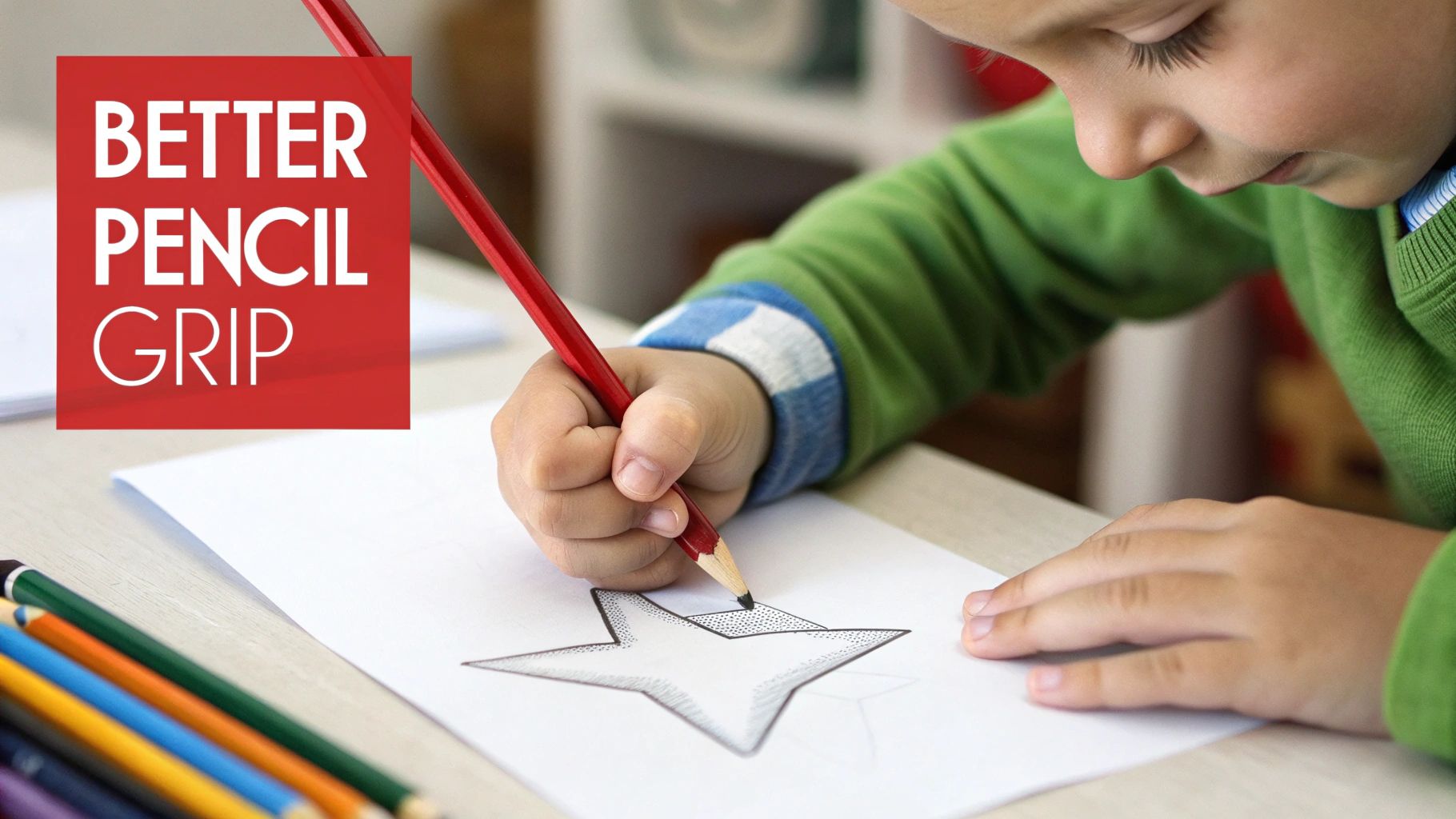
One of the biggest hurdles in early elementary school is learning to hold a pencil correctly. An efficient grip, like the dynamic tripod grasp (where the pencil rests on the middle finger and is held by the thumb and index finger), makes all the difference. It allows for fluid movement and prevents hand cramps during writing. By around age six, most kids should be settling into a more mature grip.
Instead of constantly correcting their hold, try fun activities that naturally encourage the right finger position.
- Use Small Drawing Tools: Give them small, broken crayons or nubs of sidewalk chalk. These are too short to be held in a clumsy fist, forcing them to use their fingertips in a pincer-like grasp.
- Work on a Vertical Surface: Tape paper to a wall or use an easel. Drawing or writing upright naturally encourages better wrist extension and a more functional grip.
- Follow a Creative Prompt: Learning a new skill like drawing dogs step by step is a huge motivator. Following instructions to create a recognizable image boosts hand-eye coordination and precision.
These tricks help strengthen the exact muscles needed for writing, but it all feels like a game.
Building Hand Strength Beyond the Page
Strong hands are crucial for everything from pressing hard enough with a crayon to using a hole puncher. Without endurance, kids get tired and frustrated with tasks that require sustained effort.
Expert Insight: Many classroom struggles stem not from a lack of understanding, but from a simple lack of physical stamina in the hands. When a child's hand gets tired, their focus drifts and their work can become sloppy, which is incredibly discouraging.
Here are a few real-world activities for building serious hand strength:
- Set Up a DIY Trail Mix Bar: Put out bowls of nuts, seeds, dried fruit, and chocolate chips. Hand your child scoops and tongs to create their own custom snack mixes. All that scooping and transferring is a great workout.
- Power Up the Playdough: Move beyond rolling snakes. Encourage them to knead, pinch, and squeeze therapy putty or firm playdough. Using tools like a garlic press or playdough extruders adds muscle-building resistance.
- Become Spray Bottle Artists: Fill a spray bottle with water and let them "paint" the sidewalk. Squeezing the trigger repeatedly is a fantastic hand-strengthening exercise.
These activities brilliantly weave skill-building into everyday life.
Precision and Dexterity for School Success
As schoolwork becomes more complex, so do the fine motor demands. Cutting out intricate shapes, building detailed models, or handling delicate science tools all require a high level of dexterity.
This is the perfect time to introduce toys and kits that require careful manipulation.
Model-Building Kits and Science Sets
Beginner model kits or science sets are treasure troves of fine motor practice. They are packed with opportunities:
- Tiny Parts: Picking up and placing tiny screws or gears refines the pincer grasp.
- Cool Tools: Using kid-friendly screwdrivers, tweezers, and eyedroppers teaches tool control.
- Following Directions: The process of following a visual diagram to build something hones planning skills and reinforces precision.
Playz science kits, for instance, often include droppers and test tubes that require a steady hand and careful measuring—skills that directly translate to science class. For even more ideas, check out these other activities for 1st grade students that blend learning and play.
Advanced Fine Motor Challenges for Tweens and Older Kids
Fine motor skills aren't just for learning to hold a crayon. As kids hit the tween and teen years, these skills must evolve into something more refined: precision, patience, and the ability to perform complex movements. This is more important today than ever.
Alarmingly, recent assessments show that 36% of 11-12-year-olds scored below average in fine motor skill proficiency. Experts often point to increased screen time and less hands-on play as contributing factors. You can dive deeper into the findings on 21st-century child development for more context.
The trick is finding engaging, screen-free activities that tweens will actually think are "cool." By framing these challenges as rewarding hobbies, we can build the dexterity they'll need for creative arts, science, and tech.
Precision Projects They Will Actually Enjoy
Getting older kids on board means picking challenges with a satisfying payoff—a cool model for their shelf or a piece of art they can be proud of.
Here are a few ideas that swap childish play for sophisticated skill-building:
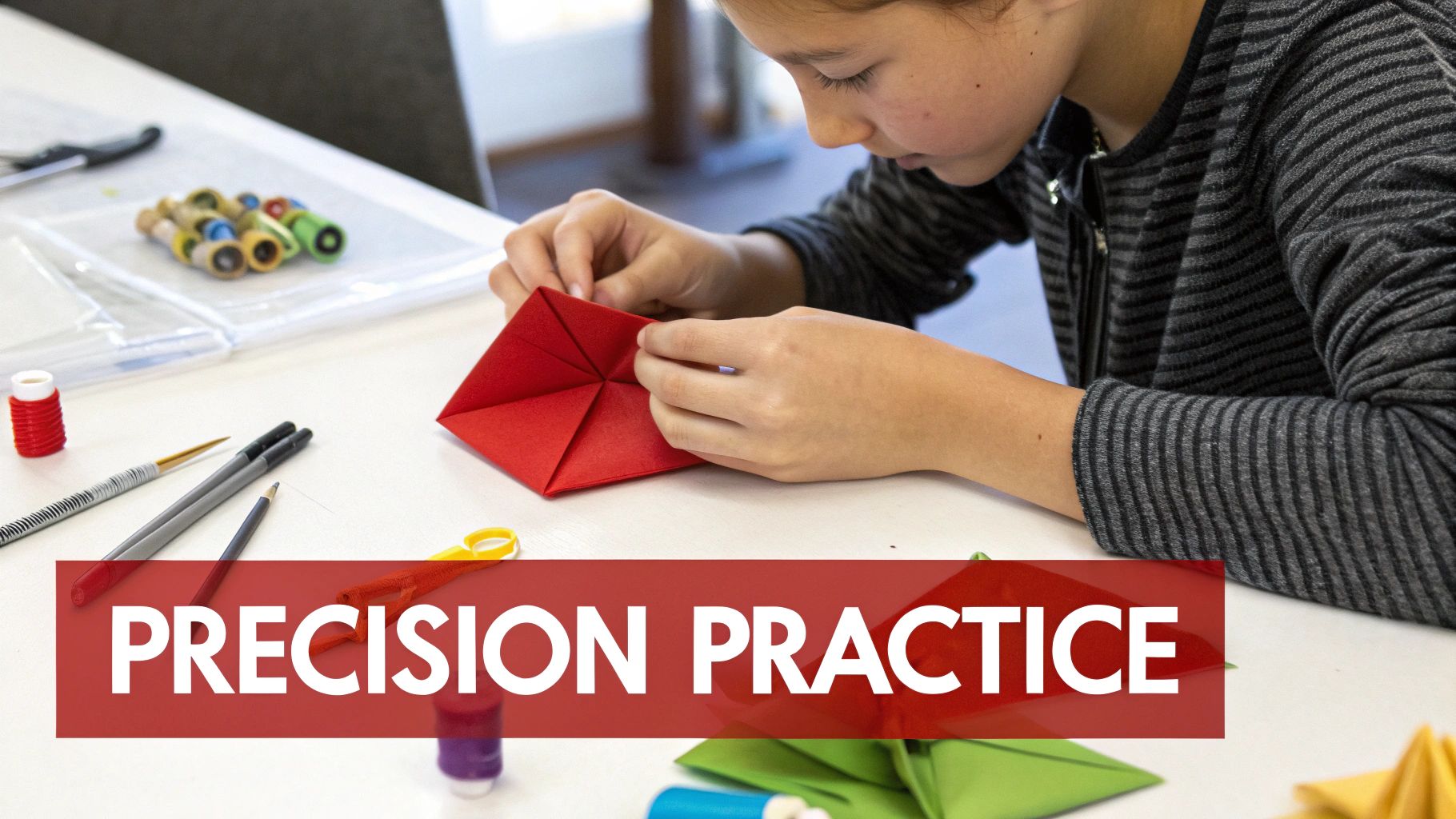
- Origami Creations: The art of paper folding is a powerhouse for developing fine motor control. It forces incredible precision with folds and creases while turning a flat piece of paper into something amazing.
- Complex Model Building: Level up from basic blocks to detailed model kits of cars, planes, or architectural replicas. These kits require handling tiny parts, using small tools, and following detailed instructions.
- Friendship Bracelet Making: The intricate knots and patterns demand excellent finger dexterity and bilateral coordination—using both hands for different, complementary actions. The result is something they can wear or share.
These activities sneakily build focus and patience, with a tangible reward for getting the tiny movements just right.
The Artistic Path to Dexterity
For creative tweens, art is a fantastic way to sharpen fine motor skills without it feeling like a lesson. The focus naturally shifts to control, detail, and bringing ideas to life with their hands.
Introduce them to more advanced artistic techniques that call for a steady hand.
Detailed Drawing and Sketching
Encourage them to experiment with:
- Shading Techniques: Learning to create depth with methods like cross-hatching or stippling requires incredible pencil control.
- Detailed Pen Work: Using fine-tipped pens to create intricate patterns or line art builds precision and hand endurance.
- Grid Drawing: This classic artist's trick of recreating an image one square at a time sharpens observation skills and the ability to make small, accurate marks.
Key Takeaway: Artistic pursuits build a powerful connection between what the mind envisions and what the hand creates. This not only refines motor skills but also boosts creative problem-solving and spatial awareness.
Connecting Dexterity to Future Success
It’s worth explaining to tweens that these aren't just hobbies; they're training for the future. The same precision needed to glue a tiny part onto a model car is echoed in the work of a surgeon, an engineer, or a graphic designer.
Building advanced fine motor skills creates a solid foundation for a huge range of potential careers and passions. A steady hand is invaluable whether handling lab equipment, typing code, or playing a musical instrument. Framing these activities as stepping stones to future goals makes them relevant and exciting.
How To Help a Child Who Is Struggling with Fine Motor Skills
It’s tough watching your child get frustrated with tasks that seem to come easily to their friends, like using a zipper or holding a pencil. When you notice these persistent challenges, it can be a sign that their fine motor skills need extra support. The great news is there are many gentle, encouraging ways to help them build strength and confidence at home by turning practice into play.
Identifying Common Challenges and Solutions
First, try to identify the specific hurdle. Is it a lack of hand strength, poor hand-eye coordination, or the frustration itself? Once you have a hunch, you can pick activities that will make a difference.
Here are a few common scenarios and practical solutions:
-
The Challenge: Weak Hand Strength. Your child’s hand tires quickly when coloring, or they can’t squeeze a glue bottle hard enough.
- The Solution: Introduce "heavy work" for their hands. Squeezing therapy putty or firm playdough is a classic for a reason. Using a spray bottle to water plants or "paint" the sidewalk is another fantastic exercise that builds crucial muscles without feeling like work.
-
The Challenge: Poor Dexterity. They struggle to pick up tiny objects like cereal or manipulate small toy parts.
- The Solution: Bring in the tools. Use tongs and kid-safe tweezers for a game of moving pom-poms between bowls. Using an eyedropper to transfer colored water onto a coffee filter is another great way to get a fine-motor workout while creating art.
Turning Frustration into Progress
For many kids, the biggest barrier is emotional. Frustration can shut down an activity in seconds. Your role is to be their coach, helping them see that small steps forward are still progress.
The best strategy is to break overwhelming tasks into manageable chunks. If getting dressed is the source of tears, focus on just one part. Maybe today’s goal is simply pulling the zipper tab up the first inch after you’ve connected it.
Key Takeaway: Celebrate every small win with genuine enthusiasm. When you praise the effort—"Wow, I love how you kept trying with that button!"—instead of just the final result, you build resilience. You teach them that the goal is progress, not perfection.
This positive reinforcement can change their mindset from "I can't do it!" to a determined "I'll try again."
When to Seek Professional Guidance
While you can accomplish so much at home, sometimes a child needs more specialized support. Trust your gut. If you see that these struggles are persistently affecting their daily life or not improving, it may be time to chat with a professional.
Knowing when to ask for help is a huge part of being your child’s best advocate. For a better baseline, you can learn more about general childhood development milestones in our guide.
Consider reaching out to:
- Your Pediatrician: Always your best first stop. They can assess your child’s overall development and provide a referral if necessary.
- An Occupational Therapist (OT): OTs are experts in fine motor skills. They can perform a detailed evaluation and create a personalized plan of fun, therapeutic activities to help your child thrive.
Seeking guidance is a sign of strong parenting. With the right mix of playful practice and expert support, you can help your child build the skills and confidence to take on any challenge.
Frequently Asked Questions About Fine Motor Skills
Navigating childhood development often brings up questions. Here are clear, straightforward answers to what parents most often ask about fine motor skills, helping you feel confident as you support your child's journey.
What Is The Difference Between Fine Motor and Gross Motor Skills?
Think of it this way: gross motor skills involve the large muscle groups for big, whole-body movements like running, jumping, and throwing a ball. Fine motor skills, on the other hand, use the small, precise muscles in the hands, fingers, and wrists for detailed tasks like writing, buttoning a shirt, or picking up a bead.
An easy analogy: gross motor skills build the house’s foundation, while fine motor skills handle the detailed wiring and decorating inside. Both are essential and work together for a child's physical development.
When Should I Be Concerned About My Child's Fine Motor Skills?
Remember that every child develops at their own pace. It's more helpful to look for consistent patterns over time rather than fixating on a single missed milestone.
However, you might consider talking with a professional if you notice your child:
- Consistently struggles with age-appropriate tasks like using a fork or holding a crayon.
- Actively avoids any fine motor skills development activities, such as drawing, puzzles, or building with blocks.
- Seems to be losing skills they once had (known as regression).
A quick chat with your pediatrician or an occupational therapist can provide expert guidance and peace of mind.
How Much Time Should We Spend on These Activities?
Quality always wins over quantity. Aim for short, playful bursts of activity—10-15 minutes at a time—sprinkled naturally throughout the day. A long, forced session usually leads to frustration for everyone.
The most effective practice happens when it doesn’t feel like practice at all. Weave it into everyday routines, like stirring pancake batter, sorting silverware, or trying to zip up their own jacket.
Does Too Much Screen Time Hurt Fine Motor Development?
The primary issue with excessive screen time is what it displaces. An hour spent swiping on a tablet is an hour not spent building with LEGOs, squishing playdough, or drawing.
Those hands-on, tactile activities build a range of muscles and coordination that swiping a screen cannot replicate. For a deeper look, you can learn more about how sensory play supports development in our article.
The goal isn't to eliminate screens but to find a healthy balance. Ensure screen time is balanced with plenty of real-world, hands-on play to support robust, well-rounded fine motor development.
At Playz, we believe that hands-on exploration is the key to unlocking a child's potential. Our science kits and creative toys are designed to make learning an adventure, turning every experiment into a powerful opportunity for fine motor skill development. Discover how we make learning fun at https://www.playzusa.com.