

Welcome to the magical, messy, and momentous world of toddlerhood! This period is defined by incredible growth, where every interaction becomes a building block for your child's future. You don't need a formal curriculum or expensive gadgets to foster this development; the most powerful learning happens right at home, through simple, joyful play.
This guide is your go-to resource for fun and effective learning activities for toddlers at home. We've curated a collection of engaging, developmentally-appropriate ideas that turn everyday moments into meaningful educational opportunities. Each activity is broken down by the skills it targets, from fine motor and language to early STEM concepts and creative expression, ensuring you can easily find the perfect fit for your child's needs and interests.
The goal is to integrate learning seamlessly into your daily routines. For a comprehensive guide on fostering growth through daily activities, explore the 'Eat Play Say' approach to holistic toddler development, which aligns perfectly with this hands-on philosophy. This article will provide you with the specific tools to transform your living room, kitchen, and backyard into the ultimate learning playgrounds. Let's dive in and unlock your toddler’s amazing potential.
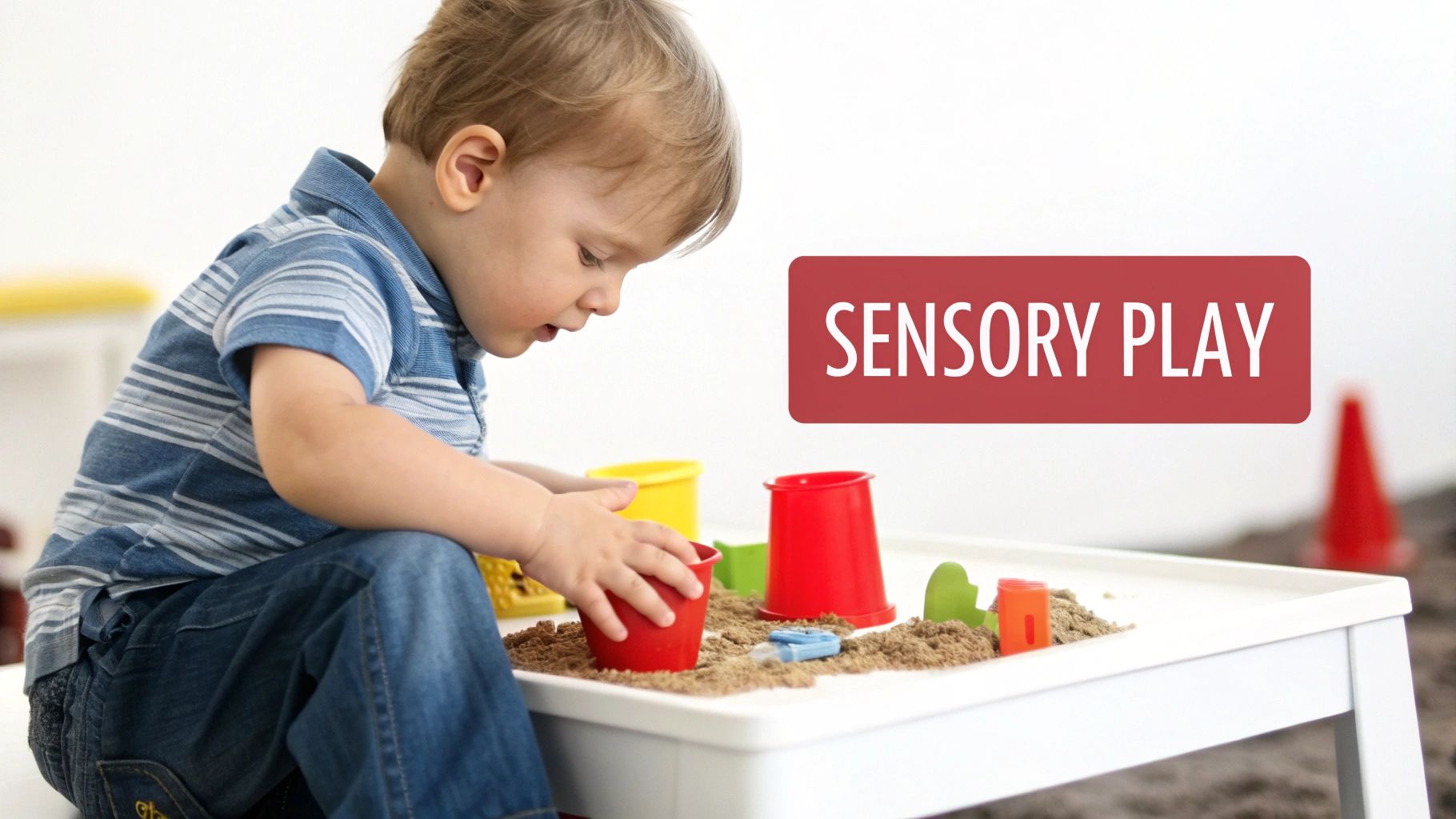
1. Sensory Play Activities for Hands-On Learning
Sensory play is a cornerstone of early childhood development, engaging a toddler's senses of touch, sight, sound, smell, and even taste in a controlled environment. These hands-on learning activities for toddlers at home are crucial for building neural pathways in the brain, supporting everything from language development to problem-solving skills. By exploring different textures, sounds, and materials, toddlers learn about their world and the principles of cause and effect.
Why It's a Powerful Learning Tool
This approach helps children refine their sensory thresholds and motor skills. When a toddler scoops water, squishes playdough, or listens to a shaker bottle, they are conducting mini-experiments that teach them fundamental scientific concepts. According to the Early Years Learning Framework, sensory experiences are vital for helping children make sense of the world.
Actionable Tips for Sensory Play
Getting started is simple and doesn't require expensive toys. The focus is on providing a variety of safe, engaging materials.
- Tactical Bin: Set up a bin with kinetic sand, water, or even dry pasta. Add scoops, cups, and small toys to encourage exploration. Real-world example: Use a large plastic tub and fill it with uncooked oats and hidden animal figurines for a "farm dig."
- Visual & Auditory Shakers: Create shaker bottles with rice or beans, or freeze small, colorful toys in a block of ice for a "rescue" mission that delights the eyes.
- DIY Texture Board: Make a "texture board" by gluing different materials like soft felt, bumpy cardboard, and smooth foil onto a piece of wood or sturdy card for tactile exploration.
For an even deeper dive into this topic, you can explore a wide variety of sensory activities for kids. Always supervise closely and choose age-appropriate, non-toxic materials.
2. Picture Books and Interactive Story Time
Interactive reading is one of the most powerful learning activities for toddlers at home, transforming a simple story into an immersive experience. Sharing picture books goes beyond just reading words on a page; it involves pointing at illustrations, making animal sounds, and discussing the story, which builds foundational literacy and language skills. This shared activity fosters a love for reading and creates precious bonding moments.

Why It's a Powerful Learning Tool
This practice introduces toddlers to vocabulary, sentence structure, and narrative concepts in an engaging way. Research from the American Academy of Pediatrics emphasizes that reading aloud from birth builds crucial language and literacy skills. When a toddler helps turn the pages of The Very Hungry Caterpillar, they are actively participating in the story, which enhances comprehension and cognitive development.
Actionable Tips for Story Time
Creating a rich reading experience is easy and can be woven into your daily routine, especially before naps or bedtime. The key is making it interactive and fun.
- Be Expressive: Use different voices for characters and vary your tone to match the story's mood. This captures a toddler’s attention and makes the narrative more exciting.
- Encourage Participation: Ask simple, open-ended questions like, "What do you see on this page?" or "What sound does the cow make?" Let your child point to pictures and even "read" the story in their own way.
- Create a Cozy Reading Nook: Designate a comfortable, quiet spot for reading. Real-world example: A corner with a soft rug, a few pillows, and a forward-facing bookshelf can signal that it's time to settle down with a good book.
Repetition is key for toddlers, so don't be afraid to read the same favorites over and over. This familiarity builds confidence and helps them internalize new words and concepts.
3. Musical Exploration and Movement Activities
Musical exploration and movement are dynamic learning activities for toddlers at home that tap into a child's natural inclination to make noise and dance. These activities combine auditory stimulation with physical action, helping to develop a toddler’s rhythm, motor coordination, and emotional expression. When children sing songs, play with simple instruments, or move their bodies to music, they are building crucial connections in their brains related to language, memory, and spatial awareness.
Why It's a Powerful Learning Tool
The repetition in songs and rhymes strengthens memory and language patterns, while dancing and playing instruments refine both gross and fine motor skills. Studies have shown that early music exposure can significantly improve language and reading skills by helping children recognize different phonetic sounds.
Actionable Tips for Musical Exploration
Creating a musical environment at home is easy and encourages spontaneous creativity. The key is to make musical instruments and opportunities readily available and fun.
- DIY Orchestra: You don't need fancy instruments. Real-world example: A set of pots and pans with wooden spoons makes a great drum kit. Fill a sealed plastic container with rice or beans for a simple shaker.
- Action Songs: Engage with classic nursery rhymes that have corresponding movements, like 'The Wheels on the Bus' or 'Twinkle, Twinkle, Little Star'. The physical actions help reinforce the meaning of the words.
- Spontaneous Dance Party: Put on some upbeat, age-appropriate music and simply dance together. This is a fantastic way to burn off energy, practice coordination, and express emotions.
These activities are a perfect example of learning through doing. You can learn more about this hands-on approach by exploring the kinesthetic learning style and how it benefits your child. Remember to always use child-safe instruments and supervise playtime.
4. Nature Exploration and Outdoor Play
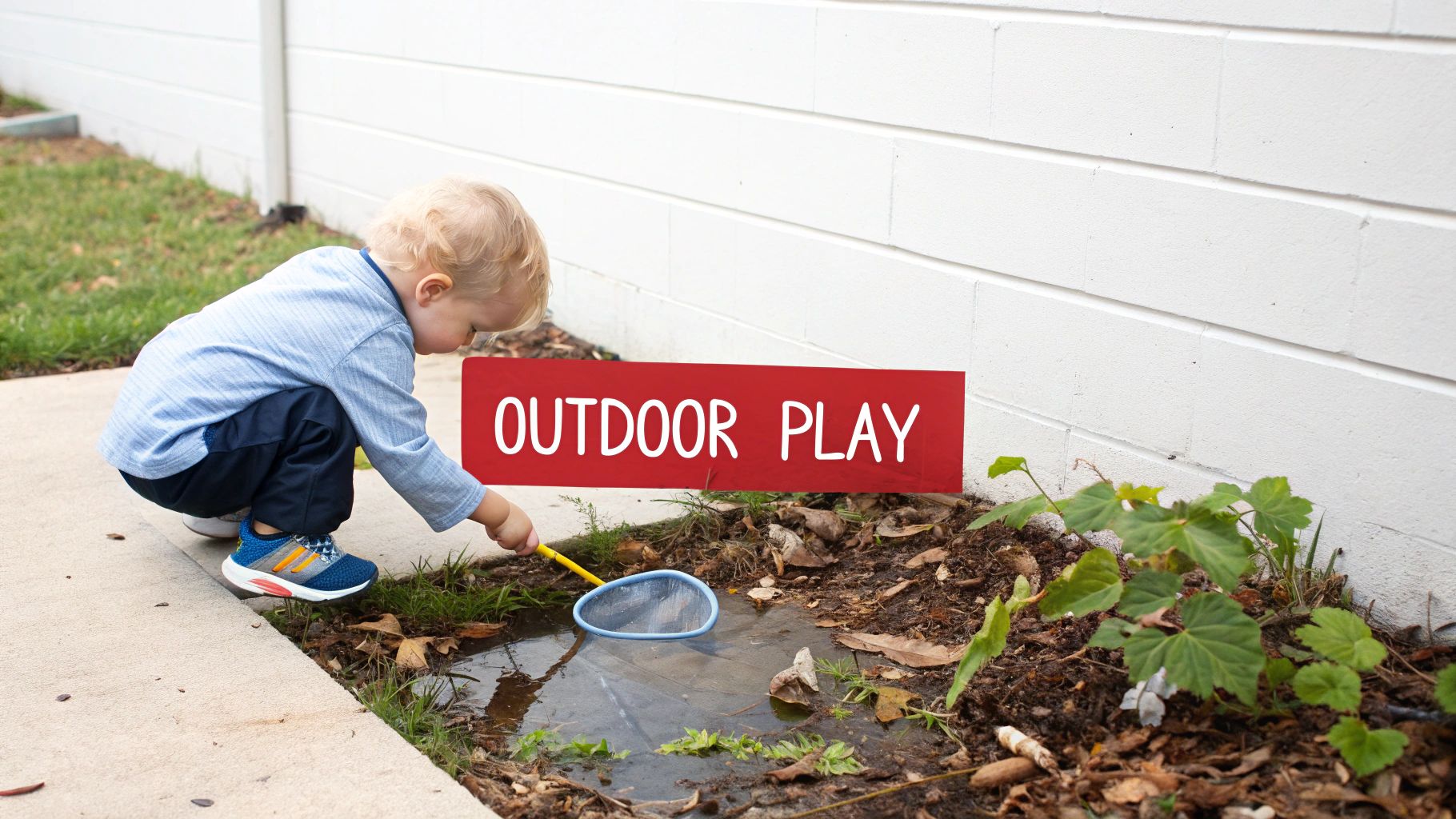
Connecting with the natural world is a fundamental learning activity for toddlers at home, offering a vast, multi-sensory classroom right outside your door. Supervised outdoor play allows toddlers to interact with elements like grass, leaves, and water, which develops their observational skills, strengthens gross motor abilities, and fosters an early appreciation for nature. This hands-on exploration provides essential fresh air and physical exercise, which are crucial for healthy development.
Why It's a Powerful Learning Tool
This approach leverages a child's innate curiosity. When a toddler digs in the dirt, watches an ant march by, or jumps in a puddle, they are learning about physics, biology, and weather in a tangible, memorable way. According to the National Association for the Education of Young Children (NAEYC), these experiences build resilience, confidence, and a strong foundation for scientific inquiry.
Actionable Tips for Nature Exploration
Getting started is as simple as stepping outside. Focus on creating safe opportunities for your toddler to lead the discovery within established boundaries.
- Go on a Nature Scavenger Hunt: Explore a local park or even your own backyard. Real-world example: Create a simple checklist with pictures (a smooth rock, a green leaf, a brown stick) for them to find.
- Engage All the Senses: Encourage your toddler to feel the texture of tree bark, listen to birds singing, and smell flowers. Point out different colors and patterns you see.
- Embrace Messy Fun: Set up a designated area for digging in the dirt or sand. After a rainy day, put on some boots and go splash in puddles together.
These activities are powerful tools for holistic development. To understand more, you can read about the extensive benefits of outdoor play and find new ways to engage your child. Always ensure they are dressed appropriately for the weather and supervised.
5. Art and Creative Expression Projects
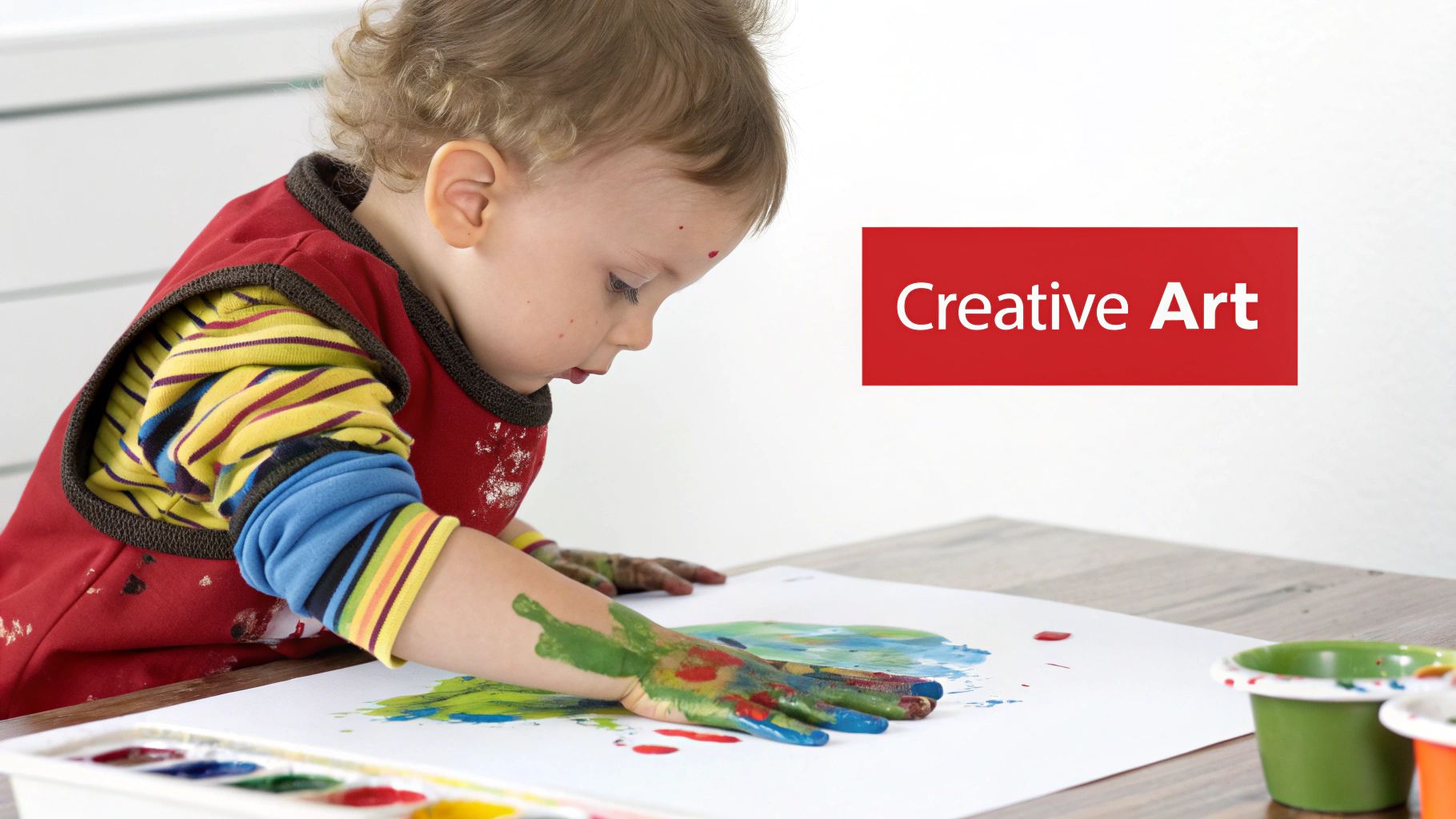
Art and creative projects are fantastic open-ended learning activities for toddlers at home that prioritize the creative process over the final product. These activities, which include everything from painting and drawing to collage-making and sculpting, allow toddlers to express themselves freely. By exploring different materials, colors, and textures, they develop fine motor skills, color recognition, and a powerful sense of creative confidence.
Why It's a Powerful Learning Tool
Art is a fundamental "language" for young children. When a toddler mixes colors, tears paper for a collage, or molds playdough, they are communicating ideas and making tangible connections between their actions and the results. This builds self-expression and problem-solving skills in a joyful, low-pressure environment.
Actionable Tips for Art and Creative Projects
Setting up a creative space is simple and focuses on providing access to safe, inviting materials. Always protect surfaces and have your toddler wear an old shirt or smock.
- Process-Art Painting: Offer washable finger paints for a sensory-rich experience, or provide thick-handled brushes and sponges with tempera paint for a different tactile feel. Real-world example: Tape a large sheet of paper to the floor and let them paint with their hands and feet.
- Sculpting & Molding: Provide non-toxic playdough or clay with child-safe tools like rollers and cookie cutters to strengthen hand muscles and encourage 3D thinking.
- Collage Creation: Give your toddler torn colored paper, old magazine scraps, and a glue stick to create a unique piece of art. This helps with fine motor control and spatial awareness.
For more inspiration, you can find a variety of creative crafts for preschoolers. Always supervise closely and focus on celebrating your child's creative journey.
6. Imaginative and Dramatic Pretend Play
Imaginative and dramatic play is where toddlers step into new roles and worlds, using props and their creativity to act out scenarios. These learning activities for toddlers at home are fundamental for developing crucial life skills, as they allow children to explore social dynamics, express emotions, and solve problems in a safe, unstructured environment. By pretending to be a doctor, a chef, or even an animal, toddlers build empathy, expand their vocabulary, and make sense of the world around them.
Why It's a Powerful Learning Tool
Child development expert Lev Vygotsky highlighted pretend play as a vital cognitive tool. When a toddler hosts a tea party for their stuffed animals or pretends to go grocery shopping, they are practicing turn-taking, symbolic thinking (a block can be a phone), and narrative skills. This type of play builds the foundation for more complex social interactions and abstract thought.
Actionable Tips for Imaginative Play
You don't need elaborate costumes or sets; simple, open-ended props are often the most effective at sparking creativity. The key is to provide the tools and then let your toddler lead the way.
- Create a Prop Box: Fill a basket with items like old hats, scarves, toy stethoscopes, and empty food containers. Real-world example: Create a "restaurant" box with old menus, aprons, and plastic food.
- Set a Simple Scene: Arrange a few chairs to be a "bus," lay a blanket on the floor for a "picnic," or use a large cardboard box to create a "house" or "store."
- Engage as a Co-Player: Join in their world without taking over. If they offer you a pretend cup of tea, accept it with a "thank you!" Ask open-ended questions like, "What should we cook for dinner next?" to extend the play.
To understand more about how this powerful activity supports your child's growth, you can discover the amazing benefits of pretend play.
7. Puzzles and Problem-Solving Games
Introducing puzzles and shape sorters is a fantastic way to engage a toddler's developing mind. These learning activities for toddlers at home are designed to build critical cognitive skills like spatial awareness, logical reasoning, and persistence. By manipulating shapes and fitting pieces together, toddlers learn to recognize patterns, understand relationships between objects, and experience the satisfaction of completing a challenge on their own.
Why It's a Powerful Learning Tool
Problem-solving activities are essentially mini-lessons in resilience and critical thinking. These toys encourage trial-and-error learning. When a toddler tries to fit a square block into a round hole, they are actively testing a hypothesis and learning from the result, strengthening neural connections crucial for future academic success.
Actionable Tips for Problem-Solving Play
Success with puzzles is all about starting simple and building confidence. The goal is to challenge, not frustrate.
- Start Simple: Begin with puzzles that have 2-4 large, chunky pieces with knobs for easy gripping. Shape sorters with basic circles and squares are also excellent starting points.
- Build Complexity Gradually: As your toddler masters simple puzzles, introduce nesting cups, stacking rings, or basic Duplo block constructions to teach concepts of size and order.
- Guide, Don't Solve: Model problem-solving by thinking aloud ("Hmm, this piece has a straight edge. Where could it go?"). Allow your child to struggle a bit before offering a gentle hint rather than just placing the piece for them. Real-world example: Offer a choice between two pieces instead of pointing to the correct one.
8. Language and Vocabulary Building Games
Language and vocabulary building games are interactive learning activities for toddlers at home designed to expand their communication skills. Through playful repetition, storytelling, and conversation, toddlers learn to associate words with objects, actions, and feelings. These activities are foundational for literacy, social interaction, and expressing needs and ideas, turning everyday moments into powerful learning opportunities.
Why It's a Powerful Learning Tool
This play-based approach taps into a toddler’s natural curiosity. When a child names a color or sings a rhyming song, they are actively creating and reinforcing neural connections related to language processing. This makes vocabulary acquisition feel like a game rather than a lesson.
Actionable Tips for Language Games
Integrating these games into your daily routine is simple and highly effective. The key is to make conversation interactive and fun.
- Narrate Your Day: During daily activities, name objects you are using. Real-world example: While making breakfast, say, "I'm cracking the round, white egg into the yellow bowl."
- Play 'I Spy': Use simple descriptions for a game of 'I Spy'. For instance, "I spy something red that we eat," while looking at an apple.
- Expand on Their Words: If your toddler says "car," you can expand on it by saying, "Yes, that is a big, fast, red car! Vroom vroom!" This technique, called expansion, is proven to boost language development.
Always celebrate their attempts to communicate, using exaggerated facial expressions and an enthusiastic tone to keep them engaged.
9. Practical Life Skills in the Kitchen
Bringing toddlers into the kitchen for age-appropriate tasks transforms a daily chore into a powerful learning experience. These hands-on learning activities for toddlers at home engage all the senses, fostering a positive relationship with food. By participating in simple food preparation, toddlers develop fine motor skills, learn early math and science concepts, and build important life skills.
Why It's a Powerful Learning Tool
This method empowers children by giving them meaningful responsibilities. When a toddler pours pre-measured flour or washes vegetables, they are learning about sequences, measurement, and cause and effect. It's a natural way to introduce new vocabulary ("mix," "pour," "sprinkle") and build confidence in their abilities.
Actionable Tips for Kitchen Activities
Safety and simplicity are paramount. Start with tasks that have a low risk and a high chance of success. To create a safe and efficient space for these culinary explorations, you might find tips on effectively organizing your kitchen pantry to keep hazards out of reach.
- Motor Skill Practice: Have your toddler tear lettuce for a salad, mash a banana with a fork, or use a child-safe knife to spread cream cheese on a cracker.
- Sensory & Math: Let them pour pre-measured dry ingredients like oats or flour into a large bowl, or count out berries for a snack.
- Simple "Recipes": Real-world example: Assemble a fruit salad, make a no-bake "pizza" on a rice cake with sauce and cheese, or simply wash fruits and vegetables in a bowl of water.
Always ensure close supervision, use toddler-safe utensils, and focus on the joy of creating together rather than the perfection of the final product.
10. Block Building and Early Engineering
Block building is a classic among learning activities for toddlers at home, offering far more than simple stacking. This form of construction play involves using materials like wooden blocks or LEGO Duplo bricks to create structures. Through this process, toddlers develop crucial spatial awareness, planning skills, and an intuitive understanding of physics principles like balance and gravity, laying the groundwork for STEM learning.
Why It's a Powerful Learning Tool
Block play is a powerful cognitive tool. When a toddler figures out how to balance one block on another to build a tower, they are engaging in engineering and problem-solving. This hands-on experimentation with cause and effect builds resilience and fine motor control.
Actionable Tips for Block Building
Encouraging construction play is easy and adaptable to your child's developmental stage. The key is to provide the right materials and a supportive environment.
- Offer Variety: Provide a mix of materials, such as large cardboard blocks for giant structures, classic wooden blocks for stability, and magnetic tiles for exploring colors and patterns.
- Model and Challenge: Start by demonstrating simple stacking. As your child grows more confident, introduce gentle challenges like "Can we build a bridge for your toy car to go under?"
- Embrace the Collapse: Allow structures to fall without criticism. This is a natural and important part of learning about stability and structural integrity. Treat it as a fun part of the game. Real-world example: Cheer when the tower falls and say, "Crash! Let's build it again!"
Always ensure the play area is safe and blocks are age-appropriate, without small parts that could be a choking hazard.
Activity Comparison: Which Learning Activity is Right for Today?
| Activity | 🔄 Complexity | ⚡ Resources | 📊 Key Skills Targeted | ⭐ Best For... |
|---|---|---|---|---|
| Sensory Play | Low-Moderate | Low-cost items | Fine motor, sensory integration | Calming down or tactile exploration. |
| Story Time | Low | Books | Language, bonding, literacy | Quiet time and bedtime routines. |
| Musical Movement | Low | Household items | Gross motor, rhythm, memory | Burning energy and creative expression. |
| Outdoor Play | Moderate | Outdoor space | Gross motor, observation skills | Sunny days and nature connection. |
| Art Projects | Moderate-High (prep/cleanup) | Art supplies | Fine motor, creativity | Fostering self-expression. |
| Pretend Play | Low-Moderate | Simple props | Social skills, empathy, language | Developing emotional intelligence. |
| Puzzles | Moderate | Puzzles/sorters | Logic, problem-solving | Focused, independent playtime. |
| Language Games | Low | Everyday life | Vocabulary, communication | Integrating learning into daily chat. |
| Kitchen Activities | High (supervision) | Safe tools, ingredients | Life skills, math concepts | Teaching practical skills and patience. |
| Block Building | Low-Moderate | Blocks | Spatial reasoning, STEM skills | Open-ended, creative construction. |
Your Adventure in Playful Learning Awaits
You've just navigated a comprehensive guide packed with dynamic, developmentally-rich experiences. From the tactile wonders of sensory bins to the foundational logic of block building, this collection of learning activities for toddlers at home is a blueprint for transforming your daily routine into a vibrant landscape of discovery.
We've explored how simple materials can spark complex thinking and how everyday moments are powerful opportunities for growth. The true magic lies not in elaborate setups or expensive toys, but in the engaged, joyful interaction between you and your child. These activities are designed to be flexible, adaptable, and, most importantly, fun.
Key Takeaways for Your Toddler's Learning Journey
As you embark on these adventures, remember these core principles:
- Process Over Product: The learning happens in the doing, not the finished product. Celebrate the splatters of paint and the lopsided block towers. This focus on process builds resilience and a love for exploration.
- Child-Led Exploration is Powerful: While you provide the materials and a safe environment, allow your toddler to guide the play. Their innate curiosity is their best teacher.
- Consistency Creates Comfort: Integrating these learning activities for toddlers at home into your regular schedule creates a predictable and secure environment. A few minutes of focused, playful learning each day builds a stronger foundation than sporadic, lengthy sessions.
Turning Inspiration into Action
The ultimate goal is to nurture a lifelong love of learning. By embracing the mess, asking open-ended questions, and celebrating every small "aha!" moment, you are not just teaching skills; you are building your child's confidence and curiosity. You are showing them that learning is an exciting adventure, not a chore.
The variety of activities ensures a well-rounded developmental experience. You are laying the groundwork for future academic success, emotional intelligence, and critical thinking, all through the simple, profound power of play. Your enthusiastic presence is the most crucial ingredient.
Ready to amplify your toddler's curiosity with tools designed for discovery? Playz creates innovative science kits, imaginative play tents, and hands-on toys that seamlessly extend these at-home learning activities. Explore our collection at Playz and find the perfect kit to turn your living room into a laboratory of fun and learning.