


An indoor play tent is so much more than a pop-up fort. It's a launchpad for creativity, a private sanctuary where your child’s imagination runs the show. With this one simple addition, any corner of a room can become a secret castle, a spaceship blasting off to Mars, or a quiet spot to get lost in a good book. It’s the key to unlocking endless hours of screen-free fun.
More Than a Toy—A Portal to Imagination
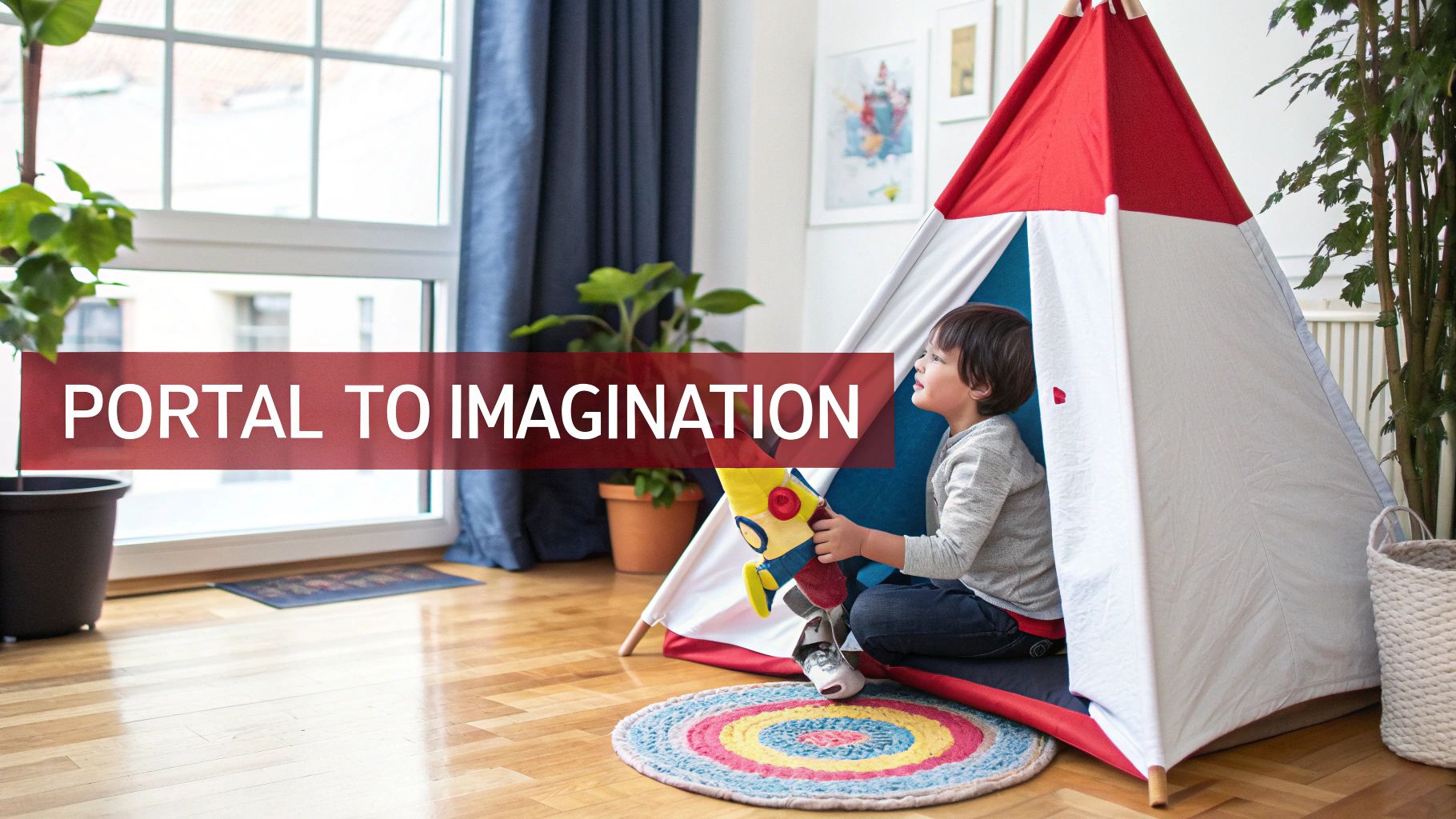
In a world packed with digital distractions, many parents are searching for ways to encourage hands-on, developmental play. An indoor play tent is a perfect solution, offering a personal space where a child's creativity can truly flourish.
Think of it as their personal headquarters for make-believe. Once they step inside, the normal rules of the house fade away, replaced by the laws of their imagination. This kind of environment is crucial for nurturing growth, building confidence, and giving kids an outlet for self-expression.
Key Takeaway: Fostering Screen-Free Creativity
An indoor play tent is a fantastic catalyst for unstructured play, which is essential for cognitive development. When kids have the freedom to invent their own stories and solve imaginary problems, they build critical thinking and resilience skills that last a lifetime. This is a big reason why finding ways to reduce screen time is so powerful for young minds.
Expert Insight: An indoor play tent gives a child a realm they can truly call their own. Inside those soft walls, grown-up rules pause, and the stage opens for boundless exploration and hands-on learning.
This guide will walk you through everything you need to know about picking the perfect indoor play tent. We'll cover safety, durability, and finding the right fit for your family's next big adventure. For even more inspiration, check out these unforgettable gift ideas for kids.
You’ll discover how this simple toy can become one of the most valuable tools for your child’s development, helping them build everything from independence to social skills.
The Developmental Magic of a Personal Play Space
An indoor play tent is much more than fabric and poles. To a child, it's a universe in miniature, perfectly scaled to their imagination. Inside this cozy retreat, kids get their first real taste of ownership and control, a huge step in their emotional growth. When the big world feels overwhelming, their tent becomes a private refuge where they are in charge.
This sense of autonomy is a powerful teacher. For example, a quick break inside their personal fort can turn a brewing tantrum into a moment of calm. In there, they can think, play quietly, or just breathe, learning to manage their own feelings in a space that’s entirely theirs.
Nurturing Creativity and Problem-Solving
Inside their tent, the real magic of unstructured play happens. There are no rules, no instructions—just endless possibilities. One day the tent is a vet's office for a lineup of sick teddy bears; the next, it’s a rocket ship blasting off to the moon. You can dive deeper into the power of this kind of fun in our guide on the benefits of pretend play.
This free-form play is a workout for a child's brain. For instance, if the rocket ship needs fixing, your little engineer has to figure out which household items can double as tools, strengthening their problem-solving muscles with every challenge they invent.
Expert Insight: An indoor play tent hands children a blank canvas, a safe laboratory, and a stage for discovery. It’s where they learn to be the architects of their own stories, building resilience one make-believe adventure at a time.
These pretend scenarios are serious brain work disguised as fun, building the foundations for planning, creativity, and strategic thinking.
Key Takeaway: A Workshop for Social Skills
When friends or siblings are invited into the tent, it transforms into a bustling social hub. The cozy space naturally encourages kids to cooperate and communicate.
- Negotiate Roles: They decide who gets to be the captain and who's the first mate, learning to lead and cooperate.
- Share Resources: With limited space and toys, taking turns is non-negotiable, building a foundation for teamwork.
- Practice Empathy: By acting out different roles, they start to see things from other points of view.
- Resolve Conflicts: Disagreements are bound to happen, but the shared goal of keeping the game going motivates them to find solutions together.
It's no surprise that the demand for these developmental spaces is booming. The market for kids' indoor soft playgrounds—often featuring a versatile indoor play tent—has grown past USD 100 billion. Projections show it could nearly double by 2026 as more families seek safe, compact ways for kids to explore at home.
Your Essential Indoor Play Tent Checklist
Choosing the right indoor play tent can feel overwhelming. With a dizzying number of options, colors, and features, where do you start? Finding the perfect one for your family doesn't have to be a guessing game.
By focusing on a few key areas—safety, durability, and the right fit for your child and your home—you can confidently pick a tent that will become a treasured part of your playroom for years. Think of this as your practical, no-nonsense guide to making a smart choice.
Safety First, Always
Before you consider themes or colors, let’s talk about the absolute non-negotiables. A secure play space is a happy play space.
Here’s your practical safety checklist:
- Non-Toxic Materials: Kids will spend hours in their hideaway, so the materials must be safe. Look for tents explicitly labeled BPA-free, lead-free, and phthalate-free to ensure they aren't exposed to harmful chemicals.
- Flame Resistance: In the U.S., any reputable tent should meet the CPAI-84 flammability standard. This critical safety feature means the material is designed to resist catching fire and will self-extinguish, giving you precious time to react in an emergency.
- Good Ventilation: A stuffy tent is no fun and can be unsafe. Seek out designs with mesh windows or roll-up flaps. This not only keeps the air fresh but also gives you a clear line of sight to supervise their play.
This simple decision tree can help you visualize how different tents support specific developmental needs.
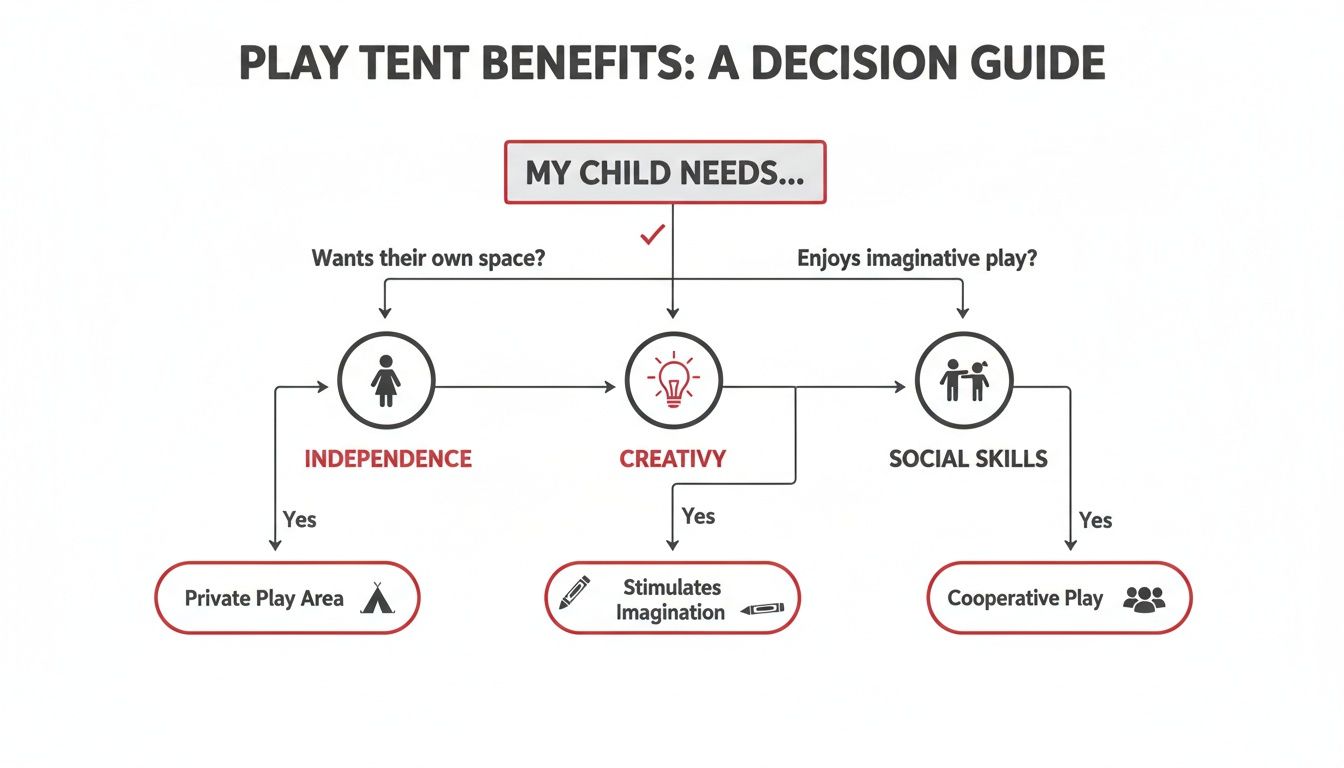
As you can see, a play tent is more than just a toy; it’s a versatile tool you can match to your child’s needs for independence, creativity, or social growth.
Materials and Durability: Built for Adventure
Next up is durability—because a play tent needs to be ready for action. The frame and fabric are the two biggest factors here, and understanding the differences can save you a lot of headaches.
Indoor Play Tent Material and Frame Comparison
| Feature | Polyester/Nylon Fabric | Cotton Canvas | Fiberglass Poles | PVC Poles |
|---|---|---|---|---|
| Durability | Pros: Resists tearing & stretching. Cons: Can be thin. | Pros: Tough and long-lasting. Cons: Heavier. | Pros: Flexible and shock-corded. Cons: Can splinter if broken. | Pros: Sturdy. Cons: Can become brittle. |
| Weight | Lightweight and portable | Heavier, more stationary | Very lightweight, easy to move | Lightweight but bulkier |
| Cleaning | Easy to wipe clean | Requires spot treatment | Wipe clean | Easy to wipe clean |
| Safety | Check for non-toxic certifications | Generally non-toxic | Look for splinter-proof covers | Smooth, no splinter risk |
| Best For | Pop-up tents, active play | Teepees, stationary forts | Portable, quick-setup designs | Sturdier, multi-room structures |
Ultimately, you want materials that can handle endless adventures. High-quality stitching is crucial to prevent seams from tearing. Since spills and smudges are inevitable, look for fabrics that are spot-cleanable or machine washable. Easy cleanup is a game-changer.
Finding the Perfect Fit for Your Child and Space
Finally, let's nail down the right fit. This is where the fun begins!
Start with the theme. A rocket ship might thrill a budding astronaut, while a simple castle can be the backdrop for a hundred different fairy tales. Browsing a curated collection of Playz play tents is a great way to see what’s out there.
Before you buy, grab a tape measure. Check the tent's dimensions—height, width, and depth—to ensure it fits comfortably in your intended space without taking over the room.
And of course, consider your child's age. Toddler tents should have simple, open designs without small parts. Older kids might love more complex structures with multiple rooms and tunnels. Always check the manufacturer's age recommendation.
Unlock Creative Adventures and Imaginative Play

An indoor play tent is a blank canvas, waiting for a child's imagination to bring it to life. With a few simple props, that simple structure becomes a universe of screen-free fun that nurtures critical skills.
The real magic is in its adaptability. One day it's a bustling command center, the next it’s a quiet reading nook. This versatility makes it a powerhouse tool for purposeful play that grows with your child.
Practical Play Ideas: From Fort to Future Vet
Transforming the tent is simple and doesn't require expensive toys. It's all about sparking a story and letting your child’s imagination lead.
Here are a few actionable ideas to get you started:
- The Animal Rescue Clinic: Round up stuffed animals and turn the tent into a vet's office. A toy doctor's kit, small blankets, and a clipboard for "patient charts" are all you need. This setup builds empathy and early literacy.
- The Secret Agent Headquarters: Drape a dark blanket over the entrance and hand out flashlights and toy binoculars. This thrilling mission encourages problem-solving and teamwork.
- The Deep Space Rocket Ship: Tape glow-in-the-dark stars to the ceiling and create a control panel from a cardboard box with bottle caps for buttons. This scenario is a fantastic gateway to STEM learning, sparking curiosity about planets and stars.
Expert Insight: An indoor play tent doesn't just contain play; it inspires it. Each new theme is an opportunity for a child to try on a new role, solve a new problem, and build a new world from the ground up.
These activities are cleverly disguised learning experiences. It's no surprise the global indoor amusement center market, which relies on this immersive play, is projected to hit USD 84.03 billion by 2030. You can read the full research on this growing market trend to see how play is evolving.
Key Takeaway: Creating a Calm-Down Corner
Beyond high-energy adventures, an indoor play tent plays a crucial role in a child's social-emotional growth. Fill it with soft pillows, a weighted blanket, and a few favorite books to create a dedicated calm-down corner.
This cozy retreat gives kids a safe space to process big feelings, self-soothe, and decompress when overwhelmed. Adding different textures like faux fur pillows can also introduce gentle sensory input. You can learn more about the importance of sensory play in our detailed guide.
Having this designated quiet zone empowers children to recognize their emotional needs and learn healthy coping skills.
Simple Setup, Care, and Maintenance Tips
An indoor play tent should spark joy, not stress. The best toys are easy to manage from the moment you open the box to when you put them away.
Thankfully, most modern tents are designed with busy families in mind. Many have pop-up designs that practically assemble themselves in seconds. For structured models, look for user-friendly features like color-coded poles. A five-minute setup is often all it takes to open up a new world of adventure.
Keeping Your Indoor Play Tent Fresh and Clean
A well-loved play space will inevitably collect crumbs and spills. A little regular maintenance is all it takes to keep the tent a hygienic and inviting haven.
Here’s a simple routine to keep things tidy:
- Weekly Shake-Out: Once a week, take the tent outside for a good shake to dislodge loose dirt and crumbs.
- Spot Cleaning: For most polyester tents, a damp cloth with mild soap is all you need to wipe away spots.
- Deep Cleaning: Always check the care tag first! Some cotton canvas covers are machine washable on a gentle cycle, but air drying is a must to prevent shrinking.
Using the right products is key. It's worth reading up on choosing a non-toxic toy cleaner to keep your child’s play area pristine without harsh chemicals.
Expert Insight: A clean play tent is a healthy play tent. A few minutes of weekly care ensures your child’s favorite hideout remains a safe and sparkling space for countless adventures.
Smart Storage for Modern Homes
One of the biggest perks of an indoor play tent is its ability to disappear when playtime is over. Most are designed for compact storage, a lifesaver in smaller living spaces.
Pop-up tents often twist and fold down into a thin, circular bag that can slide under a bed. Even larger teepees can be disassembled and tucked away in their carrying bags. This quick-and-easy storage makes a play tent a low-hassle, high-reward addition to any home. For more great tips, check out our guide on how to organize a toy room.
Frequently Asked Questions About Indoor Play Tents
Even with all the benefits, it’s smart to have a few practical questions before bringing a play tent into your home. Let's walk through the most common things parents ask to help you feel totally confident in your choice.
Are indoor play tents safe for toddlers?
Yes, absolutely—as long as you choose one designed specifically for toddlers. Look for tents with plenty of mesh windows for airflow and supervision. It's also critical to pick an indoor play tent made from certified non-toxic materials. A sturdy frame that won’t tip over easily is another must-have. Finally, ensure the tent has no small, detachable parts that could be a choking hazard. Always check the manufacturer's age recommendation.
Key Takeaway: A safe toddler tent prioritizes visibility, stability, and non-toxic materials to create a secure haven where imagination can run wild without worry.
How much space do I really need for a play tent?
It varies! The good news is there’s an indoor play tent for almost any size home. A simple pop-up tent can fit neatly in a bedroom corner, while an elaborate setup with tunnels might need a dedicated playroom.
Actionable Tip: Measure the floor space where you plan to put the tent. Compare those numbers to the product's dimensions, and remember to leave a little extra "get-in-and-out" room around the entrance so your child can move freely.
What is the best way to clean an indoor play tent?
Most modern polyester tents are designed for easy cleaning. For small spills, a damp cloth with mild soap usually works. For bigger messes, always check the manufacturer's care label first. Some cotton canvas covers are machine washable, which is a game-changer. I recommend a weekly habit of shaking out crumbs and wiping down surfaces to keep the space hygienic.
Can a play tent actually help my child's development?
Yes, it's a powerful tool for development. An indoor play tent creates a unique, child-sized space that encourages imaginative play, which is the foundation for building crucial problem-solving skills and creativity. Having their own "fort" also fosters independence and confidence. When friends join in, the tent becomes a mini-workshop for social skills like sharing, cooperation, and negotiation—all while having a blast.
Ready to unlock a world of imaginative play for your child?
Explore the full collection of safe, durable, and inspiring play tents at Playz. Discover the perfect backdrop for your little one's next great adventure and watch their creativity soar.