

The right indoor toys for active kids are more than just a way to survive a rainy day. They are essential tools for channeling boundless energy into productive, developmental fun. The perfect setup can transform your home into a dynamic playground, turning potential chaos into creative, screen-free activities that help your child’s brain and body grow.
Transform Your Home into a Playground
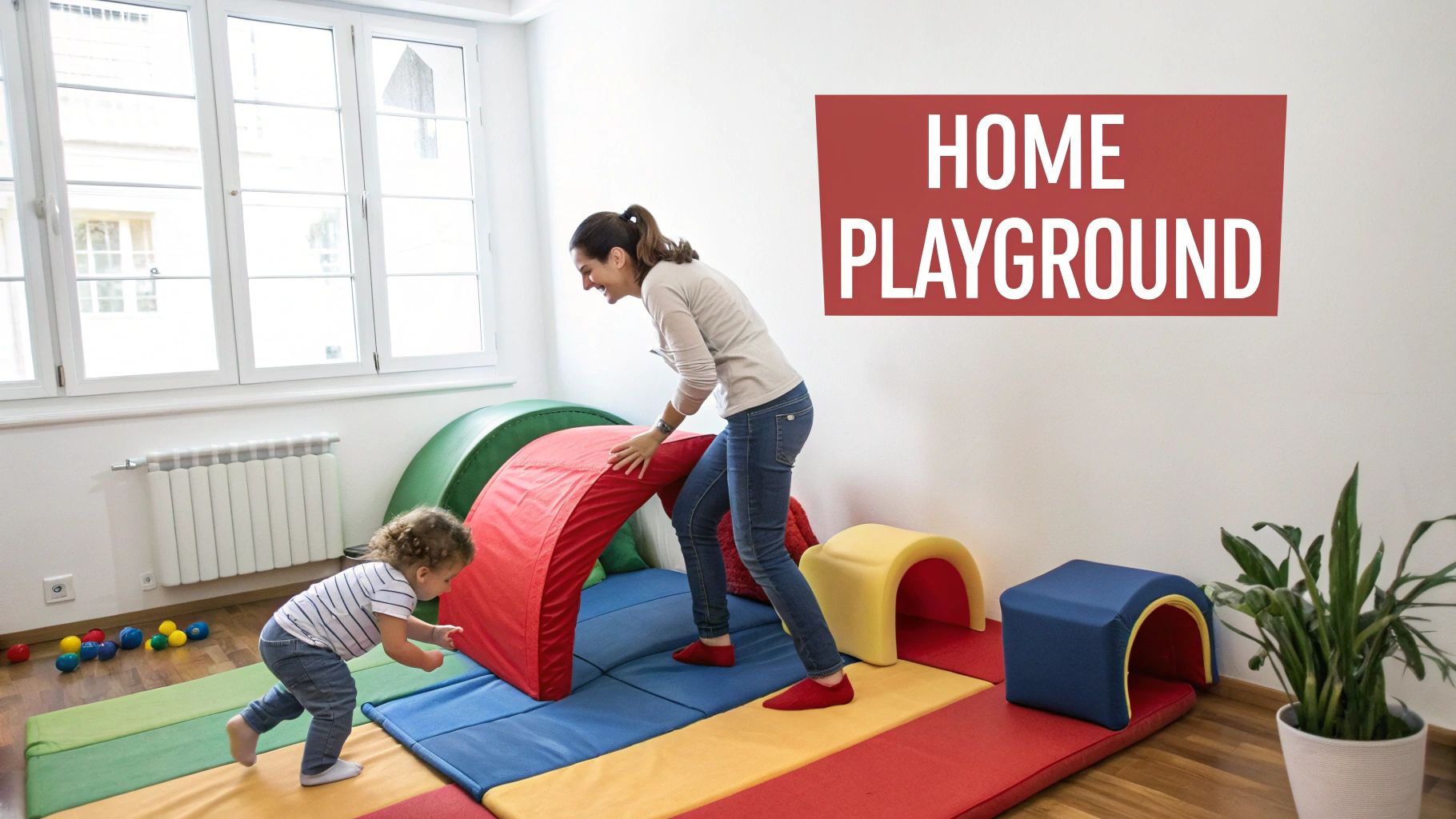
Let's be honest: staring down another day cooped up inside with a high-energy kid can be daunting. The walls feel like they're closing in, and it's tempting to let screen time become the default babysitter. But what if you could harness that limitless energy indoors? It's not just possible—it's crucial for their development. The secret lies in purposeful play.
Why Active Indoor Play Matters: The Big Picture
Active indoor play provides a structured outlet for a child's natural, biological need to move. It’s not about letting them bounce off the walls; it’s about giving them the right tools to explore, learn, and grow within a safe environment. For example, a simple pop-up play tunnel isn't just a toy; it's a cave to explore, a spaceship corridor, or an obstacle to conquer, turning any room into a grand adventure.
This kind of play is fundamental for building strong bodies and sharp minds. Navigating that play tunnel or climbing a small indoor structure helps develop gross motor skills and spatial awareness. Kids learn best through hands-on experience, making these activities far more than simple entertainment.
Key Takeaway: Active play is the language of childhood. It's how children process their world, build critical skills, and connect with others. An indoor environment rich with opportunities for movement is a direct investment in their overall well-being.
From Boredom to Breakthroughs: A Parent's Guide
We've all been there—the struggle to keep an energetic child engaged indoors is a universal parent experience. Purposeful toys are the perfect solution, acting as a catalyst for both imagination and physical activity. They encourage kids to actively participate in their own fun rather than passively consuming content on a screen.
Consider the practical benefits of swapping 30 minutes of screen time for structured play:
- Physical Health: An indoor obstacle course using pillows and a play tunnel builds strength, balance, and coordination.
- Cognitive Skills: Figuring out how to construct a fort with a building kit encourages problem-solving and engineering basics.
- Creativity: A simple play tent can spark imaginative scenarios, turning it into a rocket ship heading for Mars or a secret castle.
By choosing the right indoor toys, you’re not just managing energy levels—you’re building a foundation for a lifetime of learning. Once you have the perfect collection, learning how to organize a toy room can keep the fun going without the clutter taking over.
Unpacking the Benefits of Active Indoor Play
Purposeful indoor toys are far more than a way to keep kids busy. Think of them as a serious investment in your child's future. Active indoor play delivers real, tangible developmental rewards that build a strong foundation for physical, cognitive, and social-emotional growth. Every toy is a tool, and each one helps cultivate a specific set of skills.
For example, as a child wiggles through a play tunnel or climbs a soft play structure, they aren't just burning off energy—they're strengthening core muscles, honing their balance, and improving coordination. This directly builds gross motor skills, the large movements involving their arms, legs, and torso. It’s the physical literacy they need for everything from sports to playground fun.
More Than Just Movement: Cognitive Gains
Beyond the physical perks, the right indoor toys for active kids are powerhouses for cognitive growth. Picture a child completely absorbed in a hands-on STEM kit. They aren't just mixing colorful liquids; they're learning about cause and effect, practicing patience, and flexing their problem-solving muscles. Every failed experiment is a mini-lesson in resilience, and every success boosts their analytical thinking.
The demand for engaging, brain-building toys is part of a growing global market, with puzzles and activity gyms as major contributors. For active kids, this leads to critical skill development. In fact, research indicates that regular use of equipment like activity gyms can improve coordination by as much as 25% in preschoolers.
Building Social and Emotional Skills Through Play
Active play is also a fantastic training ground for social and emotional learning. When kids team up to build a fort inside a play tent or take turns on an indoor slide, they're practicing essential life skills like cooperation, negotiation, and empathy.
A play tent can instantly become a secret clubhouse where rules are made, friendships are forged, and minor squabbles are resolved. These experiences are absolutely fundamental for developing emotional intelligence and strong people skills.
To get the full picture, you can explore the essential benefits of keeping kids active all year long. These toys create natural opportunities for children to figure out teamwork and communication in a fun, low-stakes environment. The lessons learned are just as vital as the physical skills they're developing, a key point detailed in our guide on the benefits of play-based learning.
Choosing the Right Indoor Toys for Your Child
Walking down the toy aisle (or scrolling through endless web pages) can be overwhelming. How do you pick the right indoor toys for active kids—the ones they'll actually play with for more than five minutes? The secret is to stop thinking about individual toys and start thinking in categories.
By matching a toy's primary purpose to your child's developmental stage and your available space, the process becomes much simpler. This helps you cut through the noise and find something that will lead to hours of happy, productive play.
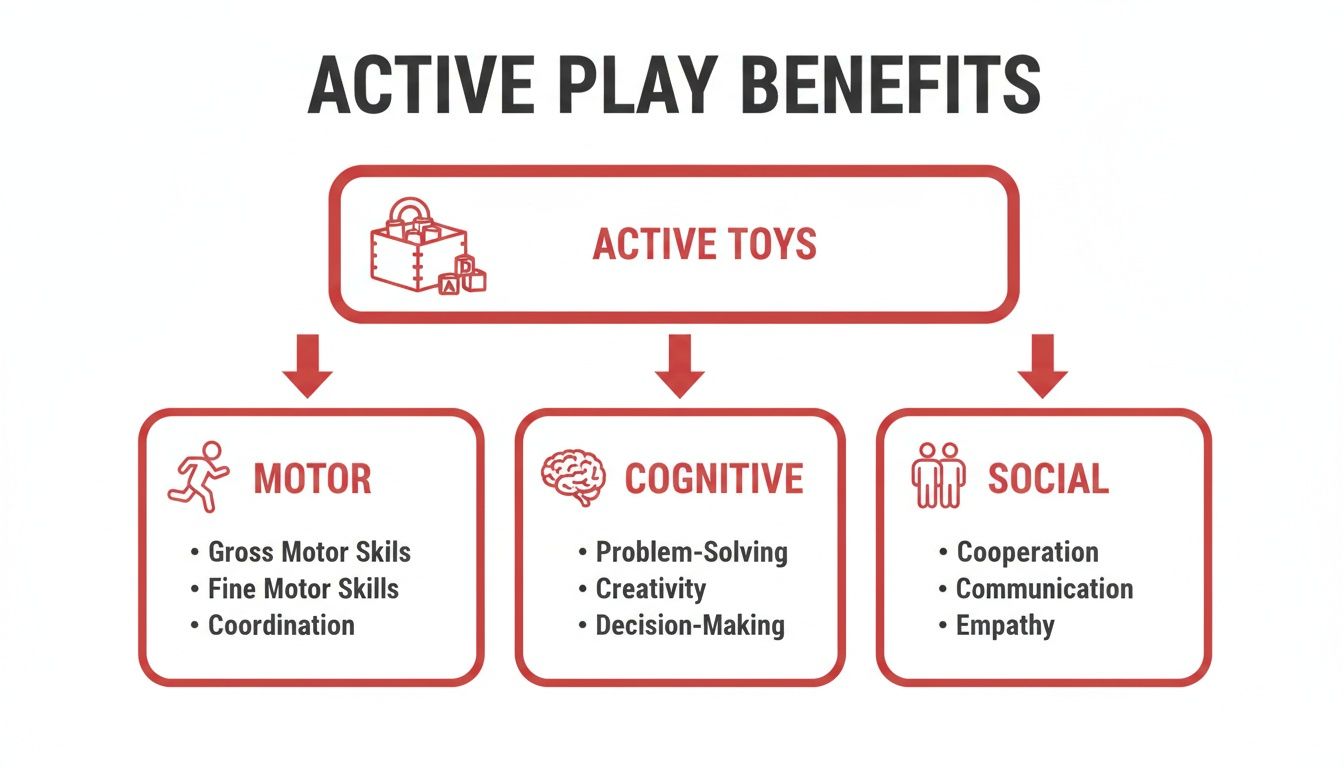
As you can see, the best active toys are powerful tools for well-rounded development, targeting motor skills, brainpower, and social skills all at once.
Keyword-Rich Subheading: Gross Motor Skill Builders
These are the heavy hitters of indoor play, designed to get large muscle groups working. They are a lifesaver for kids who need to climb, crawl, and burn off serious energy.
- What they are: This category includes soft play climbers, pop-up tunnels, and small indoor slides.
- Best for: Toddlers and preschoolers (ages 1-5) mastering fundamental movements.
- Practical Example: A collapsible play tunnel encourages crawling, a powerhouse activity for strengthening the core and improving bilateral coordination—the crucial skill of using both sides of the body in harmony.
Keyword-Rich Subheading: Balance and Coordination Boosters
More specialized than general motor toys, these items challenge a child's stability and body awareness. They build the subtle but essential skills needed for everything from sports to simply moving confidently.
- What they are: Stepping stones, balance boards, and wobble cushions.
- Best for: Kids aged 2-7 developing physical grace and control.
- Practical Example: Setting up "river" stepping stones across the living room floor challenges kids to plan their movements and adjust their balance with each step. For more ideas, see our guide to the best toys for active toddlers.
Keyword-Rich Subheading: Creative Movement and STEM Kits
Here’s where physical activity meets imagination and critical thinking. These toys get kids to build their own play zones or engage in hands-on experiments that also require movement.
- What they are: Fort-building kits, magnetic tiles, and hands-on science experiment sets.
- Best for: Children aged 3-10+ who thrive on building and discovery.
- Practical Example: A fort-building kit allows kids to physically construct their own space, problem-solving how to make the structure stable before using it for imaginative play.
Active Indoor Toy Categories at a Glance
This comparison table breaks down the main types of active toys so you can quickly identify the best fit for your child.
| Toy Category | Primary Skills Developed | Ideal Age Range | Example | Pros & Cons |
|---|---|---|---|---|
| Gross Motor Toys | Climbing, crawling, core strength | 1-5 years | Pop-up play tunnels | Pros: High energy burn, easy setup. Cons: Can take up space. |
| Balance Builders | Stability, coordination, focus | 2-7 years | River stepping stones | Pros: Small footprint, great for focus. Cons: Less imaginative potential. |
| Creative Movement | Imagination, problem-solving | 3-8 years | Fort-building kits | Pros: Highly creative, promotes teamwork. Cons: Requires cleanup. |
| Active STEM Toys | Critical thinking, fine motor skills | 5-10+ years | Hands-on science kits | Pros: Educational, channels energy. Cons: May require supervision. |
By identifying your child's primary need—whether it's burning off toddler energy or channeling an older kid's focus—you can pick indoor toys for active kids that are guaranteed to be a hit.
Creating a Safe and Engaging Indoor Play Zone
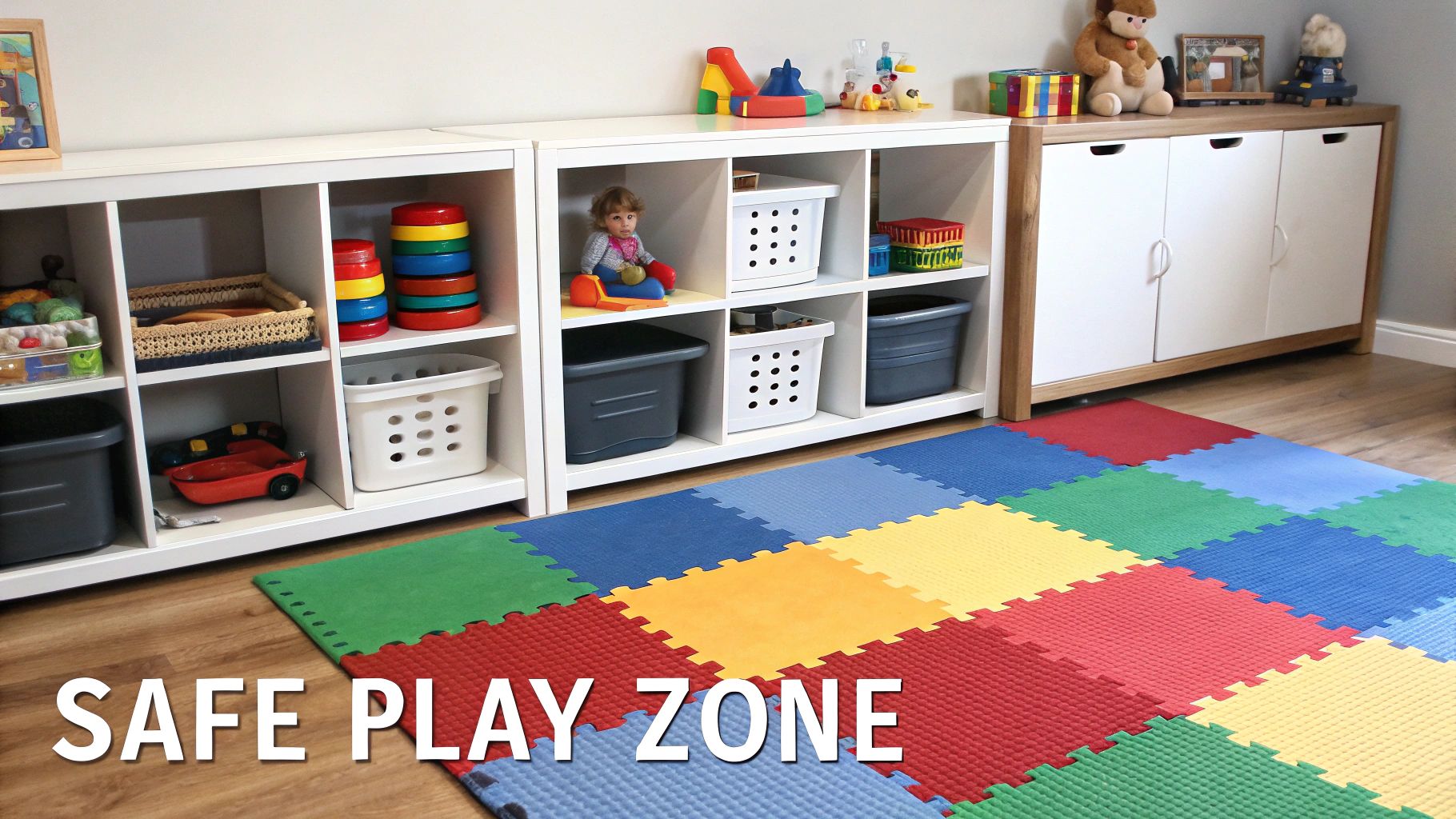
The best indoor toys for active kids require a safe, inviting space to truly shine. You don't need a massive, dedicated playroom; with smart planning, even a corner of your living room can become a launchpad for energetic fun.
The foundation of any play area is safety. Start by choosing a spot with minimal furniture, clear of sharp corners or breakables. One of the most effective upgrades is laying down soft, interlocking foam mats. They provide crucial cushioning for inevitable tumbles and instantly define the play space.
Setting the Ground Rules for Fun
With the physical space ready, establish a few clear, simple rules. This isn't about limiting fun—it's about ensuring it happens safely. Think of it as creating a mutual understanding that keeps both your child and your home in one piece.
Actionable ground rules that work:
- Keep toys in the play zone. This helps contain the chaos and prevents the rest of the house from turning into a minefield.
- Feet on the floor. A simple rule that nips climbing on couches or tables in the bud.
- Inside voices for inside play. This helps keep energy at a manageable hum instead of a full-blown roar.
Key Takeaway: A key part of a safe play zone is organization. Teaching kids where toys belong after playtime doesn't just tidy up—it builds responsibility and ensures a clutter-free, safer environment for the next adventure.
The Magic of Toy Rotation: An Actionable Insight
One of the most powerful strategies for keeping your indoor play zone fresh is toy rotation. It's a simple system: store some of your child’s toys out of sight and swap them out every few weeks.
This works like a charm. When a toy reappears after a short break, it feels new again, sparking fresh interest. For example, if you have a couple of different indoor play tents in our guide, keeping one packed away makes its return a special event. This approach fights boredom and helps kids appreciate each toy more deeply, allowing them to focus their imagination on a smaller selection.
Inspiring Imagination with Creative Play Ideas
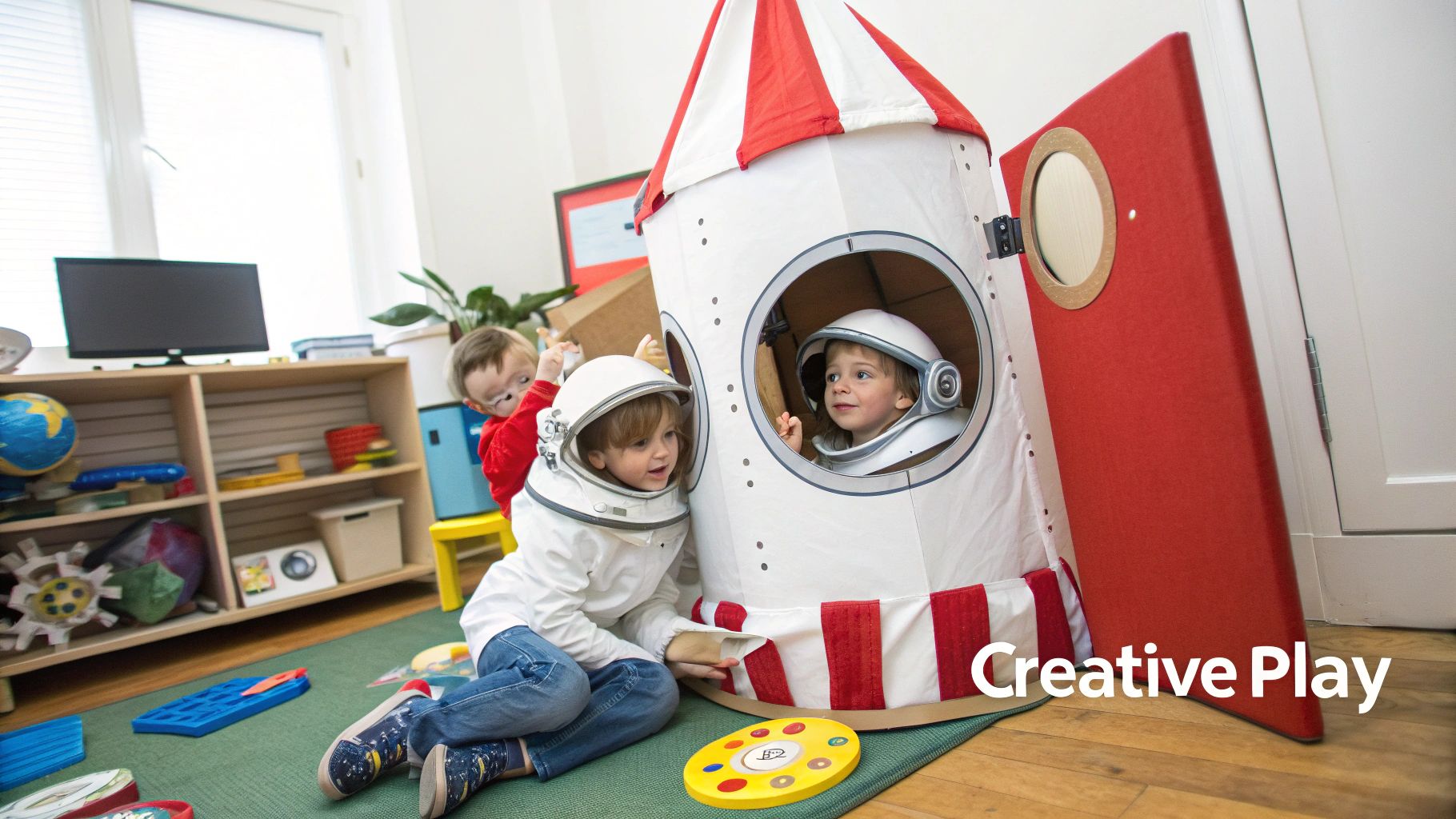
The best indoor toys for active kids are not just objects; they're props for imagination. The real magic happens when a toy becomes the centerpiece of a brand-new adventure. A simple play tent isn't just a tent—it's a deep-sea submarine, a vet clinic for a sick stuffed tiger, or a rocket ship blasting off to Mars. This transforms simple play into a story, a problem to solve, and a reason to move.
Beyond the Instruction Manual: Real-World Examples
Thinking outside the box is the name of the game. Many great indoor toys for active kids are designed for open-ended play, but a little nudge from a grown-up can get the ball rolling. Your job is to plant a seed and watch their creativity grow.
Here are a few practical ideas to get you started:
- The Floor is Lava Obstacle Course: A classic for a reason! Use balance beams, stepping stones, and pillows as "safe zones." The goal is to get from one side of the room to the other without touching the molten lava floor. It’s an awesome game for building coordination and planning skills.
- Mad Scientist Laboratory: Break out that science kit. Throw on some funny goggles and start mixing bubbling "potions." Maybe you're building a circuit to power up a friendly monster. The key is to frame it as a grand, exciting experiment.
- Indoor Camping Adventure: Pop up a play tent, grab a couple of flashlights, and tell spooky (but not too spooky) stories. This simple setup can transform a familiar bedroom into a whole new world and encourage cooperative play.
Fostering a Creative Atmosphere
The environment is just as important as the toys. You can spark creative scenarios by making small changes to their room. For instance, using fun children's room decals can instantly turn a plain wall into a jungle, a deep ocean, or a galaxy waiting to be explored.
Key Takeaway: When you encourage your child to invent new rules or combine different toys, you're teaching them a valuable lesson: their creativity is their most powerful tool. A set of building blocks can become food in a play kitchen, and a ball can be an asteroid to dodge.
This push for more engaging, developmental play is reflected across the toy industry. Action-oriented STEM kits and building sets are booming as parents seek toys that get kids both moving and thinking.
Fueling a Lifetime of Learning Through Play
Choosing the right indoor toys for active kids is about much more than surviving a rainy day. It's an investment in your child's future—a way to nurture their physical strength, critical thinking, and emotional resilience all at once. When you turn your home into an active play zone, you're laying the foundation for a lifetime of curiosity and joyful learning.
The real magic of these toys is how they channel boundless kid-energy into productive, screen-free activity. Whether they're crawling through a play tunnel to build gross motor skills or tackling a science kit that sparks critical thinking, every activity builds their confidence. You're not just buying another toy; you're giving them a tool to understand the world through hands-on fun.
Embrace the Power of Play: The Final Word
This shift toward purposeful play isn't just a parenting trend; it's backed by market data. The global kids' indoor toy market is expanding as more families seek screen-free alternatives, especially as urban living often means less outdoor space. As you can see the data on this market growth for yourself on htfmarketinsights.com, these toys are becoming essential for helping kids stay fit and imaginative.
Key Takeaway: Investing in active play is an investment in your child's holistic development. It's built on the proven idea that the most important lessons are learned not while sitting still, but while moving, creating, and discovering.
By making movement and imagination a priority, you’re giving your child the best gift of all: a love for learning that will last a lifetime. For more inspiration, explore our guide on learning through play examples.
FAQs: Your Questions on Indoor Active Play Answered
Even with the best intentions, turning your living room into a hub for active play can bring up practical questions. Here are clear, actionable answers to the most common concerns.
How do I keep my kid from getting bored in five minutes?
The secret weapon is toy rotation. Pack away about half of their active toys and store them out of sight. In a few weeks, swap them out. Those "old" toys will feel brand new, sparking renewed interest. Also, help them reimagine what a toy can be. A play tunnel isn't just a tunnel—today, it's a secret cave guarding pirate treasure. Involving your child in creating the story makes them invested in the game.
We live in a tiny apartment. Are we doomed to screen time?
Not at all! Small-space living requires smarter toy choices. Focus on items that are collapsible, multi-functional, or vertical.
- Collapsible Wonders: Pop-up play tents and tunnels are ideal. They offer a large play footprint but fold down flat enough to slide under a bed.
- Go Vertical: A doorway-mounted swing or removable climbing holds can create tons of fun without using any floor space.
- Small Footprint, Big Fun: Balance boards, river stepping stones, or wobble cushions pack a major physical punch without taking over the room.
How do I help them calm down after energetic play?
Routine is everything. Establish a predictable rhythm with a clear "go time" for energetic play and a "slow time" for quieter activities like reading or puzzles. A visual timer is an excellent tool, giving kids a concrete signal that a transition is coming. When you frame active play as a scheduled part of the day, you teach them how to manage their energy and self-regulate—a crucial life skill.
Are 'active STEM toys' really good for high-energy kids?
Absolutely. They are a game-changer. An active STEM toy gives physical energy a purpose. Instead of just bouncing around, your child channels that energy into building something, conducting an experiment, or solving a problem. This hands-on approach is ideal for kinesthetic learners—the kids who need to do something to understand it—making it one of the most effective types of indoor toys for active kids.
Ready to turn your home into the ultimate playground? Explore our full collection of play tents, science kits, and other creative Playz toys designed to make learning an adventure.
Shop Our Collection and Spark Your Child's Imagination Today!