


It’s easy to think of an indoor play tent as just another toy cluttering up the living room. But it’s so much more than that—it’s a private world, a secret clubhouse, and a launchpad for incredible adventures, all rolled into one. At its core, it's a simple, portable hideaway designed to give kids their own special sanctuary right inside the house.
More Than a Toy: A Gateway to Imagination
Picture a dreary, rainy afternoon. Instead of hearing the inevitable "I'm bored!" followed by pleas for screen time, you see your child captaining a spaceship through an asteroid field. Or maybe they're a vet in a jungle clinic, carefully tending to a line of sick stuffed animals. This is the magic a simple play tent unlocks.
It’s not just a pile of fabric; it’s a portal where imagination takes over. This one addition to your home can become a powerful tool for growth, creating a space for independent play and fostering the kind of creativity that screens just can't replicate.
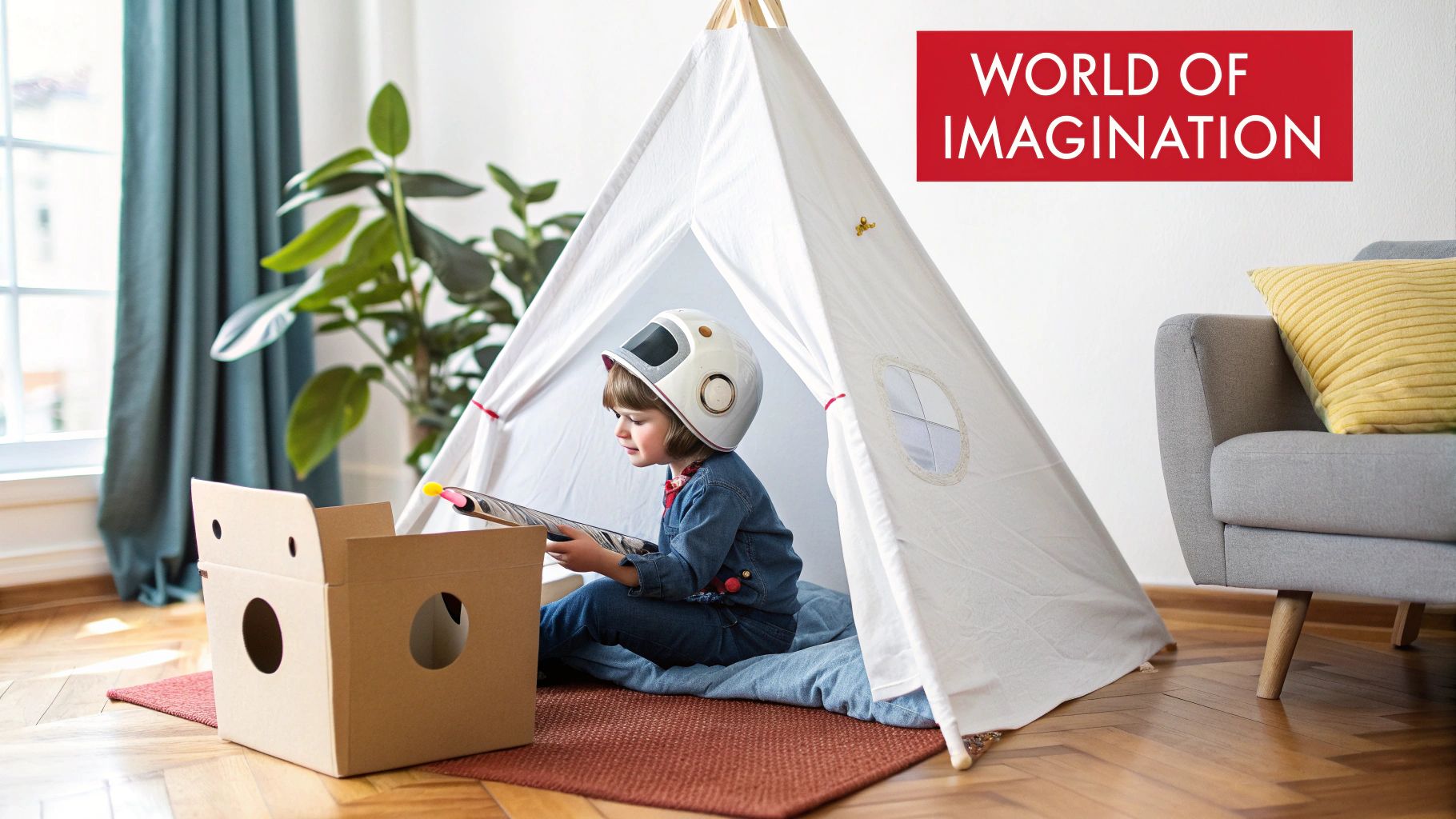
Actionable Insight: Unlock a World of Creative Play
Inside the soft walls of a play tent, the rules of the real world fade away. It’s a stage for limitless exploration where a kid is finally in charge. They get to make the rules, steer the narrative, and solve problems on their own terms.
This is where unstructured play works its wonders. A simple blanket transforms into a wizard’s cloak, and a flashlight becomes a scanner for discovering alien life. If their "fortress" is suddenly under siege by the family dog, they have to think on their feet and invent a solution. That’s how kids build resilience and confidence.
Key Takeaway: An indoor play tent gives a child a realm they can truly call their own. It’s a low-tech setup with an outsized impact on a child's growth, serving as a launchpad for storytelling, problem-solving, and hands-on learning.
A Foundation for Growth and Learning
An indoor play tent is also a classroom in disguise. It’s a unique environment where kids develop crucial life skills without even realizing they’re learning. Think of it as their personal headquarters for:
- Building Independence: Having a space that is exclusively theirs helps children develop a sense of self and autonomy. It’s their fort, their rules.
- Enjoying Quiet Time: It offers a calm spot to read, daydream, or just decompress from the hustle and bustle of a busy family home.
- Developing Social Skills: When shared with friends or siblings, that little tent becomes a workshop for negotiation, cooperation, and teamwork.
Throughout this guide, we’ll dive into how this one simple toy can nurture these skills and turn any room into a hub for creativity. You can learn more about the incredible power of make-believe by reading about the benefits of pretend play. Brands like Playz are built on the philosophy that #KidsLearnBestThruPlayz, proving that a simple tent can be one of the best educational tools you can bring home.
The Developmental Benefits of Indoor Play Tents
An indoor play tent is so much more than a toy—it's a powerful engine for child development, cleverly disguised as fun. Within those fabric walls, kids build real-world skills across cognitive, social-emotional, and physical domains. It's a private world where learning just happens, turning ordinary playtime into a foundation for lifelong growth.
This secluded space is also a fantastic antidote to passive screen time. Instead of just watching stories on a tablet, kids are suddenly inspired to create their own. That simple shift from consuming content to creating it is essential for building a healthy, curious, and resilient mind.
Boost Cognitive Skills and Problem-Solving
Think of an indoor play tent as your child’s very first laboratory. It’s a safe space where they can experiment with ideas, test out theories, and solve problems on their own terms. The moment a child decides their tent is a spaceship that has crash-landed on a strange planet, they’re immediately faced with a series of challenges.
How will they fix the ship? What tools can they use? This kind of imaginative scenario pushes them to think critically and creatively, transforming pillows into engine parts and blankets into fuel. Every game becomes an impromptu lesson in resourcefulness and planning, strengthening the neural pathways needed for complex thought.
Key Takeaway: A play tent provides a safe, contained environment for children to practice executive functions. Skills like planning, organizing, and flexible thinking are not taught but discovered through self-directed play.
The tent also becomes a natural stage for storytelling. As kids create narratives for their games—who they are, what they’re doing, and what happens next—they’re building crucial language skills. They practice sequencing events, developing characters, and using descriptive language, all of which are foundational elements of literacy.
Nurture Social and Emotional Growth
When a sibling or friend joins the adventure, the tent transforms into a workshop for social skills. The cozy, close quarters naturally encourage cooperation and communication. Kids have to learn how to negotiate roles, share the limited space, and work together to achieve a common goal, whether it’s running a pretend café or defending a castle from imaginary dragons.
This dynamic environment fosters key emotional intelligence skills:
- Empathy: By role-playing different characters, children learn to see the world from other perspectives.
- Conflict Resolution: Disagreements are bound to happen, but the desire to keep the fun going motivates them to find compromises.
- Independence: The tent offers a private sanctuary where a child can process their feelings, decompress, and enjoy a healthy sense of autonomy.
These interactions are vital for building healthy relationships. You can discover more about how this works by exploring the core principles of play-based learning benefits.
Develop Physical and Motor Skills
The developmental benefits aren't just mental; they're also deeply physical. The simple act of crawling in and out of a tunnel, peeking through a window, or setting up a "campsite" helps build crucial gross motor skills. These movements improve a child's balance, coordination, and spatial awareness in a fun, low-pressure setting.
Fine motor skills also get a workout. Zipping up a door, tying back a flap, or carefully arranging small toys inside the tent all require precise hand-eye coordination. This physical engagement is becoming more important than ever. According to industry analysis, the market for kids' indoor playgrounds, which often feature play tents, surpassed USD 100 billion and is projected to nearly double by 2026. This growth is fueled by findings that link this type of active play to 25% better motor skills in young children. You can read more insights on 2024 indoor playground trends.
How to Choose the Perfect Indoor Play Tent
Finding the right indoor play tent can feel overwhelming with the sheer number of options available. But by focusing on a few key factors, you can easily narrow down the choices and find a tent that becomes a cherished hub for imagination and fun.
Think of it like choosing a new piece of furniture. The perfect play tent needs to fit your space, your child's age, and the kinds of adventures they dream up. It’s all about finding that sweet spot between a magical design and practical, everyday use.
Material Matters: Safety and Durability First
The materials are the heart and soul of any play tent. They determine its safety and how long it will withstand energetic play. You’ll want fabrics that are tough but also soft and breathable.
First and foremost, always choose tents made from non-toxic, child-safe materials. Look for clear labels confirming the tent is free from chemicals like BPA, phthalates, and lead. Good ventilation is also a must, so look for designs with mesh windows or multiple doors to keep the air flowing.
Here’s a quick comparison of the most common materials:
-
Breathable Cotton Canvas:
- Pros: Natural fiber, incredibly durable, and lets air circulate to prevent stuffiness.
- Cons: Can be heavier and more expensive.
-
Lightweight Polyester:
- Pros: Easy to clean, often more affordable, and great for vibrant, themed designs.
- Cons: Less breathable than natural fibers.
The frame—the tent's "bones"—should be just as reliable. Look for smooth, splinter-free wood poles or sturdy, flexible fiberglass rods that won’t snap under pressure. A strong foundation keeps the tent stable and secure.
Size and Footprint: Finding the Perfect Fit
Before you fall in love with a sprawling castle design, grab a measuring tape. The tent needs to fit comfortably in your home without turning your living room into an obstacle course. Measure the floor space you have in mind and check it against the tent’s dimensions.
Don’t forget to account for "play space" around the tent. Kids will be crawling in and out, so you'll want to leave enough clearance for them to move freely. A tent that’s too big for the room will feel cramped and won't get used as much.
Key Takeaway: The best play tent isn't the biggest one; it's the one that integrates seamlessly into your living space, inviting play without causing clutter or frustration.
Match Tent Style to Your Child's Imagination
Once you’ve nailed down the practical stuff like material and size, the fun begins: choosing a style! Different tents inspire different kinds of play. From simple pop-ups to elaborate tunnel systems, there’s a design out there for every adventurer.
This decision tree helps visualize how different play tent benefits can guide your choice.
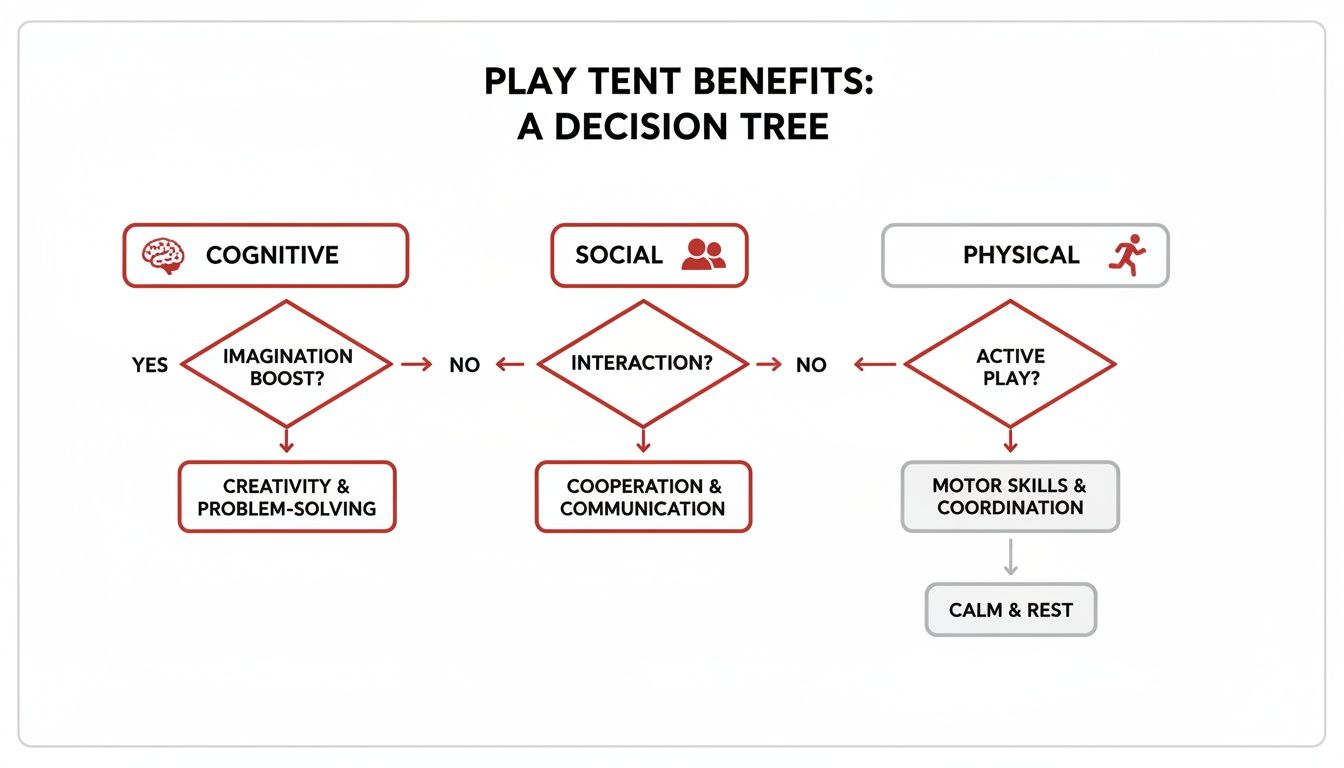
This flowchart can help you connect your child's developmental needs to the right kind of play, whether that's problem-solving in a secret "lab" or building social skills in a shared "clubhouse."
Here’s a quick rundown of the most popular styles:
- The Classic Teepee: Simple and stylish, teepees are perfect for creating quiet reading nooks or a special hideaway for one or two children.
- The Pop-Up Castle: A dream for toddlers and preschoolers, they set up in seconds and often fold down flat, which is ideal for smaller spaces.
- The Tunnel Combo: A game-changer for active kids, tents with connecting tunnels encourage physical activity and offer modular fun that you can rearrange for new adventures.
Feature Checklist for Your Ideal Indoor Play Tent
Use this table to compare key features when selecting an indoor play tent to ensure it meets your family's needs for safety, fun, and practicality.
| Feature | What to Look For | Why It Matters for Indoor Play |
|---|---|---|
| Safety Certifications | Labels like ASTM, CPSIA, BPA-Free, Phthalate-Free | Guarantees the materials are non-toxic and structurally safe for kids. |
| Ventilation | Mesh windows, multiple doors, breathable fabric | Keeps air circulating, preventing the tent from getting hot and stuffy. |
| Frame Durability | Sturdy fiberglass or smooth wooden poles; secure connectors | A strong frame prevents collapses during active play and ensures longevity. |
| Ease of Assembly | Pop-up design, simple pole-and-sleeve system, clear instructions | You want to spend time playing, not struggling with a complicated setup. |
| Storage Solution | Folds down compactly, includes a carrying case | Makes it easy to put away when not in use, freeing up valuable floor space. |
| Size & Footprint | Dimensions that fit your room with space to move around | A well-sized tent gets more use and doesn’t overwhelm your living area. |
| Washability | Machine-washable fabric or easy-to-wipe surfaces | Kids are messy! Easy cleaning keeps the tent fresh and hygienic. |
| Engaging Features | Tunnels, ball pits, windows, themed designs | Added features spark imagination and provide more ways to play. |
By keeping these key factors in mind—materials, size, and style—you can confidently choose a fantastic indoor play tent. If you're ready to see some great options, check out our collection of Playz play tents. You’ll find designs built for safety, durability, and most importantly, endless imaginative play.
Creative Ways to Use Your Play Tent
So, you’ve picked out the perfect tent. Now the real fun starts. That little fabric structure is a blank canvas for countless adventures. Let's dive into some practical ways to turn that tent into a hub of activity and learning, proving that #KidsLearnBestThruPlayz.

Actionable Insight: Spark Imaginative Adventures
The best thing about a play tent is its ability to become whatever your child dreams up. With just a few simple props, that corner of the room can transform into a whole new world.
Here are a few real-world examples to get the creativity flowing:
- Underwater Submarine: Drape blue streamers around the tent and hand your kid a flashlight to use as a periscope. They can search for "sea creatures" (stuffed animals) and jot down their discoveries on a clipboard.
- Royal Castle: A homemade banner over the entrance and some "jewels" (colorful craft gems) scattered on soft pillows is all it takes. Suddenly, they're ready for royal tea parties or fending off imaginary dragons.
- Jungle Safari Basecamp: Surround the tent with houseplants to create a jungle vibe. Your little explorer can use binoculars made from cardboard tubes to spot wild animals and document what they find in a notebook.
Create a Cozy Quiet Zone
A play tent doesn’t always have to be about high-energy adventures. It can also be a much-needed sanctuary for quiet time, a place for kids to rest and regulate their feelings. It gives them a private space to decompress and recharge on their own terms.
Key Takeaway: An indoor play tent offers a unique personal space where a child can learn to self-soothe and regulate their emotions, an essential skill for healthy development.
It's easy to turn the tent into a peaceful retreat:
- The Ultimate Reading Nook: Fill the tent with fluffy blankets, oversized pillows, and a basket of their favorite books. Add battery-powered fairy lights for a warm, magical glow.
- A Calm-Down Corner: When things get overwhelming, a well-stocked tent can be a lifesaver. Keep it filled with calming tools like a weighted lap pad, soft fidget toys, noise-canceling headphones, and a coloring book.
Foster Educational Play
With a bit of creativity, a play tent can easily become an exciting, hands-on classroom. Thematic play is a fantastic way to introduce new ideas and make learning feel like a game.
Here’s how you can mix education with imagination:
- Become a Paleontologist: Bury toy dinosaurs in a sandbox or a bin of rice nearby. Your child can use a paintbrush to carefully "excavate" the fossils and identify them with a picture book inside their "research tent."
- Run a Veterinarian Clinic: The tent is now the animal hospital! Stock it with stuffed animal "patients," a toy doctor kit, and a small clipboard for taking notes. This teaches empathy, care, and problem-solving. For more DIY fun, check out these cardboard craft ideas.
- Launch a Space Mission: Turn the tent into a rocket ship cockpit. Create a control panel from an old cardboard box with bottle caps for buttons and hang glow-in-the-dark stars inside. Your astronaut is ready for liftoff.
To unlock these scenarios, an organized space helps. Check out these tips on how to organize a kids' room to create an inviting play area. By offering simple prompts, you help your child see their tent not just as a toy, but as a portal to endless learning.
Maintaining Your Play Tent for Lasting Fun
A well-loved indoor play tent shows signs of adventure: cracker crumbs, juice drips, and smudges. Proper care is what keeps the magic going. A little consistent maintenance will keep the tent safe, clean, and ready for the next journey.
Most messes on polyester or nylon tents can be spot-cleaned with a damp cloth and mild soap. For bigger spills, always check the tag first. It helps to understand fabric care symbols, as some canvas covers are machine-washable on a gentle cycle.
Smart Storage and Safety Checks
When playtime winds down, storing the tent properly protects it. Pop-up tents are genius in how they fold down, but rushing it can bend the frame. Take an extra second to follow the instructions. Popping it back in its case is the best way to prevent tears and keep all the pieces together.
Just as important are regular safety inspections. These quick checks take a minute but provide lasting peace of mind.
- Inspect the Seams: Gently tug at seams, especially around doors and windows, to ensure stitching is tight.
- Check the Poles: Run your hand along the poles to feel for any cracks or splinters. A damaged frame can make the tent unstable.
- Examine Mesh Windows: Look for any rips or holes in the mesh panels, which are key for good airflow.
Key Takeaway: A proactive approach to maintenance is the best way to extend the life of your play tent. A few minutes of care each month ensures it remains a safe and inviting haven.
Building these simple habits will keep the tent in great shape for years. For more ideas on keeping play areas in order, find tips on how to organize kids' toys.
FAQs: Your Common Questions About Indoor Play Tents
Even after seeing the benefits, you probably have a few practical questions. Totally normal. We’ve answered the most common questions from parents to help you feel 100% confident.
What is the best age for an indoor play tent?
Indoor play tents have a surprisingly long lifespan. They’re a hit with a huge age range, starting from toddlers (around 18 months) all the way up to 8 years old and beyond. The trick is to match the tent to your child’s developmental stage. A toddler needs a simple nook for sensory play, while older kids use it as a command center for elaborate make-believe games, a social hub, or a private reading corner. Always check the manufacturer's age recommendation.
Are indoor play tents hard to set up and store?
Not at all! Most modern play tents are designed with busy parents in mind. Pop-up models are a favorite because they spring into shape in seconds. When playtime is over, they often fold down into a slim, flat circle that’s a breeze to store under a bed or behind a couch. Just follow the folding instructions to keep the frame in good shape.
How does a play tent help my child's development?
Think of a play tent as a developmental tool disguised as a toy. It’s a blank canvas for imagination, which is ground zero for building creativity and problem-solving skills. Every time your child decides the tent is a rocket ship, they’re practicing how to plan, adapt, and think on their feet.
Key Takeaway: A play tent is a fantastic way to nurture independence and self-regulation. It gives kids a space that's entirely their own—a safe haven where they can work through big feelings or just enjoy being the boss of their own tiny world.
When friends join in, that tent becomes a mini-classroom for social skills like sharing and teamwork. Even crawling in and out helps build gross motor skills.
What safety features should I look for?
Safety is non-negotiable. There are a few key things to look for to ensure your little one has a secure place to play. First, prioritize tents made from non-toxic, durable, and breathable materials. Good airflow is a must, so look for designs with mesh windows or more than one door. The frame should be sturdy but flexible, with no sharp edges. Reputable brands will always meet strict child safety standards, giving you peace of mind.
Ready to unlock a world of imagination and developmental fun for your child? The right play tent can transform any room into a magical space for learning and adventure. At Playz, we believe that #KidsLearnBestThruPlayz, which is why our tents are designed for safety, durability, and endless creative possibilities.
Explore our collection of innovative play tents at Playz today!