


A rainy day can feel like a major challenge when you have an energetic preschooler at home. The walls start to close in, and the temptation to rely on screens can be overwhelming. But what if you could transform those gloomy, drizzly days into vibrant opportunities for connection, creativity, and hands-on learning? This guide is your definitive resource for exactly that, offering a curated collection of engaging, screen-free rainy day activities for preschoolers designed to bust boredom and build essential developmental skills.
Forget endless scrolling for ideas. This list provides everything you need in one place. We will explore a wide range of activities, from building epic blanket forts and conducting simple, mind-blowing science experiments to setting up dynamic sensory play stations that captivate young minds. Each activity includes practical, step-by-step instructions, a simple materials list, and actionable tips to make setup and cleanup a breeze for busy parents and caregivers.
Our focus is on turning confinement into a catalyst for discovery. We'll even highlight how educational toy brands champion the power of hands-on learning, aligning with the core principle that children learn best through active play. Get ready to make your next rainy day the most memorable and enriching one yet.
1. Indoor Play Tents and Fort Building
Transforming your living room into an imaginative sanctuary is one of the most engaging rainy day activities for preschoolers. By creating a cozy fort with blankets and pillows or setting up a dedicated play tent, you give your child a special space that’s entirely their own. This defined area encourages independent, creative play, from hosting a tea party for stuffed animals to embarking on a secret mission.

Why It Works
A tent or fort provides a sense of security and ownership, which can be comforting on a gloomy day. It becomes a versatile backdrop for endless scenarios, helping preschoolers develop narrative skills, problem-solving abilities, and social-emotional intelligence as they act out different roles and stories.
Getting Started
- Setup: Use a pre-made pop-up tent like those from Playz for a quick setup, or drape blankets over chairs and couches for a classic DIY fort.
- Materials: You'll need blankets, pillows, cushions, chairs, and clothespins or clamps.
- Activity Duration: 30 minutes to several hours.
- Learning Benefits: Enhances imagination, spatial awareness, and independent play. For a deeper dive into their benefits, you can explore more about indoor play tents for kids.
Pro-Tip for Maximum Fun
Stock the fort with a flashlight, a few favorite books, and some quiet toys. Adding battery-operated string lights can create a magical, calming ambiance perfect for reading or napping. Set gentle boundaries for safe play, ensuring the structure is stable and away from any potential hazards.
2. Science and STEM Experiment Kits
Rainy days are a perfect opportunity to spark a lifelong love for learning with hands-on science. Age-appropriate STEM kits transform your home into a mini-laboratory, allowing preschoolers to conduct simple, exciting experiments. These activities turn abstract concepts like cause-and-effect into tangible, memorable experiences, making them one of the most enriching rainy day activities for preschoolers.
Why It Works
Science experiments captivate a preschooler's natural curiosity. Activities like mixing colors, creating fizzy reactions, or making slime provide immediate, observable results that are both fascinating and educational. They encourage kids to ask "why?" and "how?", building foundational skills in critical thinking, observation, and following instructions.
Getting Started
- Setup: Choose a dedicated, easy-to-clean space like a kitchen table or a tiled floor. Use a plastic tray to contain any spills.
- Materials: All-in-one science kits from Playz offer everything needed for guided experiments like volcano eruptions or slime making. You can also use household items like baking soda, vinegar, and food coloring.
- Activity Duration: 20 to 60 minutes per experiment.
- Learning Benefits: Fosters curiosity, introduces basic scientific principles, and develops fine motor skills. To find the right fit for your child, discover more about STEM toys for preschoolers.
Pro-Tip for Maximum Fun
Before starting, talk about what you think might happen. Use simple scientific language like "observe," "predict," and "experiment" to build their vocabulary. Let your preschooler do as much of the mixing and pouring as is safe, as this hands-on involvement is key to their learning and enjoyment.
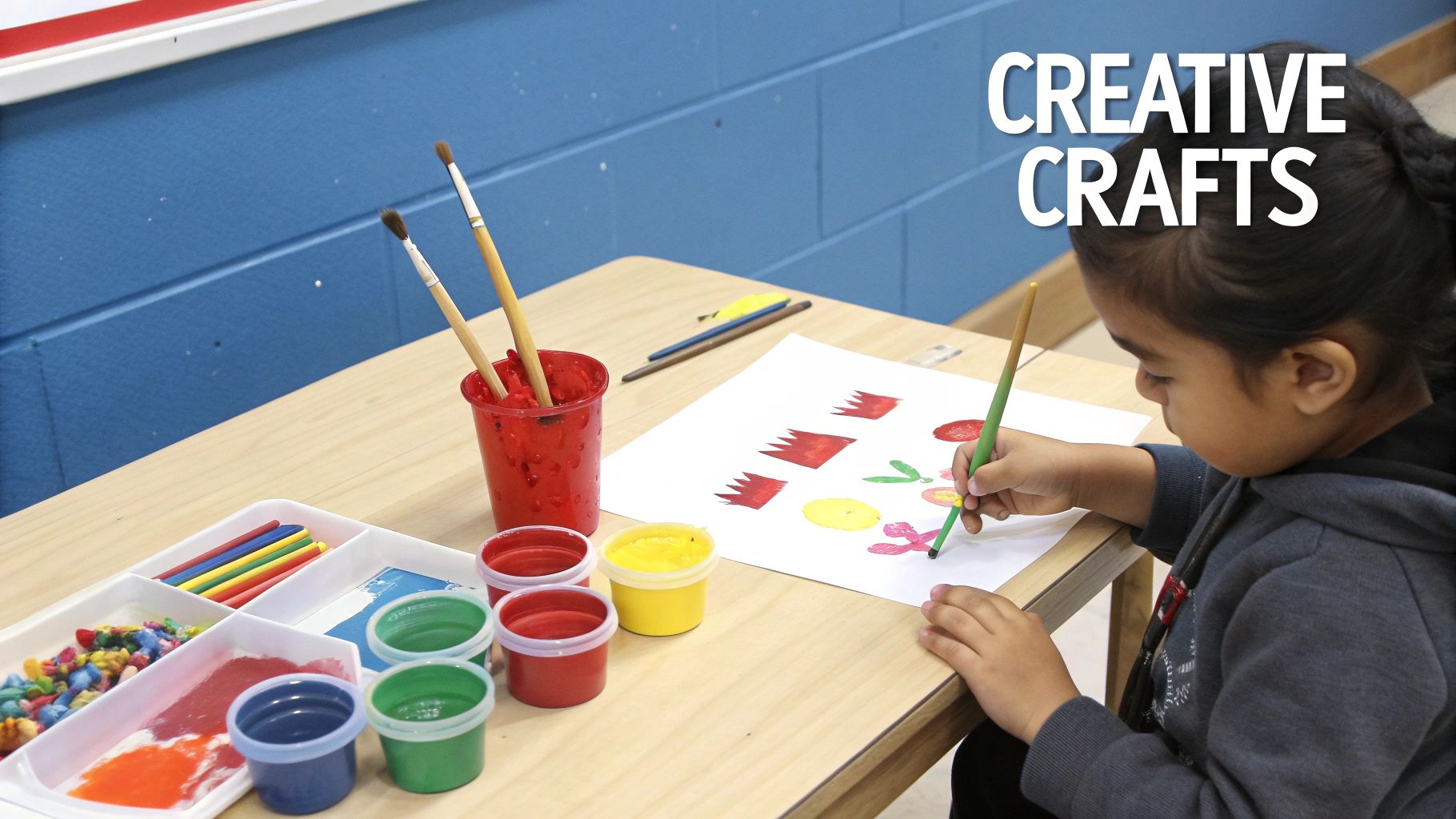
3. Creative Arts and Crafts Projects
Unleashing your preschooler's inner artist is a perfect way to brighten a gloomy day. Open-ended arts and crafts projects, such as painting, collage-making, or sculpting with playdough, provide an invaluable outlet for self-expression. These activities focus on the creative process rather than a specific outcome, allowing children to explore materials and ideas freely.
Why It Works
Arts and crafts are fantastic for developing crucial preschool skills in a fun, low-pressure environment. Manipulating crayons, paintbrushes, and pieces of paper hones fine motor control and hand-eye coordination. This hands-on engagement also introduces concepts like color recognition, textures, and cause-and-effect, all while building confidence and nurturing creativity.
Getting Started
- Setup: Lay down a plastic tablecloth or newspaper on a flat surface to define the art zone and make cleanup easier. Arrange all materials so they are easily accessible to your child.
- Materials: Washable paints or markers, crayons, construction paper, child-safe scissors, glue sticks, playdough, and recycled materials like cardboard tubes or old magazines.
- Activity Duration: 20 minutes to over an hour, depending on your child's engagement.
- Learning Benefits: Fosters creativity, fine motor skills, color recognition, and self-expression. To explore more ideas, check out these creative crafts for preschoolers.
Pro-Tip for Maximum Fun
Offer a "creation station" with a variety of materials and let your child lead the way. Instead of giving specific instructions, ask open-ended questions like, "What do you think will happen if we mix the blue and yellow paint?" This encourages problem-solving and makes the experience more personal and memorable.
4. Interactive Reading and Storytelling Sessions
Snuggling up with a good book is a classic rainy day activity, but you can elevate it by making reading an interactive, multisensory experience. Instead of simply reading the words on the page, bring stories to life with animated voices, sound effects, and engaging questions. This turns passive listening into an active adventure, capturing your preschooler’s attention and boosting their comprehension.
Why It Works
Interactive storytelling builds a strong foundation for literacy by developing listening skills, expanding vocabulary, and introducing narrative structures. When children participate by asking questions or acting out scenes, they connect more deeply with the material. This makes reading a joyful shared experience rather than a solitary task, fostering a lifelong love of books.
Getting Started
- Setup: Create a cozy reading nook with pillows and blankets to signal it’s a special, focused time for stories.
- Materials: A selection of age-appropriate books (like The Very Hungry Caterpillar), puppets, or simple props like scarves or hats.
- Activity Duration: 20 to 45 minutes, depending on your child's engagement.
- Learning Benefits: Improves language development, listening comprehension, and emotional intelligence. For more ideas on boosting brain power, check out these cognitive development activities for preschoolers.
Pro-Tip for Maximum Fun
Pause while reading and ask, "What do you think will happen next?" This simple question encourages critical thinking and prediction skills. Use puppets or even just your hands to act out the characters, or let your child turn the pages. After the story, extend the fun by drawing a favorite scene or building a character out of play-doh.
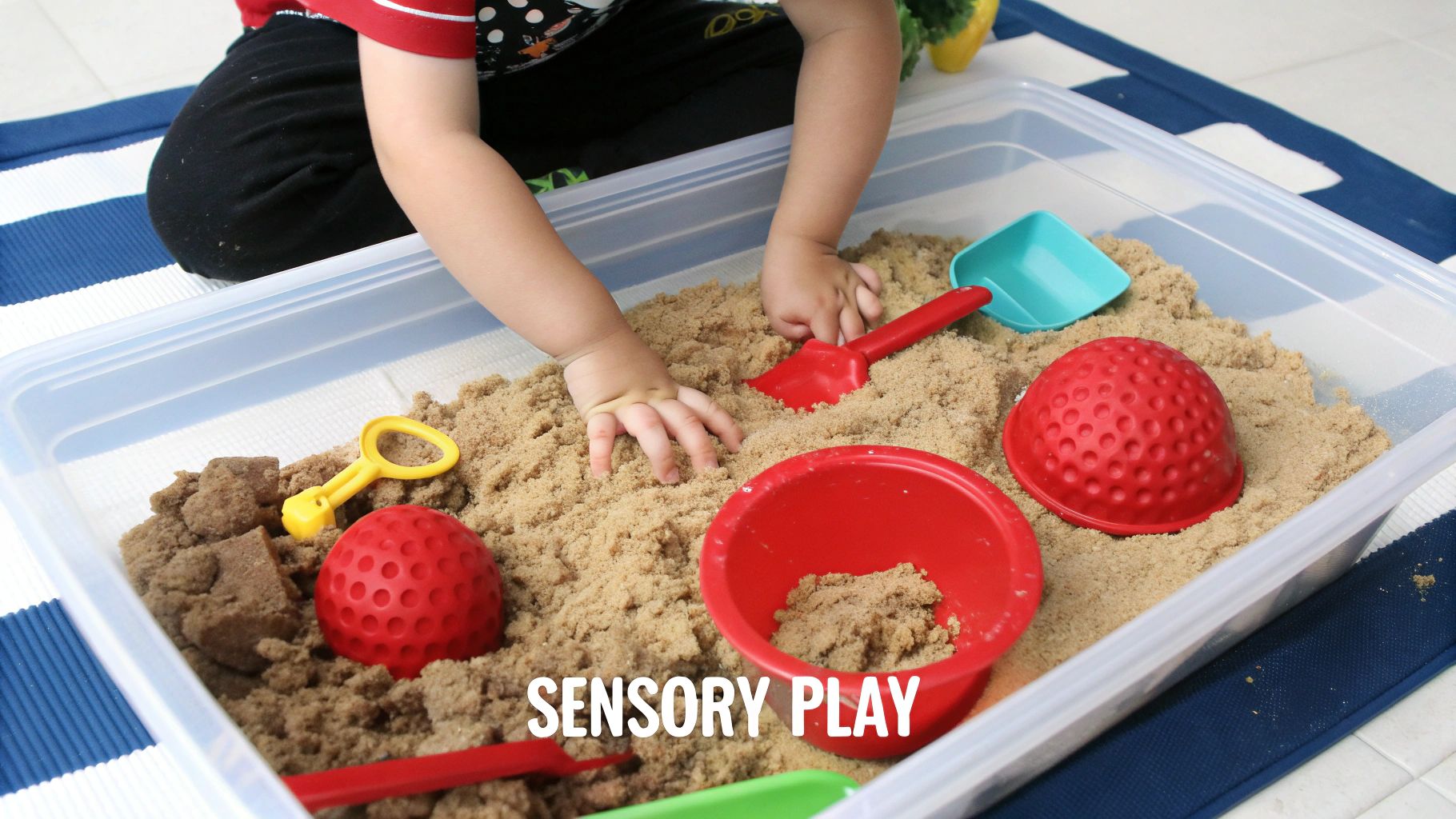
5. Sensory Play Stations
Engaging a preschooler's sense of touch, sight, and sound is a fantastic way to turn a dreary day into one of discovery. Sensory play stations, using materials like sand, water, or rice, offer a calming yet stimulating activity that captivates a child's attention. These contained setups provide a rich, hands-on experience, making them one of the best rainy day activities for preschoolers to explore textures and materials at their own pace.
Why It Works
Sensory play is crucial for cognitive development, helping children build nerve connections in the brain's pathways. It encourages the development of fine motor skills through scooping and pouring, supports language development as they describe textures, and can have a wonderfully soothing effect, especially when kids are stuck indoors.
Getting Started
- Setup: Use a large, shallow plastic bin or a dedicated water table placed on a mat or old sheet to contain the mess. Fill it with your chosen sensory material.
- Materials: Safe fillers like dried pasta, kinetic sand, or water, along with tools like scoops, funnels, cups, and small toys.
- Activity Duration: 20 minutes to over an hour.
- Learning Benefits: Develops fine motor skills, promotes sensory exploration, and encourages scientific thinking. To understand its full impact, you can explore more about what sensory play is and its benefits.
Pro-Tip for Maximum Fun
Create a "theme" for your sensory bin. A construction theme could use kinetic sand with small trucks, while an ocean theme might involve water, blue food coloring, and plastic sea creatures. Always supervise closely, especially with small items, and store your sensory materials in airtight containers to reuse them again and again.
6. Music and Movement Dance Sessions
Transforming cabin fever into joyful energy is easy with a music and movement session, making it one of the best rainy day activities for preschoolers. This activity encourages kids to shake, dance, and wiggle to their favorite tunes, providing a fantastic outlet for pent-up energy when playing outside isn't an option. It's a structured yet free-form way to get bodies moving and spirits soaring.
Why It Works
Music and dance tap into a child's natural inclination to move, helping them develop gross motor skills, coordination, and rhythmic awareness. It's also an excellent mood booster, releasing endorphins that combat rainy day blues. Singing along to songs enhances language development and memory recall in a fun, pressure-free environment.
Getting Started
- Setup: Clear a safe, open space in a room by moving furniture to the sides. Create a playlist of upbeat, age-appropriate songs.
- Materials: You'll need a speaker or device for music, and optional items like colorful scarves, ribbon wands, or simple rhythm instruments (shakers, drums, or even pots and pans).
- Activity Duration: 20 to 45 minutes.
- Learning Benefits: Improves gross motor skills, coordination, rhythm, and self-expression. For engaging musical fun, explore various types of preschool learning songs that encourage movement and cognitive development.
Pro-Tip for Maximum Fun
Incorporate games like freeze dance, where kids freeze in place when the music stops, or follow-the-leader to introduce new movements. Encourage them to express themselves freely without worrying about getting the "moves" right. Vary the tempo with slow and fast songs to teach them about different rhythms and help them practice self-regulation.
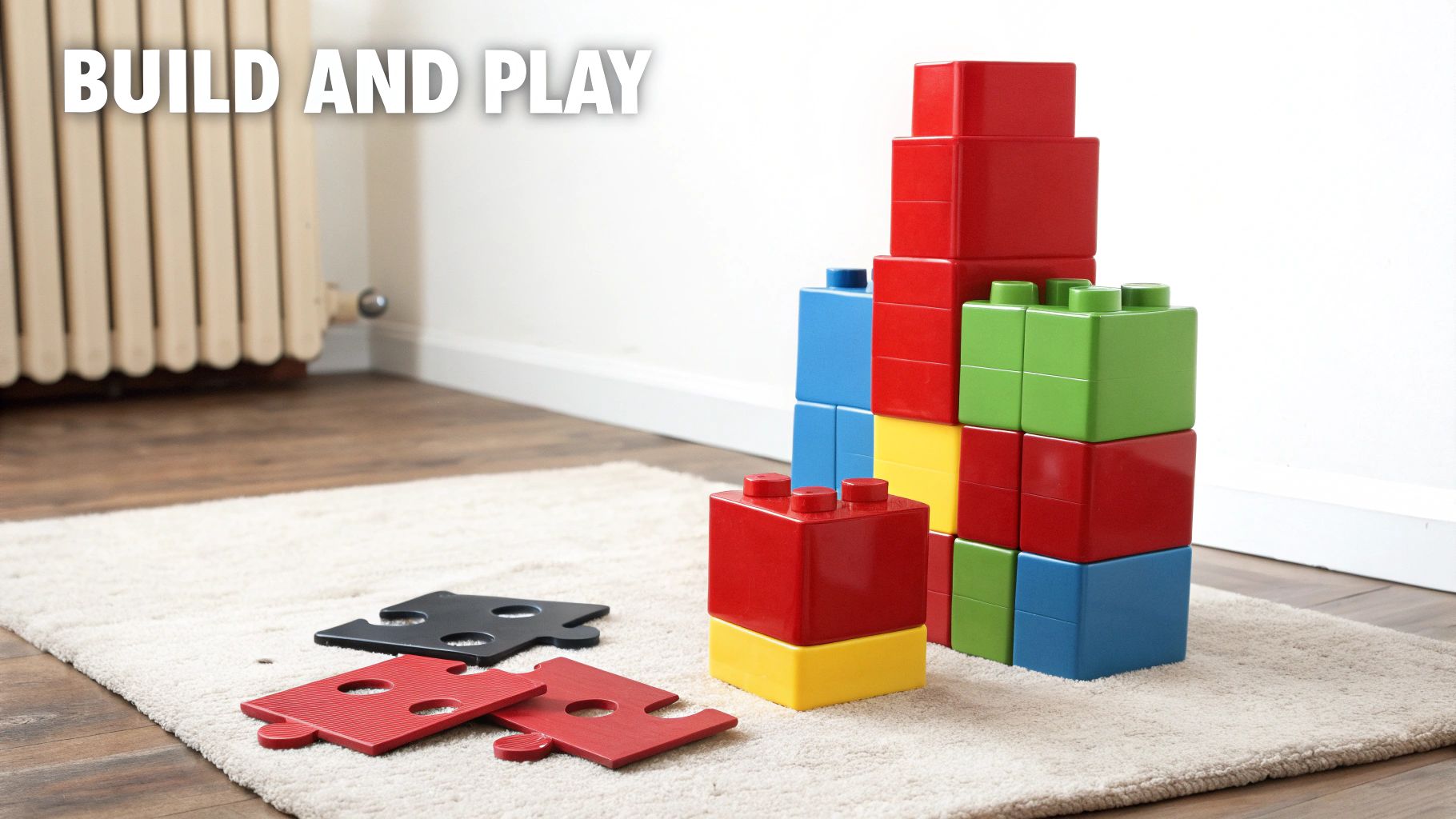
7. Puzzle and Building Block Activities
Engaging with puzzles and building blocks is a classic rainy day activity for preschoolers that quietly nurtures critical thinking. These hands-on toys, from simple chunky puzzles to complex magnetic tiles, challenge children to think logically and creatively, providing a satisfying sense of accomplishment with each completed project. They offer a constructive outlet for a preschooler’s boundless energy when stuck indoors.
Why It Works
Puzzles and building toys are fantastic for developing fine motor skills, hand-eye coordination, and spatial reasoning. As children manipulate pieces, fit shapes together, or balance structures, they are actively problem-solving and experimenting with cause and effect. This focused play can be both calming and highly engaging, making it an ideal activity for a long afternoon.
Getting Started
- Setup: Clear a space on the floor or a low table. For puzzles, start by separating edge pieces. For blocks, simply pour them into a bin or onto a mat.
- Materials: You'll need age-appropriate puzzles (4-8 pieces for young preschoolers), building blocks like Duplo, or magnetic construction sets.
- Activity Duration: 20 minutes to over an hour.
- Learning Benefits: Improves problem-solving, fine motor control, and spatial awareness. For advanced construction play, consider toys like those found in the Playz building sets.
Pro-Tip for Maximum Fun
Start by building or solving a puzzle alongside your child to model the process without pressure. Celebrate their creations by taking photos before they are taken apart. To keep things interesting, try mixing different building sets or challenge them to build the tallest tower they can before it topples. Rotating your collection of puzzles and blocks monthly keeps the activity feeling new and exciting.
8. Dramatic Play and Dress-Up Games
Encouraging dramatic play is one of the most powerful rainy day activities for preschoolers, allowing them to step into new roles and make sense of the world. By putting on costumes and acting out scenarios, children explore complex emotions, practice social interactions, and develop a deeper understanding of different people and professions in a safe, imaginative setting.
Why It Works
Dress-up games provide a tangible way for preschoolers to process their experiences and build empathy. Acting as a doctor, a chef, or a teacher helps them practice communication, negotiation, and problem-solving skills. This kind of imaginative play is fundamental to developing social-emotional intelligence and creative thinking.
Getting Started
- Setup: Designate a corner of a room as the "stage." Organize costumes and props in an open, accessible bin or on low hooks so children can choose their own.
- Materials: A collection of old clothes, hats, scarves, and accessories. You can also use themed costume sets for specific roles like doctors, firefighters, or chefs.
- Activity Duration: 45 minutes to over an hour.
- Learning Benefits: Fosters empathy, social skills, language development, and emotional expression.
Pro-Tip for Maximum Fun
Create simple "scenario cards" with pictures to spark ideas, like a picture of a cat for a vet visit or a plate of food for a restaurant scene. Use open-ended props like cardboard boxes that can become a car, a storefront, or a spaceship. Join in briefly to model language and interactions, then step back and let their creativity lead the way.
9. Cooking and Baking Simple Recipes
Bringing your little one into the kitchen is a fantastic rainy day activity for preschoolers that blends learning with delicious fun. Child-friendly cooking and baking projects turn a gloomy afternoon into a productive, multi-sensory experience. From mixing batters to decorating treats, these activities introduce basic life skills while creating tasty results the whole family can enjoy.
Why It Works
Cooking introduces preschoolers to practical math and science concepts like measuring, counting, and observing chemical reactions (like dough rising). Following a recipe enhances listening skills and the ability to follow directions, while the sensory engagement of touching, smelling, and tasting ingredients supports cognitive development. It’s an empowering activity that builds confidence.
Getting Started
- Setup: Choose a simple recipe like personal pizzas on pre-made crusts, no-bake energy balls, or fruit smoothies. Set up a low, accessible workspace for your child.
- Materials: Child-safe utensils (plastic knives, kid-sized spoons), mixing bowls, measuring cups, and all necessary ingredients.
- Activity Duration: 20 to 60 minutes.
- Learning Benefits: Develops fine motor skills, basic math concepts, and reading readiness (following picture recipes). For a delightful culinary adventure, consider involving your preschoolers in creating some fun recipes to make with kids.
Pro-Tip for Maximum Fun
Pre-measure messy ingredients like flour into small bowls to minimize spills and keep the focus on the fun parts like pouring and mixing. Let your child take the lead on age-appropriate tasks like washing vegetables, stirring ingredients, or decorating cupcakes. Celebrate their creation, no matter how it looks, to foster a positive relationship with food preparation.
10. Movie Marathons with Themed Activities
A carefully planned movie session can be one of the most relaxing rainy day activities for preschoolers, especially when you turn it into an interactive experience. Instead of passive viewing, pairing a short, age-appropriate film with related crafts, snacks, and discussions transforms screen time into a dynamic and educational event. This balanced approach acknowledges that a little screen time can be a lifesaver while enriching the experience beyond the screen.
Why It Works
This method engages multiple senses and learning styles, reinforcing concepts from the movie through hands-on activities. It encourages critical thinking by prompting preschoolers to recall plot points and character emotions, turning entertainment into a valuable opportunity for comprehension and connection. For example, watching an episode of Bluey could be followed by a game of "Keepy Uppy" with a balloon.
Getting Started
- Setup: Choose a short movie or a couple of episodes from a show like Daniel Tiger's Neighborhood or StoryBots. Prepare any craft materials or themed snacks beforehand.
- Materials: A screen, a cozy viewing area with blankets, and supplies for your chosen themed activity (e.g., craft paper, crayons, simple baking ingredients).
- Activity Duration: 30 to 60 minutes for viewing, plus 30 minutes for the related activity.
- Learning Benefits: Develops listening comprehension, encourages creative expression, and models a healthy, balanced approach to screen time.
Pro-Tip for Maximum Fun
Create a "movie ticket" for your preschooler to present before the show begins. After watching, start a simple conversation with questions like, "What was your favorite part?" or "How did the character feel when that happened?" This small step builds narrative recall and emotional intelligence.
10-Point Comparison: Rainy-Day Activities for Preschoolers
| Activity | Implementation complexity 🔄 | Resource requirements ⚡ | Expected outcomes ⭐📊 | Ideal use cases 💡 | Key advantages |
|---|---|---|---|---|---|
| Indoor Play Tents and Fort Building | Low — quick pop-up or blanket drape 🔄 | Moderate — floor space, cushions or tent ⚡ | ⭐⭐⭐⭐ — imaginative play, security, spatial awareness 📊 | Cozy reading, pretend scenarios, small-group collaborative play 💡 | Portable, reusable, contained play space; supports social-emotional development |
| Science and STEM Experiment Kits | Medium — prep + adult supervision 🔄 | Kits or consumables, trays, washable surface ⚡ | ⭐⭐⭐⭐ — scientific curiosity, observation, STEM vocabulary 📊 | Short guided discovery sessions; parent-child experiments 💡 | Educational and hands-on; creates memorable, explainable outcomes |
| Creative Arts and Crafts Projects | Low — simple setup, adaptable 🔄 | Basic art supplies, washable surfaces, aprons ⚡ | ⭐⭐⭐⭐ — fine motor skills, creativity, extended engagement 📊 | Extended quiet play; fine-motor practice; display projects 💡 | Inexpensive, adaptable, boosts confidence; tangible results |
| Interactive Reading and Storytelling Sessions | Low — minimal prep, optional props 🔄 | Books, cozy seating, simple props ⚡ | ⭐⭐⭐⭐ — vocabulary growth, listening, pre-literacy skills 📊 | Calming bonding time; language and comprehension practice 💡 | No-special-materials, soothing, repeatable; strengthens attachment |
| Sensory Play Stations | Low–Medium — setup for containment 🔄 | Bins, sensory materials (sand, rice, water), supervision ⚡ | ⭐⭐⭐⭐ — sensory processing, regulation, fine motor control 📊 | Calming exploratory play; sensory-focused needs; 20–40 min sessions 💡 | Low-cost, highly engaging, supports emotional regulation |
| Music and Movement Dance Sessions | Low — planning + adult energy to lead 🔄 | Music source, open floor, simple instruments ⚡ | ⭐⭐⭐ — gross motor development, rhythm, mood boost 📊 | Energy-release, group activities, gross-motor practice 💡 | Burns energy, improves coordination, easily adaptable |
| Puzzle and Building Block Activities | Low–Medium — select appropriate difficulty 🔄 | Blocks/puzzles, storage, age-appropriate sets ⚡ | ⭐⭐⭐⭐ — spatial reasoning, problem-solving, sustained focus 📊 | Quiet focused time; cognitive development practice 💡 | Durable, repeatable, scalable difficulty; minimal supervision |
| Dramatic Play and Dress-Up Games | Medium — prop prep and facilitation 🔄 | Costumes, open-ended props, storage ⚡ | ⭐⭐⭐⭐ — social-emotional skills, language, empathy 📊 | Collaborative role-play, language expansion, imaginative scenarios 💡 | Encourages empathy, cooperative play, rich language practice |
| Cooking and Baking Simple Recipes | Medium–High — close supervision, kitchen access 🔄 | Ingredients, child-safe tools, workspace (oven optional) ⚡ | ⭐⭐⭐⭐ — early math, sequencing, independence, sensory learning 📊 | Bonding activities, life-skill lessons, short guided tasks 💡 | Real-world skills, measurable steps, tasty rewards |
| Movie Marathons with Themed Activities | Low — content selection + light prep 🔄 | Screen, curated films, themed craft/snack supplies ⚡ | ⭐⭐⭐ — passive learning; improved media literacy when paired 📊 | Quiet rest for caregivers; thematic tie-ins; brief downtime 💡 | Easy to manage, abundant content, good for caregiver rest |
Embrace the Puddles: Your Ultimate Rainy Day Playbook
The next time dark clouds gather, there's no need to anticipate a chorus of "I'm bored." As we've explored, a rainy day isn't a setback; it's a unique opportunity for connection, discovery, and imaginative play. With this playbook of diverse and engaging rainy day activities for preschoolers, you're fully equipped to transform any dreary afternoon into an adventure.
The true power of these activities lies in their ability to turn confinement into a canvas for growth. You’re not just keeping your child busy; you're actively nurturing their development in profound ways. Each activity we’ve covered offers more than simple entertainment, contributing to a well-rounded foundation for lifelong learning.
Key Takeaways for a Successful Rainy Day
Remember, the goal is not to fill every single second with a structured plan. The most important ingredient is your presence and willingness to engage. Let's recap the core principles for making your indoor days memorable:
- Preparation is Your Best Friend: Having a "rainy day kit" with basic supplies like craft materials, playdough, or a pre-selected science kit can eliminate stress and allow you to jump right into the fun. You don't need an entire closet, just a small, accessible box of possibilities.
- Balance is Essential: A great rainy day includes a mix of activity types. Try to alternate between a high-energy dance session and a quiet puzzle-building challenge, or follow a creative art project with a collaborative baking experience. This variety keeps preschoolers engaged and prevents overstimulation.
- Embrace the Mess (Within Reason): Sensory play, science experiments, and art projects can be messy, but that's often where the best learning happens. Designate a "mess-friendly zone" using a splat mat or an old sheet to make cleanup manageable and allow your child to explore freely without anxiety.
- Follow Your Child's Lead: While this guide provides a fantastic starting point, the best rainy day activities for preschoolers are the ones that capture your child's current interests. If they are fascinated by dinosaurs, adapt the fort-building into a dinosaur cave or create fossil-themed playdough stamps. This child-led approach fosters a genuine love for learning.
Ultimately, mastering these moments is about shifting your perspective. A rainy day is a gift of focused time together, a chance to slow down and reconnect without the usual distractions. By fostering an environment of creativity and curiosity, you are doing more than just passing the hours; you are building a strong foundation of problem-solving skills, emotional intelligence, and cherished family memories that will last far longer than any storm.
Ready to stock your rainy day arsenal with activities that spark curiosity and make learning an adventure? Explore the full collection of STEM kits, play tents, and creative toys from Playz to ensure your next indoor day is your best one yet. Discover your child's next favorite activity at Playz.