

Art and craft projects are far more than just a fun way to fill an afternoon; they are a powerful tool for a child's development. These hands-on activities are proven to build essential skills, from fine motor control to creative problem-solving, all while giving kids a much-needed break from screens.
Why Crafting Is a Cornerstone of Childhood Development
In a world filled with passive entertainment, getting kids to create something with their hands is an active alternative that shapes young minds in incredible ways. I still remember watching my own child, who was usually hesitant to try new things, spend a whole afternoon building a wobbly cardboard robot. The pride on their face was priceless. That single project built a foundation of confidence that has fueled their curiosity ever since. This guide is designed to help you create those same empowering moments.
The Real-World Power of Making Things by Hand
Engaging in art and craft projects is about celebrating the process, not just admiring the final product. Every snip of the scissors, swipe of the paintbrush, and pinch of clay contributes to a child's growth. This hands-on approach is a meaningful return to tangible learning experiences.
This shift is clearly reflected in the global arts and crafts market, which grew from $41.6 billion in 2023 and is projected to hit $75 billion by 2025. This surge is largely driven by parents seeking meaningful, screen-free activities. In fact, research shows that children who regularly participate in crafting develop fine motor skills and creativity at a rate 25% higher than those engaged in passive play.
Key Takeaway: The true value of art and craft projects lies in the journey of creation. When you focus on exploration and self-expression, every project becomes a successful learning experience, regardless of the final outcome.
Building Essential Skills Beyond the Craft Table
The benefits of these activities extend far beyond the creative session itself—they are, in essence, playful training for real-world challenges. When a child follows steps to build a model or figures out how to make a paper tower stand, they're practicing critical thinking and resilience without even realizing it.
Here’s a breakdown of the core skills they're building:
- Fine Motor Skills: Activities like beading, cutting, and drawing strengthen the small muscles in the hands and fingers, which is essential for learning to write and performing daily tasks.
- Creative Problem-Solving: When a project doesn't go as planned, kids learn to adapt and find new solutions. This builds a flexible and innovative mindset.
- Focus and Patience: Completing a project from start to finish requires concentration and persistence—valuable skills that translate directly to academic success.
These activities are a core component of hands-on learning, a method proven to deepen understanding and improve long-term retention.
How to Set Up a Creative Space for Success
A fantastic art project begins long before you break out the supplies. The secret to unlocking creativity (without unleashing chaos) is setting up a dedicated, functional, and safe crafting environment. Think of it as a "creation station"—a special spot where kids feel free to explore, experiment, and make a glorious mess in a manageable way.
The goal isn’t a pristine art studio, but a practical zone that invites creative thinking. This could be a corner of the playroom, a small desk, or even a portable cart you can roll out to the kitchen table. Consistency is key, so your child knows exactly where to go when inspiration strikes.
Designing Your Kid-Friendly Creation Station
First, protect your surfaces. A washable vinyl tablecloth, a roll of craft paper, or flattened cardboard boxes can save your table from spills and marker scribbles. Designating a special "art shirt" or smock also reduces stress and lets them get messy without worry.
Good organization is your best friend. When supplies are easy for little hands to see and reach, kids are more likely to use them—and put them away.
- Use Clear Bins: Stackable plastic containers are perfect for larger items like yarn, fabric scraps, and recycled materials.
- Try Divided Organizers: Small compartments are a lifesaver for tiny items like beads, buttons, and googly eyes.
- Repurpose Jars and Cans: Cleaned-out jam jars or tin cans are ideal for holding brushes, pencils, and scissors upright.
For more clever storage ideas, our guide on how to organize a toy room offers tips that work perfectly for art supplies.
This flowchart is a handy tool for quickly choosing a craft that fits your child's mood and needs at any given moment.
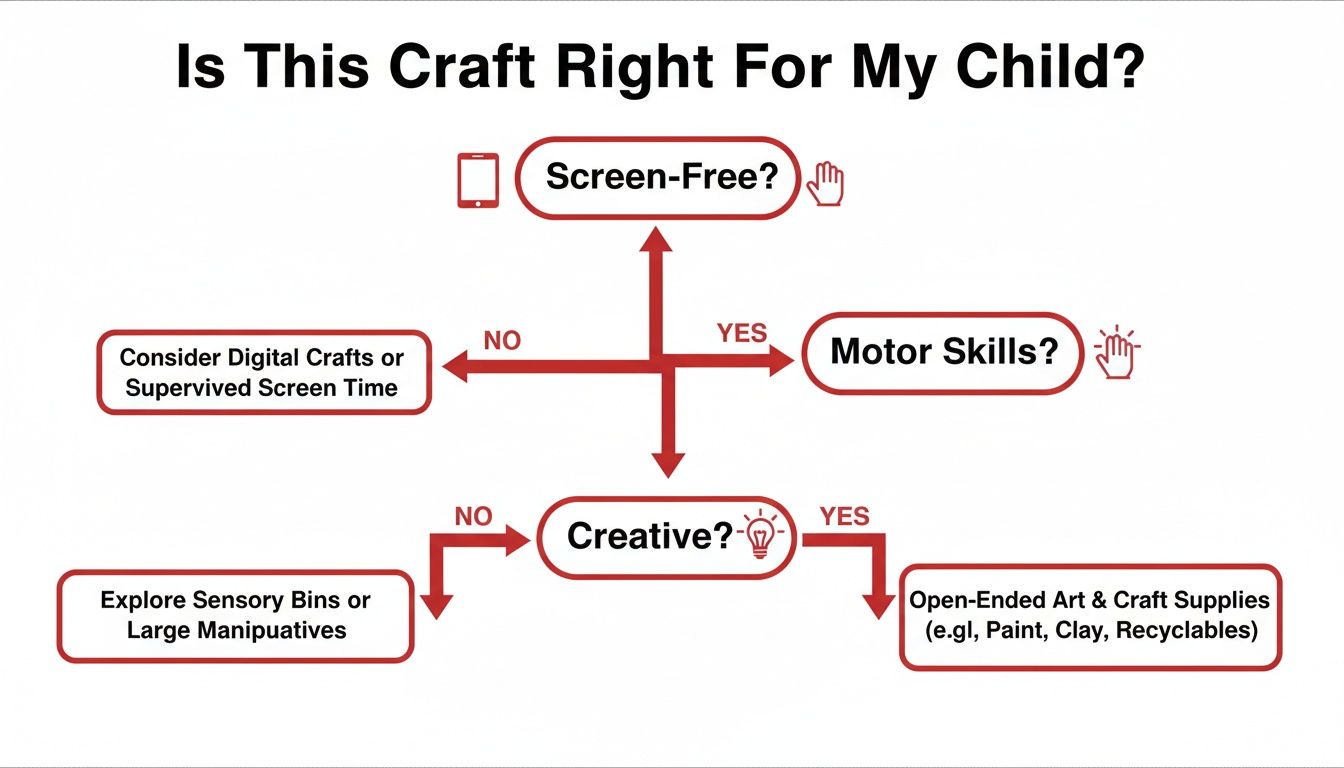
As you can see, the best projects balance screen-free fun, skill-building, and pure creative expression.
Prioritizing Safety and Sustainable Crafting
Choosing the right materials is crucial, especially with younger kids. Always look for non-toxic supplies, often identified by the "AP" (Approved Product) seal from the Art and Creative Materials Institute (ACMI).
As children get older, you can introduce more advanced tools with proper guidance. Blunt-tipped safety scissors are suitable for supervised three-year-olds, while a low-temperature glue gun should be reserved for older kids with an adult right beside them.
A well-planned setup minimizes risks and lets the fun take center stage. This checklist will help you ensure every session is safe.
Crafting Safety Checklist by Age Group
| Age Group | Recommended Materials | Tools & Supervision Level | Key Safety Tip |
|---|---|---|---|
| Toddlers (1-3) | Edible finger paints, large crayons, washable markers, dough | Constant, hands-on supervision. Avoid small parts. | Ensure all materials are non-toxic and large enough to not be a choking hazard. |
| Preschool (3-5) | Non-toxic paint, glue sticks, safety scissors, construction paper | Close supervision. Assist with cutting and gluing. | Teach proper handling of tools like safety scissors, always pointing them down. |
| Early School (6-8) | Tempera/acrylic paints, craft glue, beads, pipe cleaners | Intermittent supervision. Check in on tool use. | Introduce low-temp glue guns and more complex scissors with direct guidance. |
| Tweens (9-12) | Fabric dyes, polymer clay, advanced art kits, craft knives | Guidance & availability. Adult should be nearby for help. | Set clear rules for using sharp tools or heat elements like an oven for clay. |
Safety isn't just about preventing accidents—it's about creating a secure space for creativity to flourish.
Finally, consider sustainability. Incorporating eco-friendly habits into your craft time is great for the planet and teaches resourcefulness. Eco-friendly products are a major driver in the crafting world, accounting for 40% of its growth. Studies show that kids involved in sustainable art projects have 30% higher engagement rates, and crafting can reduce anxiety by up to 25%.
Making cleanup part of the routine is another valuable lesson. Frame it as the final step of every project, teaching responsibility and respect for their creative space.
Simple and Fun Projects for Toddlers and Preschoolers
Welcome to the messy and magical world of crafting with toddlers and preschoolers (ages 2-5). At this stage, art projects are all about the experience—sensory exploration, the joy of discovery, and building foundational skills.
Forget perfect results. It's time to celebrate the process! For this age group, the goal is to engage their senses with different textures, colors, and materials.
Colorful Pasta Necklaces for Fine Motor Fun
This classic craft is a powerhouse for developing fine motor skills and hand-eye coordination. The simple act of threading pasta onto a string is a fantastic challenge for little fingers, teaching precision and patience.
Materials List:
- Dry pasta: Shapes with large holes like penne, rigatoni, or ziti work best.
- Child-safe paint: Washable tempera or acrylic paints are great choices.
- Yarn or string: Cut a piece long enough for a necklace and wrap tape around one end to create a makeshift "needle" for easier threading.
- A tray or bowl: Essential for containing the pasta.
First, let your child paint the pasta in bright colors and let it dry completely. Once dry, show them how to thread the pieces onto their string. It’s a simple concept that requires significant focus for a young child.
Why It's Great for Them: This project directly supports the pincer grasp (coordinating the index finger and thumb), a skill that is a direct precursor to holding a pencil and learning to write.
Nature Collage Art with Backyard Treasures
Take creativity outdoors with a project that encourages kids to observe their surroundings and appreciate different textures and shapes.
Start with a "treasure hunt." Give your child a small bag and go on an adventure to collect interesting natural items.
Materials to Hunt For:
- Fallen leaves of different shapes and sizes
- Small twigs or sticks
- Fallen flower petals
- Interesting pebbles or small stones
- Pinecones, acorns, or seed pods
Once you have your collection, provide a sturdy piece of cardboard or heavy paper and non-toxic school glue. Their mission is to arrange and glue their treasures onto the board to create a unique, textured masterpiece. There are no rules—the sensory experience is where the real learning happens. For more ideas tailored to this age, check out our guide to art and craft for preschoolers.
DIY Playdough Sculptures for Sensory Engagement
Nothing beats the squishy satisfaction of homemade playdough. It's a cornerstone of sensory play, strengthening hand muscles while allowing for three-dimensional creativity. Plus, making it at home is easy and affordable.
Simple Homemade Playdough Recipe:
- In a large bowl, mix 2 cups of all-purpose flour and 1 cup of salt.
- In a separate bowl, combine 1 cup of cold water, 2 tablespoons of vegetable oil, and a few drops of food coloring.
- Slowly pour the wet ingredients into the dry, mixing until a sticky dough forms.
- Knead the dough on a floured surface for 5-7 minutes until it's smooth and pliable.
Once the dough is ready, provide simple tools like plastic cookie cutters, a small rolling pin, or plastic cutlery. Encourage them to roll, flatten, pinch, and sculpt whatever they imagine.
Creative Twists for Extended Play:
- Add Scents: Mix in a few drops of vanilla extract or lavender oil for another sensory layer.
- Incorporate Textures: Knead in glitter, small beads (for older preschoolers), or uncooked rice for a new tactile experience.
- Practice Color Mixing: Make batches of primary colors (red, yellow, blue) and let your child discover what happens when they mix them.
These projects are designed to be flexible, low-stress, and full of learning opportunities. By focusing on the experience, you create an encouraging environment where your little artist can thrive.
Engaging STEM-Based Crafts for School-Aged Kids
For curious school-aged kids (ages 6-9), the world is a puzzle waiting to be solved. This is the perfect age to introduce art and craft projects that teach the fundamentals of Science, Technology, Engineering, and Mathematics (STEM) in a fun, hands-on way. Blending creativity with a core scientific concept can spark a genuine, lifelong passion for learning.
These projects are about experimenting, observing, and understanding the "why" behind what’s happening, turning a simple craft into a memorable lesson.
Bring Chemistry to Life with a DIY Volcano Eruption
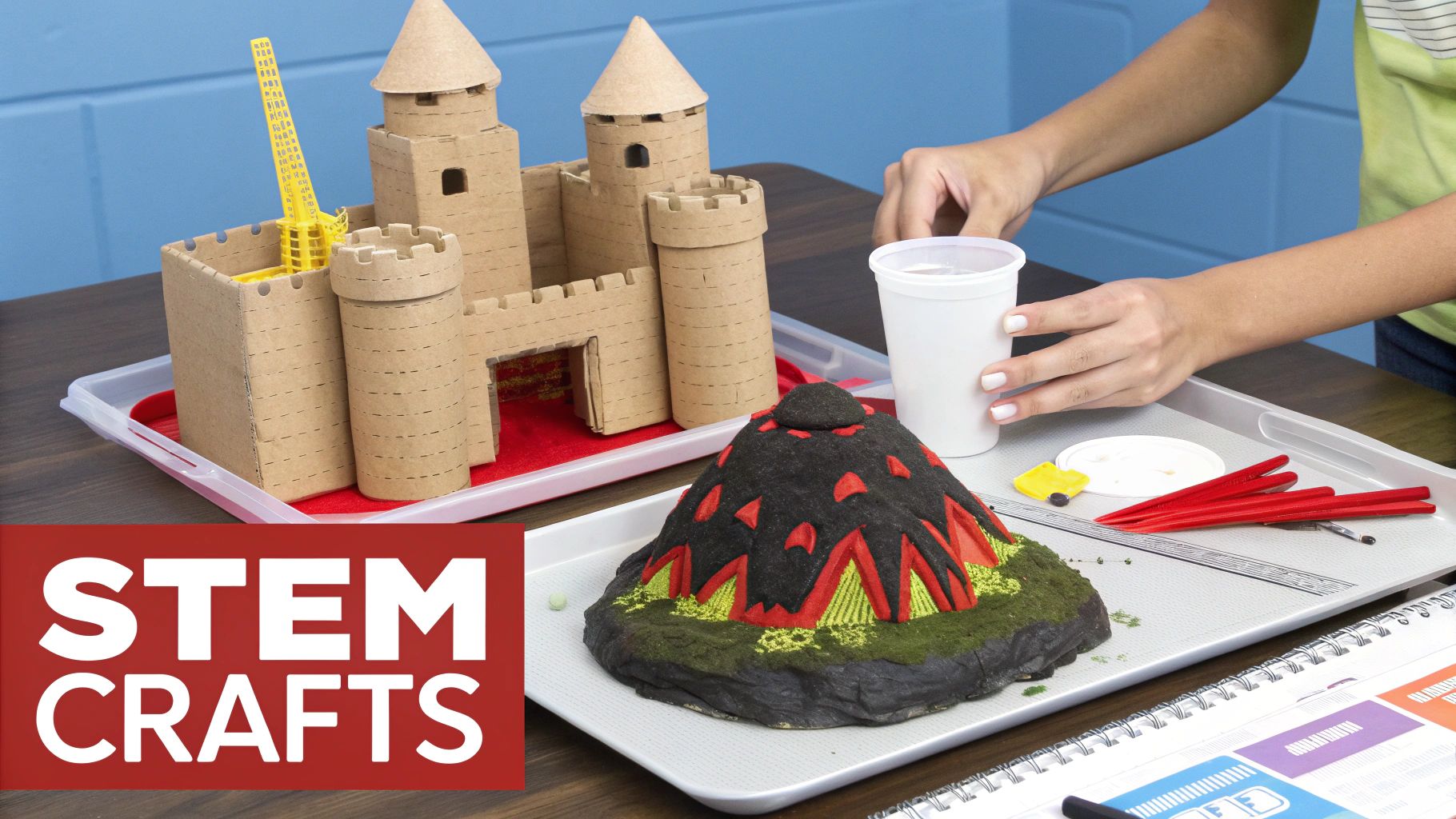
A homemade volcano is a classic science project for a reason—it’s a thrilling way to see chemistry in action. The magic lies in the reaction between an acid (vinegar) and a base (baking soda), which creates carbon dioxide gas and an awesome "eruption."
First, build your volcano. A small plastic bottle makes a great core; build the mountain shape around it using salt dough, clay, or even packed mud. Let it dry, paint it, and you're ready for the main event.
Materials for the Eruption:
- Warm water
- A few drops of red food coloring
- A squirt of dish soap (for extra foamy bubbles)
- 2 tablespoons of baking soda
- 1/2 cup of vinegar
Pour the water, food coloring, dish soap, and baking soda into the bottle. When ready, pour in the vinegar and stand back to watch the fizzy lava flow!
What They're Learning: This is a fantastic introduction to basic chemistry. Kids see firsthand how combining household ingredients creates a dynamic reaction, opening up discussions about states of matter and cause and effect.
Explore Polymer Science with a Homemade Slime Factory
Slime is more than a gooey toy; it's a brilliant lesson in polymer science. The magic happens when you mix glue (full of long molecule chains called polymers) with an activator like a borax solution. The activator links those chains together, transforming liquid glue into a stretchy, slimy substance.
Basic Slime Recipe:
- Pour 1/2 cup of clear or white school glue into a bowl.
- Add 1/2 cup of water and a few drops of food coloring, then mix well.
- In a separate cup, dissolve 1 teaspoon of borax in 1 cup of warm water. (Adult supervision required for this step.)
- Slowly add the activator to your glue mixture a little at a time while stirring, until the slime starts to form and pull away from the bowl.
Knead it with your hands until it reaches the perfect consistency. For more great ideas, check out these STEM activities for elementary students that mix play with powerful learning.
Master Basic Engineering with a Cardboard Castle Challenge
This project challenges kids to think like architects using one of the most versatile materials available: cardboard. The goal is to build the strongest or most creative castle possible using only recycled cardboard, tape, and glue.
Gather various cardboard boxes and tubes. Encourage your child to think about castle parts like towers, walls, and bridges. How can you make a round tower from a flat piece of cardboard? What's the best way to connect two walls?
Key Engineering Skills Learned:
- Structural Integrity: Kids will discover which shapes are strongest (like triangles) and how to build a stable base.
- Spatial Reasoning: They'll practice visualizing and building 3D objects from 2D materials.
- Problem-Solving: When a tower leans, they have to figure out what went wrong and how to fix it, building resilience and critical-thinking skills.
A Quick Troubleshooting Guide for Young Scientists
Even the best experiments can go wrong, and that's a huge part of the scientific process! Learning to troubleshoot empowers kids to analyze problems and find solutions.
| Common Issue | Likely Cause | How to Fix It |
|---|---|---|
| Volcano Didn't Erupt | The baking soda or vinegar might be old and less reactive. | Use fresh ingredients. Adding a little extra of each can also help kickstart the reaction. |
| Slime is Too Runny | Not enough activator was added to link the polymer chains together. | Keep adding your activator solution a tiny bit at a time while kneading until it firms up. |
| Slime is Too Stiff | Too much activator was added, making it rubbery and prone to snapping. | Try kneading in a small amount of lotion or a single drop of baby oil to help soften it. |
| Cardboard Castle Collapses | The base is likely too small or the connections aren't strong enough. | Reinforce the joints with extra tape or hot glue (with adult help). A wider base always adds stability. |
These projects show kids that learning isn't just for the classroom. For more resources that mix science with hands-on fun, explore platforms offering guides for engaging STEM-based crafts.
Advanced DIY Projects for Tweens and Teens
Once kids hit the tween and teen years (ages 10 and up), they're ready for projects with more challenge—activities that require precision, offer independence, and let them express their personal style.
This is the perfect time to introduce projects that feel less like assignments and more like genuine hobbies, resulting in something they’ll be proud to use, wear, or display.
Custom Tie-Dye Apparel and Accessories
For older kids, tie-dye is a fantastic entry point into color theory and pattern-making. By moving beyond simple spirals, they can create intricate, professional-looking designs.
Encourage them to experiment with advanced techniques for one-of-a-kind results:
- Ice Dyeing: Pile ice cubes on fabric and sprinkle powdered dye over the top. As the ice melts, it creates beautiful, watercolor-like effects.
- Shibori Folding: This traditional Japanese method uses folding and binding to create stunning geometric patterns for a more controlled, artistic approach.
- Reverse Tie-Dye: Start with a dark-colored shirt and use a bleach solution (with close adult supervision) to remove color, creating bold and edgy designs.
When they create the perfect shirt, they can learn how to frame t-shirts as a DIY project and turn wearable art into room decor.
Intricate Friendship Bracelet Weaving
Friendship bracelets get a major upgrade for this age group. It’s time to move beyond simple stripes and tackle complex patterns like chevrons, diamonds, or even weaving names into the design. It's a fantastic craft for developing patience and fine motor skills.
The finished bracelets make meaningful, handmade gifts for friends. Endless online tutorials for new knots and patterns make it a great way to channel screen time into a productive hobby.
Pro Tip: Use a clipboard to hold the bracelet steady while working. It keeps threads from tangling and helps maintain even tension for a professional-looking finish.
Model Rocket Building and Launching
For the science and engineering enthusiast, building and launching a model rocket is an unforgettable experience. This project blends precision, physics, and pure excitement.
It requires careful reading of instructions and attention to detail. The real thrill comes on launch day. Finding a large, open field and following all safety guidelines is key. This is a full-blown STEM experiment that brings concepts like aerodynamics and propulsion to life. If this project sparks their interest, our guide on how to build simple robots is another great one to check out.
From Hobby to Hustle: The Entrepreneurial Angle
These advanced art and craft projects can also serve as an introduction to entrepreneurship. Creating personalized gifts or selling creations on a platform like Etsy shows them their talents have real value.
The online craft market has exploded, with e-commerce sales expected to make up over 30% of the market by 2025. In Britain alone, online craft sales have more than tripled in a decade, with 10.3 million buyers on Etsy. Dive deeper into these craft market trends on accio.com.
By encouraging tweens and teens to tackle these projects, you're empowering them to see themselves as creators, designers, and maybe even future business owners.
Common Crafting Questions Answered
Even the most well-planned crafting session can hit a few snags. Here are some answers to common questions to help you get back to the fun part.
How Can I Manage the Inevitable Mess?
The secret isn't avoiding the mess; it's being prepared for it. Designate a "creation station" covered with an old tablecloth or newspaper. An art smock or old t-shirt is also essential for protecting clothes.
Keep paper towels or baby wipes within arm's reach for quick cleanups. Most importantly, make tidying up part of the activity. Turning it into a game teaches responsibility and makes it feel less like a chore.
What Are the Best Projects for a Child Who Isn't "Artistic"?
For kids who shy away from drawing or painting, shift the focus to process-oriented art, which is all about the experience of creating and exploring, not the final product.
Great places to start:
- Sensory Fun: Tactile activities like homemade slime, sculpting with playdough, or squish painting in a sealed bag are all about the feeling, not the final look.
- Action-Packed Art: Get them moving with splatter painting outdoors or building a giant fortress out of recycled boxes.
- STEM-Based Kits: A science kit, like a volcano-making set, is perfect. The goal is experimentation and discovery, tapping into a different kind of creativity.
The point is to celebrate their effort. When a child feels successful just for trying something new, they build the confidence to tackle more traditional art projects later on.
How Can I Store Our Supplies Without Creating Clutter?
An organized craft stash is a happy one. Clear, stackable bins labeled by category—'Paint,' 'Paper,' 'Glue & Glitter'—help kids find what they need and put it away themselves.
A multi-drawer rolling cart is another great solution that can be tucked away easily. For tiny items like beads and buttons, a craft organizer with divided compartments is unbeatable. Involving your child in putting things away gives them a sense of ownership and helps them learn the system.
At Playz, we believe learning happens by doing. The best way for kids to grow is by getting their hands dirty, asking questions, and having fun. Our science kits and creative toys are designed to spark natural curiosity and turn learning into an unforgettable adventure.
Explore our full collection and find the perfect project to inspire your young creator today at https://www.playzusa.com.