

Walk down any toy aisle, and you're met with a wall of plastic, flashing lights, and loud noises. It can be overwhelming. But Montessori toys for preschoolers offer a refreshing alternative. They’re less about short-term entertainment and more about deep engagement—think of them as thoughtfully designed tools for purposeful, hands-on play that ignite a child's natural desire to learn and become independent.
Instead of flashy electronics that do all the work, you'll find simple, beautiful toys often made from natural materials, inviting your little one to explore the world at their own pace.
What Makes a Toy "Montessori"?
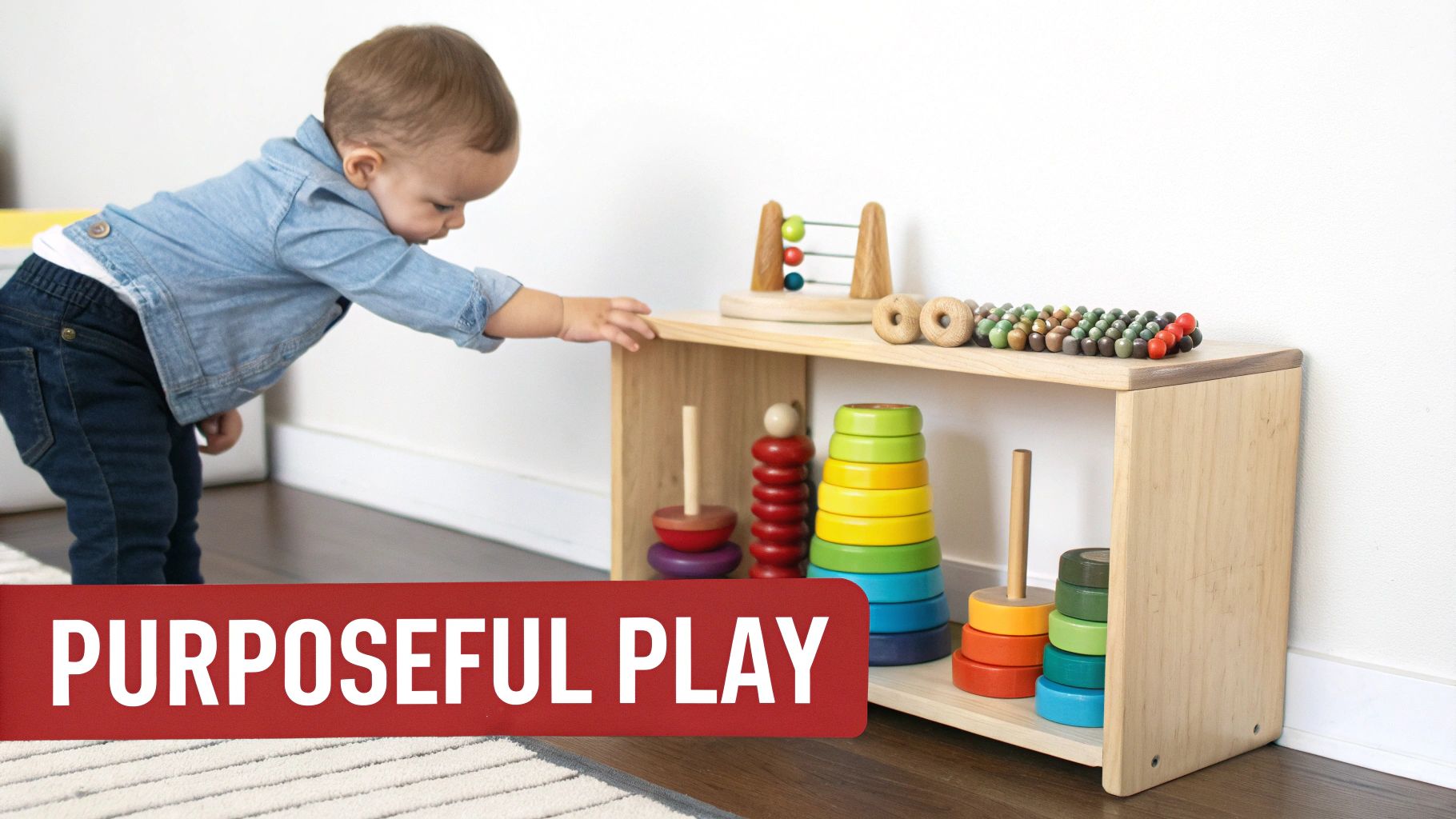
It’s easy to hear "Montessori" and immediately picture specific wooden toys, but it’s more of a philosophy than a strict label. These toys are invitations for your preschooler to build concentration and understand concepts through their senses. Unlike toys that dazzle with lights and sounds, Montessori toys require your child’s active participation. They have to do something.
This hands-on approach is intentional. It respects that children are born curious and gives them the tools to answer their own questions. This idea is catching on, and fast. The global Montessori toys market was valued at an impressive USD 8.55 billion in 2024 and is projected to soar to USD 16.25 billion by 2032. This surge shows how much parents are seeking meaningful, hands-on learning experiences for their kids.
The Core Principles in Action
So, what are the key ingredients that make a toy truly Montessori? It all comes down to a few simple but powerful ideas that prioritize a child's developmental needs. These toys are carefully designed to support the natural learning process without overwhelming a child's senses. You can learn more about the philosophy behind it in our guide on the Montessori method of teaching.
Here’s a practical breakdown of what sets these toys apart.
Core Principles of Montessori Toys at a Glance
This table sums up the key characteristics that define a Montessori toy. It’s a handy checklist for when you’re trying to figure out if a toy aligns with the philosophy.
| Principle | What It Means for a Toy | Practical Example |
|---|---|---|
| Child-Led Exploration | The toy allows a child to discover its purpose with minimal adult guidance. It encourages independent problem-solving and self-correction. | A set of stacking rings where the child learns to sequence them from largest to smallest. |
| Focus on a Single Skill | Each toy is designed to isolate one specific concept or skill, like sorting colors, matching shapes, or understanding size. | A shape sorter with distinct, basic geometric shapes. |
| Grounded in Reality | Toys are realistic and represent things from the real world, helping preschoolers understand their environment. | Miniature, true-to-life animal figures or a child-sized broom that actually works. |
Ultimately, these principles work together to create an environment where a child feels capable, empowered, and engaged.
At its heart, a Montessori toy is a tool for discovery, not just a distraction. It's designed to be handled, explored, and understood, empowering a child to become an active, confident learner.
How Montessori Toys Supercharge Preschool Development
Choosing Montessori-style toys for your preschooler is about so much more than a clean, aesthetic look—it’s a direct investment in their rapidly developing brain. These toys are designed to work with how young children naturally learn, turning playtime into a powerful engine for building cognitive, sensory, and practical skills.
Unlike blinking, beeping gadgets that offer passive entertainment, Montessori-inspired items demand a child's full attention. They have to get their hands in there and really do something.
When a preschooler carefully places a wooden knobbed cylinder into its perfectly matched slot, they're doing far more than just playing. They are sharpening their pincer grasp, improving hand-eye coordination, and getting a real, tangible lesson in size and dimension. This kind of purposeful work forges neurological pathways in a way a flashy plastic toy never could.
Boosting Cognitive and Problem-Solving Skills
One of the greatest benefits of Montessori toys is how they build critical thinking from the ground up. They often present a single, clear challenge that encourages a child to focus deeply and see a problem through from start to finish. This process cultivates concentration—one of the most important skills for all future learning.
Real-World Example: Think about a simple puzzle with realistic animal shapes. It does more than just teach animal names. It nudges a child to analyze shapes, test hypotheses ("Will this piece fit here? No, let me try this one."), and feel that amazing spark of satisfaction when they figure it out themselves. This simple cycle of effort and success builds resilience and a confident "I can do this" attitude.
The real magic of a Montessori toy is that it teaches without needing a manual. The toy itself is the guide. It allows a child to make their own discoveries, correct their own mistakes, and build genuine understanding through hands-on experience.
Beyond just physical toys, simple educational materials like these alphabet charts for early learning can also give a preschooler's cognitive skills a major boost by introducing letters and sounds in a clear, straightforward way.
Refining Sensory and Motor Abilities
Preschoolers learn with their whole bodies. They explore the world by touching, seeing, and moving objects. Montessori toys are designed with this in mind, often made from natural materials like wood, wool, and metal that provide rich sensory feedback. The satisfying weight of a wooden block or the cool touch of a metal cup offers far more information to a developing brain than uniform, lightweight plastic.
This intense focus on the benefits of hands-on learning is essential for their growth. Activities that look simple to us are actually complex workouts for their fine motor skills.
- Threading Beads: This classic activity requires immense concentration and is fantastic for developing the pincer grasp—the same one they’ll need to hold a pencil in a few years.
- Pouring Activities: Using small pitchers to pour water or dry beans from one cup to another is a masterclass in wrist control and precision.
- Stacking Blocks: This timeless toy teaches balance, spatial awareness, and the basic principles of physics, all through play.
These activities aren't just about keeping little hands busy. They’re building the dexterity and coordination needed for practical life skills, like zipping a jacket or using a fork.
Nurturing Independence and Practical Life Skills
Perhaps the most profound benefit of all is how these toys foster true independence. Many are based on real-world tools and tasks, scaled down for a child’s size and ability. A small broom and dustpan or a set for washing vegetables empowers them to take part in daily family life in a meaningful way.
This isn't just "playing house." It's about giving preschoolers real responsibilities that build their self-esteem and show them just how capable they are. When a child successfully slices a banana for their own snack, they learn that their contributions matter. This fosters a sense of purpose that screen time simply can't replicate.
Choosing the Right Toys for Your Growing Preschooler
Walking down the toy aisle can feel like a pop quiz you didn't study for. With endless options blinking, buzzing, and promising to make your child a genius, how do you pick the ones that will actually spark their interest and help them grow?
The secret is to flip your perspective. Instead of focusing on what a toy does, ask yourself what it encourages your child to do.
The best Montessori toys for preschoolers aren't flashy gadgets; they're simple, beautiful tools that bridge the gap between what your child can do today and what they'll be able to do tomorrow. It's about finding that sweet spot—a "just right" challenge that keeps them engaged without causing frustration. This is how we build real confidence and a true love for learning.
Aligning Toys with Developmental Goals
Rather than grabbing a toy simply because it’s labeled "educational," think about the specific skills your child is working on right now. A 3-year-old who is fascinated with fitting small objects into containers has different needs than a 5-year-old who is starting to grasp early math concepts. When you match toys to their current developmental stage, playtime becomes both purposeful and joyful.
This diagram highlights the core areas of development for preschoolers.
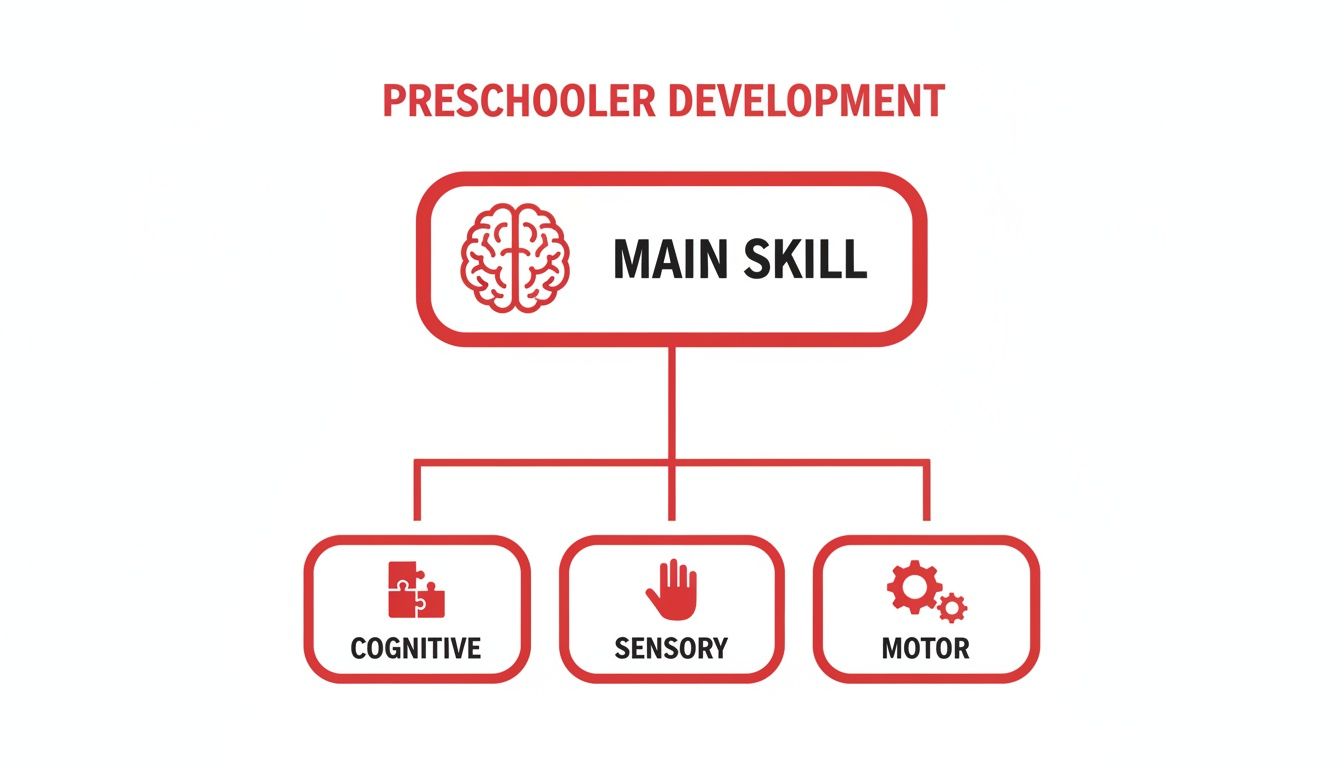
As you can see, a balanced approach that touches on cognitive, sensory, and motor skills creates a powerful foundation for everything that comes next.
Actionable Ideas: Montessori Toys by Developmental Goal
To help you get started, here's a quick reference table. Think of it as a cheat sheet for matching common toy types with the skills you want to encourage.
| Developmental Goal | Toy Category | Specific Examples |
|---|---|---|
| Fine Motor Skills | Manipulatives | Lacing beads, knobbed puzzles, small tongs for transferring pom-poms, stacking rings |
| Early Math Concepts | Counting & Sorting | Number rods, shape sorters, nesting bowls, counting beads on a frame |
| Language Development | Realistic Models | High-quality animal figures, miniature real-world objects, sandpaper letters |
| Sensory Exploration | Textured Materials | Sensory bins (with rice, beans, or water), playdough, fabric swatches of different textures |
| Gross Motor Skills | Movement & Balance | Wooden balance board, small climbing triangle (Pikler), push wagon |
| Practical Life Skills | Child-Sized Tools | Small pitcher and cups for pouring, dressing frames with buttons/zippers, a functional play kitchen |
Remember, this isn't a checklist you need to complete. It's a way to think more intentionally about the toys you bring into your home and how they can support your child's natural growth.
The Power of Open-Ended Play
While skill-specific toys are fantastic, never underestimate the magic of simple, open-ended materials. Items like a good set of wooden blocks, colorful play silks, or even a basket of smooth stones don't come with instructions. Why? Because they can become anything.
A block isn't just a block—it's a car, a phone, a piece of cake, or a brick for a castle.
An open-ended toy grows with your child. It meets them where they are developmentally and allows for increasingly complex play as their skills and imagination expand.
This type of imaginative play is where the real work of childhood happens. It's how kids develop creativity, tackle problems, and learn to navigate social situations. By letting them direct their own play, we empower them to become confident, capable leaders of their own little worlds.
This approach is catching on. The preschool years (ages 3-5) are driving a boom in demand for Montessori-style toys that prepare kids for school. The educational toys market hit a massive $54 billion in 2023 and is projected to more than double to $118.79 billion by 2030. This surge is backed by solid research showing that active, hands-on play can boost a child's brain development by up to 20% in their early years.
To learn more about what makes a great educational toy, check out our complete guide on the best learning toys for preschoolers.
Ultimately, choosing the right toys is less about buying and more about observing. Watch what captures your child's interest, celebrate their small victories, and offer them simple tools that invite them to explore the world with their own two hands.
Creating a Play Space That Inspires Calm and Focus
The right environment is just as powerful as the toys themselves. A Montessori-inspired play space isn't about a total home makeover; it’s about carving out a calm, orderly, and accessible area that invites your preschooler to dive into deep, focused play.
Think of it as preparing a beautiful, welcoming workshop for their most important job: learning.
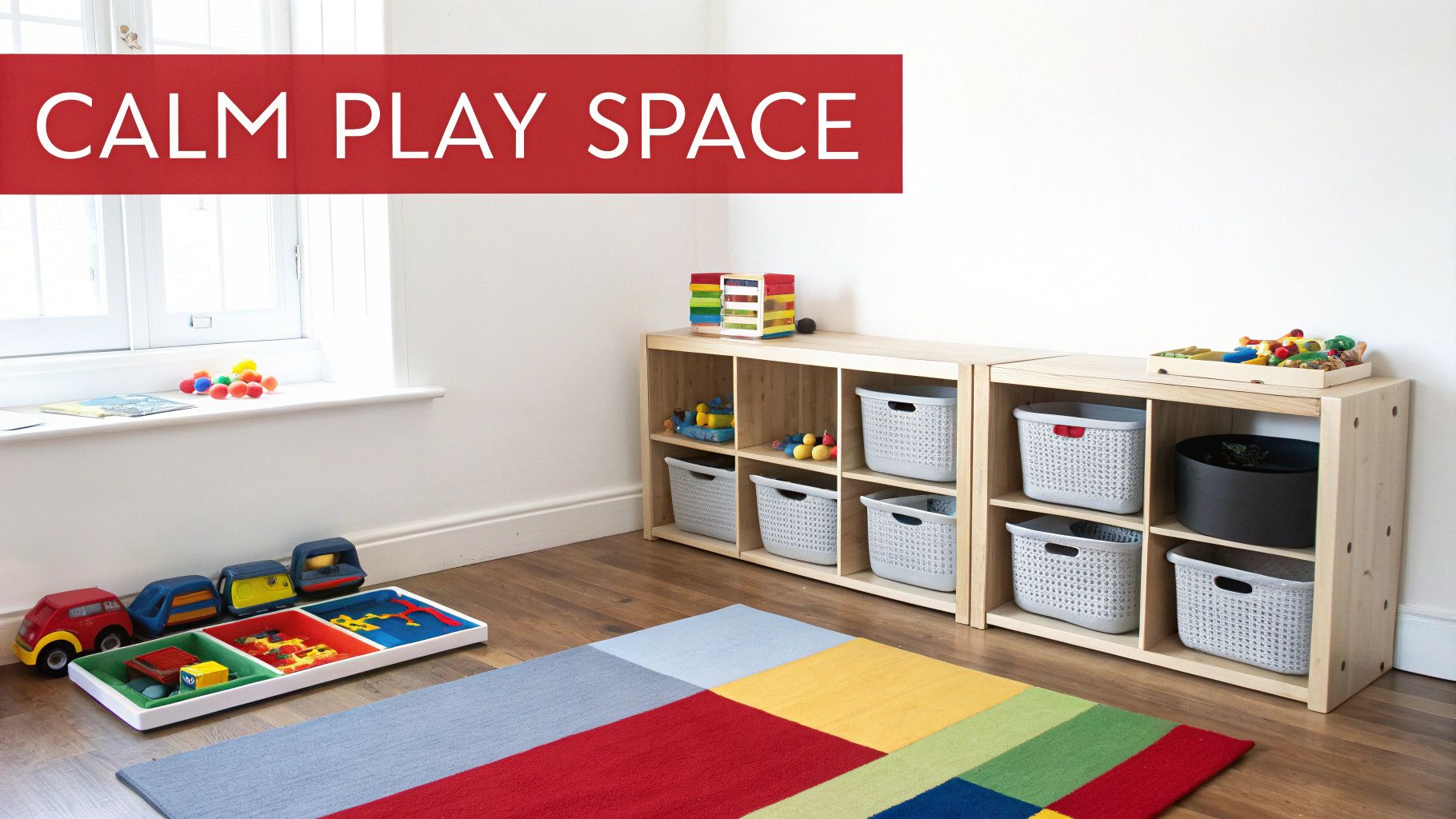
The goal is to design a space where a child feels capable and in control. When they can clearly see their choices and grab what they need without help, they're far more likely to initiate play on their own. This simple shift builds incredible confidence and fosters a sense of ownership over their activities.
The Power of Low, Open Shelves
One of the simplest yet most effective changes you can make is to ditch the giant, overflowing toy box. Swap it out for low, open shelving where a few toys are displayed neatly with space between them. This small change has huge benefits for your preschooler.
- Empowers Choice: When toys are visible and within reach, children can see all their options and make a real choice about what they want to work on. This is a huge first step toward self-directed learning.
- Reduces Overwhelm: A jumbled toy box is visual chaos. It often leads to a child dumping everything out only to lose interest moments later. A curated shelf with just a few items promotes calm and helps them engage deeply with one thing at a time.
- Teaches Respect for Materials: Displaying toys thoughtfully sends a clear message: these are valuable tools for learning and should be cared for, not just a pile of stuff to be tossed around.
A well-organized shelf acts like a silent invitation to play. It tells your child, "Here are your tools. I trust you to choose your work and to put it away when you are finished."
This principle of clear organization isn't just for toys on a shelf. For more practical ideas, check out our guide on how to organize a toy room to create a truly functional and peaceful space.
The Magic of Toy Rotation: Less is More
You don't need hundreds of Montessori toys for preschoolers to keep them engaged. In fact, having fewer options often leads to deeper, more creative play. This is where the simple strategy of toy rotation comes in.
Toy rotation is just what it sounds like: storing some toys away and periodically swapping them with the ones on the shelf. This keeps their environment fresh and exciting without you having to constantly buy new things. It’s amazing how it reignites interest in forgotten toys and prevents the "I'm bored" syndrome that comes from having too many choices.
A good rule of thumb is to have 6-8 activities available at once. This provides enough variety to be interesting but not so much that it becomes overwhelming. You'll be shocked at how a toy that was ignored for weeks suddenly becomes the most fascinating thing in the room when it reappears after a short break.
Using Trays to Define the Workspace
Another brilliant Montessori concept is using simple activity trays. A basic wooden or plastic tray serves two powerful purposes.
- Creates a Boundary: It defines a clear, contained workspace for an activity. This helps a child focus their attention and keeps all the necessary pieces together, which means fewer small parts getting lost under the couch.
- Teaches Order: The tray visually demonstrates the entire cycle of an activity. A child learns to take the tray from the shelf, do the work on the tray, and then return the complete tray back to its spot when they're done.
For example, you might place a bowl of beads and a string on a single tray. This simple setup makes the task feel manageable and quietly teaches the invaluable life skill of cleaning up and restoring order after completing a job. It’s a tiny change with a massive impact on concentration and responsibility.
Bringing Montessori Principles into Everyday Play
Montessori isn’t just about having a perfectly curated shelf of beautiful wooden toys—it’s a mindset. It’s about seeing your entire home as a learning environment and turning everyday moments into powerful developmental opportunities.
When you shift your perspective, you start to see that even mundane chores can become joyful, skill-building activities. This approach is all about inviting your child into the real, meaningful work of the household, fostering a sense of capability that sticks with them long after playtime is over.
Practical Life: The Heart of Montessori at Home
At the core of the Montessori philosophy for preschoolers are "practical life" activities. These are the simple, purposeful tasks you do every day, from making a snack to watering the plants. Involving your child is one of the most powerful ways to build their confidence, coordination, and focus.
The best part? You don't need any fancy equipment. You already have everything you need right at home.
- In the Kitchen: Let your preschooler help wash vegetables in a bowl, stir ingredients with a small whisk, or use a child-safe knife to slice a soft banana. These tasks are fantastic for building fine motor skills and teaching them how to follow a sequence of steps.
- Around the House: Give them a small cloth to wipe up their own spills, a tiny broom to sweep up crumbs, or a basket to help sort laundry by color. This teaches them to take responsibility and care for their environment.
- Caring for Living Things: Involving them in filling a pet's food bowl or using a small watering can for houseplants is a beautiful way to nurture empathy and an early understanding of cause and effect.
Practical life activities send a powerful message to a child: "You are capable, you are helpful, and your contributions matter to our family."
This focus on real-world learning is so effective that its principles are used far beyond the home. While the home-use market for Montessori toys is growing fast at an 8% CAGR, schools are major buyers, often purchasing materials in bulk. This shows just how valued hands-on, purposeful learning is across the board. You can find more insights on the educational toy market on strategicrevenueinsights.com.
Fostering Independence Through Simple Routines
Creating predictable daily routines is another fantastic way to bring Montessori principles to life. When preschoolers know what to expect from their day, they feel more secure and in control, which frees up their minds for learning and exploring.
You can set them up for success with a few simple tweaks to your home. Place a small step stool in the bathroom so they can reach the sink and wash their own hands. Install low hooks by the door so they can hang up their own jacket. These small adjustments empower them to do things for themselves, building their self-esteem with every tiny win.
These everyday routines also set the stage for open-ended play, where kids can use their imagination without being boxed in by rules. Want to learn more about how this type of play builds creativity and problem-solving skills? Check out our detailed guide on what is open-ended play. By weaving these simple habits into your daily life, you're not just teaching tasks—you're nurturing a capable, confident, and independent little human.
Your Smart Shopper's Checklist for Quality Toys
Ready to find toys that your kids will actually play with for more than a week? Navigating the world of Montessori toys for preschoolers can feel like a maze, but identifying quality is simpler than you think. It's about tuning out the marketing noise and zeroing in on what gives a toy real, lasting value.
When you start prioritizing quality, you're not just buying another thing to clutter up the playroom. You're investing in a learning tool that can grow with your child for years. That means finding items that are safe and durable, but also designed to spark genuine curiosity—without all the distracting bells and whistles.
Prioritize Natural, Durable Materials
One of the easiest ways to spot a quality toy is to feel it. What’s it made of? Montessori-inspired toys lean heavily on natural materials because they provide rich sensory feedback and connect children to the real world.
- Solid Wood: You can't go wrong with toys made from durable woods like beech or maple. They're sturdy, beautiful, and have a satisfying weight that flimsy plastic can't match.
- Natural Fibers: Materials like cotton, wool, and silk are fantastic for dolls, play silks, and other sensory items. They feel good in little hands and offer a variety of textures to explore.
- Child-Safe Finishes: This is a non-negotiable. Always make sure any paints or finishes are non-toxic and water-based. Look for safety certifications like ASTM International to ensure they meet safety standards.
These materials aren't just for aesthetics. Their durability means they can survive years of enthusiastic play, and their simple, natural feel helps create a calm, focused atmosphere for your child.
A well-made toy from natural materials is an open invitation to explore. The heft of a wooden block, the softness of a wool ball—these things offer a depth of sensory information that’s crucial for a preschooler’s developing brain.
Choose Purposeful and Simple Designs
We live in a world of toys that practically play themselves. The Montessori approach flips that on its head by championing simplicity. The best toys are often the most basic ones, designed to encourage a child to do something rather than just sit back and watch.
Steer clear of toys with blinking lights and a million sound effects. These features can easily overstimulate a preschooler and end up dictating the play, which stifles creativity. A simple wooden puzzle, on the other hand, presents a clear challenge and lets the child focus on figuring it out, building problem-solving skills and concentration at their own pace.
Embrace the Power of Open-Ended Toys
If you want the best return on your investment, choose open-ended toys. These are the champions of the toy world—items that don't have just one right way to be used. They can be used in countless ways, adapting as your child’s imagination and skills grow. A set of plain wooden blocks can be a skyscraper one day, a race car the next, and a fence for farm animals the day after that.
That kind of versatility is what keeps a toy engaging for years, offering far more long-term value than a single-use gadget. By choosing durable, simple, and open-ended Montessori toys for preschoolers, you're giving your child tools that will truly grow right along with them.
FAQs: Your Questions About Montessori Toys, Answered
Jumping into the world of purposeful, educational toys can bring up a lot of questions. As you start thinking more intentionally about playtime for your preschooler, it's normal to wonder about the practical side of things. Let's clear up some of the most common questions parents have about using Montessori toys for preschoolers.
Don't worry, this isn't about following a strict rulebook. It's about understanding the core ideas so you can confidently pick what works for your family and, most importantly, for your child.
Do I have to follow Montessori strictly?
Absolutely not. Think of Montessori principles as a flexible guide, not a rigid set of rules. You can easily incorporate core ideas—like child-led exploration and hands-on learning—into whatever parenting style feels right for you. The real goal is to offer toys that build independence and spark curiosity. Many parents find a happy medium, mixing different types of toys to create a rich play environment that feels authentic to their home.
Are Montessori toys worth the high price?
While some classic wooden materials can be an investment, you don't need a huge budget to embrace the philosophy. The key is to focus on quality over quantity. It's far better to have a few versatile, open-ended toys—like a great set of wooden blocks—that offer years of play than a dozen cheap, single-purpose gadgets.
You can also get creative and resourceful:
- DIY Activities: Many classic Montessori activities can be created with simple household items.
- Focus on Practical Life: Involving your child in real-world tasks like sorting socks or helping prepare a snack is a core part of the method—and it costs nothing.
- Go Thrifting: Keep an eye out for high-quality wooden toys at second-hand stores. You can find some real gems.
The most valuable part of the Montessori approach isn't the price tag on the toys. It's the mindset of respecting the child's incredible ability to learn through focused, hands-on work and play.
How do I introduce these toys to my child if they're used to electronic ones?
If your child is accustomed to toys with all the bells and whistles, switching to simpler toys might take a little patience. The key is to make the change feel gradual and inviting, not like you're taking something away. Start by slowly reducing screen time while placing one or two engaging Montessori toys for preschoolers on a low, accessible shelf. Show them briefly how the toy works, then step back. Give them space to explore it on their own terms. Rotating the toys every week or two is also a fantastic way to keep things fresh. Over time, most kids discover that the deep, focused engagement they get from these simpler toys is far more satisfying.
Where does imaginative play fit into Montessori?
This is a great question. While classic Montessori education focused heavily on reality-based learning for young children, modern interpretations fully embrace the immense value of imagination. The difference is in how that creativity is supported. Instead of giving kids toys with a built-in story (like fantasy characters), the approach favors open-ended items. Think blocks, play silks, and realistic animal figures that let a child build their own worlds from the ground up. This method nurtures creativity rooted in their growing understanding of the real world, giving them a solid foundation for imaginative adventures.
At Playz, we believe the best learning happens when kids are having a blast. Our science kits and creative toys are built to spark that same hands-on curiosity that’s at the heart of purposeful play. Discover how our products can complement your child’s learning journey by visiting us at Playz.