

Ready to dive into a flurry of fun? Winter is the perfect season to explore the arctic world right from your playroom or classroom. These polar bear art projects for preschoolers aren't just about creating cute crafts; they are powerful, hands-on tools for learning and development. Each activity is carefully designed to spark imagination, develop crucial fine motor skills, and introduce sensory exploration in an engaging, playful manner. As children manipulate materials like cotton balls, paper plates, and even ice, they are building foundational skills that support future academic success.
This guide provides a curated collection of eight unique projects, complete with simple materials lists and step-by-step instructions tailored for little hands. From a fluffy cotton ball collage to a fascinating ice cube painting, every preschooler will find a creative adventure they'll love. While these projects focus on a specific animal theme, the core techniques can be adapted for countless other creations. For expanding beyond arctic themes, exploring other creative possibilities like those found in diverse paper craft applique patterns can spark new ideas for different seasons and interests. Let’s transform a chilly day into a masterpiece of play-based learning
1. Cotton Ball Polar Bear Collage
The Cotton Ball Polar Bear Collage is a classic and beloved preschool art project that combines sensory exploration with creative expression. Children use simple materials to create a wonderfully fluffy and textured polar bear, making it one of the most engaging polar bear art projects for preschoolers. This activity is perfect for developing fine motor skills as little fingers pinch, pull apart, and place individual cotton balls.
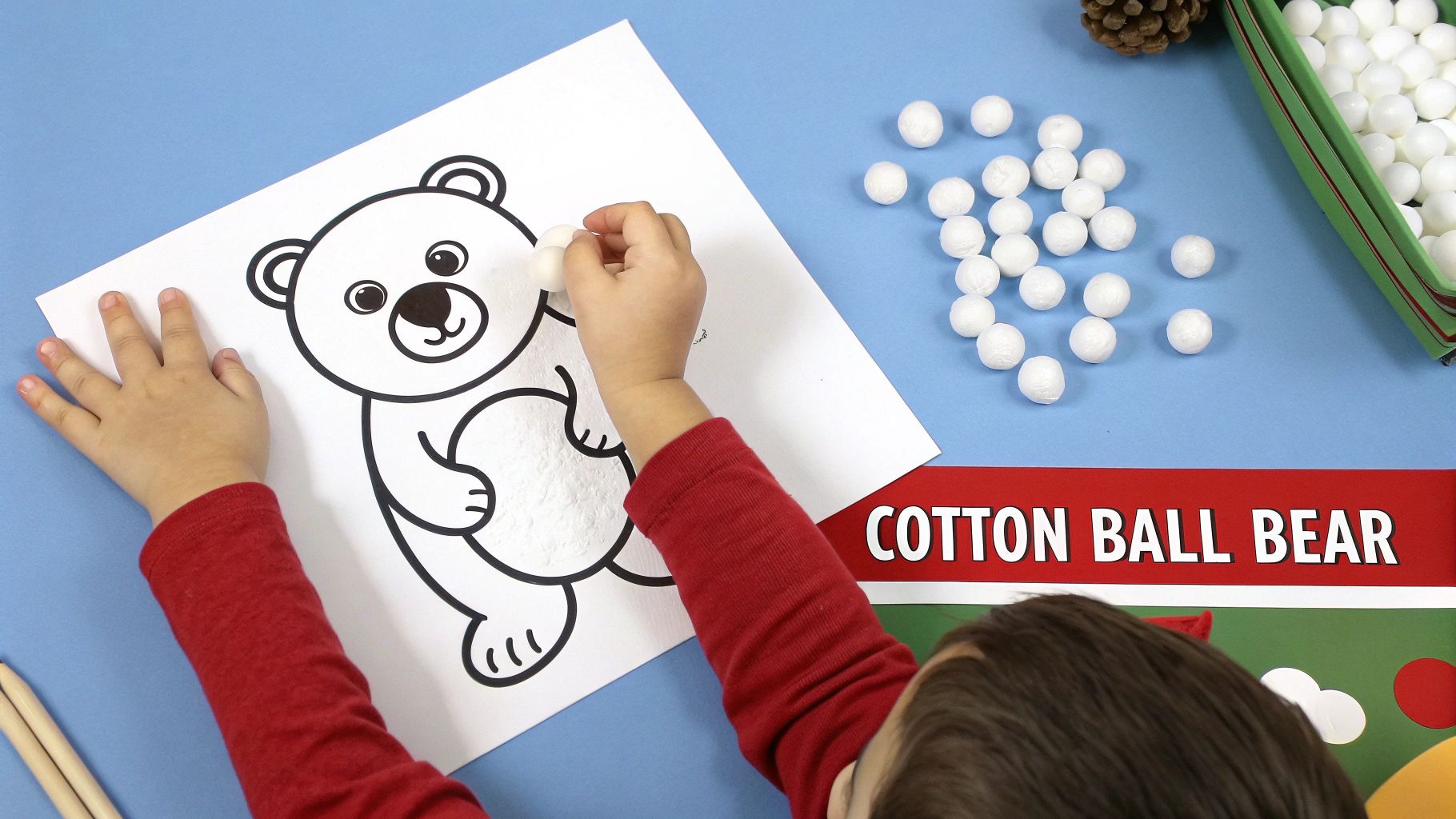
This project works exceptionally well in both home and classroom settings because it requires minimal preparation but delivers a big sensory payoff. The soft, puffy texture of the cotton balls provides a tactile experience that helps keep young children focused and engaged. It's an excellent introduction to collage art, teaching children about texture, layering, and transforming a 2D outline into a 3D-like creation.
How to Create Your Fluffy Polar Bear
To get started, you will need a simple set of materials: blue or black cardstock, a pre-drawn polar bear outline, cotton balls, glue (sticks or liquid), and optional googly eyes.
- Prepare the Outline: Give each child a piece of cardstock with a polar bear shape printed or drawn on it. For younger children, pre-cut shapes work best to simplify the process.
- Apply the Glue: Encourage your preschooler to apply glue inside the outline. Glue sticks offer more control and less mess for little hands.
- Add the "Fur": Let the fun begin! Show your child how to pull apart cotton balls and stick them onto the glued area. This step is fantastic for strengthening pincer grasp skills.
- Add Details: Once the body is covered, add googly eyes and a nose cut from black paper to bring the polar bear to life.
Pro-Tip: Before applying glue, have your child practice placing the cotton balls within the bear's outline. This helps them visualize the final product and improves spatial awareness without the pressure of sticky fingers.
This collage is more than just a craft; it’s an opportunity to discuss polar habitats and the animals that live there. You can find more inspiration for simple yet impactful activities by exploring creative crafts for preschoolers.
2. Paper Plate Polar Bear Mask
The Paper Plate Polar Bear Mask is a wonderfully interactive craft that transforms a simple household item into a tool for imaginative play. This activity allows children to design and wear their own polar bear faces, making it one of the most dynamic polar bear art projects for preschoolers. This project is fantastic for encouraging self-expression, creativity, and developing the fine motor skills needed to hold and use art tools like markers and paintbrushes.
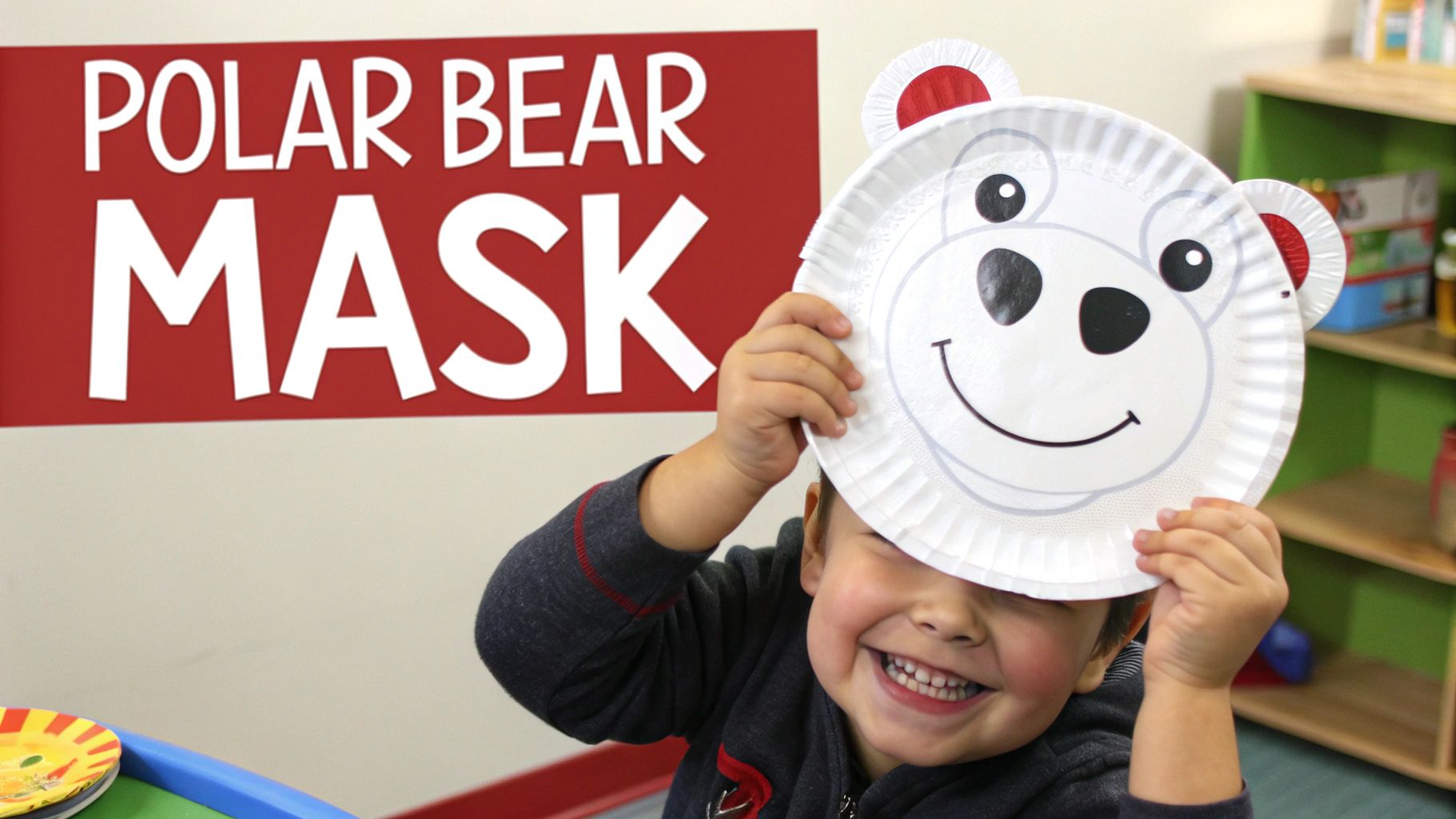
This project excels at bridging the gap between art and dramatic play. Once the masks are complete, they can be used for storytelling, acting out polar bear adventures, or even as part of a classroom play. The simplicity of the materials makes it easy to set up at home or for a larger group, and the resulting mask provides hours of entertainment long after the crafting is done. It’s a perfect way to bring arctic animal lessons to life.
How to Create Your Polar Bear Mask
To get started, you will need a few basic supplies: plain white paper plates, scissors, elastic string or a craft stick, and various decorating materials like markers, paint, cotton balls, and construction paper.
- Prepare the Mask Base: Before giving the plate to your child, carefully cut out two eye holes. This step is best done by an adult for safety and precision.
- Decorate the Face: Let your preschooler’s creativity shine! They can paint the plate white, draw features with markers, or glue on cotton balls for a fluffy texture.
- Add Polar Bear Features: Help your child cut out and glue on two small ears from white paper and a black nose from construction paper. This adds dimension and character to the mask.
- Attach the Handle or Strap: Punch a small hole on each side of the plate and tie an elastic string through them so it can be worn. Alternatively, you can tape a large craft stick to the bottom for a handheld mask.
Pro-Tip: Turn mask-making into a group storytelling activity. As children decorate, ask them to imagine what their polar bear is like. This encourages language development and imaginative thinking, making the final role-playing even more meaningful.
This wearable art project is a fantastic way to engage children in learning about animal characteristics and behaviors. After creating their masks, kids can retreat to a play tent, transforming it into an "ice cave" for hours of arctic-themed fun.
3. Polar Bear Paw Print Stamping
Polar Bear Paw Print Stamping is a wonderfully personal and kinetic art project that uses a child's own handprints to create charming polar bear artwork. This activity is a fantastic way to capture a moment in time while creating memorable polar bear art projects for preschoolers. It focuses on gross motor skills and body awareness as children press their hands into paint and stamp them onto paper, resulting in a unique and personal keepsake.
This project is especially popular in daycare and home settings for creating gifts for holidays or Mother's Day, as it produces a heartfelt piece of art. The sensory experience of feeling the cool, smooth paint on their hands makes it an exciting and engaging activity for preschoolers. It teaches cause and effect as they see how the pressure of their hand creates a distinct shape, transforming a simple handprint into a recognizable polar bear.
How to Create Your Paw Print Polar Bear
To get started, you will need a few key materials: blue or black construction paper, white non-toxic washable paint, a paper plate or shallow tray, a black marker, and optional googly eyes.
- Prepare the Paint Station: Pour a thin layer of white paint onto a paper plate. It's best to set up a dedicated painting area with wet wipes nearby for quick cleanup.
- Make the Handprint: Help your child press their palm and four fingers (thumb tucked away) firmly into the paint. Guide their hand to the paper and press down evenly to make a clear print. This will form the bear's head and body.
- Let It Dry: Allow the handprint to dry completely. This is a crucial step before adding any details with markers, as it prevents smudging.
- Add the Details: Once dry, turn the paper so the fingers are pointing down. Use a black marker to draw ears on the "palm" part of the print and add a nose and eyes. You can also add googly eyes for a fun, 3D effect.
Pro-Tip: For a less messy alternative, you can paint the child’s hand with a paintbrush instead of having them dip it into a tray. This gives you more control over the amount of paint used and can lead to a cleaner print.
This activity is not just about making a cute craft; it’s an excellent way to practice following multi-step directions. For more ideas on how activities like this can support development, explore these ways to improve fine motor skills.
4. Ice Cube Painting - Frozen Polar Bear Art
Ice Cube Painting offers a fantastic blend of science and creativity, making it a uniquely memorable addition to your list of polar bear art projects for preschoolers. This innovative activity involves freezing paint into ice cubes, which children then use to "paint" as they melt. The project introduces basic scientific concepts like melting and color mixing in a hands-on, magical way.
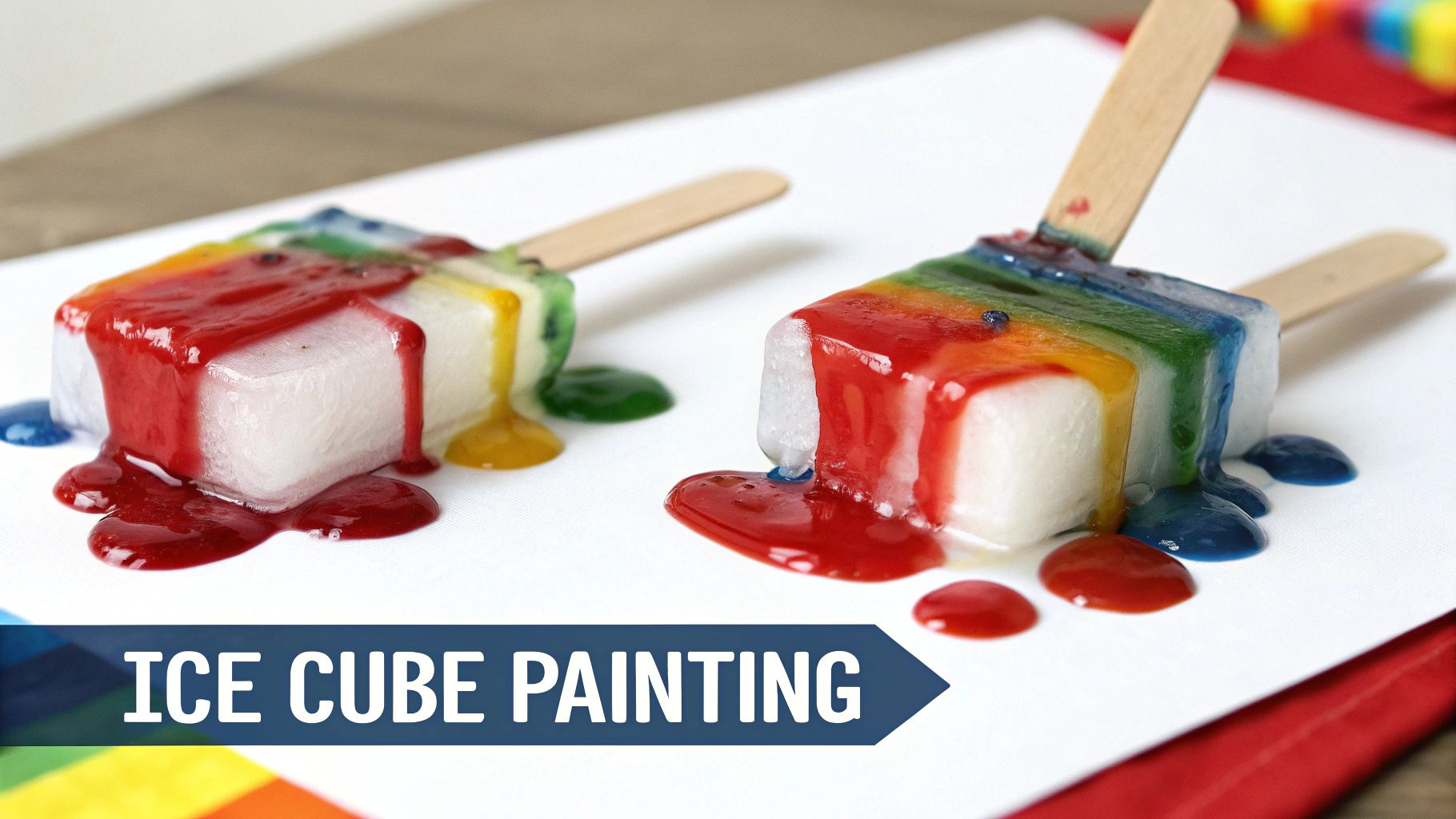
This STEM-art hybrid is perfect for capturing the attention of curious preschoolers. As they glide the frozen paint across the paper, they witness cause-and-effect in real time, turning a simple art session into a thrilling scientific experiment. It’s an ideal project for discussing polar habitats, temperature, and states of matter, all while creating beautiful, abstract arctic scenes.
How to Create Your Frozen Polar Bear Art
For this project, you'll need an ice cube tray, water, washable paint (white, blue, and black work well for an arctic theme), popsicle sticks, and thick paper or cardstock.
- Prepare the Ice Paints: Mix a small amount of washable paint with water in each compartment of an ice cube tray. Place a popsicle stick in each section to act as a handle and freeze overnight.
- Set Up Your Art Station: Place thick cardstock on a protected surface. Give your child the frozen paint cubes to use as their "paintbrushes."
- Paint with Ice: Encourage your preschooler to draw a polar bear or an icy landscape by moving the ice cubes across the paper. They will be fascinated as the colors melt and blend.
- Observe and Discuss: Talk about what is happening. Ask questions like, "Why is the ice melting?" and "What happens when the blue and white mix?" This turns playtime into a valuable learning experience.
Pro-Tip: Keep the ice paint cubes in a small bucket of ice during the activity to slow the melting process, giving your child more time to create their masterpiece.
This sensory-rich activity not only develops fine motor skills but also sparks scientific curiosity. To discover more ways to combine creativity and learning, check out these engaging ideas for art and craft for preschoolers.
5. Polar Bear Tissue Paper Collage
The Polar Bear Tissue Paper Collage introduces a vibrant and delicate texture to winter crafting. This project involves layering torn or cut pieces of tissue paper onto a bear silhouette, creating a stunning translucent effect. It's one of the most visually captivating polar bear art projects for preschoolers because it combines sensory play with color theory in a simple, accessible way. This activity is excellent for strengthening hand-eye coordination and fine motor skills as children tear, crumple, and place the delicate paper.
This project is fantastic for exploring how colors blend and overlap. When held up to a window, the finished artwork reveals a beautiful stained-glass effect, making it a wonderful decoration for a classroom or home. It teaches preschoolers about layering and transparency while allowing them to express themselves through their choice of colors, whether they stick to icy blues and whites or create a rainbow polar bear.
How to Create Your Tissue Paper Masterpiece
To begin, you'll need white or blue cardstock with a polar bear outline, assorted colors of tissue paper, a glue stick or diluted liquid glue, and scissors (optional).
- Prepare the Paper: Let your preschooler tear the tissue paper into small pieces. For younger children, pre-tearing the paper into manageable strips or squares can help them get started more easily.
- Apply the Glue: Instruct the child to apply glue inside the polar bear outline. A glue stick provides a less messy experience, while a thin layer of diluted white glue painted on with a brush also works well.
- Create the Collage: Encourage your child to place the tissue paper pieces onto the glued area. They can overlap the pieces to see how the colors mix and create new shades.
- Complete and Display: Once the bear is fully covered, let it dry completely. You can add a googly eye for personality. These collages look especially beautiful when taped to a window to let the light shine through.
Pro-Tip: Use a mix of white, light blue, and silver tissue paper to mimic the icy, shimmering look of a polar bear’s arctic home. This encourages a discussion about arctic colors and environments while they create.
6. Polar Bear Clay Sculpture
The Polar Bear Clay Sculpture project transforms a simple art activity into a dynamic, three-dimensional experience. Children get their hands on air-dry clay or play dough to mold their very own polar bear figures, making this one of the most tactile polar bear art projects for preschoolers. This activity is exceptional for developing fine motor control, spatial awareness, and hand-eye coordination as children pinch, roll, and shape the material.
This project is a fantastic sensory outlet that allows for immense creative freedom. Unlike 2D crafts, sculpting encourages children to think about form, balance, and structure. It’s a wonderful way to introduce basic sculptural concepts in a playful, hands-on manner, aligning with the principles of Montessori and Reggio-inspired learning environments where tactile exploration is key.
How to Create Your Clay Polar Bear
You will need a few simple supplies for this 3D art adventure: white air-dry clay or play dough, a small cup of water (for clay), and optional tools like craft sticks, toothpicks, or googly eyes.
- Form the Body: Start by giving each child a lump of clay. Show them how to roll it into a large ball and then gently elongate it to create the bear's main body.
- Shape the Head and Limbs: Guide your preschooler in creating smaller balls of clay for the head, four legs, and a tiny tail. Demonstrate how to attach these pieces to the body by gently pressing and smoothing the seams with a fingertip.
- Add Textural Details: This is where creativity shines. Encourage children to use tools like a fork or toothpick to create a "furry" texture on their bear's body.
- Finish the Face: Add final details by pinching out small ears and pressing a small black bead or a tiny ball of black clay for the nose. Let the sculpture air dry completely. Once dry, it can be painted.
Pro-Tip: Before the children start, demonstrate how to create basic shapes like spheres and logs. Rolling the clay between their palms or on the table helps them feel the material and understand how to manipulate it.
Working with clay is a powerful way for children to express themselves. For more ideas on what to create, explore these cool things to make out of clay.
7. Googly Eye Polar Bear Pop-Up Card
The Googly Eye Polar Bear Pop-Up Card introduces preschoolers to the magic of simple paper engineering. This interactive craft goes beyond a flat piece of art, teaching basic mechanics and producing a card that delights with movement and animation when opened. It's one of the most exciting polar bear art projects for preschoolers because it combines cutting, folding, and decorating to create a surprising pop-up effect.
This project is fantastic for advanced preschoolers or pre-K students who are ready for a multi-step activity. It serves as an excellent holiday greeting card project or a craft to accompany lessons on cause and effect. The moment a child opens their card and sees the polar bear "pop" forward is a rewarding experience that boosts their confidence and understanding of 3D shapes.
How to Create Your Pop-Up Card
For this project, you will need white and blue construction paper or cardstock, scissors, glue, a black marker, and googly eyes.
- Create the Card Base: Fold a piece of blue cardstock in half to form the card.
- Make the Pop-Up Mechanism: Give your child a strip of white paper (about 1 inch wide and 4 inches long). Show them how to fold it into an accordion or "M" shape. This will be the spring that makes the polar bear pop.
- Attach the Bear: Have your preschooler glue a pre-cut polar bear head shape onto the top front section of the accordion strip.
- Assemble the Card: Glue the bottom of the accordion strip to the inside of the card. When the card is opened, the polar bear will jump forward. Add googly eyes and draw a nose and mouth to complete the face.
Pro-Tip: Before introducing the project to children, create a finished example and practice the accordion fold yourself. Demonstrating the pop-up action will build excitement and help them understand the goal before they start folding and gluing.
8. Polar Bear Sensory Bin with Frozen Exploration
The Polar Bear Sensory Bin offers a deeply immersive experience that goes beyond a typical craft, transforming into a miniature arctic world for imaginative play. This activity invites children to explore textures, temperatures, and concepts like melting through hands-on discovery. While not a traditional "art" project, it is one of the most creative and engaging polar bear art projects for preschoolers because it allows them to construct and interact with a habitat, fostering storytelling and scientific curiosity.
This project is exceptional for developing a wide range of skills simultaneously. Children build scientific understanding by observing ice turning to water, enhance fine motor control by using scoops and tongs, and expand their vocabulary as they describe the cold, wet, and slippery textures. It provides a rich, multi-sensory environment that stimulates learning through pure, unstructured play.
How to Create Your Arctic World
Setting up this sensory bin is simple, and you can easily customize it with items you already have. You will need a shallow plastic bin, water (to make ice), polar bear figurines, and various "arctic" materials like cotton balls, shaving cream, or white pom-poms.
- Prepare the Frozen Base: The night before, fill the bin with a shallow layer of water and freeze it to create an "ice floe." You can also freeze small arctic animal toys inside ice cube trays for a fun excavation activity.
- Add the "Snow" and Water: Once frozen, add a small amount of cool water around the ice. On one side of the bin, create a "snowy" landmass using cotton balls or even a mound of taste-safe "snow" made from cornstarch and water.
- Introduce the Animals: Add polar bear figurines and other arctic animals like seals or penguins to the habitat. Provide tools like scoops, small cups, and tongs for scooping and pouring.
- Encourage Exploration: Let your preschooler lead the play. They might make the bears slide on the ice, dig in the snow, or swim in the chilly water.
Pro-Tip: Place a large towel or mat under the sensory bin to contain splashes. Having a change of clothes nearby is also a great idea for this wonderfully wet and engaging activity.
This sensory bin is more than just a fun afternoon; it’s a powerful tool for learning. To dive deeper into the benefits of this type of activity, you can explore more about what is sensory play.
Preschool Polar Bear Art: 8-Project Comparison
| Project | 🔄 Implementation Complexity | ⚡ Resource & Time Requirements | 📊 Expected Outcomes / Skills Developed | ⭐ Key Advantages / Ideal Use Cases | 💡 Quick Tip |
|---|---|---|---|---|---|
| Cotton Ball Polar Bear Collage | Low 🔄 — simple gluing and placement | Low materials (cotton, glue, paper); 15–20 min ⚡ | Fine motor, texture awareness, color recognition 📊 | ⭐⭐⭐⭐ Very tactile; display-worthy; quick circle-time craft | 💡 Pre-cut outlines and use glue sticks for control |
| Paper Plate Polar Bear Mask | Low–Medium 🔄 — cutting, decorating, attach elastic | Common craft supplies; 20–30 min; allowance for drying ⚡ | Creative expression, imaginative play, social skills 📊 | ⭐⭐⭐⭐ Great for dress-up, group activities, parades | 💡 Pre-cut eye holes and staple elastic for secure fit |
| Polar Bear Paw Print Stamping | Low 🔄 — body-print technique, adult setup | Washable paint, wipes, drying space; 15–25 min ⚡ | Body awareness, sensory exploration, keepsake art 📊 | ⭐⭐⭐⭐ High emotional value; parent gifts; mixed-age friendly | 💡 Use shallow paint trays and wet wipes for quick cleanup |
| Ice Cube Painting - Frozen Polar Bear Art | Medium 🔄 — prep freezing + supervised melting | Paint frozen into ice; prep 24h + 20–30 min activity ⚡ | STEM concepts (melting), observation, color mixing 📊 | ⭐⭐⭐ Highly engaging STEM-art hybrid; discussion starter | 💡 Keep ice in a bucket and use thick paper to prevent soaking |
| Polar Bear Tissue Paper Collage | Low 🔄 — tearing/placing tissue pieces | Inexpensive tissue paper, glue; 20–25 min ⚡ | Fine motor, color recognition, hand strength 📊 | ⭐⭐⭐⭐ Vibrant displays; excellent for window hangings | 💡 Pre-tear pieces for younger children and mount on poster board |
| Polar Bear Clay Sculpture | Medium 🔄 — 3D shaping, drying time | Air-dry clay or play dough; 20–30 min + 24h drying ⚡ | Spatial awareness, hand strength, problem-solving 📊 | ⭐⭐⭐⭐ Durable keepsakes; kinesthetic learners benefit most | 💡 Demonstrate shaping and provide texture tools (toothpicks) |
| Googly Eye Polar Bear Pop-Up Card | Medium–High 🔄 — folding/precision required | Cardstock, scissors, googly eyes; 30–40 min ⚡ | Sequential thinking, paper engineering, fine motor 📊 | ⭐⭐⭐ Produces gift-quality interactive cards; advanced craft | 💡 Pre-cut shapes and model the fold before children start |
| Polar Bear Sensory Bin with Frozen Exploration | Low–Medium 🔄 — setup and supervision | Ice, white materials, toys, bin; 20–45 min (ongoing) ⚡ | Sensory awareness, imaginative play, scientific observation 📊 | ⭐⭐⭐⭐ Rich multi-sensory play; ideal for open-ended exploration | 💡 Use shallow bins, provide towels, and freeze small surprises for discovery |
Crafting More Than Art: Building Skills Through Play
As we've explored these eight delightful polar bear art projects for preschoolers, it becomes clear that a simple craft session is so much more than a way to fill an afternoon. It's a powerful engine for development, disguised as fun. From the tactile exploration of the Cotton Ball Polar Bear Collage to the imaginative role-playing sparked by the Paper Plate Polar Bear Mask, each activity is a building block for essential life skills.
These projects demonstrate that creative play is the cornerstone of early childhood education. Every pinch of clay in the Polar Bear Sculpture project strengthens finger muscles needed for writing. Each careful placement of tissue paper or a googly eye enhances hand-eye coordination. Even a seemingly simple activity like stamping paw prints reinforces cause and effect, a fundamental concept for scientific thinking.
The True Value of Hands-On Creation
The real magic of these polar bear art projects for preschoolers lies in their ability to integrate various learning domains seamlessly. A child engaging with the Ice Cube Painting or the Polar Bear Sensory Bin isn't just making art; they are:
- Developing Fine Motor Skills: Grasping brushes, tearing paper, and manipulating small objects are critical for dexterity.
- Enhancing Cognitive Abilities: Following multi-step instructions, making creative choices, and solving small problems (like how to make a pom-pom stick) build crucial neural pathways.
- Boosting Sensory Processing: Experiencing different textures like fluffy cotton, cold ice, and smooth paint helps children understand and respond to the world around them.
This holistic approach ensures that learning is never a chore but an exciting adventure. The process of creating, not just the final product, is where the most profound learning occurs. Providing a dedicated and organized space for this exploration is equally important. Beyond the specific art projects, remember that providing a secure and stimulating environment is key to fostering creativity; consider insights on creating a safe playroom for toddlers to ensure a conducive space for all your arctic adventures.
Fostering a Lifelong Love for Learning
By embracing these hands-on activities, you are doing more than just creating adorable polar bear crafts. You are nurturing curiosity, building confidence, and fostering a love for discovery that will last a lifetime. You're showing your child that their ideas have value and that learning can be a joyful, interactive experience.
Keep the spirit of these arctic adventures alive by continuing to explore, create, and play. The skills they build today while stamping polar bear paws are the very same ones they will use to solve complex problems tomorrow.
Ready to take the adventure beyond the craft table? The Playz mission is to make learning an unforgettable experience through hands-on fun. Explore our full range of creative toys and science kits at Playz to discover your next great learning adventure.