

Project-Based Learning (PBL) transforms the classroom from a lecture hall into a dynamic workshop where students tackle real-world problems. But finding high-quality, ready-to-use lesson plans can feel like a project in itself. The challenge isn't a lack of ideas, but a lack of time to vet, adapt, and align resources to your standards. We've done the heavy lifting for you, curating a definitive list of the best platforms for project based learning lesson plans.
This roundup moves beyond generic search results to give you a clear view of what each resource offers, who it's for, and how you can implement it tomorrow. Each entry provides a detailed overview, complete with screenshots and direct links, so you can quickly find the perfect fit for your students' needs. From comprehensive K-12 STEM units to specific ELA or social studies projects, this list is your shortcut to effective implementation.
By engaging students in authentic challenges, these projects do more than just teach content; they build critical thinking, collaboration, and problem-solving abilities. This approach aligns closely with the principles of action-based learning for future skills development, which is vital for cultivating essential competencies in students. Instead of asking, "What do I need to know?" students start asking, "What can I create?" Get ready to find the perfect project that sparks curiosity, fosters deep learning, and makes your students excited to come to class.
1. PBLWorks (Buck Institute for Education)
When searching for high-quality, research-backed project based learning lesson plans, PBLWorks is often the first and last stop for many educators. As the public-facing name for the Buck Institute for Education, this organization has established itself as the leading U.S. authority on Gold Standard PBL. It offers a comprehensive ecosystem for teachers, schools, and districts, blending free resources with premium curriculum and professional development.
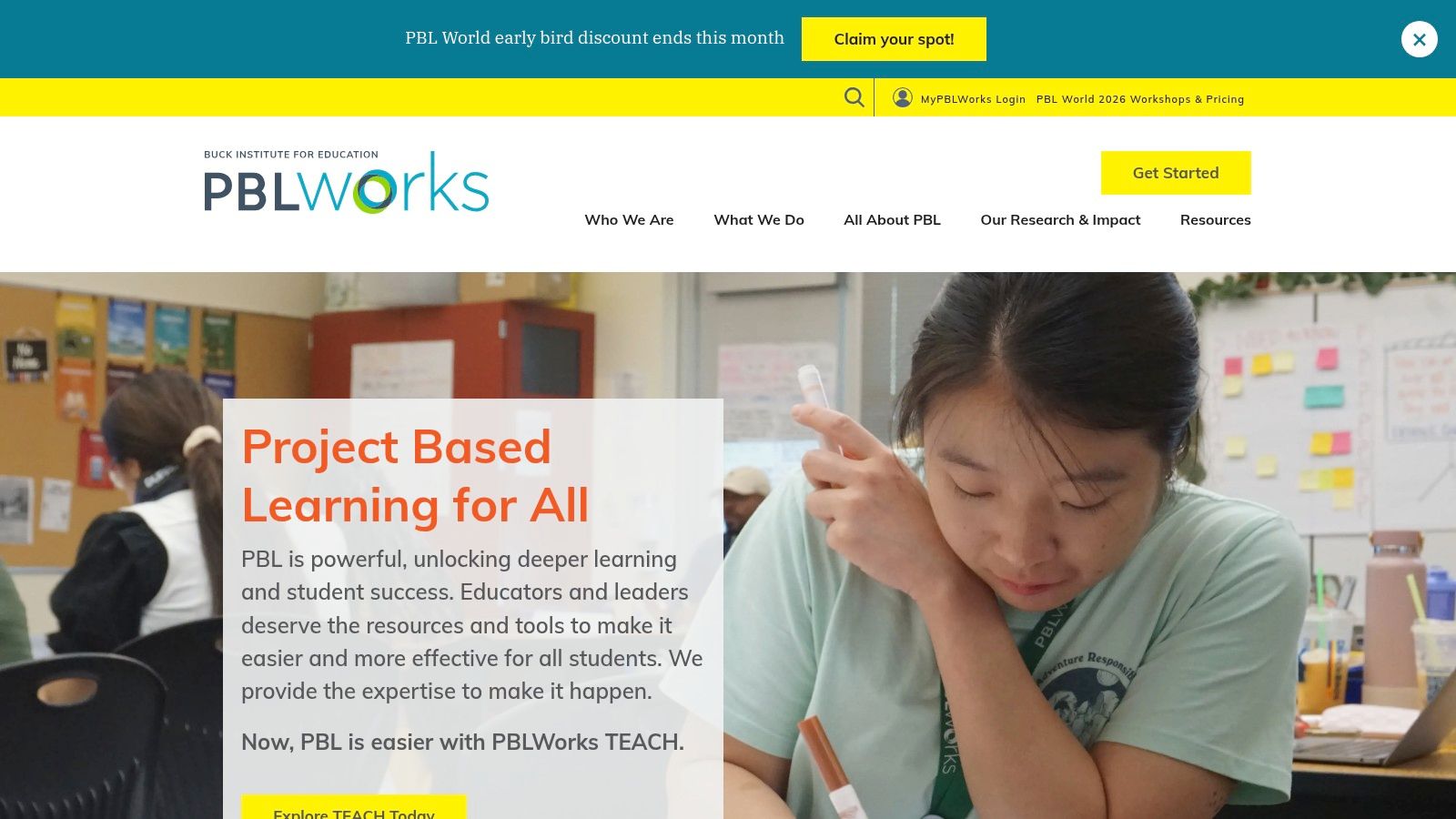
The platform’s strength lies in its rigorous pedagogical framework, which is rooted in constructivist principles. This ensures that every project is more than just a hands-on activity; it's a carefully structured experience designed for deep learning. For those interested in the educational psychology behind this model, you can explore the core ideas of constructivist learning theory to better understand its classroom impact.
Key Features and Offerings
PBLWorks provides a tiered approach to resources, making it accessible for educators at every stage of their PBL journey. The user-friendly interface allows for easy navigation between its free and premium content.
- Free Project Library: With a free account, teachers gain access to over 70 complete project units. These are not just vague ideas; they are detailed outlines adaptable for various grade levels (K-12) and subjects, from STEM to humanities.
- PBLWorks TEACH App: For schools and districts seeking a turnkey solution, the TEACH web app offers comprehensive, ready-to-use curriculum units. These premium resources include all materials, rubrics, and day-by-day guides for seamless implementation.
- Professional Development: The organization provides extensive training, workshops, and coaching for educators and school leaders, ensuring that the implementation of PBL is effective and sustainable.
- Resource Store: A selection of practical handbooks, guides, and project planners are available for purchase, offering tangible tools to support classroom instruction.
Pros and Cons
| Pros | Cons |
|---|---|
| Widely regarded as the U.S. standard for high-quality PBL. | Full turnkey units require a paid subscription via the TEACH app. |
| Excellent mix of free project ideas and premium, in-depth units. | Pricing for the TEACH app is typically negotiated at the school or district level. |
| Strong focus on research-backed methods and teacher support. | May feel overwhelming for absolute beginners without institutional support. |
Practical Tip: When exploring the free Project Library, use the search filters for grade level and subject to quickly find relevant plans. Even if you don't use a project exactly as written, they serve as fantastic templates for designing your own unique, standards-aligned PBL experiences.
Website: https://www.pblworks.org
2. Defined Learning (formerly Defined STEM)
For educators seeking project based learning lesson plans with a strong emphasis on real-world career connections, Defined Learning is an indispensable resource. Previously known as Defined STEM, the platform has expanded its scope to offer a massive library of performance tasks and projects across all core subjects, including ELA, math, science, and Career and Technical Education (CTE). Its unique value proposition is framing every project around a professional scenario, immediately answering the age-old student question, "When will I ever use this?"
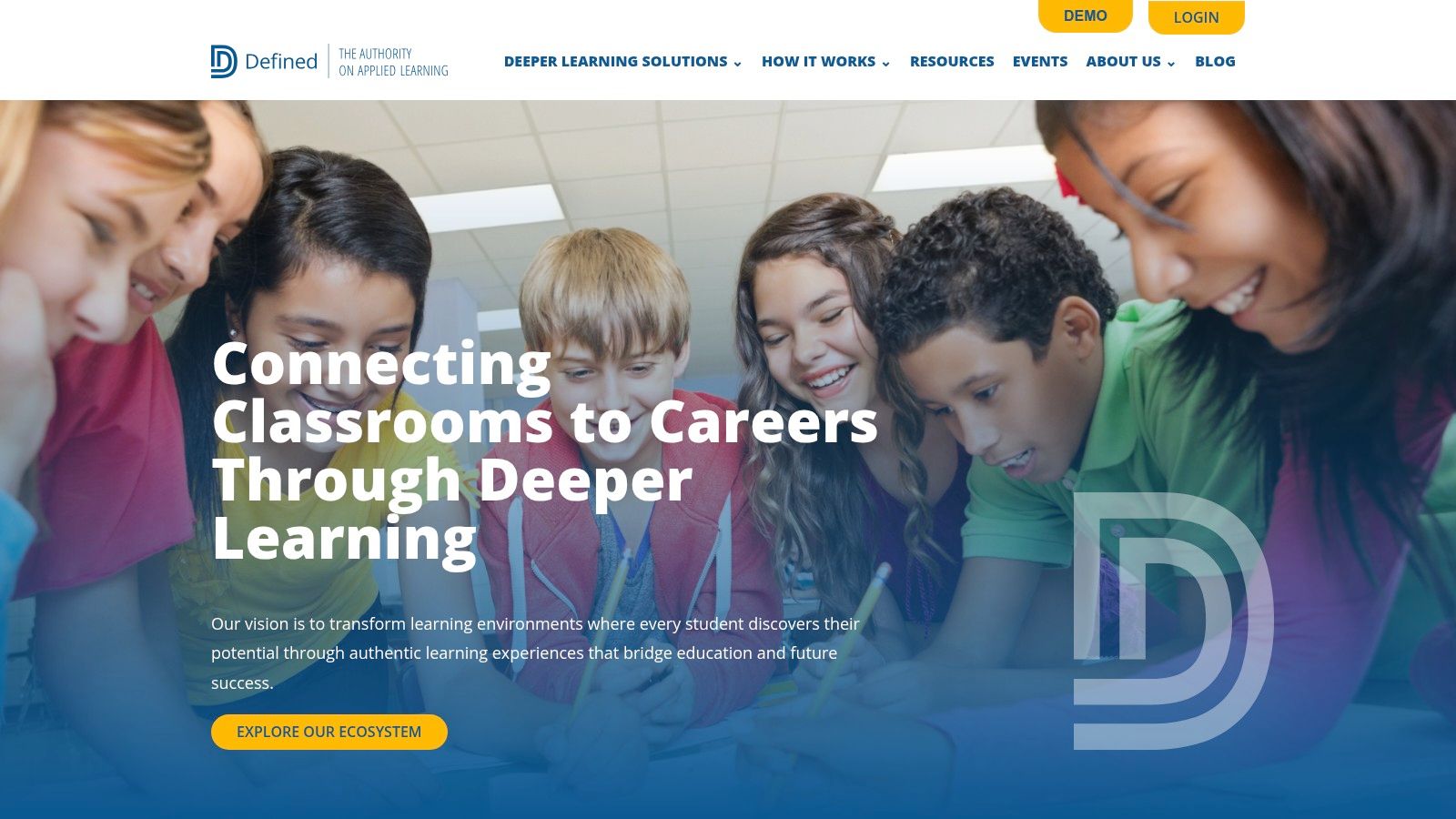
The platform is built on the idea that authentic tasks drive deeper engagement. Each project places students in the role of a professional—an architect, an urban planner, a marketing director—and asks them to solve a complex, multi-step problem. This transforms abstract concepts into tangible challenges. To dive deeper into the benefits of this model, you can explore a variety of hands-on learning activities that complement a career-focused PBL framework.
Key Features and Offerings
Defined Learning is designed as a comprehensive, ready-to-use solution that saves teachers significant planning time while providing a rigorous academic experience for students. The platform is robust and well-organized, with a clear focus on turnkey implementation.
- Extensive Project Library: With over 2,000 performance tasks and projects, the library is vast and covers grades K-12. Each project is grounded in a specific career and presents a real-world problem for students to solve.
- Built-in Rubrics and Assessments: Every task comes with pre-made rubrics and assessment tools, allowing for clear expectations and consistent evaluation. This integrated feature simplifies the grading process and helps teachers provide targeted feedback.
- Career-Connected Scenarios: The platform’s signature feature is its focus on connecting curriculum to careers. Projects expose students to various professional fields, helping them build both academic knowledge and an understanding of future pathways.
- District and School Support: Defined Learning primarily partners with schools and districts, offering implementation support, professional development, and trials to ensure successful adoption.
Pros and Cons
| Pros | Cons |
|---|---|
| Turnkey projects and tasks save significant teacher prep time. | Full access is subscription-based, often sold via district-level licensing. |
| Excellent for interdisciplinary and CTE-aligned projects. | Pricing varies and requires schools to request a demo or custom quote. |
| Sample projects and e-learning are available to try before committing. | May be less flexible for teachers who prefer building projects from scratch. |
Practical Tip: Use Defined Learning's "Request a Trial" or "View Sample Projects" feature to explore the platform's structure. Even if your school doesn't subscribe, the sample tasks can provide excellent inspiration for creating your own career-focused PBL units.
Website: https://www.definedlearning.com
3. Teachers Pay Teachers (TpT)
For educators seeking immediate, classroom-tested project based learning lesson plans, Teachers Pay Teachers (TpT) is an essential resource. As the world's largest online marketplace for educator-created materials, it offers an unparalleled volume of PBL units. Unlike top-down institutional resources, TpT is a grassroots community where teachers share what has worked in their own classrooms, providing a massive library of practical, ready-to-use content.
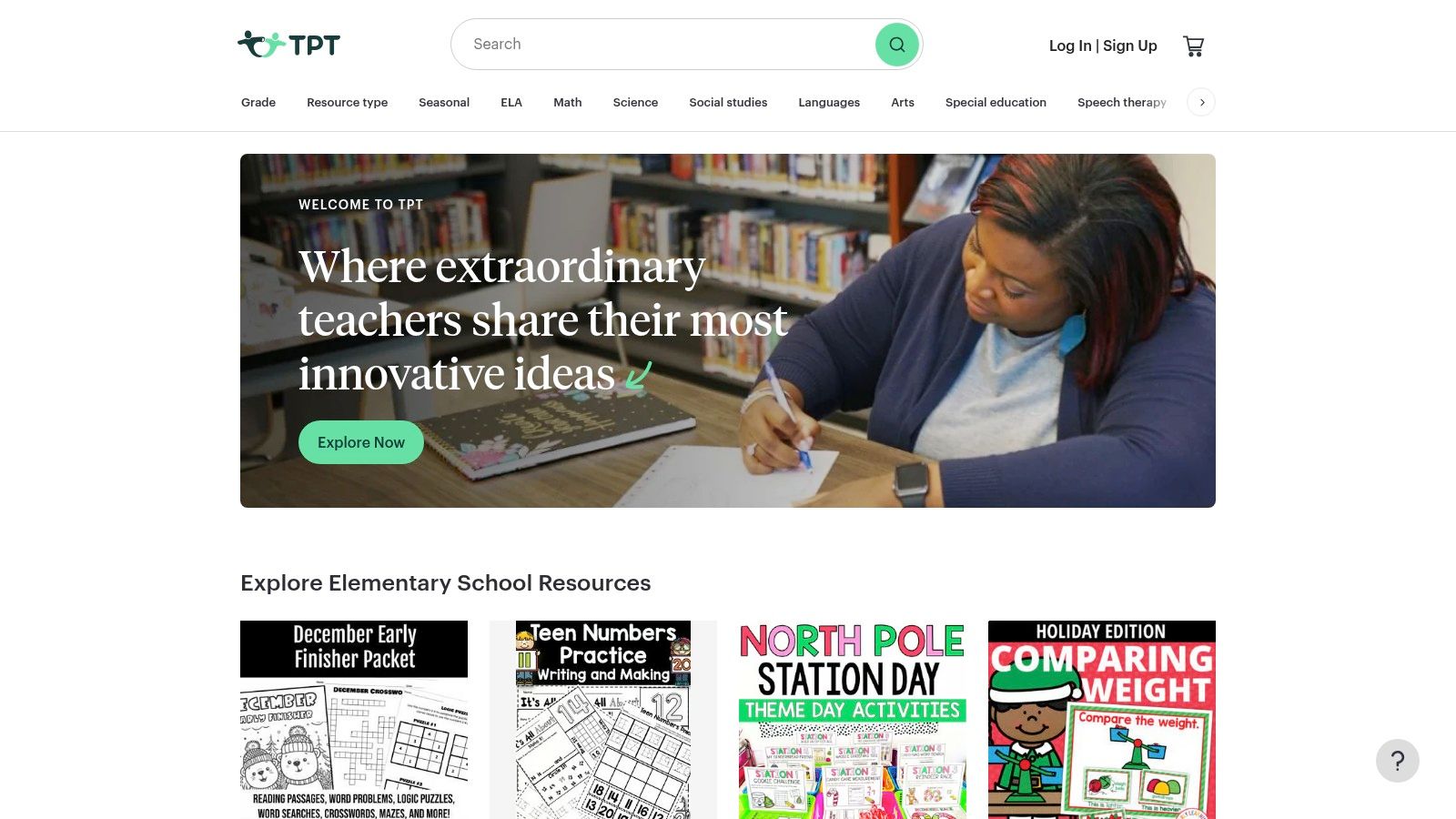
The platform’s power lies in its sheer diversity. Whether you need a full-semester PBL curriculum for high school physics or a quick, week-long project for elementary ELA, you can likely find it on TpT. This variety allows teachers to find materials that not only meet academic standards but also resonate with specific student interests, a key factor in boosting classroom participation. You can discover more strategies for how to increase student engagement and see how well-chosen projects play a crucial role.
Key Features and Offerings
TpT operates as a digital marketplace, making it incredibly easy to find, purchase, and download resources instantly. The user interface is built around powerful search and filtering tools that help teachers sift through millions of products.
- Vast Selection: The platform hosts thousands of PBL resources, from single-day activities to comprehensive unit bundles covering all K-12 grade levels and subjects like STEM, social studies, ELA, and the arts.
- Advanced Search Filters: Users can narrow their search by grade level, subject, resource type (e.g., projects, units, activities), price, and even specific state or Common Core standards.
- Ratings and Reviews: Every product can be rated and reviewed by purchasers. This transparent feedback system is vital for vetting the quality and classroom-readiness of a resource before buying.
- Instant Digital Downloads: Materials are available for immediate download after purchase, making it perfect for last-minute lesson planning. Many sellers also offer free resources as samples of their work.
Pros and Cons
| Pros | Cons |
|---|---|
| Affordable, ready-to-use options, many priced under $10. | Quality can vary significantly from one seller to another. |
| Enormous breadth covering nearly every subject and grade level. | Inconsistent formatting and structure across different sellers. |
| Transparent community feedback and ratings help gauge quality. | Finding the perfect resource can be time-consuming due to the sheer volume. |
Practical Tip: Pay close attention to the product previews and teacher reviews before making a purchase. The preview often shows several pages of the resource, giving you a clear idea of the quality, layout, and content. Also, look for sellers who specialize in PBL and have consistently high ratings to ensure you are getting a well-designed unit.
Website: https://www.teacherspayteachers.com
4. Share My Lesson (AFT)
For educators who believe in the power of community, Share My Lesson is an indispensable resource for finding project based learning lesson plans. Powered by the American Federation of Teachers (AFT), this platform is a massive, free repository where educators share what works in their classrooms. It stands out as a grassroots, teacher-driven alternative to more institutionally curated collections, offering an authentic look at PBL in action.
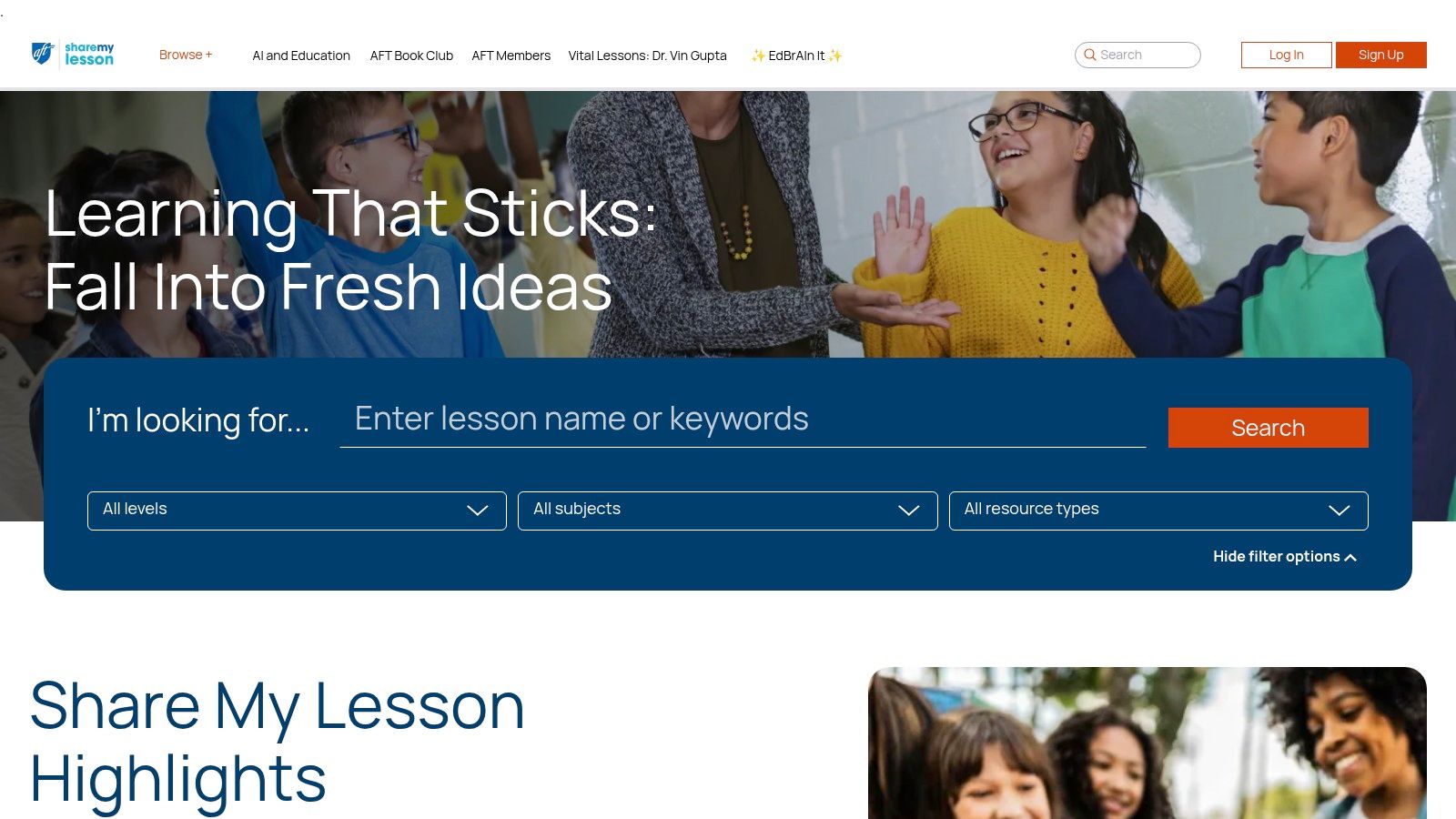
The platform's core strength is its sheer volume and variety, with thousands of resources contributed by practicing K-12 teachers. This community-centric approach ensures a constant flow of fresh, relevant content that reflects real-world classroom challenges. Many projects naturally align with student-led discovery, making them a great fit for educators who want to deepen their understanding of inquiry-based learning activities and apply those principles in their teaching.
Key Features and Offerings
Share My Lesson operates on a simple premise: create a free account and gain access to a treasure trove of educational materials. The interface is built for quick searching and downloading, empowering teachers to find and adapt resources with minimal friction.
- Extensive Free Library: The platform hosts a vast collection of lesson plans, full curriculum units, and classroom resources, all available at no cost. You can find multi-week PBL units complete with every necessary document.
- Powerful Search and Filtering: Users can easily search for materials by grade level (PreK-12), subject, and resource type. This allows you to quickly narrow down options for STEM, ELA, social studies, the arts, and more.
- Downloadable and Adaptable Materials: Most resources are provided in common file formats like PDF, Word, or PowerPoint. This makes it easy for teachers to download, edit, and tailor the plans to fit their specific classroom needs.
- Community-Driven Content: The library includes rubrics, project timelines, student handouts, and presentations created and vetted by fellow educators, providing practical tools you can implement immediately.
Pros and Cons
| Pros | Cons |
|---|---|
| Completely free to access and download all resources. | Quality and completeness can be inconsistent, as it is user-submitted. |
| Huge variety of real-world PBLs from practicing teachers. | Some resources may require significant editing to align with local standards. |
| Excellent source for inspiration and adaptable templates. | The format and depth of plans can vary widely from one resource to the next. |
Practical Tip: Use the "Project Based Learning" filter in the "Types of Lessons" category to zero in on relevant units. Since quality varies, look for resources with high download counts or positive reviews, and always be prepared to adapt the materials rather than using them directly out of the box.
Website: https://sharemylesson.com
5. TeachEngineering
For educators seeking robust, STEM-focused project based learning lesson plans, TeachEngineering is an invaluable and completely free resource. Developed by a team of engineers and teachers, this peer-reviewed digital library offers a massive collection of K-12 lessons and activities centered on engineering design and authentic problem-solving. It stands out for its rigorous, standards-aligned curriculum that provides everything a teacher needs to guide students through complex engineering challenges.
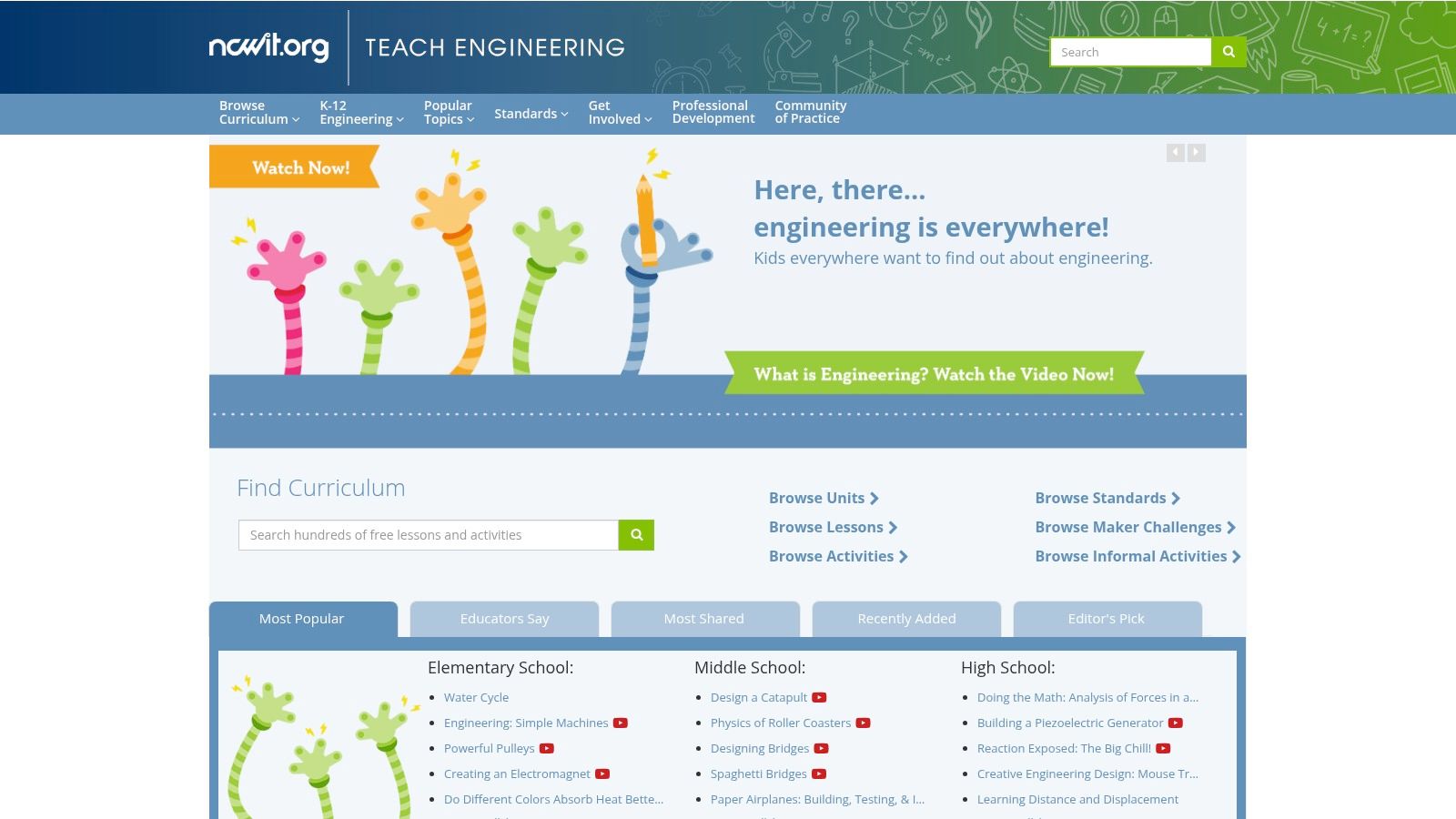
The platform's core philosophy is that students learn science and math best by doing, which aligns perfectly with the hands-on nature of PBL. Each unit is structured to help students think like engineers—moving from identifying a problem to brainstorming, designing, building, and iterating on a solution. This approach not only deepens subject matter knowledge but also builds critical skills. To get your students excited about this field, you can find a variety of engaging engineering activities for kids that complement the lessons on the platform.
Key Features and Offerings
TeachEngineering organizes its content for easy access, with powerful search filters that allow educators to find resources by grade level, subject, and even specific engineering habits of mind. The user experience is straightforward, focusing on providing high-quality, downloadable content without barriers.
- Peer-Reviewed Curriculum: All lessons, activities, and units undergo a rigorous peer-review process, ensuring they are accurate, effective, and educationally sound.
- Complete Units and Lessons: The site offers standalone activities as well as comprehensive, multi-week "curricular units" that sequence lessons logically to build toward a major project goal.
- Detailed Teacher Guides: Each resource includes extensive support for educators, featuring background information, learning objectives, detailed materials lists, step-by-step procedures, and assessment tools.
- Standards Alignment: Resources are meticulously aligned with key educational standards, including the Next Generation Science Standards (NGSS) and Common Core State Standards (CCSS), making them easy to integrate into existing curriculum maps.
Pros and Cons
| Pros | Cons |
|---|---|
| Completely free with detailed teacher guides and downloads. | Primarily STEM-focused; teachers in other subjects may need to adapt. |
| Strong standards alignment and ready-to-run multi-week units. | May not cover non-engineering project themes as comprehensively. |
| Robust engineering focus perfect for makerspaces and labs. | The website design is functional but can feel dated compared to others. |
Practical Tip: Use the "Curricular Unit" filter when searching to find complete, sequenced project plans. These units are the most comprehensive offerings on the site and serve as excellent examples of long-term, in-depth project based learning lesson plans that you can implement directly in your classroom.
Website: https://www.teachengineering.org
6. EL Education Curriculum (Expeditionary Learning)
For educators seeking rigorous, literacy-rich project based learning lesson plans at no cost, EL Education offers an exceptional K-8 English Language Arts curriculum. Formerly known as Expeditionary Learning, this non-profit provides a comprehensive, open-source ELA framework that is deeply rooted in PBL principles. Its modules are designed around compelling real-world topics, guiding students through textual analysis that culminates in authentic, high-quality products.
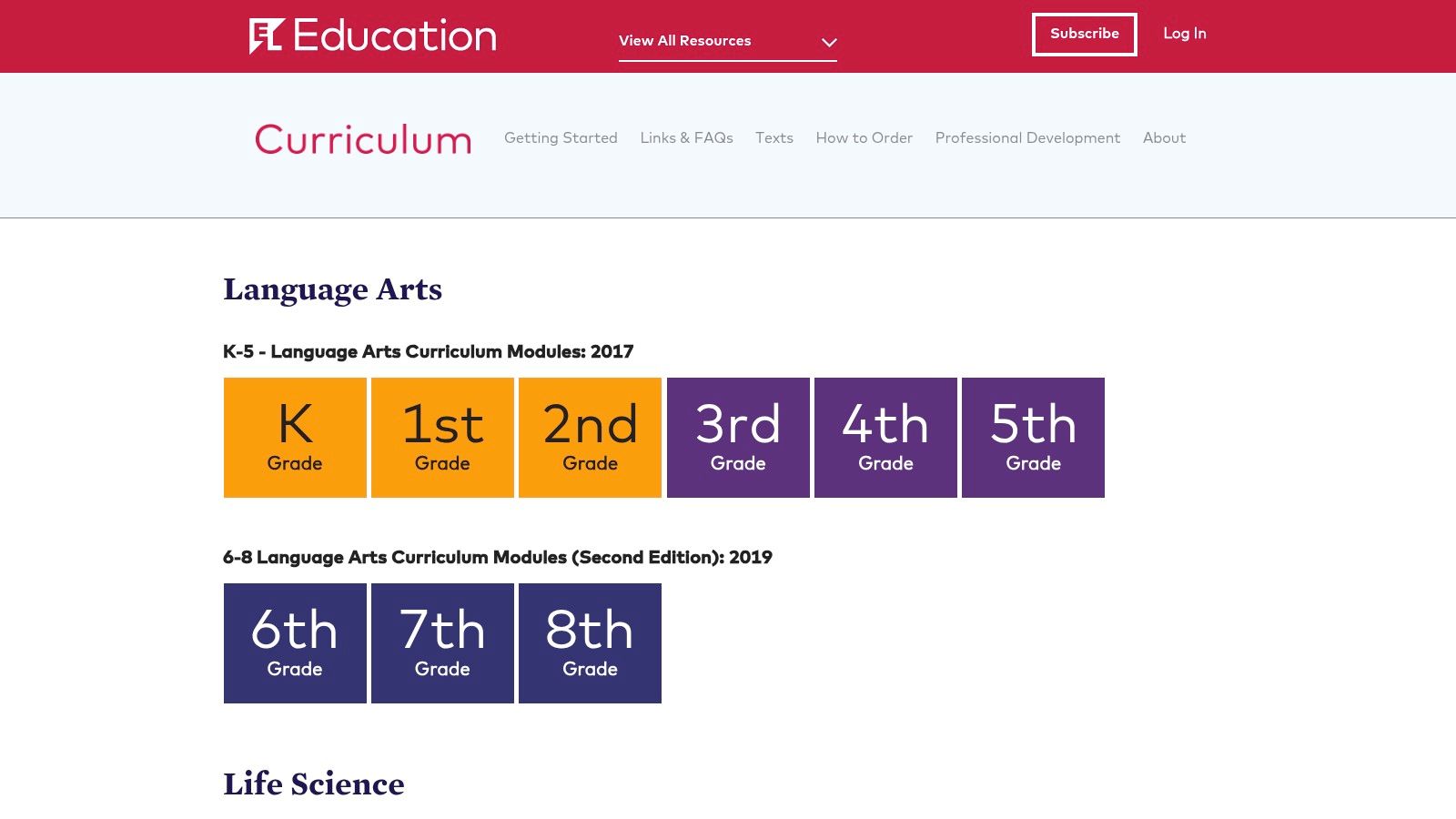
The platform’s standout quality is its fusion of high standards for literacy with the core tenets of project based learning. Rather than treating PBL as an occasional add-on, EL Education embeds project work directly into the curriculum. Each multi-week module is a complete instructional sequence that builds knowledge and skills, leading students toward a culminating project where they apply their learning to create something meaningful for an authentic audience.
Key Features and Offerings
EL Education’s curriculum is meticulously organized and designed for direct classroom implementation, providing a wealth of resources that significantly reduce teacher planning time. The user-friendly website is easy to navigate, with clear pathways to find materials by grade level.
- Complete K-8 ELA Modules: Each grade level includes several modules, complete with all necessary texts, detailed lesson plans, assessments, and culminating performance tasks. These modules are available as free PDF downloads.
- Standards-Aligned Content: The curriculum is built upon college and career-ready standards, ensuring every project addresses key learning objectives in reading, writing, speaking, and listening.
- Authentic Products and Performance Tasks: A hallmark of the EL model is its emphasis on creating work that matters. Projects often involve students creating books, presentations, or museum exhibits that are shared with the community.
- Implementation Guidance: The site provides extensive support materials for teachers, coaches, and administrators, including videos, planning tools, and protocols to ensure effective adoption.
Pros and Cons
| Pros | Cons |
|---|---|
| High-quality, comprehensive K-8 ELA curriculum available at no cost. | Primarily focused on ELA; cross-curricular connections require extra planning. |
| Literacy-rich projects are perfectly suited for authentic PBL outcomes. | Some print companions or supplemental materials may need to be purchased separately. |
| Complete modules with all texts and lessons reduce planning time. | The structured nature might feel less flexible for teachers who prefer building from scratch. |
Practical Tip: When you download a module, pay close attention to the "Performance Task" overview at the beginning. Understanding the final product from the start will help you and your students see how each daily lesson builds toward that meaningful, culminating goal. This backward-design approach is central to the curriculum's success.
Website: https://curriculum.eleducation.org
7. Pitsco Education – STEM PBL Units
For educators seeking comprehensive, all-in-one solutions for STEM education, Pitsco Education provides a unique and powerful resource. Unlike platforms that offer downloadable digital files, Pitsco specializes in turnkey, hands-on project based learning lesson plans that arrive in a physical kit. These multi-week units are meticulously designed for middle school STEM labs and makerspaces, providing everything a teacher needs to facilitate a rich design, build, and test experience right out of the box.
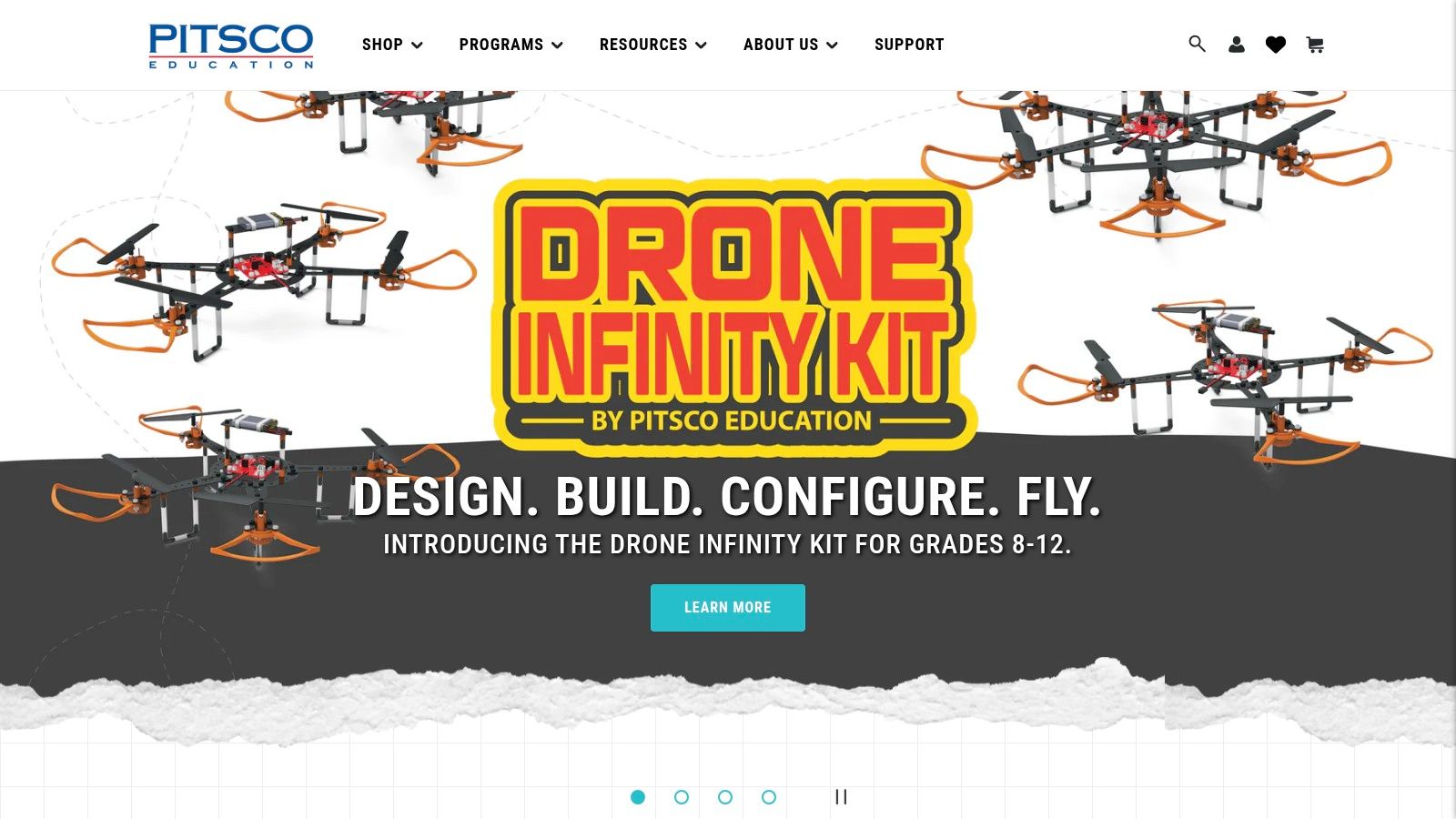
The core strength of Pitsco’s model is its focus on eliminating the logistical hurdles of sourcing materials for complex engineering projects. By packaging teacher guides, student instructions, equipment, and all necessary consumables together, the platform allows educators to focus entirely on instruction and student engagement rather than procurement. This makes it an ideal choice for schools looking to implement a robust, standardized, and repeatable STEM PBL curriculum with minimal prep time.
Key Features and Offerings
Pitsco's offerings are structured as complete, self-contained educational packages, making them straightforward to integrate into an existing curriculum. The website is organized to help educators find kits that align with specific standards and learning goals.
- Complete Class-Set Kits: Each unit includes all the materials needed for an entire class to participate. This includes everything from building components and tools to specialized testing devices for measuring project outcomes.
- Comprehensive Teacher Guides: The included guides provide structured timelines, detailed daily lesson plans, pacing suggestions, and clear assessment criteria, taking the guesswork out of implementation.
- Built-in Career Connections: Projects are explicitly linked to real-world STEM careers, helping students see the practical application of their learning and envision future pathways.
- E-Learning Support: Many units are supplemented with short e-learning courses that provide students and teachers with foundational knowledge, software tutorials, or other digital support to enhance the hands-on experience.
Pros and Cons
| Pros | Cons |
|---|---|
| Minimizes teacher prep and material sourcing with complete, reliable kits. | Higher upfront cost per unit (e.g., $1,495) compared to digital resources. |
| Perfectly suited for hands-on labs, makerspaces, and CTE classes. | Requires planning for shipping, purchasing logistics, and physical storage. |
| Structured pacing and robust teacher supports make implementation straightforward. | Less flexible for creative adaptation than a purely digital lesson plan. |
Practical Tip: Before purchasing, carefully review the "What's Included" section for each kit on the Pitsco website. This will help you understand the specific equipment and consumables provided, allowing you to plan for storage and potential long-term replenishment needs for items used up in the project.
Website: https://www.pitsco.com
7-Source PBL Lesson Plan Comparison
| Tool | Implementation Complexity 🔄 | Resource Requirements ⚡ | Expected Outcomes 📊 | Ideal Use Cases 💡 | Key Advantages ⭐ |
|---|---|---|---|---|---|
| PBLWorks (Buck Institute for Education) | Moderate — mix of free resources and paid TEACH licensing 🔄🔄 | Free account for library; paid TEACH & PD for turnkey implementation | High — standards‑aligned, Gold‑Standard PBL; strong teacher practice gains ⭐⭐⭐⭐ | Districts/schools seeking researched PBL & formal PD | Authoritative PBL guidance, robust teacher supports |
| Defined Learning (formerly Defined STEM) | Moderate — district/subscription deployment with implementation support 🔄🔄 | Subscription/district licensing; demo/trial available | High — career‑connected, interdisciplinary performance tasks ⭐⭐⭐⭐ | CTE, interdisciplinary programs, districts wanting turnkey tasks | Large (2,000+) vetted project library; built‑in rubrics |
| Teachers Pay Teachers (TpT) | Low — immediate downloads; requires teacher vetting 🔄 | Low cost per item; teacher time to review/adapt | Variable — depends on selected seller; scalable if curated ⭐⭐⭐ | Individual teachers seeking affordable, ready‑to‑use lessons | Enormous breadth, instant access, community reviews |
| Share My Lesson (AFT) | Low — free repository; quality and depth vary 🔄 | Free account; time to adapt incomplete resources | Moderate — useful for inspiration or adaptable units ⭐⭐⭐ | Quick downloads, inspiration, supplementing plans | No cost, active educator contributions, downloadable materials |
| TeachEngineering | Low‑Moderate — ready multi‑week STEM units; STEM adaptation only 🔄🔄 | Free downloads; requires hands‑on materials and lab space | High — NGSS/CCSS‑aligned engineering design learning ⭐⭐⭐⭐ | STEM classes, makerspaces, engineering design challenges | Peer‑reviewed, detailed guides and materials lists |
| EL Education Curriculum (Expeditionary Learning) | Moderate — complete ELA modules (K‑8) with implementation guidance 🔄🔄 | Free modules; some supplements/print may cost extra | High — literacy‑rich performance tasks and projects ⭐⭐⭐⭐ | ELA‑focused PBL, literacy‑anchored units for K‑8 | Comprehensive, standards‑aligned ELA modules reducing planning |
| Pitsco Education – STEM PBL Units | Low (teacher prep) — turnkey kits; procurement/logistics required 🔄🔄 | Higher upfront cost (kits, shipping); consumables included ⚡ | High — consistent hands‑on design/build/test experiences ⭐⭐⭐⭐ | Labs, makerspaces, schools needing complete physical kits | All‑in‑one materials, pacing, and built‑in assessments |
Bring Learning to Life with Your Next Project
The journey through project-based learning reveals a landscape rich with resources, each offering a unique pathway to student engagement and authentic learning. We've explored platforms from the gold-standard frameworks of PBLWorks to the vast, teacher-created marketplace of Teachers Pay Teachers. We've seen how resources like Defined Learning provide career-focused scenarios, while TeachEngineering delivers rigorous STEM challenges at no cost. The detailed expeditions from EL Education and the hands-on kits from Pitsco further illustrate the incredible breadth of options available.
The central takeaway is clear: there is no single "best" source for project based learning lesson plans. The most effective choice is the one that aligns with your classroom context, students' needs, and pedagogical goals. Your mission is to move from being a dispenser of information to a facilitator of discovery, and these tools are your launchpad.
Making the Right Choice for Your Classroom
Selecting the ideal resource requires thoughtful consideration. Before committing, ask yourself a few key questions to guide your decision-making process:
- What is my budget? Your financial constraints will immediately narrow the field. Resources like Share My Lesson and TeachEngineering offer exceptional value for free, while platforms like Defined Learning or Pitsco represent an investment in an all-in-one solution.
- How much prep time do I have? If you're short on time, a fully-fleshed-out unit from EL Education or a ready-to-go kit from Pitsco might be perfect. If you prefer to customize, the project skeletons from PBLWorks or adaptable lessons on Share My Lesson offer the flexibility you need.
- What are my students' primary interests? The most successful PBL experiences tap into student curiosity. Browse the project libraries on Teachers Pay Teachers or Defined Learning with your students' passions in mind. A project about designing a community skate park will resonate far more than a generic assignment.
- Which standards do I need to cover? Always start with your learning objectives. Use the standards-alignment tools on platforms like Defined Learning and EL Education to ensure your chosen project will meet curricular requirements.
Your Next Steps to Launching a Successful PBL Unit
Moving from inspiration to implementation is the most exciting step. Don't feel pressured to execute a flawless, month-long project on your first attempt. Success in PBL is iterative.
Start by choosing one project that genuinely excites you and aligns with an upcoming unit. Adapt it, don't just adopt it. Use the rubrics, timelines, and activity lists provided by these resources as a guide, but feel empowered to modify them to fit your students. The true power of these project based learning lesson plans lies in their ability to serve as a scaffold for your own creativity. Remember, the goal is not merely a polished final product; the real learning happens in the messy, collaborative, and often unpredictable journey of inquiry.
By embracing this student-centered approach, you create an environment where curiosity thrives, critical thinking becomes second nature, and learning transcends the classroom walls. You are not just teaching a subject; you are empowering students to become problem-solvers, collaborators, and lifelong learners prepared for a world that demands more than rote memorization. The adventure is just beginning.
Ready to add the perfect hands-on component to your next PBL unit? The science kits and creative toys from Playz are designed to spark curiosity and make complex concepts tangible and fun. Explore our collection at Playz and find the ideal tools to supplement your project based learning lesson plans and bring your students' ideas to life.