


Sensory toys are far more than just playthings. For children on the autism spectrum, they are essential tools designed to help regulate senses, reduce anxiety, and improve focus. Think of them as targeted inputs—a specific texture, gentle pressure, or predictable motion—that can either calm an overstimulated nervous system or awaken an understimulated one.
For many kids with autism, these toys are fundamental for navigating a world that can often feel overwhelming. By providing a safe and predictable way to engage the senses, they empower children to self-regulate, turning challenging moments into opportunities for growth and joyful engagement.
Why Sensory Toys Are Essential Tools, Not Just Toys
Imagine being at a concert where every instrument is blaring at maximum volume, all at once. For many children with autism, the world can feel just like that. The hum of a fluorescent light, the scratchy tag on a shirt, or a distant siren can be intensely distracting or even painful. This is where sensory toys for autism come in. They act like a personal control panel, helping a child turn down the overwhelming noise and find a comfortable rhythm.
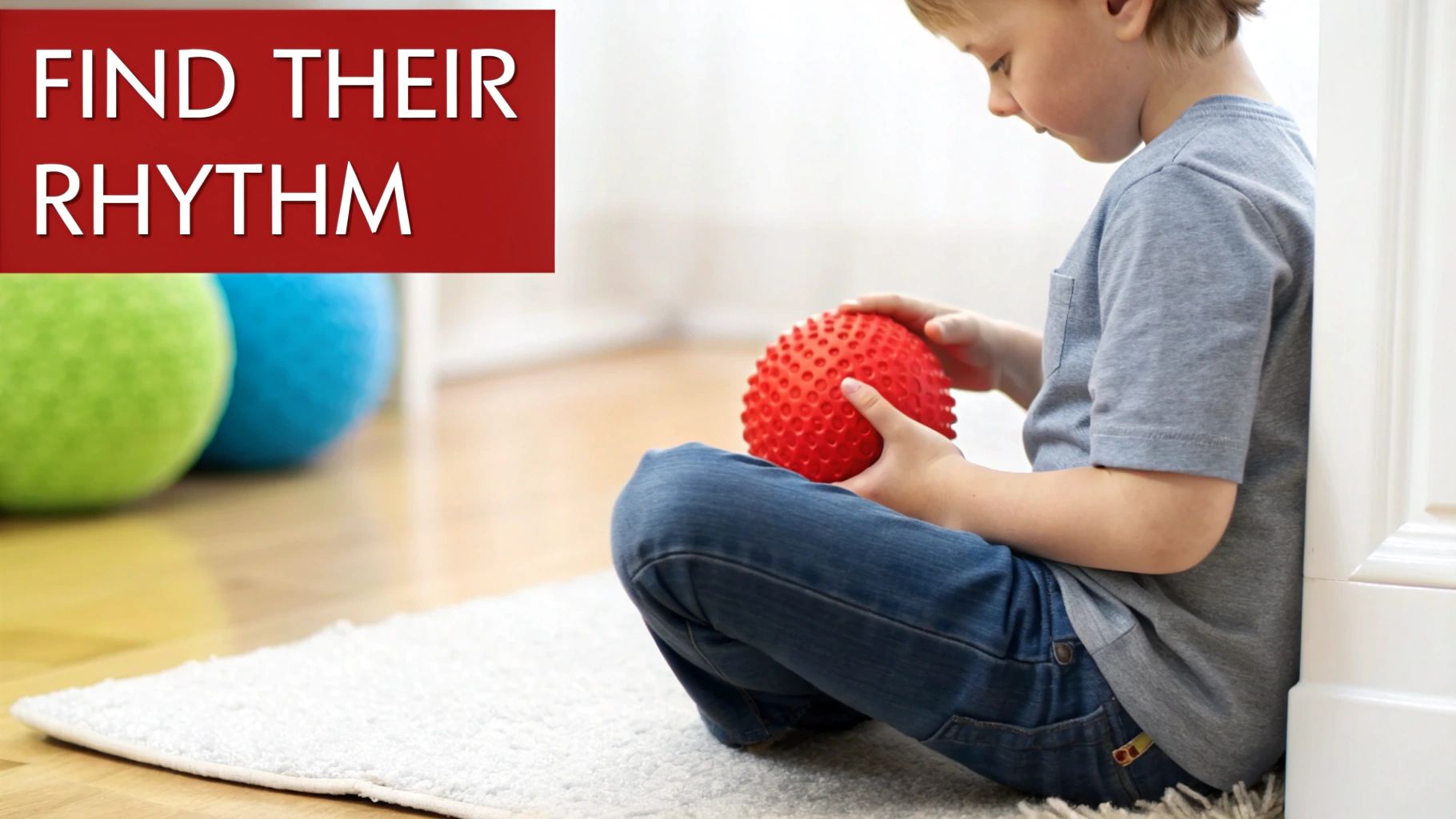
These items aren't just for fun; they are fundamental for managing sensory input. When a child engages in purposeful play with these tools, it becomes a powerful form of therapy, opening new pathways for learning and connecting with the world.
The Growing Recognition of Therapeutic Play
The incredible value of therapeutic play is finally getting the attention it deserves. The global market for sensory toys designed for autism, currently valued at USD 32.9 million, is projected to reach USD 51.4 million by 2032. This isn't just a business trend; it reflects a deeper, widespread understanding of how vital these tools are for families.
Sensory toys empower children to self-regulate. For instance, a child feeling overwhelmed might squeeze a stress ball. This simple action provides deep pressure input that has an almost immediate calming effect on the nervous system, helping them regain control and focus. You can dive deeper into what sensory play is in our detailed guide.
Key Takeaway: By providing a safe and predictable sensory experience, these toys empower children to meet their own needs, transforming overwhelming moments into opportunities for growth and joyful engagement.
Core Benefits of Sensory Engagement for Development
Integrating sensory toys into a child's daily routine offers several core advantages that support their overall well-being and development. These tools are designed to:
- Reduce Anxiety and Stress: Repetitive motions like spinning a fidget toy or squeezing putty can be incredibly soothing. For example, a child can quietly use a fidget cube under their desk at school to stay centered during a lesson.
- Improve Focus and Concentration: Having a quiet, tactile outlet helps filter out distracting background noise. A weighted lap pad can provide calming pressure, allowing a child to concentrate better on homework.
- Develop Critical Motor Skills: Manipulating items like therapy putty, squishy balls, or lacing beads is fantastic for building hand strength and fine motor coordination, skills needed for writing and daily tasks.
- Encourage Exploration and Participation: Engaging and non-threatening toys can help a child feel safer exploring new textures, sensations, and environments, making new experiences less intimidating.
Understanding Your Child's Unique Sensory World
To choose the right sensory toys, you must first understand your child's unique experience of the world. Every child processes environmental information differently, but for kids on the autism spectrum, that experience can be exceptionally intense.
Imagine their sensory system as a high-tech soundboard. Some faders are cranked way up, making certain sounds, sights, or textures feel overwhelming. Others are set too low, leaving the child craving more intense input just to feel grounded and centered.
This explains why one child might be sensory-seeking—constantly in motion, seeking input by spinning, jumping, or crashing into cushions. Another child might be sensory-avoiding, feeling overwhelmed by sensations most people filter out, like the hum of a refrigerator. Understanding these patterns is the crucial first step. For a closer look at these behaviors, this practical guide to high-functioning autism characteristics is an excellent resource.
Beyond the Five Senses: Vestibular and Proprioceptive Systems
We all learned about sight, sound, smell, taste, and touch. However, for children with autism, two lesser-known "hidden" senses often play a starring role in how they feel and function.
-
The Vestibular System: This is your body's internal GPS, located in the inner ear. It governs our sense of balance and spatial orientation. It tells us if we’re upright, upside down, or spinning. A child who could swing for hours is feeding their vestibular system the input it craves.
-
The Proprioceptive System: This is our sense of body awareness. Receptors in our muscles and joints constantly tell our brain where our limbs are in space without us needing to look. A child who loves bear hugs, weighted blankets, or even seems to crash into furniture is seeking deep pressure to help their brain map out their body.
Actionable Insight: Understanding whether your child is a sensory seeker or avoider isn't about labeling them. It's about translating their behavior. A child who repeatedly crashes into the sofa isn't just being disruptive; they are communicating a need for proprioceptive input to regulate their system.
How to Identify Your Child's Sensory Profile
The best way to identify your child's sensory needs is through careful observation. Pay attention to their reactions in different environments. Do they cover their ears in a crowded store? This indicates an avoidance of auditory input. Do they seem to touch every surface they walk past? This shows a clear need for tactile input. You can learn more about this by reading about what the tactile learning style is.
Once you spot these patterns, you can strategically match them to the right kinds of sensory toys for autism. This targeted approach transforms playtime into a powerful tool for self-regulation, helping your child feel calmer and more focused.
Matching Sensory Toys to Specific Needs: A Practical Chart
Use this quick guide to connect common sensory behaviors with toy categories that can provide effective support.
| Sensory System | Common Behavior You Might See | Helpful Toy Category | Practical Example |
|---|---|---|---|
| Tactile | Constantly touching things, fidgeting, sensitive to certain clothing textures. | Play dough, kinetic sand, textured balls, slime kits. | Squeezing therapy putty during a car ride. |
| Proprioceptive | Loves crashing, jumping, deep hugs; seems "clumsy" or unaware of body. | Weighted blankets, crash pads, trampolines, climbing structures. | Jumping on a mini-trampoline for 5 minutes before homework. |
| Vestibular | Craves spinning, swinging, rocking; is always in motion. | Swings, balance boards, scooter boards, spinning seats. | Using an indoor swing to calm down after a busy day. |
| Auditory | Covers ears in loud places, is sensitive to background noise, or seeks loud sounds. | Noise-canceling headphones, musical instruments, sound puzzles. | Wearing headphones during a noisy school assembly. |
| Visual | Stares at lights or spinning objects, or gets overwhelmed by bright, cluttered spaces. | Lava lamps, bubble tubes, light projectors, simple visual timers. | Watching a bubble tube in a quiet corner to de-stress. |
| Oral | Chews on clothes, toys, or hands; prefers crunchy or chewy foods. | Chewable jewelry (chewelry), textured teethers, drinking from a straw. | Wearing a chewable necklace for a safe oral outlet. |
Building the Ultimate Sensory Toy Toolkit
Assembling an effective collection of sensory toys is like stocking a toolbox for your child’s emotional and physical well-being. Instead of hammers, you’re filling it with items designed to calm, focus, or energize their nervous system. The goal isn't to buy a lot of toys, but to create a curated selection that meets your child’s unique needs in different settings.
Start by familiarizing yourself with the main categories of sensory toys. Each type targets a specific system to help your child feel more grounded. An effective toolkit will include options for everything from deep, calming pressure to engaging visual input.
This decision tree is a great visual guide for determining if your child’s behavior indicates they are seeking sensory input or avoiding it.
Observing whether your child is constantly moving versus covering their ears can point you directly toward the kind of sensory support that will help most.
Essential Tools for Touch and Body Awareness (Tactile & Proprioceptive)
For many children with autism, tactile and proprioceptive toys are the cornerstones of a sensory toolkit. They offer grounding feedback that is incredibly calming and organizing.
- Tactile Toys: These engage the sense of touch. Think therapy putty, kinetic sand, squishy textured balls, or fidget spinners. They offer a quiet, discreet way for a child to self-regulate in a classroom or during a car ride.
- Proprioceptive Toys: These provide deep pressure input to muscles and joints. Weighted blankets, lap pads, and compression vests are classics, delivering a comforting, hug-like sensation that can be a game-changer for focus and calm.
Must-Have Toys for Movement and Balance (Vestibular)
The vestibular system, which governs our sense of balance and spatial awareness, is another critical area to support. Vestibular toys are essential for kids who crave movement—the ones who are always spinning, swinging, and rocking.
Items like indoor swings, balance boards, and spinning seats provide a safe and appropriate outlet for this need. This type of input is incredibly organizing for the brain, helping a child feel more centered and ready to tackle other tasks.
Engaging Visual, Auditory, and Oral Senses
A complete toolkit also addresses the other key senses, which can either be sources of overwhelm or areas where a child needs more input.
- Visual Toys: Items like bubble tubes, lava lamps, and gentle light projectors offer predictable, mesmerizing visual input that can be extremely calming for an overstimulated mind.
- Auditory Tools: Noise-canceling headphones are lifesavers for children sensitive to sound. Conversely, a sound machine can provide soothing white noise to block out jarring background sounds.
- Oral Motor Toys: For kids who chew to regulate, chewable jewelry ("chewelry") or other safe chew toys provide a better outlet than shirt collars or pencils. Understanding this need can also help you pick the right teething chew toys for infants.
Pro Tip: The most effective tools often engage multiple senses at once. This synergy creates a richer, more powerful regulating experience. Multi-sensory toys now hold a 40% share of the market, reflecting a preference for products that provide combined tactile, auditory, and visual stimulation for more holistic support.
How to Choose Safe and Effective Sensory Toys
Once you understand your child’s sensory profile, it’s time to choose toys. This is about finding tools that are both effective and completely safe. The market for sensory toys for autism has exploded, which means more options but also more to consider. Knowing what to look for will help you select high-quality items that will support your child and withstand rigorous play.
Safety must always be the top priority. Many children, especially those on the spectrum, explore objects with their mouths. This is normal, but it requires vigilance about materials and construction. A well-made toy is not just a better investment; it's far less likely to break into small, dangerous pieces.
Your Quick Safety Checklist
Before making a purchase, run through this quick mental checklist to ensure you're making a smart, safe choice.
- Non-Toxic Materials: Check the label for BPA-free, phthalate-free, and non-toxic materials. This is non-negotiable for oral motor tools like chewelry or any toy that might end up in your child's mouth.
- Durable Construction: Examine the toy for sturdiness. Look for strong seams, securely attached parts, and solid materials that won’t easily splinter or crack. It needs to handle being dropped, squeezed, and pulled.
- No Choking Hazards: Pay close attention to the size of the toy and its components. A good rule of thumb: if a piece can fit through a toilet paper roll, it’s a potential choking hazard for young children.
- Age-Appropriate Design: Adhere to the manufacturer's age recommendations. These are based on safety testing and developmental stages, not just suggestions.
Key Takeaway: The most effective sensory toy is one a child actually wants to use. Aligning your choices with their personal interests—whether it’s dinosaurs, space, or bright colors—dramatically increases the chances they will engage with it.
Matching Toys to Your Child's Interests and Development
Beyond safety, the best sensory tools are those that align with your child’s developmental level and personal interests. A toy that is too simple will lead to boredom, while one that is too complex can cause frustration. The goal is to find that sweet spot where a toy is both therapeutic and genuinely engaging.
For example, a toddler might benefit most from simple, oversized textured blocks. An older child, however, might be ready for the challenge of a complex fidget cube or the satisfying squish of therapy putty.
The demand for these tools is significant. The global fidget toys market, valued at USD 9.01 billion, is expected to hit USD 17.65 billion by 2030. This highlights how essential these self-regulation tools have become. You can read more about the growth of the fidget toy market.
Weaving Sensory Play into Your Daily Routine
The most effective sensory tools are not reserved for special occasions; they are seamlessly integrated into your child's day. When you thoughtfully weave sensory play into daily life, these items become reliable sources of support. This consistency is what helps a child stay regulated, engaged, and ready for whatever comes next.
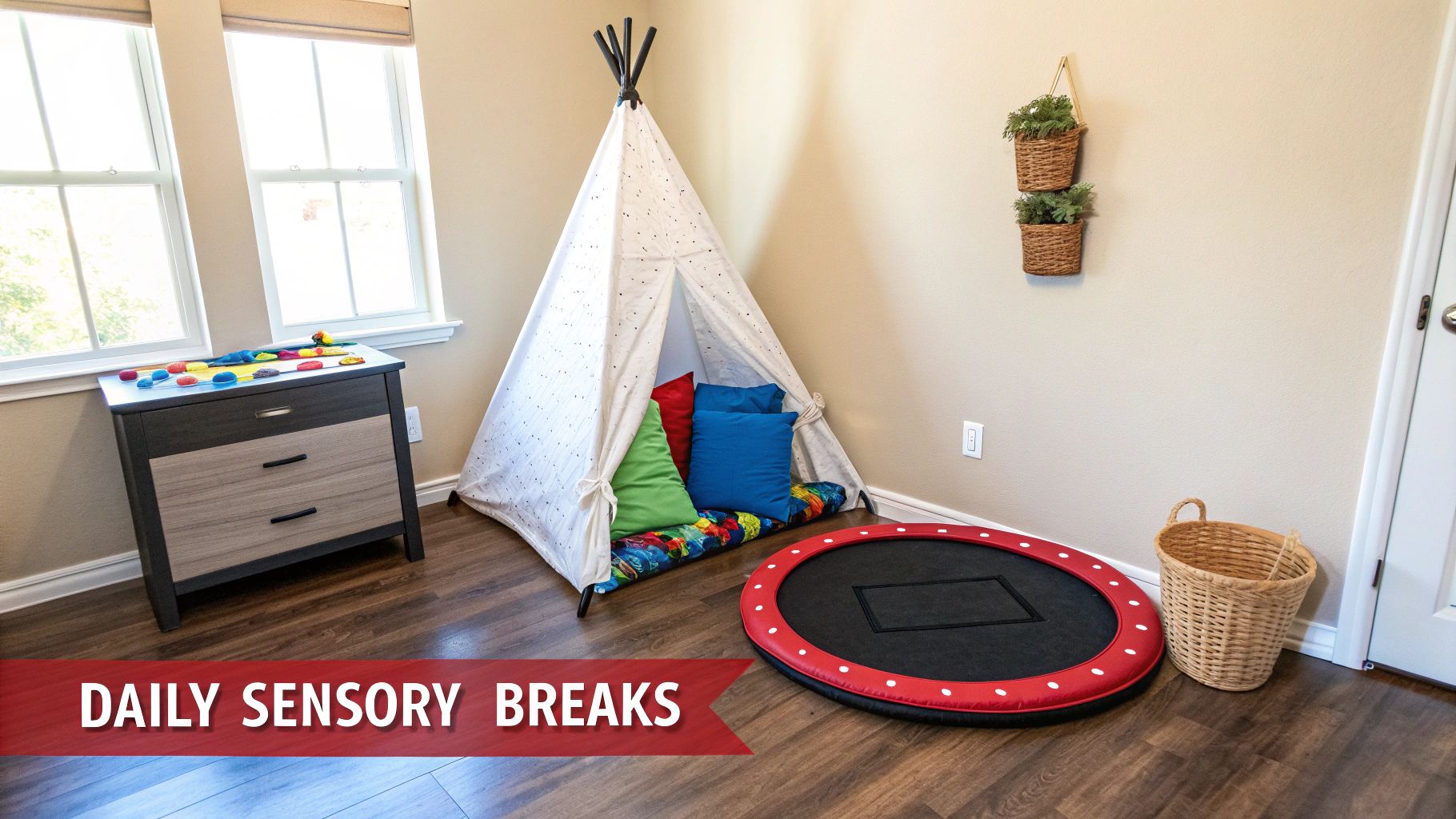
This doesn't need to be complex. For example, keeping a small bin of fidgets in the car can turn a stressful ride into a calmer journey. Before starting homework, five minutes of jumping on a mini-trampoline can provide the proprioceptive input needed to settle in and focus.
Creating Intentional Sensory Spaces at Home
Creating dedicated spaces for sensory regulation can be incredibly powerful. This doesn’t require an entire room—even a small, designated corner can be highly effective.
- A Calm-Down Corner: Create a cozy nook with soft pillows, a weighted blanket, and gentle lighting. Stock it with calming items like slow-motion glitter wands, plush toys, or a sound machine. This gives your child a safe place to retreat when feeling overwhelmed.
- An Active Zone: For sensory-seeking kids, a spot for safe, energetic play is a game-changer. This could be an area with a mini-trampoline, a crash pad, or a small climbing structure. It provides an appropriate outlet for their need to move and get deep pressure input.
Introducing the Concept of a "Sensory Diet"
This proactive approach of scheduling sensory input leads to what occupational therapists call a sensory diet. It isn’t about food; it's a personalized schedule of activities designed to meet a child’s specific sensory needs throughout the day, helping them stay regulated.
Actionable Insight: A sensory diet is like a nutritional plan for the nervous system. It provides a steady stream of the right kind of input at the right times, preventing sensory overload or under-stimulation before it starts.
A child’s sensory diet might include:
- Morning: Swinging for 10 minutes before school to wake up the vestibular system.
- Afternoon: Squeezing therapy putty during quiet reading time for tactile input.
- Evening: A warm bath with bubbles, followed by deep pressure from a weighted blanket before bed.
Working with an occupational therapist can help you create a tailored sensory diet. This approach shifts sensory toys for autism from reactive tools during meltdowns to proactive supports for a balanced day. For more ideas, check out these fantastic sensory activities for kids.
Turning Play into a Pathway for Connection
We've explored how sensory toys for autism are powerful, practical tools for regulation, focus, and joy. By understanding your child's unique sensory profile, you can select the right items to help them navigate the world with more confidence and calm.
This journey of exploring sensory play is also an amazing opportunity to connect with your child on their level, discovering together what makes them feel comfortable, secure, and happy.
Key Takeaway: By embracing this process of discovery, you’re not just buying toys—you’re using purposeful play to build a world where your child feels completely understood, supported, and ready to thrive.
View this as a fun adventure, not another task. Every time you introduce a new sensory toy, it's a chance to learn something about your child and strengthen your bond. Thoughtful play becomes a shared language, fostering communication and understanding without words. It's this very idea that helps create deep, lasting bonds, something we explore in our guide on family engagement activities.
Ultimately, these toys help carve a pathway for connection, turning everyday moments into powerful opportunities for growth and happiness.
Frequently Asked Questions About Sensory Toys
It's normal to have questions when you begin exploring the world of sensory toys for autism. To help you feel more confident, we've answered some of the most common questions from parents and caregivers.
How Do I Know Which Sensory Toys My Child Needs?
The best place to start is by observing your child in their daily environment. You are the expert on them. Pay close attention to their behaviors. Do they constantly move, crash into furniture, and crave deep hugs? That's classic sensory-seeking behavior. Or do they get overwhelmed by loud sounds, bright lights, or certain textures? That's sensory-avoiding.
Jotting down these patterns is a great first step. For a more structured approach, an occupational therapist is an incredible resource. They can perform a professional assessment and help you build a "sensory diet"—a personalized plan of activities and tools to help your child feel regulated.
Can My Child Use Sensory Toys at School?
Absolutely. Many schools are very supportive because they see how the right sensory tools can dramatically improve a child's focus and calm anxiety in a busy classroom.
Popular and effective options for school include:
- Discreet fidgets that can be kept in a pocket or under a desk.
- Weighted lap pads to provide calming deep pressure during lessons or circle time.
- Chewable pencil toppers for kids who need oral input to concentrate.
The key is teamwork. Talk with your child's teacher and occupational therapist to add these tools to their Individualized Education Program (IEP). This ensures everyone is on the same page and your child receives consistent support.
Pro Tip: Integrating sensory tools at school isn't about creating a distraction. It's about giving a child's nervous system the support it needs to be present, calm, and ready to learn.
Are Sensory Toys Only for Children with Autism?
Not at all. While they are a game-changer for many children on the autism spectrum, these tools are beneficial for anyone who struggles with sensory processing, including kids and adults with ADHD, anxiety, or other sensory differences.
In fact, all children benefit from sensory play. It's how they learn about their world, explore their environment, and build foundational motor and cognitive skills. Sensory exploration is a universal part of childhood development.
When Is the Right Age to Introduce Sensory Toys?
There's no "right" age, as sensory exploration begins at birth. You can introduce age-appropriate sensory toys from day one. The most important factor is matching the toy to your child's developmental stage and ensuring it is safe.
For an infant, this might be a soft rattle with different textures or a high-contrast mat. A toddler might love squishing play dough or rocking on an indoor swing. The goal is always safe, engaging, and developmentally appropriate fun.
Ready to find toys that do more than just entertain? Playz creates engaging, educational toys designed to spark curiosity and support development. Explore our collections to discover the perfect additions to your child's sensory toolkit at https://www.playzusa.com.