

The science fair is more than just a school requirement; it's a launchpad for curiosity, innovation, and hands-on learning. Finding genuinely good STEM fair projects that are both exciting and achievable can often feel like a monumental task. This guide is designed to eliminate that challenge, providing a clear roadmap to a standout project that inspires and impresses. We've curated a list of 10 outstanding project ideas that go far beyond the classic volcano model, covering everything from renewable energy and robotics to biodegradable materials and medical innovation.
This isn't just a list of ideas. It's an actionable blueprint for success. For each project, you will find practical steps, budget-friendly material lists, and real-world examples to help you not only compete but also discover a genuine passion for science, technology, engineering, and math. You'll gain a clear understanding of the scientific method in action, from forming a hypothesis to presenting your results with confidence.
Whether you're a curious elementary student building your first circuit or an ambitious high schooler exploring advanced concepts, this guide has something to spark your imagination. Get ready to find an idea that sets you on a path to discovery. Let's start building the future, one project at a time.
1. Water Purification and Filtration Systems
This hands-on project challenges students to design and build a multi-stage water filtration system using everyday, budget-friendly materials. It's an excellent way to explore environmental science and engineering principles by tackling a real-world problem: access to clean water. Students learn how different layers, such as sand, gravel, and activated charcoal, work together to remove impurities from contaminated water.
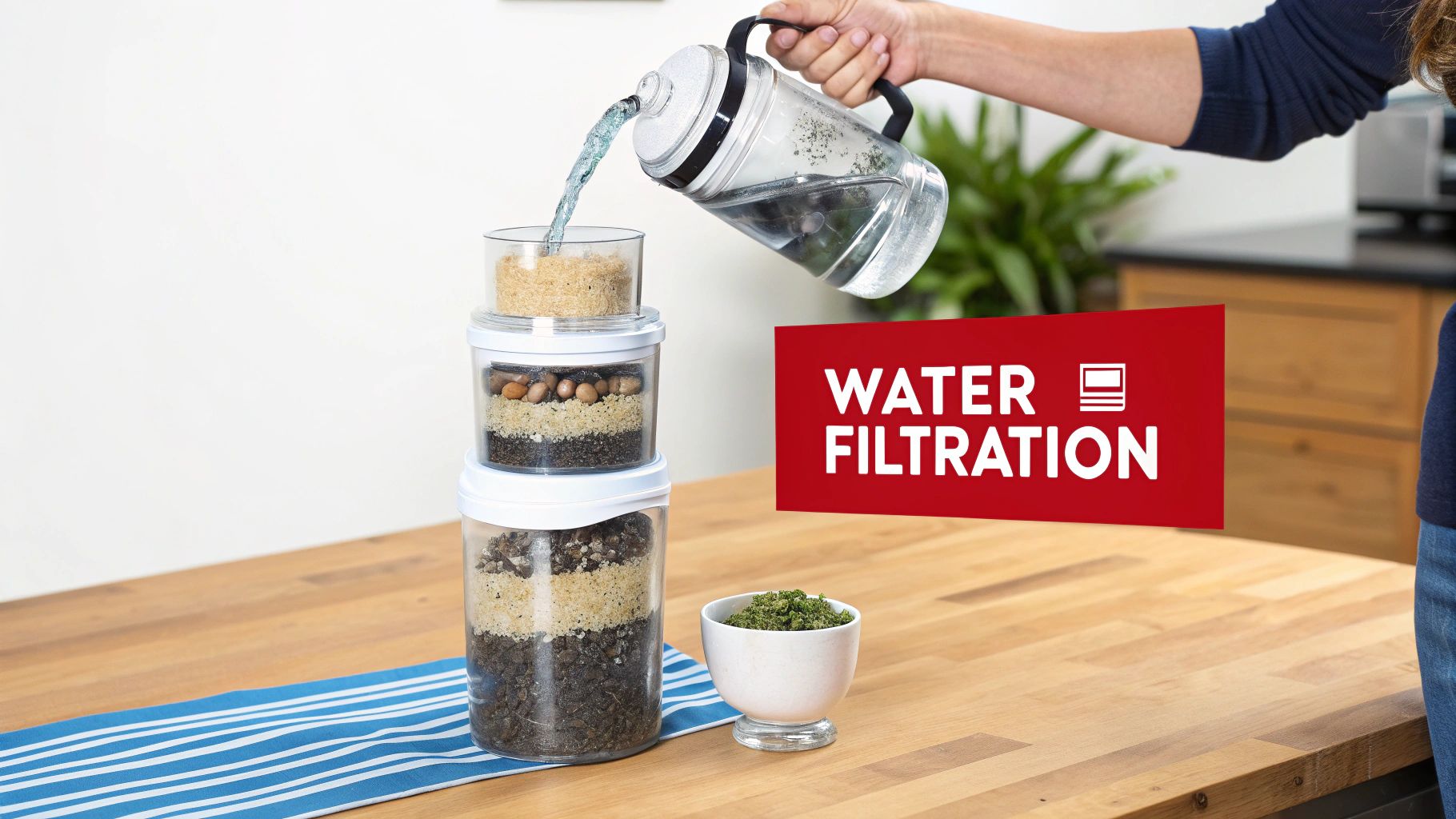
This experiment serves as a powerful model for systems used globally, from rainwater harvesting setups in developing nations to the advanced water recycling systems on the International Space Station. For those looking for good STEM fair projects, this one offers a perfect blend of scientific method and creative engineering. It visually demonstrates a core concept of the natural water cycle, a topic you can explore further in this water cycle experiment.
Actionable Tips for a Winning Project
- Test and Compare: Use clear containers to see each filtration stage in action. Collect water samples before and after filtration, and after each layer, to compare their clarity, pH, and turbidity.
- Analyze Your Materials: Create a cost-benefit analysis comparing different filtration materials. How does cotton compare to a coffee filter? Does adding another layer of charcoal significantly improve the outcome?
- Advanced Testing: For a deeper analysis, you could research the specifications of a lab water purifier for distilled water to understand the standards for achieving high-purity results and compare them to your homemade system's output.
2. Renewable Energy Projects (Solar, Wind, or Hydro)
This category of good STEM fair projects allows students to build functional models that generate electricity from sustainable sources. By constructing solar-powered cars, miniature wind turbines, or small-scale hydroelectric generators, students gain a practical understanding of energy conversion. These projects bring complex physics and engineering concepts to life, showing how natural forces can be harnessed to create clean power.
These hands-on experiments connect directly to global efforts in sustainable energy, mirroring the work of institutions like the National Renewable Energy Laboratory (NREL). Students can explore how design changes affect efficiency, a core principle in real-world engineering. Understanding the basics of electricity is key, and you can get a great introduction by learning how to build simple circuits. This project is a fantastic way to engage with one of the most critical challenges of our time.
Actionable Tips for a Winning Project
- Track Performance: Use a multimeter or data logger to measure and record the voltage and amperage your model generates over time. Test how different conditions, like the angle of a solar panel or the speed of a fan for a turbine, impact energy output.
- Compare Designs: Build and test several different wind turbine blade designs or compare the efficiency of different types of solar cells. This introduces the concept of iterative design and optimization.
- Scale It Up: After measuring your model's output, calculate its potential real-world impact. How many of your mini-turbines would it take to power a lightbulb or charge a phone? This helps connect the small-scale experiment to large-scale applications.
3. Robotics and Automation Projects
This project area invites students to design, build, and program robots to complete specific tasks, offering a dynamic entry into mechanical engineering, coding, and artificial intelligence. Students can tackle challenges like navigating a maze, sorting objects by color, or even simulating a search-and-rescue mission. This is one of the most engaging and good STEM fair projects because it provides tangible, immediate feedback on design and programming logic.
The process mirrors real-world applications seen in manufacturing automation, space exploration rovers, and autonomous vehicles. Whether using a beginner-friendly kit like LEGO Mindstorms or a more advanced Arduino-based custom build, students gain invaluable problem-solving skills. The journey from a pile of parts to a functional machine is a powerful learning experience, and for those just starting, you can learn more about how to build simple robots to get the basics down.
Actionable Tips for a Winning Project
- Start with Kits: Use established platforms like LEGO, VEX, or Arduino starter kits. These come with tutorials and a supportive community, which helps flatten the steep learning curve.
- Document Everything: Keep a detailed engineering notebook. Document every design change, programming tweak, and test result. Failures are just as important as successes in the iterative design process.
- Focus on the Logic: Create a flowchart or pseudocode before writing the actual program. A clear explanation of your programming logic is crucial for judges and demonstrates a deep understanding of the project's core.
4. Biodegradable Materials and Sustainable Packaging
This innovative project invites students to tackle the global plastic pollution crisis head-on by creating their own biodegradable packaging. Using common kitchen ingredients like cornstarch, gelatin, and vinegar, students can engineer bioplastics and test their properties. This is a fantastic way to delve into materials science and environmental chemistry, challenging them to design a sustainable alternative to single-use plastics.
The experiment models the work of companies like Ecovative Design, which uses mushroom mycelium to create compostable packaging. For those seeking good STEM fair projects with a real-world impact, this one offers a tangible connection to green innovation and a circular economy. It demonstrates how simple chemistry can lead to powerful solutions for complex environmental problems.
Actionable Tips for a Winning Project
- Test and Compare: Create several bioplastic formulas by varying the ratios of ingredients like glycerin or starch. Test each for tensile strength, water resistance, and flexibility to determine the best recipe.
- Analyze Your Materials: Document the entire material science process from creation to decomposition. Set up a controlled compost experiment to measure how quickly your bioplastic breaks down compared to a traditional plastic bag.
- Advanced Testing: For a deeper analysis, investigate the cost-effectiveness and scalability of your best formula. Compare its production cost per square inch to commercial alternatives and discuss its potential for real-world manufacturing applications.
5. Medical Device Innovation (3D-Printed Prosthetics or Assistive Tech)
This advanced project merges engineering, biology, and computer-aided design (CAD) to address real-world accessibility challenges. Students are challenged to design and create functional assistive devices, such as 3D-printed prosthetic hands, custom orthotic braces, or adaptive tools for individuals with disabilities. It is an empathy-driven project that combines technical skill with a deep understanding of human biomechanics and user needs, making it one of the most impactful good STEM fair projects available.
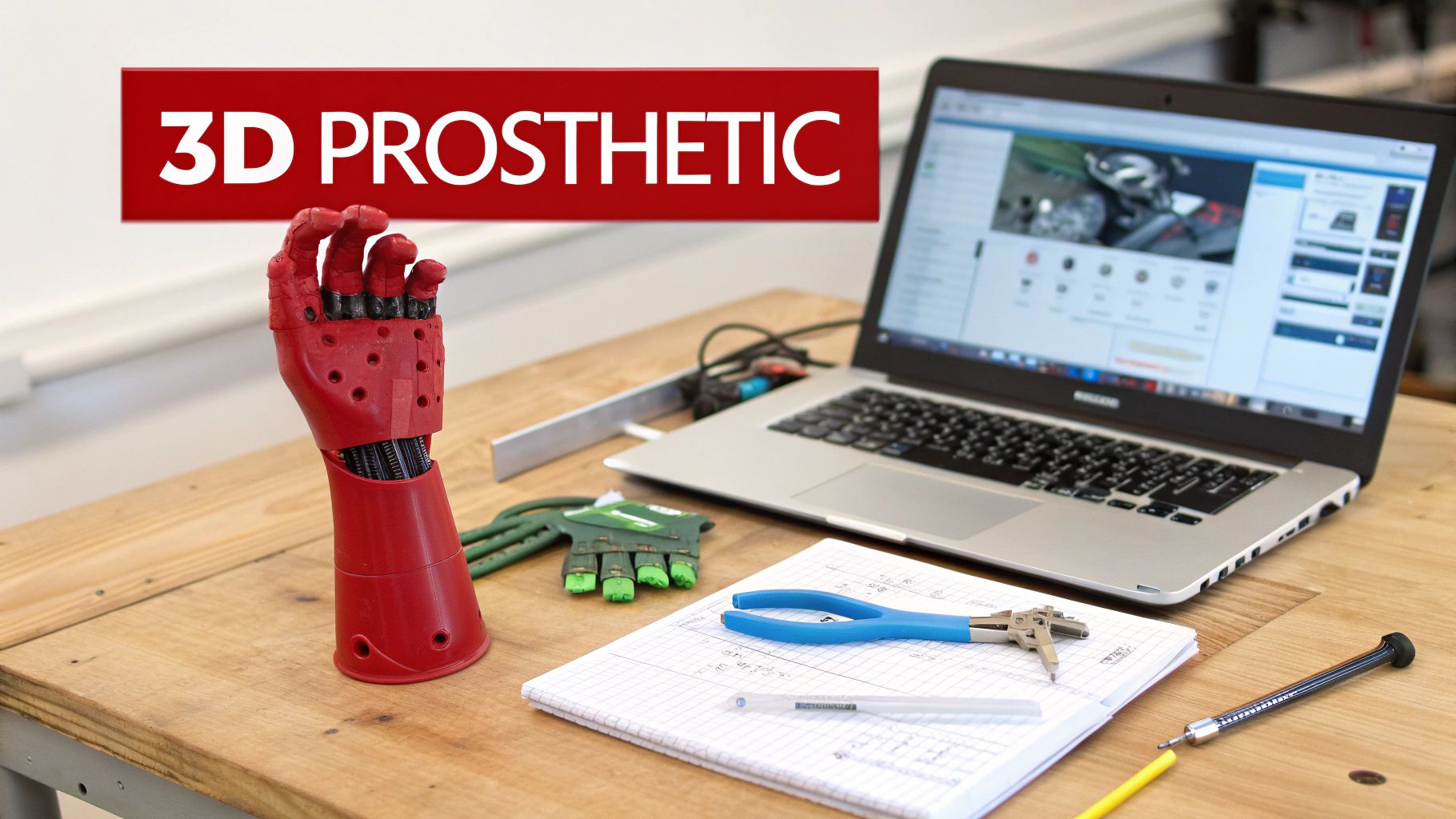
Inspired by global initiatives like the e-NABLE community, which provides 3D-printed hands to children, this project allows students to see their work make a tangible difference. It demonstrates how modern technology can provide low-cost, customized solutions to complex medical problems. For students who find a passion in this area, understanding the complete medical device product development process is an excellent next step toward a potential career.
Actionable Tips for a Winning Project
- Focus on User Needs: Start by interviewing potential users or researching specific disabilities to identify a clear problem to solve. Empathy is the core of successful design.
- Utilize Free Software: Learn to use free and accessible CAD software like Tinkercad (beginner) or Fusion 360 (intermediate) to create your 3D models.
- Iterate and Test: Partner with a local library or makerspace for 3D printing access. Print, test, and refine your prototypes based on user feedback, documenting each design improvement.
6. Environmental Monitoring and Data Analysis Systems
This project merges computer science with environmental studies, empowering students to build their own sensor networks. Using platforms like Arduino or Raspberry Pi, participants can monitor real-time environmental data such as air quality, temperature, soil moisture, or light levels. It's a fantastic opportunity to engage with the Internet of Things (IoT) and learn how to collect, analyze, and interpret data to understand the world around them.
This type of project mirrors the work of professional environmental scientists and data analysts. Students can set up a school weather station, monitor pollution in an urban area, or even study the microclimates within a garden. For those seeking good STEM fair projects that combine hardware, software, and critical analysis, this option offers immense depth and relevance. The skills learned are directly applicable to careers in technology and environmental science.
Actionable Tips for a Winning Project
- Choose Your Platform: Start with user-friendly platforms like Arduino for simple sensors or Raspberry Pi for more complex projects that require a full operating system. Platforms like ThingSpeak can help you easily visualize your data online.
- Long-Term Data Collection: Don't just collect data for a day. Set up your system to run for weeks or even months to identify meaningful trends, seasonal changes, or the impact of specific events.
- Visualize and Conclude: Use software to create interactive dashboards or graphs of your data. The goal is not just to collect numbers but to tell a story and draw meaningful conclusions from the patterns you observe.
7. Genetic Engineering and DNA Extraction/Analysis
This project allows students to delve into molecular biology by performing hands-on experiments to extract DNA from common organisms like strawberries or even their own cheek cells. It offers a tangible way to explore the building blocks of life, teaching the fundamentals of genetics and biotechnology through direct observation. Students can learn and apply laboratory techniques using simple, household materials to isolate and visualize the genetic material that codes for all living things.
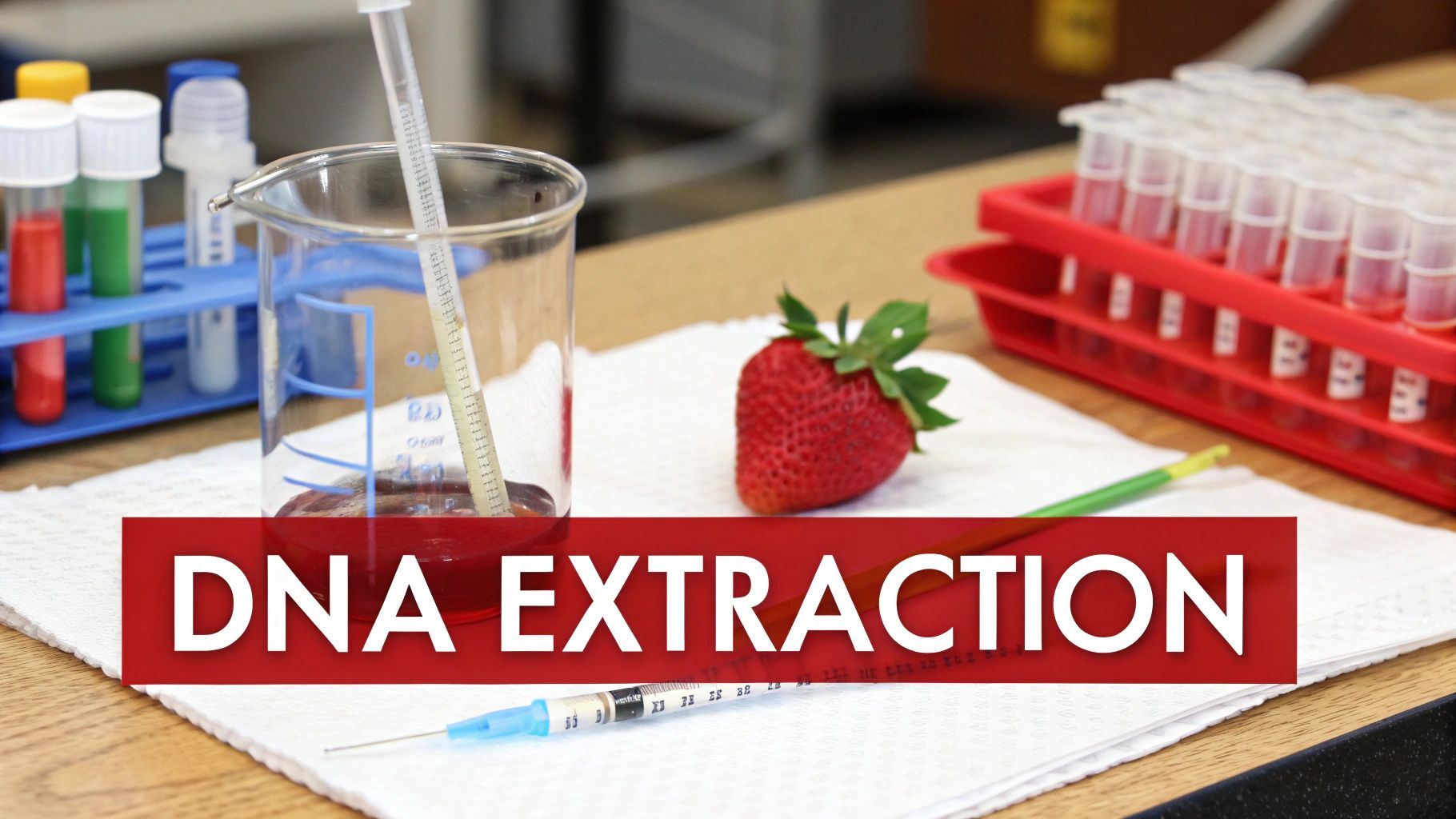
This experiment serves as a fantastic introduction to the complex world of genetics, providing a foundation for understanding advanced topics like CRISPR gene editing. For those searching for good STEM fair projects that feel like real-world science, DNA extraction is an exciting and visually impressive choice. You can explore more concepts like this with other biology science projects. This project is popular in advanced biology classes and at competitive science fairs where students can even compare the DNA yields from different organic sources.
Actionable Tips for a Winning Project
- Start Simple: Begin with a classic strawberry DNA extraction, as their octoploid nature (eight sets of chromosomes) yields a large amount of visible DNA. Use a simple mixture of soap, salt, and rubbing alcohol.
- Compare and Contrast: Once you master the basic technique, try extracting DNA from other sources like bananas, onions, or spinach. Compare the quantity and texture of the DNA you collect from each.
- Follow Protocols: Always use established and safe protocols from reputable educational sources. Ensure all biosafety guidelines are followed, especially if working with bacteria or other microorganisms in more advanced projects.
8. Earthquake Engineering and Structural Design
This project plunges students into the world of civil engineering and seismology by challenging them to design and build structures capable of withstanding simulated earthquakes. Using common materials like straws, toothpicks, and marshmallows, participants create model buildings and test their resilience on a homemade shake table. It’s a dynamic way to explore concepts like structural integrity, load distribution, and seismic wave absorption.
This experiment directly mimics the work of structural engineers who design buildings in earthquake-prone regions, blending physics principles with creative problem-solving. As one of the most engaging and good STEM fair projects available, it provides a tangible demonstration of how engineering saves lives. Students can see firsthand why certain shapes and reinforcement techniques are crucial for stability, from the base isolation systems in modern skyscrapers to the triangular trusses in bridges.
Actionable Tips for a Winning Project
- Build a Shake Table: Construct a simple shake table using marbles or rollers underneath a board. You can manually shake it to test designs or attach a small vibration motor for consistent, measurable results.
- Compare and Contrast: Build several small structures using different design principles. Test a square-based tower against a triangular one or compare a rigid structure to one with built-in flexibility.
- Document Performance: Use a smartphone to record your tests in slow motion. This allows for a detailed analysis of how each part of the structure flexes, where the failure points are, and which designs perform best under stress.
9. Citizen Science and Crowdsourced Research Projects
This project idea moves beyond the classroom by allowing students to contribute to real, ongoing scientific research. Citizen science invites the public to collect and analyze data, often in collaboration with professional scientists. Students can use platforms like Zooniverse to classify galaxies or iNaturalist to document local biodiversity, turning their observations into valuable data points for large-scale studies.
Participating in these projects demonstrates how collaborative effort fuels scientific discovery, from tracking bird migrations with eBird to monitoring butterfly populations with Monarch Watch. This approach is one of the best for good STEM fair projects because it connects students directly with the scientific community and shows them the tangible impact of their work. They are not just simulating an experiment; they are actively participating in one.
Actionable Tips for a Winning Project
- Focus Your Data: Instead of just contributing, design a project that analyzes the data. For example, use eBird data to compare bird populations in a local park before and after a heatwave.
- Create a Local Challenge: Use a platform like iNaturalist to organize a "BioBlitz" for your school or neighborhood. Your project could then analyze the biodiversity found and create a report for your community.
- Track and Present Impact: Document your contributions. Show how many classifications you made or species you identified. Present your findings alongside the official research goals to highlight how your work helped.
10. Machine Learning and AI Applications (Image Recognition, Predictive Models)
This advanced project introduces students to the cutting-edge world of artificial intelligence by challenging them to build a functional machine learning model. It's a fantastic way to explore computer science and data analysis by creating systems that can recognize patterns, make predictions, or classify information. Students can use accessible online platforms to build projects ranging from an image classifier that identifies plant diseases to a model that predicts sports outcomes based on historical data.
This experiment demystifies AI, showing how algorithms learn from data to perform tasks that are transforming industries from healthcare to finance. For those seeking good STEM fair projects that showcase modern tech skills, this one provides a deep dive into the logic behind the apps and tools we use daily. It also serves as a great entry point into coding, a foundational skill you can learn more about in this guide on how to teach coding to kids.
Actionable Tips for a Winning Project
- Start with Existing Data: Use beginner-friendly platforms like Google Colab and pre-built datasets from sources like Kaggle to focus on the model-building process rather than data collection.
- Focus on a Real Problem: Frame your project around solving a practical problem, such as identifying different types of recyclable materials from images or predicting local weather patterns.
- Analyze Model Performance: Don't just build the model; test its accuracy. Discuss potential sources of bias in your training data and explain how your AI makes its decisions, a concept known as interpretability.
Top 10 STEM Fair Project Comparison
| Project | Implementation 🔄 (complexity) | Resources ⚡ (requirements & cost) | Expected outcomes ⭐📊 (effectiveness & impact) | Ideal use cases 📊 | Key advantages & tips 💡 |
|---|---|---|---|---|---|
| Water Purification and Filtration Systems | Low–Medium: simple multi-stage builds; careful setup/testing | Low: sand/gravel/charcoal; optional water-testing kits | ⭐⭐⭐: clear visual results + measurable water quality changes | Environmental science, sustainability demos, community projects | Hands-on, scalable; tip: use clear containers and sample each stage |
| Renewable Energy Projects (Solar, Wind, Hydro) | Medium: electrical assembly and safety; variable conditions | Medium–High: panels/turbines/meters; outdoor testing needed | ⭐⭐⭐⭐: measurable energy output; strong relevance to climate topics | Physics classes, climate projects, competitions | Real energy demos; tip: log data over variable conditions and compare designs |
| Robotics and Automation Projects | High: mechanical design + programming + debugging | Medium–High: kits, sensors, controllers, tools, computers | ⭐⭐⭐⭐: high engagement; strong transferable CS/engineering skills | Robotics clubs, competitions, interdisciplinary STEM | Interactive and iterative; tip: start with kits (LEGO/Arduino) and document iterations |
| Biodegradable Materials & Sustainable Packaging | Medium–High: chemistry protocols and controlled tests | Medium: lab supplies; decomposition testing time; possible specialized equipment | ⭐⭐⭐: innovation potential; commercial relevance but slow results | Materials science, environmental chemistry, product-design projects | Addresses plastic pollution; tip: test multiple formulations and environmental conditions |
| Medical Device Innovation (3D-Printed Prosthetics) | High: CAD, biomechanics, prototyping and user testing | High: 3D printers, materials, expert feedback, possible clinical input | ⭐⭐⭐⭐: high social impact; functional prototypes possible | Biomedical engineering, service-learning, assistive-technology design | Empathy-driven outcomes; tip: interview users and partner with makerspaces |
| Environmental Monitoring & Data Analysis Systems | Medium–High: sensor integration, programming, calibration | Medium: microcontrollers/sensors/data logging; long-term maintenance | ⭐⭐⭐⭐: strong data-driven insights over time; scalable impact | Data science, long-term environmental studies, school networks | Teaches IoT and analytics; tip: use Arduino/RPi and collect seasonal data |
| Genetic Engineering & DNA Extraction/Analysis | Medium–High: lab protocols, sterile technique, biosafety | Low–Medium to High: basic kits inexpensive; advanced work needs labs | ⭐⭐⭐: memorable, foundational biotech skills; safety-dependent | Biology classes, biotech clubs, lab-based competitions | Hands-on molecular biology; tip: start with simple DNA extraction and follow biosafety rules |
| Earthquake Engineering & Structural Design | Medium: structural modeling and shake-table testing; reconstructive testing | Low–Medium: building materials, simple shake table or vibration motor | ⭐⭐⭐: clear visualization of engineering principles and failure modes | Civil engineering intro, physics, disaster-prep education | Practical and visual; tip: record tests and measure displacement precisely |
| Citizen Science & Crowdsourced Research Projects | Low: joining platforms or coordinating protocols; quality control needed | Low: mostly time and coordination; digital platforms for aggregation | ⭐⭐⭐: real contribution to research; variable direct control | Ecology, community outreach, large-scale observational studies | Scalable and inclusive; tip: pick aligned platforms and track team contributions |
| Machine Learning & AI Applications | High: data preparation, model selection, evaluation and tuning | Low–Medium: compute (cloud or local), labeled datasets, coding skills | ⭐⭐⭐⭐: high career relevance; outcome depends on data quality | CS/data science courses, predictive modeling, image recognition | Practical AI experience; tip: start with prebuilt datasets and emphasize interpretability |
From Idea to Award: Your Next Steps to STEM Fair Success
You’ve explored a wide array of good STEM fair projects, from building renewable energy models and earthquake-resistant structures to exploring the complexities of DNA and machine learning. This list is more than just a collection of ideas; it's a launchpad for your curiosity and a testament to the power of the scientific method. The journey from selecting a topic to presenting your findings is where the most profound learning happens.
Remember, the best projects aren't always the most complex ones. They are the ones driven by genuine curiosity, executed with care, and communicated with clarity. Whether you were drawn to environmental monitoring, robotic automation, or creating biodegradable plastics, the core principles remain the same: ask a compelling question, form a testable hypothesis, gather data meticulously, and draw logical conclusions.
Key Takeaways for Your Project Journey
As you move forward, keep these essential takeaways in mind to transform a good idea into an award-winning project:
- Embrace the Process: The scientific method is a cycle of trial, error, and refinement. Don't be discouraged by failed experiments or unexpected results. These moments are often the most valuable learning opportunities, providing critical data that can lead you to a revised hypothesis and a stronger conclusion.
- Tell a Compelling Story: Your project board and presentation are your tools for storytelling. Use your data, graphs, and observations to weave a narrative that explains your initial question, your experimental journey, and the real-world significance of your findings. A clear story makes your work memorable and impactful.
- Focus on Real-World Relevance: The most impressive good STEM fair projects connect their research to tangible problems. How does your water filtration system address clean water shortages? How could your biodegradable packaging reduce plastic pollution? Highlighting this connection demonstrates a deeper level of understanding and purpose.
Actionable Next Steps to Get Started
Feeling inspired? Here’s how to channel that energy into action:
- Refine Your Question: Choose one of the projects from our list and narrow its focus. Instead of just "studying solar power," ask, "What angle of a solar panel generates the most electricity in my geographic location during winter?" A specific question leads to a focused experiment.
- Develop a Detailed Plan: Outline your procedure step-by-step. List every material you will need, define your independent and dependent variables, and establish your control group. A thorough plan minimizes errors and ensures your data is reliable.
- Document Everything: Start a detailed logbook from day one. Record your ideas, procedures, raw data, observations (even the strange ones!), and photographs. This documentation is not just for your final report; it’s a crucial tool for analyzing your results and troubleshooting problems along the way.
Ultimately, your participation in a STEM fair is a chance to think like a scientist, solve like an engineer, and create like an innovator. The skills you build-critical thinking, problem-solving, and effective communication-will serve you far beyond the competition. You are not just completing an assignment; you are contributing to a world that desperately needs curious minds and creative solutions. Go forward with confidence, ask bold questions, and get ready to discover something amazing.
Ready to build the foundational skills for your next big project? Playz offers a universe of hands-on science kits that make complex chemistry, physics, and engineering concepts fun and accessible. Explore our full collection at Playz and find the perfect kit to spark your curiosity and prepare you for STEM fair success